

Weapon System Overview
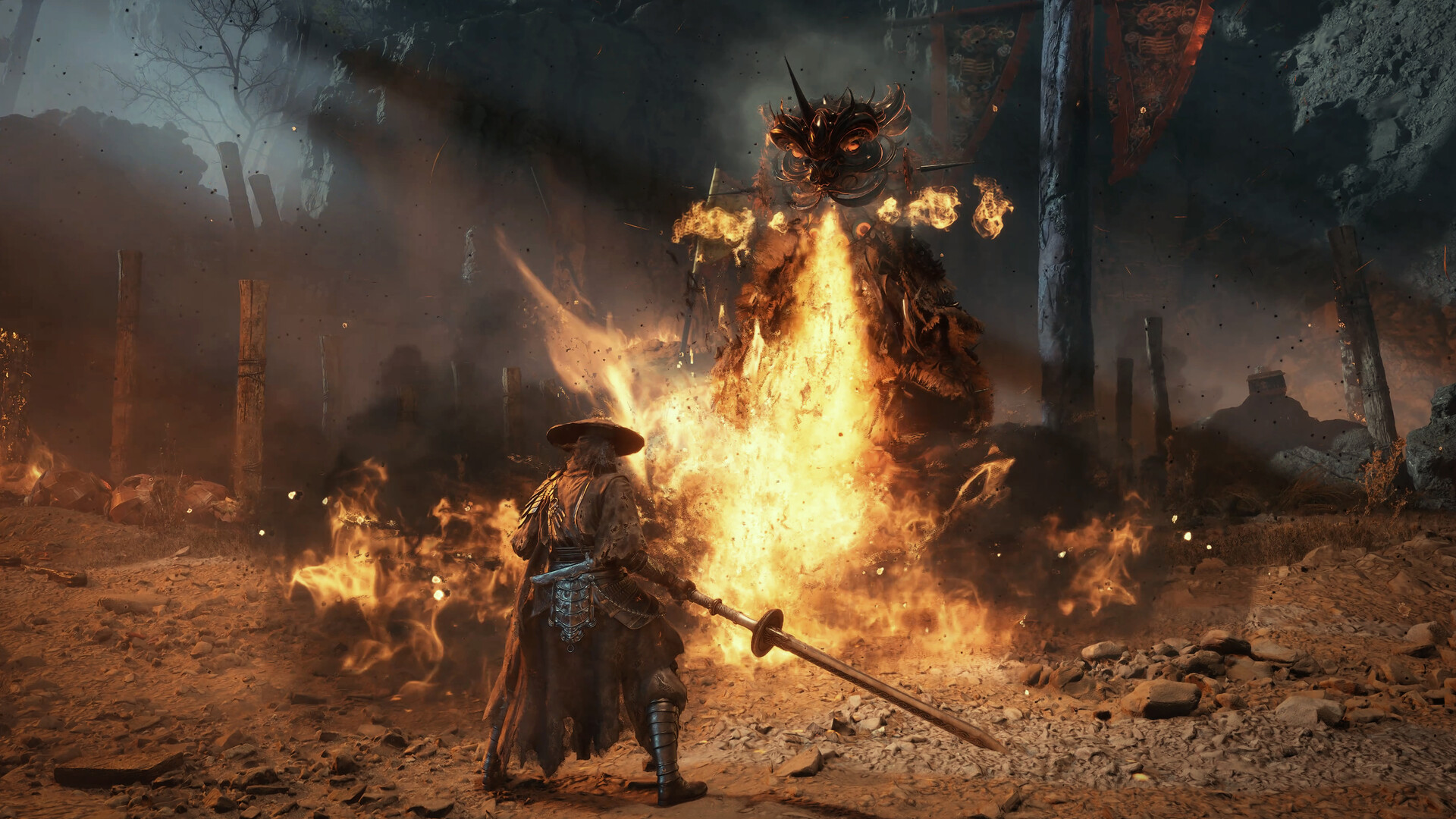
Players in Phantom Blade Zero carry four weapons at all times: two primary weapons called Blades and two secondary weapons called Phantom Edges. This loadout can be swapped outside of combat. The total weapon count is more than 55, broken into over 30 Blades and 25 Phantom Edges. Switching your primary weapon mid-fight fully recovers your Sha-Chi meter, which creates a strong incentive to swap weapons regularly rather than sticking with one for an entire encounter.
Each weapon has its own moveset, combo strings, and a unique L2 ability. The combat system is built around weapon-switching as a core mechanic, not an afterthought. Starting a combo with one Blade and finishing with another is how the game expects you to play at higher levels.
Confirmed Blades (Primary Weapons)
Eight Blades have been revealed through demos and gameplay footage. Each has a distinct identity and L2 special ability.
Sanguine
Soul's personal weapon. A sword that hits with cleaver-weight impact despite its relatively standard appearance. Sanguine is the weapon shown most frequently in trailers and the one players use first. Its L2 triggers quick tumbling attacks that close distance while dealing damage. It is the baseline for understanding the game's rhythm: fast, aggressive, and rewarding commitment.
Sanguine Twin
A pair of short swords crafted by Forge. These are the speed option. Attack chains come out fast and hit many times. The L2 triggers a dazzling combo at elevated speed, useful for overwhelming enemies before they can respond. The Sanguine Twin builds Sha-Chi quickly due to high hit count, but each individual hit does less damage than heavier weapons.
Sanguine Reach
A polearm that sacrifices speed for reach. Sanguine Reach lets you control space in a way the other Sanguine weapons cannot. Its L2 performs wide swings that hit multiple enemies. Useful in situations where you are surrounded or fighting large groups, and it pairs well with a faster Blade as your swap weapon.
Jagged Steel
A weapon designed around the Bleeding status effect. Attacks with Jagged Steel fill the target's Bleeding meter. When the meter is full, it triggers Hemorrhage, a burst of damage that punishes enemies who let the meter build up. The L2 is a storm of frenzy attacks that rapidly fills the Bleeding meter. Jagged Steel rewards sustained pressure on a single target.
Juggernaut
Juggernaut builds charges from successful parries. Each parry adds a charge, and the weapon visibly turns red when fully charged. The L2 releases overwhelming power attacks that consume the stored charges. This creates a defensive-offensive loop: parry to build charges, then spend them for massive damage. Juggernaut rewards players who are confident in their deflect timing.
Seamless Death
Twin rings that function as both ranged and melee weapons. The most distinctive feature: "you briefly phase out of existence when dodging." This makes Seamless Death one of the safest weapons defensively, giving extra invulnerability during dodges. The ranged/melee hybrid playstyle makes it versatile across different encounter types.
White Serpent & Crimson Viper
A dual-sword set where each sword has a different size. The shorter sword can be thrown as a projectile while the longer one is used for melee. This creates a mixed-range fighting style where you can maintain pressure at distance while closing in for close-range combos. The thrown sword returns after a short delay.
Soft Snake Sword
A defensive parry weapon. The Soft Snake Sword can form a blade barrier that blocks incoming attacks. Where most weapons in the game reward aggressive play, the Soft Snake Sword has a more methodical, counter-heavy approach. Parry, barrier, counter. It is the choice for players who prefer reading enemy patterns over overwhelming them with speed.
Venomous Softblade
A flexible snake sword (No. 13) that excels at both attack and defense. The Venomous Softblade is the best parry weapon in the game, designed for counter-based play. It belongs to the Seven Judgments weapon set.
Confirmed Phantom Edges (Secondary Weapons)
Phantom Edges are secondary weapons activated with R2. They serve different roles: some are purely combat tools, while others double as traversal or exploration keys in the game's Metroidvania-style level design. S-GAME has confirmed roughly 10 key-lock combinations where specific Phantom Edges open new paths. Five Phantom Edges have been revealed.
Night Owl
A teak longbow that fires owl-feathered arrows. Holding R2 charges the shot for higher damage. Night Owl is the primary ranged option among Phantom Edges, useful for picking off distant enemies or dealing damage to bosses during phases where melee is too dangerous.
Man-Cutter
An axe that can be charged after dodging. The dodge-charge mechanic rewards aggressive repositioning. Man-Cutter also is an environmental key, able to destroy specific barriers to open new paths through the level. This is one of the clearest examples of the Metroidvania design philosophy.
Flaming Mane
A metallic mask that spews fire. Attacks with Flaming Mane fill the target's Burning meter. When the meter is full, it triggers Ignition, dealing a burst of fire damage. Like Jagged Steel's Bleeding mechanic for Blades, Flaming Mane gives Phantom Edges access to status effect buildup. The fire also has visual flair: the metallic mask design makes it one of the more memorable weapons in the game's lineup.
Ink Cut
A medium-range Phantom Edge that performs a 3-hit combo. Ink Cut deals extra damage against the boss Huangxing, making it a situation-specific tool that rewards players who match their loadout to the encounter. Whether other Phantom Edges have similar boss-specific bonuses has not been confirmed.
Bashpole
A sledgehammer. Bashpole can slam from the air for a ground-pound attack. It also breaks weakened floors, functioning as a traversal tool that opens vertical paths downward. Combined with Man-Cutter's barrier destruction, Bashpole shows how Phantom Edges serve double duty as combat tools and exploration keys.
Savage Axe
A heavy axe that specializes in charged strikes dealing massive Sha-Chi damage. Used as a secondary weapon that complements the player's equipped primary blade.
Weapons Named in Preview Coverage
The October 2026 press preview showed three more weapons, each taken from a boss. The English names are as they appeared in English press material for the preview build and may still change before launch.
Weapon | Slot | What It Does | Taken From |
|---|---|---|---|
Dread Axe | Phantom Edge | Hold R2 to charge and release for a heavy downward blow, with more damage at each charge stage. Strong at breaking shields, and it can cut the chains that block some paths, which widens exploration. | Peng Meng, the Axemaster |
Hunter's Chain Sickle | Phantom Edge | Tap R2 to swing the sickle from mid to long range, with the blade end hitting harder than the chain. It can hook onto distant anchors to cross over and open routes that were out of reach. | The Hunt, Hunter of the Order |
The Fanatic's Broken Blade | Not stated | Drinking restores Sha-Chi and puts Soul into a tipsy state in which attacks become flying-sword strikes that weaken with distance. Pressing L2 while tipsy goes fully drunk: stronger flying swords and automatic dodging, but heavily restricted movement and no guard. Pressing L2 again unleashes an unblockable flurry and sobers Soul up. | Hua Qianxiao, the Sword Fanatic |
Whether the Dread Axe is the same weapon as Man-Cutter under a different English name has not been confirmed. The Fanatic's Broken Blade matches the drunken sword weapon the director has described; see Drunken Sword.
The director has also described an early heavy blade, whose English name had not been published as of October 11, 2026, that breaks shields and leaves red flowers on the ground; enemies standing on them recover Sha-Chi more slowly and steadily lose it. He called it a deliberately strong early weapon that later mechanics push the player away from.
Sha-Chi Recovery
Sha-Chi is the energy meter that powers special abilities. The key mechanic linking it to weapons is that switching your primary Blade fully recovers Sha-Chi. This means weapon-swapping is not just a stylistic choice. It is a resource management tool. If your Sha-Chi is depleted after using abilities with one Blade, switching to your second Blade refills it immediately. The system pushes players toward constant weapon rotation.
Status Effects
At least two status effect systems are tied to specific weapons:
Bleeding (Jagged Steel) - Fills a Bleeding meter on the target. Full meter triggers Hemorrhage for burst damage.
Burning (Flaming Mane) - Fills a Burning meter on the target. Full meter triggers Ignition for fire burst damage.
Whether additional status effects exist on unrevealed weapons is likely but not confirmed.
Weapons Against Armour
Weapon choice is not purely a matter of taste. Some enemies carry heavy shields that a light blade cannot get through, and those fights are meant to be answered with iron fists or hammers instead. Bringing only swords to that matchup turns an encounter that should be short into a grinding one, which makes the second Blade slot a defensive choice as much as an offensive one.
Martial Arts Choreography
The weapon animations are choreographed by Kenji Tanigaki (action director for SPL, Flashpoint, and Sakra with Donnie Yen) and Master Yang. S-GAME has over 20 kung fu masters working at their Shanghai office. Motion capture for weapon animations was recorded at real fight intensity, meaning the actors performed the moves at full speed and power rather than slowing down for safety. The result is that every weapon moveset is rooted in actual martial arts technique rather than animation shortcuts.
This matters because it affects how weapons feel. The weight, timing, and follow-through of each swing come from real physical movement. When a heavy weapon feels slow and powerful, it is because a real person swung a real weapon. When dual swords feel fast and fluid, it is because the motion capture performers actually moved that way.
Weapon Upgrade and Evolution
Each weapon has an upgrade and evolution system. Upgrades improve a weapon's stats, while evolution changes its properties more fundamentally. The full details of this system have not been disclosed, but it means that a weapon you find early in the game can remain viable throughout if you invest in upgrading it. See the difficulty and progression article for how this fits into the broader progression design.
The August 2026 showcase filled in how far that goes. Upgrading a weapon unlocks distinct forms and techniques rather than only raising its numbers, so mastery of a weapon keeps producing new options well past the point where its damage stops being the interesting part. Liang has since put it more strongly: the same weapon at level 1 and at level 30, which is the cap, can differ enough in handling and in the strategy it supports that they play as two different tools, because what a level brings is often a property rather than a number.
Investment is also reversible. A Reforging Talisman resets a weapon's level and returns every material spent on it, and those materials can go straight into a different weapon. The practical effect is that no upgrade is a dead end: committing to a weapon early costs nothing permanent if a later find suits the build better.
Pre-Launch Catalogue Status
The August 2026 gameplay showcase put firm numbers on the armoury for the first time: more than 30 primary Blades and exactly 25 Phantom Edges. Earlier store copy had said only that there were more than 20 Phantom Edges, which the 25 figure is consistent with rather than a correction to. The studio still has not published a per-weapon list, so this wiki tracks each confirmed weapon as its own article and updates this index as new ones are named. The October 29, 2026 launch date is the cutoff for treating any weapon claim as final.
The director has tied the count to the boss roster: every primary weapon and every Phantom Edge is earned by defeating a boss, which is why he put the boss count at fifty or more in October 2026 interviews.
Weapon Index Cross-Links
Every confirmed weapon has its own article. The list below cross-links each one so this index doubles as a navigation hub.
Weapon | Slot | Identity |
|---|---|---|
Primary Blade | Soul's personal cleaver-weight sword; the baseline-rhythm Blade. | |
Primary Blade | Twin short swords by Forge; rapid hit-count playstyle. | |
Primary Blade | Bleeding-stack pressure Blade with Hemorrhage finishers. | |
Primary Blade | Twin rings with phase-out dodge invulnerability and hybrid ranged-melee. | |
Primary Blade | Snake sword tuned around parry-counter rhythm; sits at the top of the parry-weighted skill branches. | |
Primary Blade | Dual swords of different lengths; the shorter sword can be thrown and returns. | |
Primary Blade | Heavy axe with brutal punish windows. | |
Phantom Edge | Dodge-cancel axe; doubles as a barrier-breaking traversal key. | |
Phantom Edge | Three-hit medium-range tool; bonus damage against Huangxing. | |
Phantom Edge | Charged longbow; the primary ranged Phantom Edge. | |
Phantom Edge | Fire-spewing mask; fills the Burning meter for Ignition bursts. | |
Phantom Edge | Sledgehammer with an aerial ground-pound and a traversal floor-break. |
How Weapons Interact With Skills
Switching the primary Blade mid-fight fully restores Sha-Chi, which is why Weapon Switching is the highest-leverage combat habit in the game. Each Blade's Power Surge is its signature ultimate, charged via Sha-Chi spend. Each Phantom Edge slots an R2 effect on top of that loop. The per-Blade skill branches are documented in the Skills article.
Counter Relationships
Almost every weapon in the game counters some enemies and loses its edge against others. That makes swapping to the right tool for a given fight the efficient answer, and the loadout is built around it: two primary Blades and two Phantom Edges are carried at once, so a fight can be answered without returning to a menu. The Weapons Against Armour section above covers the clearest case of it, where heavy shields shrug off blades and have to be answered with fists or hammers.
The studio has been explicit that this is an optimisation rather than a requirement. Running a single weapon from start to finish is viable, and Liang has named the weakest wooden sword specifically as something a player could take all the way through. The counter system rewards swapping without punishing a player who refuses to.
Late-Game Weapons and the Second Playthrough
Many weapons are taken from bosses, which puts a structural problem in the catalogue: the weapons dropped by late bosses, by the final boss and by hidden bosses arrive with almost no campaign left to use them in. On a first run they function closer to collectibles than to tools.
The studio built them out in full regardless. Because they come from late encounters, the fiction makes them stronger, and they carry more motion capture and more involved mechanics than the weapons found early. The stated intent is that New Game Plus is where that part of the arsenal gets its outing, and the studio names it rather than a difficulty increase as the real reason to replay. One late-game weapon named so far is a slender sabre of the long-handled type; no English name for it has been published.
Upgraded weapons carry over into New Game Plus, and the director has said that neither New Game Plus nor Sixty-Six Days adds new weapons, so the whole arsenal is in the first playthrough even if part of it arrives late.
See Difficulty and Progression for how New Game Plus and the difficulty tiers actually interact, and Skills for the techniques that weapon levels unlock.