

Overview
The combat animations in Phantom Blade Zero are built on a foundation of motion capture performed by real martial artists and choreographed by professionals from the martial arts film industry. S-GAME invested heavily in motion capture infrastructure and martial arts expertise to ensure that the game's combat feels grounded in real technique. The studio's approach treats motion capture not as a convenience shortcut but as an essential creative tool for achieving the martial arts authenticity that defines the game's identity.
Kenji Tanigaki
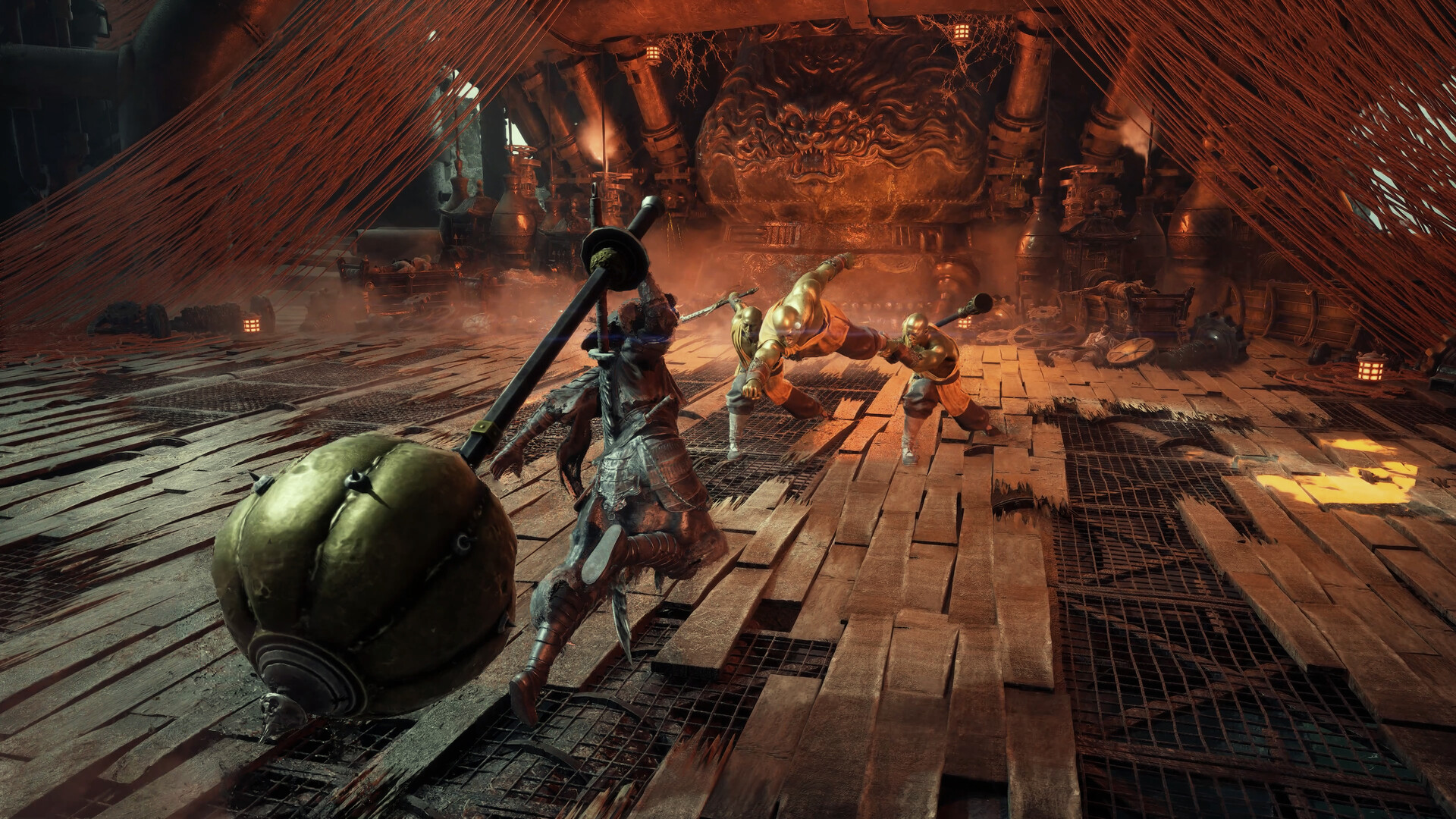
Kenji Tanigaki, the acclaimed action choreographer known for his work on the live-action Rurouni Kenshin film series, served as a lead choreography consultant on Phantom Blade Zero. Tanigaki brought decades of experience designing fight sequences for cameras, understanding how to make martial arts movements read clearly to an audience while maintaining technical authenticity.
Tanigaki's contribution was primarily in the design phase: working with S-GAME's combat designers to establish the visual language of each weapon's fighting style, making sure that attack animations convey power, speed, and technique through their motion rather than relying solely on visual effects. His film background was particularly valuable for the game's cinematic combat sequences and boss encounter choreography, where the camera work and movement design needed to achieve the visceral impact of a martial arts film.
The Rurouni Kenshin films are notable for their focus on realistic sword combat choreography, avoiding wire-fu excess in favor of grounded, physically plausible action. This sensibility aligns with S-GAME's design philosophy of starting from real technique and enhancing from there.
Master Yang and the Martial Arts Team
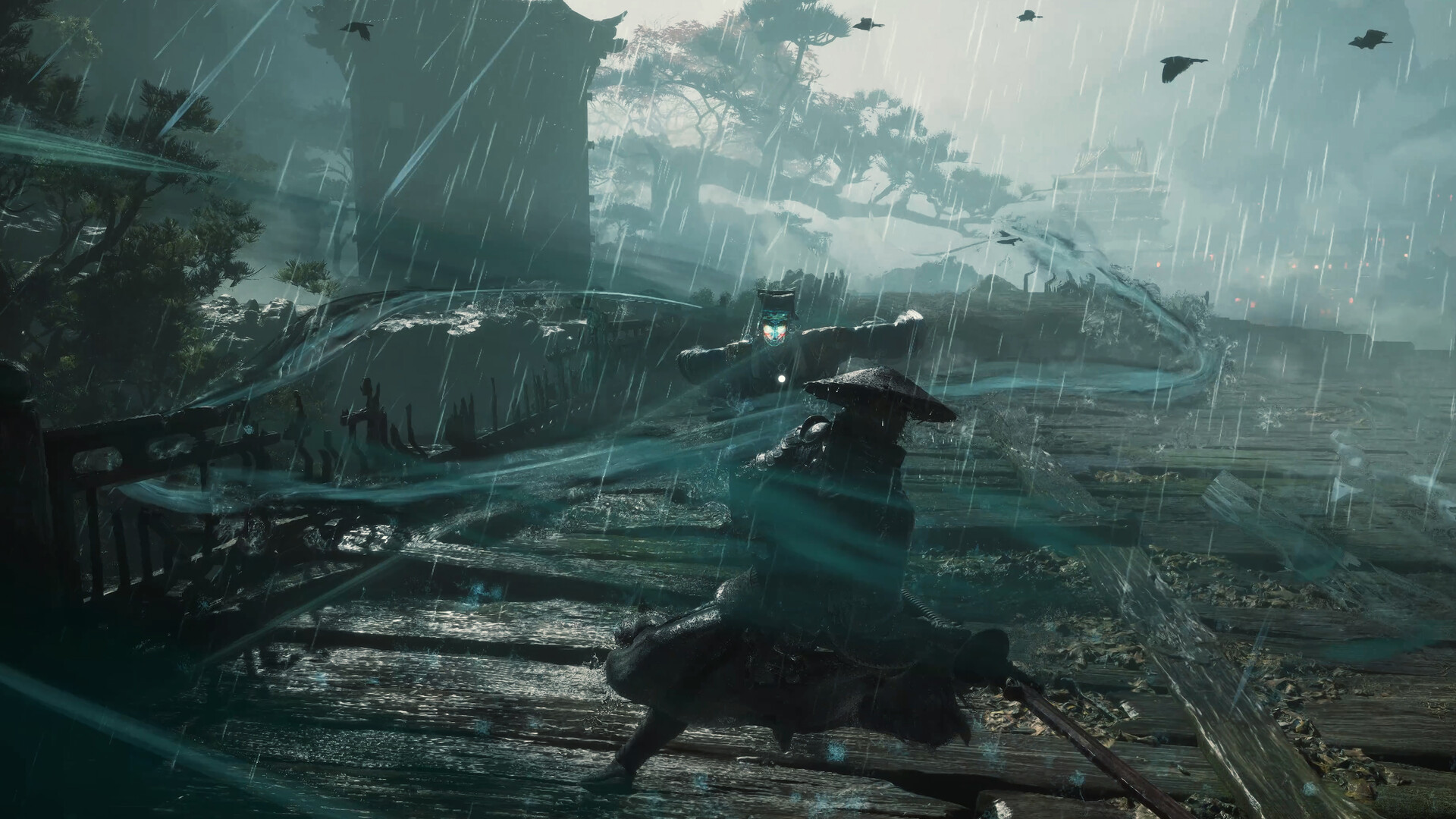
The primary motion capture performances were led by Master Yang, a martial arts master who coordinated a team of over 20 kung fu practitioners for the project. Each performer was selected for their expertise in a specific martial discipline, making sure that the game's diverse weapon types would each be animated by someone who genuinely understands how that weapon is used in real combat.
The team included practitioners of jianfa (Chinese straight sword), daofa (Chinese broadsword), gun (staff), qiang (spear), and various unarmed styles. For weapons without direct historical Chinese counterparts, such as the game's more fantastical designs, the team adapted techniques from the closest real-world analog and modified them to suit the weapon's fictional properties.
Item | Description |
|---|---|
Team size | 20+ kung fu practitioners |
Lead | Master Yang, martial arts master and coordinator |
Disciplines covered | jianfa, daofa, gun, qiang, and various unarmed styles |
Approach | each weapon type performed by a specialist in that weapon's real-world equivalent |
The Shanghai Motion Capture Studio
S-GAME built a purpose-built motion capture studio at their Shanghai headquarters specifically for Phantom Blade Zero's production. The facility uses an optical marker-based capture system capable of recording full-body motion at high frame rates, essential for capturing the fast, precise movements of martial arts forms.
The studio was designed with enough floor space for two-person combat captures, allowing the team to record attack and reaction animations simultaneously. This approach produces more natural combat flow than capturing attacker and defender separately and compositing the results. When Soul's sword strikes an enemy and the enemy staggers, both animations were captured in the same session with real performers reacting to real impacts.
Facial motion capture was handled separately using a head-mounted camera rig, allowing performers to deliver facial performances that match the intensity of their combat actions. This dual-capture approach (body and face in separate passes) allows each to be performed at maximum quality without the limitations that combined capture imposes.
Weapon-Specific Choreography
The defining principle of Phantom Blade Zero's motion capture pipeline is that each weapon type has its choreography designed and performed by a specialist in that weapon's discipline. The goal, as stated by director Soulframe Liang, is to make every weapon feel like it was designed by someone who actually fights with it.
This means that the game's straight sword has a distinctly different movement vocabulary from its broadsword, not just in the shape of the swings but in the footwork, the weight shifts, the guard positions, and the transitions between attacks. A martial arts practitioner watching the game can identify which discipline each weapon draws from, because the movements are performed by someone who trained in that discipline for years or decades.
The weapon-specific approach also extends to enemy and boss animations. Major boss characters have their own fighting styles captured by dedicated performers, giving each boss a distinct movement personality that the player can learn to read and respond to.
Key Details
Aspect | Detail |
|---|---|
Lead choreographer | Kenji Tanigaki (Rurouni Kenshin films) |
Martial arts lead | Master Yang, coordinating 20+ practitioners |
Facility | purpose-built motion capture studio in Shanghai |
Method | two-person simultaneous capture for attack/reaction pairs |
Philosophy | every weapon's animation performed by a discipline-specific specialist |
Donnie Yen and the Hong Kong Shoot
Donnie Yen joined as a creative consultant in 2023 and performs facial and motion capture for Mó Yuan. His long-standing action team worked on the project as well, which the studio describes as deep involvement in development rather than a consulting credit attached to one performance.
The capture work split across two sites. Body and facial capture ran at the Shanghai stage described above. Material that did not require capture, including Yen performing swordplay directly to camera for the August 2026 broadcast, was shot at a former Hong Kong television studio where he had worked more than thirty years earlier. Liang has framed the collaboration in terms of shared history rather than star casting, pointing to Yen having directed a game's cinematic opening two decades ago as evidence that the respect runs in both directions.
Casting the Two Leads
Neither lead performer came from a conventional casting process.
Soul is performed by a long-time player of the studio's earlier games. Liang approached him on the strength of his bearing rather than a reel, and he agreed to the role on one condition: that he read the script first. He joined after reading it.
Zuo Shang took much longer. Liang has said the difficulty was avoiding a generic silver-haired antagonist of the kind that becomes interchangeable once the hair is removed, and that more than twenty candidates were passed over. The performer eventually cast is a film-school student in Shanghai, born in the 2000s, with stage experience, and younger than the actor playing Soul despite the character being the more calculating and guarded of the two. He came to the studio himself to ask for a facial-capture audition, having noticed that Zuo Shang's costume echoed a design he recognised from the studio's earlier work.
Both performers played the public demo among the crowd at the 2025 Beijing event, unannounced. Liang has said he hopes performing in a large single-player game becomes a career path people want rather than an oddity, and that what drew him to the younger performer in the first place was simply that he was a player.