

Workstations
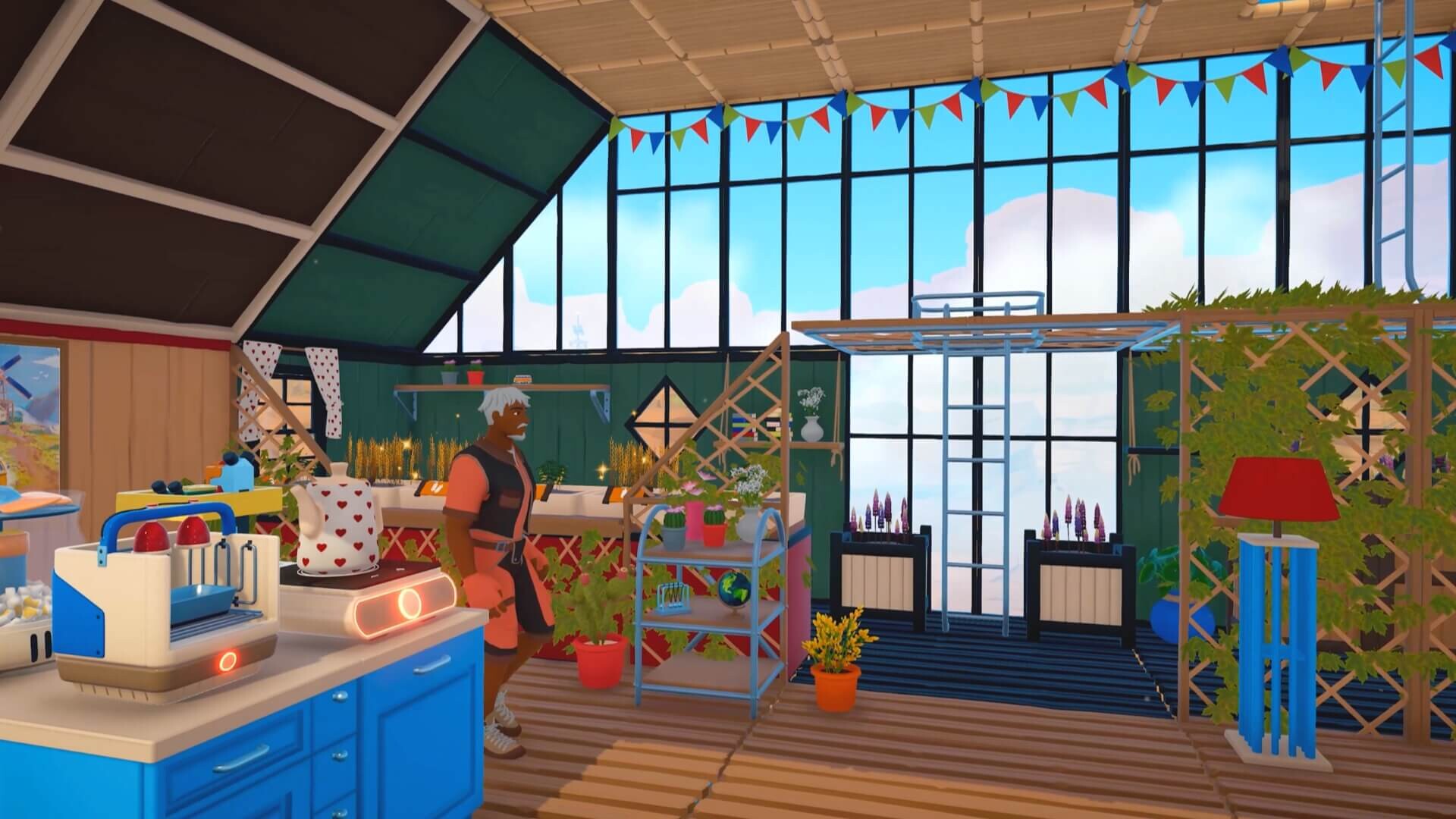
Workstations are buildable machines in Outbound that players place inside or on top of their camper van to process resources, craft items, prepare food, and generate power. Each workstation draws electricity from the van's shared battery and is unlocked through blueprints obtained at signal towers.
On This Page
Overview
Workstations are buildable machines that form the backbone of production in Outbound. Players place these units inside the camper van or on its rooftop to process raw resources into refined materials, craft tools and equipment, prepare food, and generate electricity. Every workstation draws power from the van's shared battery, so managing the energy system is essential to keeping production running smoothly.
New workstations are unlocked by downloading blueprints at signal towers scattered across the world. The van starts with a basic workbench bolted to the rear, and from there players expand their mobile workshop by discovering new blueprints, gathering materials, and building increasingly advanced machines.
Workstation Types
The table below covers the core stations most players build first. A complete list of all 25 production stations in the shipped build follows underneath it.
Workstation | Function | Key Details |
|---|---|---|
Workbench | General-purpose crafting station | Built into the rear of the van from the start. Accepts downloaded blueprints and produces tools, equipment, and other workstations. |
Sawmill | Converts logs into planks | A countertop unit that processes harvested wood into planks. Planks are required for building walls, floors, furniture, and other structural components. |
Recycler | Converts litter into download vouchers | Processes collected trash and litter into download vouchers. Vouchers are spent at signal towers to unlock new blueprints. |
Food Mixer | Prepares food and drinks | Processes raw ingredients into prepared meals and beverages such as tea. Prepared food restores health and provides other benefits. |
Generates electricity from organic fuel | The starting power source. Burns biodegradable materials to charge the van's battery. Works anywhere but consumes resources. Can eventually be supplemented or replaced by renewable sources. | |
Planter | Grows crops on the van | Allows players to plant and grow crops directly on the camper van. Requires a watering can (unlocked separately) to tend crops. |
Note: this list covers the workstations available in the current release.
All Production Stations
The shipped build has 25 production stations. Each one runs a fixed set of recipes and has a base craft time that applies to every job it takes. Full inputs for each recipe are on the Recipes List page.
Station | Recipes | Base Time | What It Does |
|---|---|---|---|
Assembler | 1 | 12s | Combines refined metal parts into Electronics |
Baking Oven | 2 | 15s | Bakes Bread and Pizza from Grain and Water |
Bamboo Splitter | 1 | 11s | Splits raw Bamboo into Bamboo Strips |
Battery Workstation | 2 | 24s | Builds Battery Components and Power Cells for storage upgrades |
Bio Burner | 3 | 10s | Burns Lumber, Light Lumber or Fibre into Electric Charge |
Bolt Press | 1 | 7s | Presses Scrap Metal into Bolts |
Bread Press | 2 | 7s | Turns a loaf plus a spread into Bread with Jam or Bread with Honey |
Cake Oven | 3 | 15s | Bakes Carrot Cake, Banana Bread and Corn Bread |
Coffee Maker | 1 | 7.5s | Brews a Cup of Coffee from roasted beans and water |
Cooking Pot | 4 | 15s | Cooks Mushroom Soup from any one of the four mushroom species |
Food Processor | 3 | 15s | Makes Jam, Tomato Sauce and Coconut Smoothie |
Glass Smelter | 3 | 10s | Smelts Common, Onyx or Red Minerals into Glass |
Metal Smelter | 4 | 10s | Smelts scrap and ore into Metal, Coarse, Hardened and Adamant Metal |
Mortar and Pestle | 2 | 8s | Grinds Flower Petals or Cactus Flower into Paint |
Nailer | 1 | 5s | Nails planks and metal into Reinforced Plank |
Recycler | 1 | 15s | Recycles Litter into Download Coupons |
Roasting Station | 3 | 3s | Roasts coffee beans and pops salty or sweet Popcorn |
Rubber Processor | 1 | 13s | Processes Natural Rubber into Processed Rubber |
Sawmill | 4 | 7s | Cuts each lumber type into its matching plank |
Sheet Press | 2 | 7s | Presses Sheet Metal and Casings |
Smasher | 4 | 10s | Smashes rocks into their matching mineral |
Spinning Wheel | 3 | 10s | Spins fibre into Thread, Durathread or Hyperthread |
Stuffing Maker | 1 | 10s | Turns Cotton into Fluff Stuffing for furniture |
Tea Station | 2 | 10s | Steeps Ginger Tea and Lavender Tea |
Weaver | 3 | 10s | Weaves thread into Cloth, Durable Weave or Strong Weave |
Base time is the duration of a single job with no upgrades. The Roasting Station is the fastest at three seconds and the Battery Workstation the slowest at 24, which matters when you are planning what to leave running while you drive.
Unlocking Workstations
Apart from the workbench, which comes pre-installed on the van, all other workstations must be unlocked through the blueprint system. The process works as follows:
Collect litter from the environment. Picking up trash serves the game's environmental theme while also providing a practical resource.
Feed litter into the Recycler to convert it into download vouchers (also called tickets or tokens).
Find a signal tower while exploring. These towers are scattered across every biome.
Spend vouchers at the tower's terminal to download a blueprint. Each tower offers multiple blueprint options, and the selection can vary between playthroughs. This keeps that no two runs feel identical.
Return to the workbench and craft the newly unlocked workstation using the required materials.
This loop ties the recycling system directly into progression. Players who spend more time cleaning up the world earn faster access to advanced equipment.
Placement and the Modular Building System
Workstations are placed using the building system, the same modular grid that handles walls, floors, furniture, and decorations. Players can position workstations inside the van's cabin for a compact, organized layout, or mount them on the rooftop if interior space is at a premium. The van supports multiple floors, so a dedicated crafting level is entirely possible.
Each workstation is a physical object that occupies space in the van. Planning the layout matters: placing related workstations near each other streamlines production, while a cluttered arrangement can make it harder to navigate the interior during a busy crafting session.
Power Draw
Every workstation that processes materials draws electricity from the van's shared battery. The camper van's electric motor, lights, and appliances all share the same battery, so running several workstations at once increases total consumption. If the battery drains completely, powered equipment shuts down until power is restored.
Early in the game, the bio burner is the only way to charge the battery. It burns organic materials like wood and plant matter, which makes it reliable but resource-intensive. As players progress, they can unlock renewable power sources through signal tower blueprints:
Solar panels generate electricity during daylight hours.
Wind turbines produce power in windy conditions.
Water generators harness flowing water for a steady charge.
A well-balanced energy grid combines multiple renewable sources so the battery stays topped up regardless of weather or time of day. Surplus power feeds into reserves, keeping workstations operational overnight or during high-consumption periods. For full details, see the energy system article.
Workstation Displays
Rather than using traditional menu-based interfaces, each workstation has a built-in display screen that shows its current status. The developers at Square Glade Games designed these displays to keep information visible at a glance without pulling players out of the game world. A workstation's display typically shows what item is being processed, how long it will take, and what inputs are needed.
Multi-Stage Processing
Many items in Outbound cannot be made in a single step. Advanced crafting recipes require materials that have already been processed at one workstation before they can be used at another. For example, raw logs must first pass through the sawmill to become planks before those planks can be used at the workbench to build furniture or structural pieces.
This multi-stage approach encourages players to think about their production pipeline. Having multiple workstations placed in a logical order inside the van reduces the time spent shuffling materials back and forth.
Automation
As players unlock more advanced technology, they gain the ability to connect workstations together into production chains. Rather than manually moving output from one machine into the next, automation lets workstations feed their output directly into downstream machines. This frees up time for exploration, farming, cooking, or simply enjoying the scenery.
Setting up an efficient automated line is one of the deeper systems in Outbound. Players who invest in automation can keep their van producing materials while they head out on foot to forage, gather litter, or discover new areas of the map.
Tips
Build a recycler early. Download vouchers are needed to unlock every other workstation, so the sooner the recycler is up and running, the faster overall progression becomes.
Keep an eye on the battery indicator. Running too many workstations at once without sufficient power generation will drain the battery quickly.
Place the sawmill and workbench close together. Planks are one of the most frequently used materials, and a short path between these two stations saves time.
Explore off the main road to find signal towers. Many towers are located away from primary routes, and they may offer blueprints that are not available at towers closer to the road.
Lock download vouchers in your backpack before using the depositing station. This prevents them from being stored automatically and ensures they are available when you reach a signal tower.