
Combat System
Comprehensive guide to Honor of Kings: World's real-time action combat system, covering all core mechanical pillars, combo chaining, air vs ground skill variants, skill paths, perfect dodge counters, posture break, fatal stance, super armor, and the full input system.
On This Page
Overview

Honor of Kings: World is a real-time action RPG whose combat system combines the dual-Resonance swap mechanic with a suite of verified combat pillars: perfect dodge counters, red-light boss attacks (红光招式) that must be interrupted with stun skills, a posture/tenacity bar that controls boss stagger, a break state with an execution finisher bonus, and body-part targeting on large enemies. All of these pillars are confirmed by current community data.
On the surface, the combat looks approachable, but there is a high skill ceiling underneath. The difference in damage output between a skilled player who chains combos optimally and an unskilled player pressing the same buttons is significant. The system has been compared to a simplified Devil May Cry, with flexible, combo-focused vertical gameplay that includes knock-ups, air combos, and knockdowns. Combos in Honor of Kings: World are described as more flexible than those in Wuthering Waves, with greater freedom to mix ground and aerial attacks in creative sequences.
Core Mechanical Pillars
The following combat systems are all confirmed in the launch build as of April 10, 2026.
Resonance System and Dual-Class Swap
Players equip two Resonances (共鸣) at once and swap between them in real time during combat with no animation lock. See Resonance System for the core mechanic. The three roles in English are Tank, Assault, and Support, corresponding to the Chinese 对抗 (Confrontation), 强攻 (Offensive), and 辅助 (Support).
Combo Chaining Across Class Swaps
One of the most powerful aspects of the dual-Resonance system is the ability to chain combos across class swaps. Players can begin a combo string with one flow style and then swap to their second Resonance mid-combo to extend it further. Because the swap has no animation lock, the transition is seamless and allows for creative combo routes that would not be possible within a single class. Mastering swap timing to maximize damage windows, particularly during posture break states, is one of the key skill differentiators between average and advanced players.
Perfect Dodge (完美闪避)
launch coverage describes the mechanic: "看到BOSS要打你的一瞬间按下闪避,就能触发'完美闪避'。不仅不掉血,还能自动打出一发反击!" ("When you see the boss about to hit you, press dodge at that exact moment to trigger 'Perfect Dodge.' You take no damage AND automatically fire off a counterstrike!") 's combat mechanics feature lists it alongside block, precise defense (格挡与精防), and red-light counters (红光妖反). The state that follows a perfect dodge includes an automatic counter and opens a damage window, but TiMi has not published an official proper-noun name for the state itself.
Enhanced Attacks After Perfect Dodge
After executing a perfect dodge, pressing the light attack button (left click) performs a special dodge counter, referred to as an enhanced attack. This enhanced attack is distinct from the automatic counterstrike triggered by the perfect dodge itself. The dodge counter can proc additional combo abilities depending on the active Resonance, creating opportunities to transition directly from a defensive action into an extended offensive combo string. Learning to chain perfect dodge into enhanced attack into full combo is a fundamental skill for high-level play.
Red-Light Attacks (红光招式)
Bosses use special telegraphed attacks marked with a red glow that cannot be dodged or parried through normal means. primary text describes: "BOSS新增了'红光招式',需要玩家看准时机,使用带昏厥标签的技能反制BOSS的红光招式" ("Bosses have added 'red-light attacks,' which players must interrupt by using skills with the stun tag to counter the boss's red-light attacks"). Successfully countering a red-light attack opens a burst damage window; failing to counter results in heavy damage. refers to the counter mechanic as 红光妖反 (red-light yokai-reversal), a term borrowed from Nioh / Wo Long combat traditions.
Posture / Tenacity Bar
Every significant enemy and boss has a posture or tenacity bar (韧性条 / Tenacity Bar; 破势条 / Break Momentum Bar in some s) displayed beneath their health bar. Sustained attacks, successful perfect dodges, and special posture-damage abilities fill this gauge. When the gauge reaches its maximum, the enemy enters a break state.
Break State and Execution (处决)
"持续攻击BOSS可以把它的'破势条'打空。一旦破势条空了,BOSS会直接倒地陷入长时间的'破势状态',这时候你打它伤害更高" ("Continuously attacking the boss empties the break bar. Once the break bar is empty, the boss collapses into a prolonged 'break state' during which damage to it is increased"). A strong follow-up attack during break state can trigger 处决 (Execution / Zhujue) for massive bonus damage. This is the signature high-value combat window and is central to coordinated co-op boss fights.
Score-Based Burst Phase
During a posture break, a sword icon appears above the boss's HP bar, signaling the start of a burst phase. The entire team must spam skills and ultimates during this window to maximize damage. The game tracks a score based on total team damage dealt during the burst phase, giving players a clear metric for how effectively they capitalized on the break state. In co-op encounters, coordinating burst rotations (ensuring all players have their ultimates and high-damage abilities ready for the break window) is essential for achieving top scores and clearing difficult content efficiently.
Body-Part Targeting
Large enemies and bosses have multiple targetable body parts, including limbs and weak points. Sustained damage to specific parts can inflict stiffness or expose weak points. Meng Ya's Wingman Response drone (响应僚机) is the clearest example of a kit designed around this system: the drone marks enemy body parts and fires on player command.
Air vs Ground Skill Variants
A distinctive feature of Honor of Kings: World's combat is that the same ability can behave completely differently depending on whether it is used on the ground or in the air. For example, one confirmed ability functions as a knock-up when activated on the ground but becomes an AoE stun when activated in the air. This dual-function design multiplies the effective number of tools available to each class and rewards players who master vertical positioning. Launching an enemy into the air, then following up with an air variant of a skill that has a different effect than its ground version, is a core part of advanced combo routing.
Skill Paths
Each class's skills can be customized through a skill path system. Players choose different paths for the skills on each Resonance, and these choices meaningfully change how the class plays. Some paths alter the usage of a skill entirely. For example, a chakram skill can be configured as either a disengage tool (creating distance from the enemy) or a heavy ranged hit (dealing significant damage from afar). Other paths do not change the skill's function but instead boost passive stats, such as increasing critical rate or elemental damage. This system allows two players using the same Resonance to have noticeably different playstyles and combo routes depending on their path selections.
Full Input System
Honor of Kings: World's combat features approximately 24 total inputs when accounting for all ground and air variants. The full input set includes:
Input | Description |
|---|---|
3 Abilities | Each Resonance has three active abilities, each with ground and air variants |
Ultimate | A high-damage ability on a longer cooldown |
Light Attacks | Standard melee combo string (left click) |
Charged Attacks | Hold attack for a heavier hit with different properties |
Class Swap | Instantly switch to the other equipped Resonance mid-combat |
Dodge | Standard evasion; becomes Perfect Dodge with precise timing |
Enhanced Attack (Dodge Counter) | Left click after a perfect dodge for a special counter attack |
Teleport on Perfect Dodge | Some Resonances teleport to a new position on a successful perfect dodge |
Stance Break Skills | Stun-tagged abilities used to interrupt red-light attacks |
Huanling Summon | Summon the equipped companion spirit to fight alongside the player |
Combo Break (PvP) | Escape from an opponent's combo string in PvP matches |
Each of the three abilities has a different effect when used on the ground vs in the air, effectively doubling the ability count. Some classes have additional unique inputs such as hold-to-charge skills, aerial flight, or active parry stances (as seen with Kai's Blade Parry).
Combo System
The combo system in Honor of Kings: World is designed around flexibility. The left mouse button's skill output changes after landing certain abilities, creating natural combo branches. Enhanced attacks (basic attacks performed immediately after a dodge) proc additional combo abilities that differ from the standard light attack chain. This means that a player who weaves dodges into their offense has access to a wider set of attack options than one who simply mashes the basic attack button.
Key combo mechanics include knock-ups (launching enemies airborne), air combos (chaining attacks on airborne enemies), and knockdowns (slamming enemies back to the ground). The vertical dimension adds substantial depth: a skilled player can launch an enemy, swap Resonances mid-air to chain a different class's air abilities, then slam the enemy down and continue with ground attacks. Some classes have unique combo tools like holding skills for extended effects, short aerial flights for repositioning, or parry counters that open up exclusive follow-up attacks.
Super Armor
Different attacks in Honor of Kings: World carry different levels of super armor, which determines whether the attacker can be interrupted during the attack animation. Heavy attacks and certain ability casts may have high super armor, allowing the player to tank incoming hits without flinching. Lighter attacks typically have no super armor and can be interrupted easily. Understanding which of the enemy's attacks have super armor, and which of your own attacks can power through interrupts, is critical for both PvE boss fights and PvP matches. In PvP specifically, recognizing when an opponent has super armor on their current attack helps players decide whether to press an offensive or back off and wait for an opening.
Fatal Stance
When a character's HP reaches zero, they do not die immediately. Instead, they enter a state called Fatal Stance. While in Fatal Stance, the character can still take actions briefly. If the character in Fatal Stance lands a sufficiently powerful hit on an opponent, it kills that opponent regardless of how much HP the opponent has remaining; both characters die simultaneously. Characters can also be killed outright by fatal damage when at extremely low HP, bypassing the Fatal Stance state entirely. This mechanic adds tension to close fights in both PvE and PvP, as a player who appears to have already lost can still take their opponent with them if they land one more big hit.
Defensive Options by Attack Type
Attack Type | Defense |
|---|---|
Standard melee strike | Perfect dodge; parry available on certain Resonances |
Red-light attack (红光招式) | Stun-tagged skill interrupt; cannot be dodged or parried |
AoE slam / area denial | Movement / perfect dodge; parry does NOT work |
Grab / grapple | Movement only |
Kai: The Parry Specialist
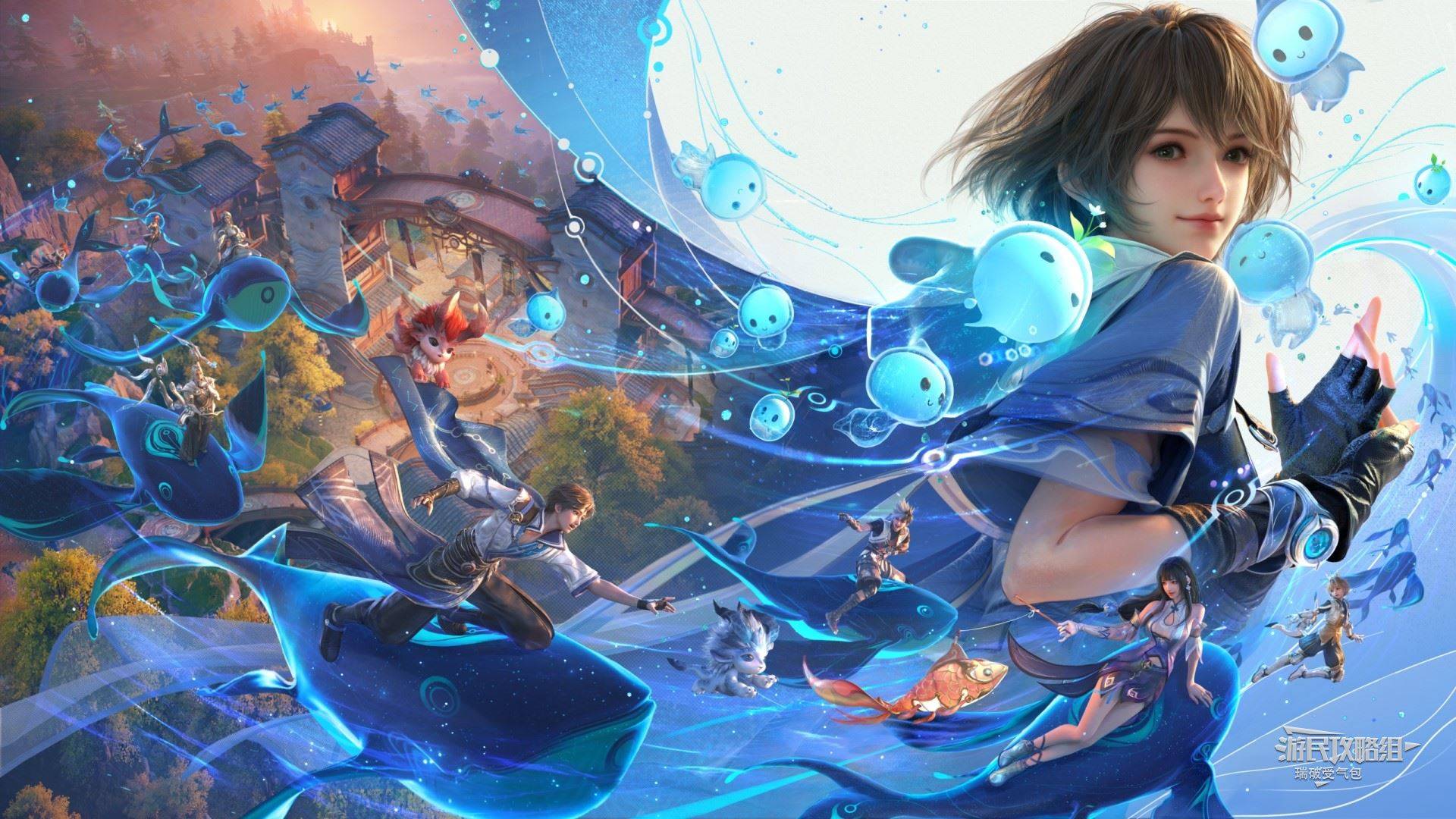
Among the S0 launch rosterKai is the only Resonance with a kit explicitly built around parrying. His signature ability is 锋刃相抵 (Blade Parry), a 0.5-second parry stance that catches attacks and unlocks 极刃反击 (Extreme Blade Counter). This is distinct from the universal perfect dodge mechanic that all Resonances have access to. Earlier English coverage used the term "Blade Resonance" for this move, but the term is not in any primary source and should not be used.
Summoned Spirits (唤灵)
Honor of Kings: World has a companion system called Huanling (唤灵, Summoned Spirits) where the player's bracelet binds creatures that fight alongside them. Earlier English coverage sometimes described this as "AI companions" for solo play, but 唤灵 is a separate system from the party-matchmaking system. The game supports up to 4-player co-op (confirmed by current community data.
Overseas Alpha Combat Confirmation
The overseas PC Closed Alpha confirmed the combat pillars above for an international build and surfaced a few details worth recording alongside them. The official feature breakdown described the alpha combat as skill-based, with precise parries, perfect dodges, and highly responsive action. In hands-on play, melee and swordsmanship-identity styles lean on parrying, while ranged and magic-identity styles rely on perfect dodge and spacing as their main defensive tools.
Because each equipped style carries its own health bar, swapping stances mid-fight doubles as a survival lever in the hardest encounters, not just a damage-routing tool. The boss loop in the alpha matched the launch build: depleting a boss’s posture bar staggers it into a window of increased, uninterrupted damage, and players choose whether to spend a special the moment it charges or hold it for that stun window.
Avoiding boss attacks was repeatedly described as the hardest part of the fight. Beams can be dodged on the ground, but lateral sweeps and ground-burn hazards require jumping; aerial combos extend airtime, and a positional tether repositions the player out of danger. One demo boss was built around the Chinese opera art of bian lian (face-changing): mid-fight it swapped face, voice, and attack pattern, a showcase of the mythology-driven boss design.
Cooperative Boss Encounters
The alpha included cooperative multiplayer boss encounters with evolving mechanics, built around mythological creatures reimagined for action gameplay. PvE supported solo or cooperative party sizes of roughly two to four players, with the same posture-break and burst-window loop scaling into team play, where coordinating burst rotations during the break window is the key to clearing efficiently.
Skill Ceiling and Mastery
While the basic controls are straightforward (light attack, dodge, three abilities, ultimate), the true depth of Honor of Kings: World's combat emerges from the interaction between all of these systems. Mastering perfect dodge timing, learning which skills have air vs ground variants, choosing optimal skill paths, chaining combos across Resonance swaps, managing super armor interactions, and capitalizing on posture break burst phases all contribute to a combat experience with a very high skill ceiling. The damage difference between a player who understands these systems deeply and one who does not is substantial, even when using identical characters and equipment.
Two-Character Party Swap and Build Switching
Unlike Genshin Impact, which rotates four characters through its active party, Honor of Kings: World runs with only two heroes active at a time. Players tap a dedicated swap input to flip between the two, and the second hero arrives on the field almost instantly, letting combo strings continue across the swap. This tighter two-slot rotation keeps the camera focused on a single duo rather than splitting attention across a full squad, and it forces loadout planning to center on how the pair's kits dovetail rather than on how four mixed elements stack.
A single hero is not locked into a single role. Each character can carry two separate builds, such as a support setup and a DPS setup, and the player can toggle between them in the middle of a fight. This means a duo that starts a boss as tank-plus-DPS can flex into support-plus-DPS for a heal window and back again without leaving the encounter. The system pairs naturally with the Resonance System and the two-hero party cap, because swapping either the active hero or the current build opens a short burst window while cooldowns reset off-screen.
Aerial Combat Layer
Combat is not limited to ground stance. Heroes can take the fight into the air, launching enemies up, leaping after them, and chaining airborne strings before landing. Most movesets have distinct air and ground skill variants, and many fights reward a player who can mix the two layers, for example knocking a boss off balance with a ground combo and then finishing the string mid-air to avoid a ground-level sweep.
Parry-Focused Tank Role
Vanguards, the game's tank archetype, do not tank through raw damage absorption. Their defensive tool is the Parry System. A correctly timed parry deflects the incoming hit, opens a counter window, and builds toward a Posture Break on the enemy. Chinese beta testers repeatedly flagged Vanguard as the hardest role to learn because it asks the player to stand in front of boss telegraphs and read them on rhythm, but they also described it as the most satisfying role once the timing clicks. The parry cadence feels closer to a Souls-style defensive loop than to an MMO tank's cooldown rotation.
Monster Hunter Plus Assassin's Creed Feel
Multiple hands-on previews converge on the same comparison for the overall combat feel. The boss-study loop of learning tells, dodging through specific wind-ups, and exploiting short vulnerable windows pulls from the Monster Hunter playbook. The tight attack-timing layer, with clear swing arcs and readable counter beats, reads closer to Assassin's Creed. The result is an action cadence that is more deliberate than a fast character-action game but more reactive than a traditional MMO: players are expected to read boss patterns on the fly, not simply press skills off cooldown.
Charging System on Attacks
Auto-attacks and light skills build a charge meter over the course of a fight. Once the meter is full, the hero can release a stronger charged skill that deals elevated damage and often carries added utility such as a knockdown or a wider hitbox. Ranged DPS heroes accumulate charge especially efficiently because they can keep attacking from a safe distance, while melee heroes trade that uptime for stronger burst windows. This charging loop ties directly into The Flow and Primal Flow pacing: a well-paced rotation finishes its charge just as an enemy enters Vulnerable Statestacking charged damage on top of the break-window multiplier.
Sekiro-Style Posture Loop
Every enemy carries a posture bar, visible as a white bar under its health bar, that depletes from parries, heavy attacks, and charged skill hits. Draining the bar to zero triggers a break state in which the target is stunned and takes increased damage from every source. Vanguards chip the bar down faster than other roles thanks to their parry-heavy kits, which reinforces the two-character party plan of pairing a Vanguard with a burst DPS so the break window lines up with a fully charged skill from the damage dealer. For the full break mechanics see Posture Break System and Break Momentum Bar.