

Overview
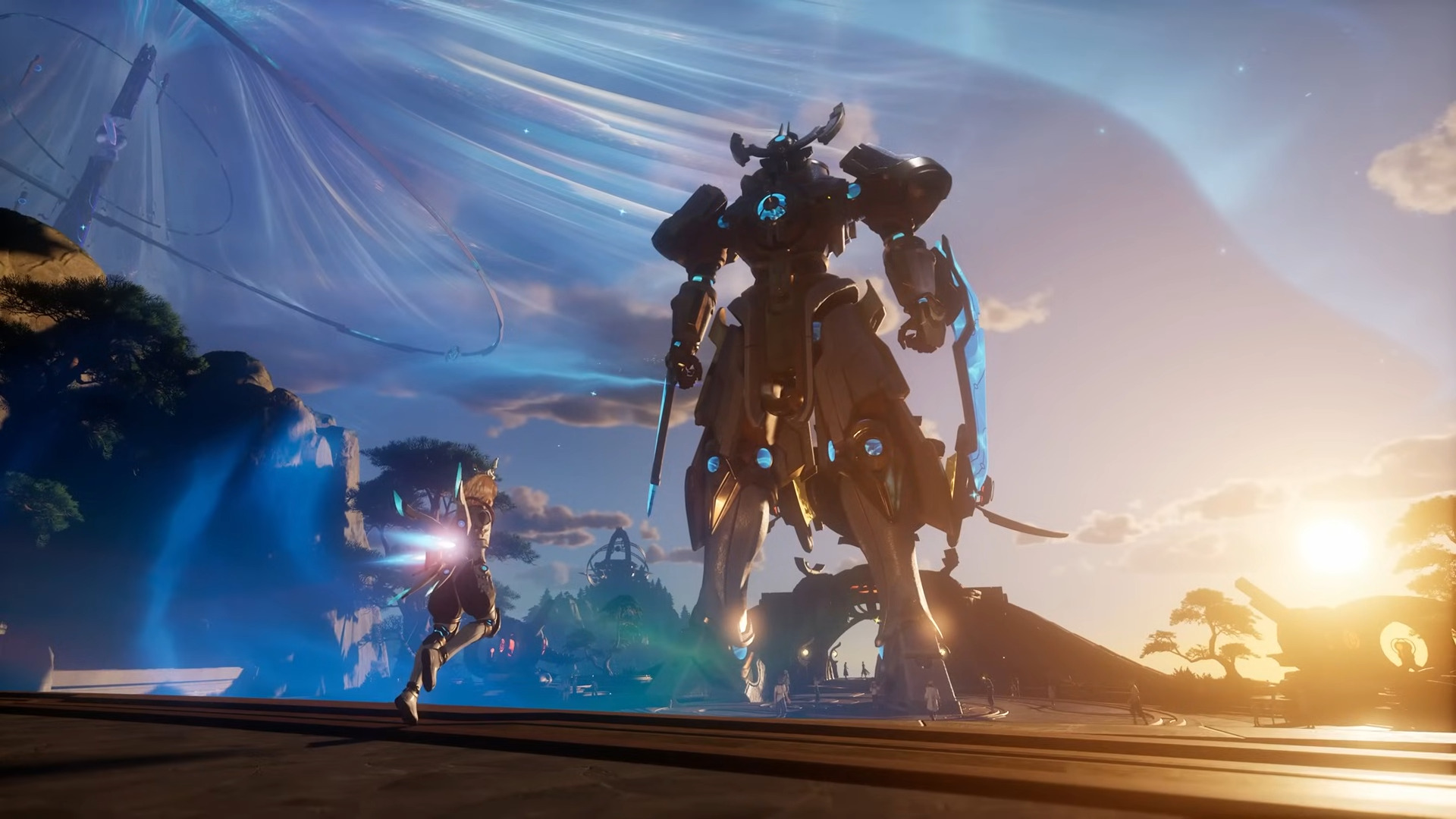
Honor of Kings: World places heavy emphasis on cooperative play, and its party and matchmaking systems are designed to make grouping up as frictionless as possible. Whether players want to team up with friends or find strangers for a dungeon run, the game provides multiple tools to streamline the process. From rank-based matchmaking to innovative features like the link mechanism and one-click gather, every aspect of the party system is built to reduce downtime and keep players in the action.
Rank-Based Matchmaking
The matchmaking system uses a rank-based algorithm that considers player level, gear score, and recent performance when assembling groups for instanced content. This ensures that players are matched with others of roughly comparable capability, reducing the chance of mismatched groups where one player significantly outgears or undergears the rest. The system applies to dungeon queues, raid matchmaking, and PvP modes.
For open-world cooperative content, matchmaking is less restrictive. Players can freely group with anyone in the same zone regardless of level difference, though the game applies level-scaling to keep encounters challenging for all participants. This open grouping philosophy encourages spontaneous cooperation during world events and open-world boss encounters.
Link Mechanism
The link mechanism is one of Honor of Kings: World's most distinctive party features. When two players are linked (either through a friends list connection or a party setting), approaching a linked teammate in the open world automatically joins their current mission or activity. There is no need to manually accept an invitation or navigate through menus. The system dynamically adjusts rewards when a linked player joins mid-mission. This keeps that both participants receive appropriate loot and experience rather than splitting a fixed pool.
This approach removes one of the most common friction points in cooperative open-world games: the need to coordinate mission states before playing together. If a linked friend is fighting a world boss, simply running toward them is enough to join the encounter. The link mechanism was specifically designed to make cooperative play feel natural and spontaneous rather than requiring constant communication and menu navigation.
One-Click Gather
The one-click gather function allows a party leader to teleport all squad members to a designated location instantly. Rather than waiting for everyone to manually travel to a dungeon entrance or meeting point, the leader selects a location and triggers the gather command. All party members receive a prompt, and upon accepting, they are transported to the leader's position.
This feature dramatically reduces the time spent waiting for party members to assemble, which is especially valuable when group members are spread across different regions of the map. It also serves a practical role during time-sensitive activities like world boss spawns, where arriving quickly can make the difference between participating and missing the encounter.
Post-Battle Team Statistics
After completing instanced content such as dungeons, raids, or PvP matches, the game displays detailed team statistics for all participants. These breakdowns include damage dealt, damage taken, healing provided, crowd control applied, and other metrics relevant to the encounter. The statistics screen helps players understand their contribution to the team effort and identify areas for improvement.
The statistics display is informational rather than competitive. It does not publicly rank players by performance or penalize lower-performing members. Instead, it is a learning tool that encourages players to experiment with different Flow style combinations and team compositions to improve their collective results.
Like Notification System
At the end of group content, players can send a "like" to teammates whose play they appreciated. Receiving likes accumulates toward a social reputation score that is visible on the player's profile. The like system is entirely positive (there is no dislike option) and provides a lightweight way to acknowledge good teamwork, skilled play, or helpful behavior.
Frequent like recipients may gain access to minor social rewards such as profile badges or cosmetic titles. The system encourages positive social interactions and gives players a reason to be helpful and cooperative beyond the inherent gameplay rewards.
Party Size and Composition
Standard parties support up to four players for most open-world and dungeon content. Raid content scales to eight players. The game does not enforce role restrictions (tank, healer, DPS), but the dual-class system and diverse Flow styles naturally encourage varied team compositions. Players who bring complementary styles, such as pairing ranged DPS with a support healer, will generally find group content more manageable than teams of four identical builds.
Matchmaking Rules by Content Mode
The S0 build treats matchmaking as a per-mode decision rather than a global queue. Some content has dedicated 4-player matchmaking; other content intentionally does not, which shapes how players pre-organize their evening sessions. The table below covers the confirmed behaviors from the dungeons and raids article and the April 2026 preview footage.
Mode | Matchmaking Stone? | Group Source |
|---|---|---|
Scourges (weekly boss rush) | Yes | 4-player auto matchmaking plus pre-mades |
Unrealms (weekly dungeon) | Yes | 4-player party, matchmaking or pre-made |
Mystic Ruins (featured Unrealm) | Via Unrealms | 4-player party, pre-made recommended |
Mighty Foes (world bosses) | No | Solo, manual invite, or nearby players on sight |
Battle Echoes (daily mini dungeons) | Optional | Up to 4, often soloed with AI |
Dream Walker Odyssey (daily randomized) | Optional | Up to 4 per run |
Elite Runs (world level 5+) | No | Solo or manual co-op, 24h respawn |
Awakening Challenge | No | First-clear event, solo or small group |
4-Player Party Cap (Verified)
The global party cap across every piece of multiplayer content in S0 is 4 players. There is no 8+ player raid queue, no large alliance format, and no plan to ship larger group content for the first season. The cap applies equally to Scourges, Unrealms and Nightmare-tier runs, Mighty Foes, Battle Echoes, and Dream Walker Odyssey. Groups with fewer humans backfill the remaining slots with AI companions.
Why Mighty Foes Skips Matchmaking
Mighty Foes is deliberately designed as open-world contact content rather than instanced queue content. Because the encounter lives in the overworld, the devs opted to let nearby players opt in on sight or through a manual invite rather than forcing players into a 4-player lobby. This keeps the weekly world boss loop ad-hoc, which also explains the 3 chest per week reward cap: without a lockout, the structural cap has to come from the reward side.
August 6, 2026 Role Rework
The August 6, 2026 update added a second classification layer for Resonances. The three broad trait labels used since launch (Assault 强攻, Confrontation 对抗, Support 支援) were joined by five job position labels that mirror classic team roles: Warrior (战士), Assassin (刺客), Mage (法师), Marksman (射手), and Support (辅助). The official notice is explicit that the five were added on the basis of the existing three rather than in place of them. The two Support labels are written differently in Chinese and are not the same thing: the trait role is 支援, the job position is 辅助.
Matchmaking now asks for a first-choice and a backup position. Team assembly still works from the three trait roles rather than the five job positions, with the system prioritising a party that covers Confrontation, Support and Assault; if a first-choice position cannot find a team for a long time, the backup position takes over automatically. Joining a run already in progress assigns a damage slot by default, and switching the active Resonance updates the assigned position on the spot.
The rework answers a long-running complaint about scrambled team compositions in matchmade dungeon groups, where parties could end up with no frontline or no support at all. Competitive ladder rules are covered separately in PvP System.
Which Layer Does What
The two classification layers are related but not interchangeable, and the official announcement draws the line explicitly.
Layer | Chinese term | What it is for |
|---|---|---|
Job position | 职业定位 | Describes a Resonance's combat characteristics, shown on the Resonance itself |
Matchmaking position | 匹配定位 | Assigns duty when a party is being formed for instanced content |
The practical consequence is that a Resonance's job label does not by itself decide which slot it fills in the party finder. A player reading a Resonance as a Mage should not assume the matchmaker treats it as the party's damage requirement; that decision runs through the trait layer instead.