

Overview
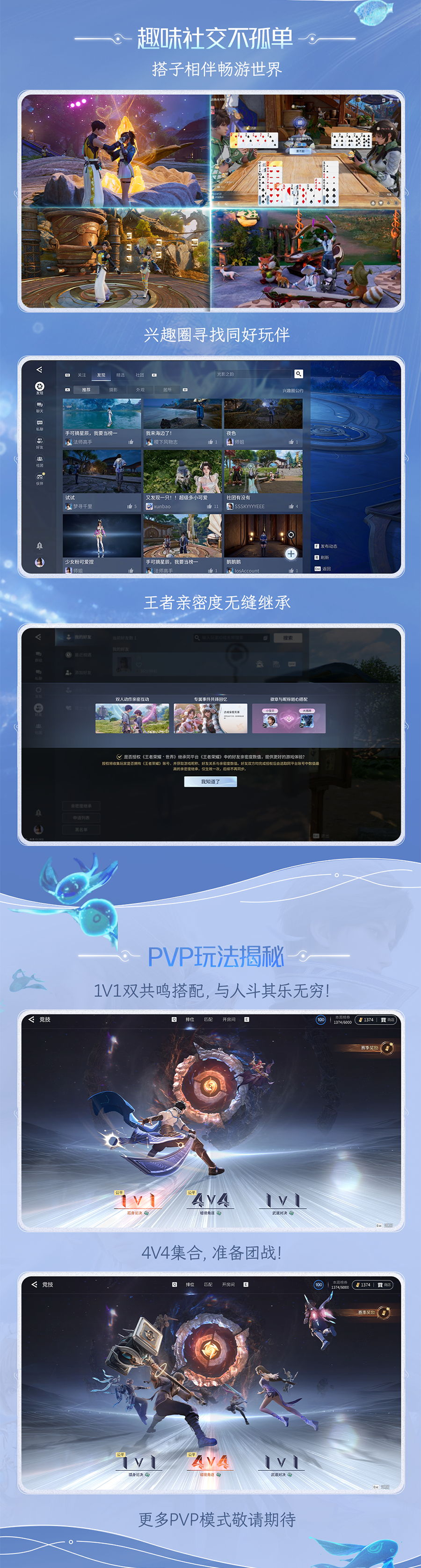
Honor of Kings: World launched on April 10, 2026 with a multi-mode PvP system confirmed by current community data. PvP sits alongside the open-world PvE content as a core pillar of the game, offering players several distinct competitive formats ranging from 1v1 skill-based duels to 4v4 objective-based team fights. Unlike many free-to-play action RPGs, Honor of Kings: World's PvP modes use stat normalization or player equipment depending on the mode, which means PvP outcomes are not dominated by time investment. All PvP takes place in dedicated arenas; there is no open world PvP. The combat system carries over in full to PvP, including perfect dodge counters, Resonance swapping, and skill paths. Players can also earn PvP-exclusive currency used to purchase additional heroes and Resonances from the PvP shop.
Gear Equalized vs Gear Reliant Queues
A key design decision in Honor of Kings: World's PvP is the separation between gear reliant and gear equalized queues. In gear reliant modes, players bring their own equipment, runes, and progression stats into the match. In gear equalized modes, all participants receive standardized loadouts so the fight is 100% fair and determined entirely by player skill. The equalized queue is particularly important for competitive play and ranked ladder integrity, since it eliminates any advantage from time investment or spending.
Queue Type | Equipment | Best For |
|---|---|---|
Gear Reliant | Player's own equipment and runes | Players who want their PvE progression to carry over into PvP |
Gear Equalized | Standardized loadouts for all players | Competitive players seeking a pure skill-based experience |
Confirmed PvP Modes
Mode | Chinese Name | Format | Description |
|---|---|---|---|
Wudao Duel | 武道对决 | 1v1 Ranked (Gear Reliant) | Top-rank duel mode using the player's own equipment and runes; grants top-rank exclusive cosmetics as rewards |
Gushen Lunjue | 孤身论决 | 1v1 Fair Fight (Gear Equalized) | 1v1 mode with standardized loadouts to emphasize pure player skill; the primary competitive 1v1 mode |
Xiezhan Zhengkui | 协战争魁 | 4v4 Tactical (Gear Reliant) | Team PvP with map objectives and a destroy-enemy-base win condition; also referred to as 墟境角逐 in some material |
Quick Match 1v1 | Casual 1v1 | Quick matchmaking for individual practice with crystal destruction win conditions | |
Quick Match 3v3 | Casual 3v3 | Small team PvP with jungle resources on some maps | |
Quick Match 5v5 | Casual 5v5 | Larger team PvP with crystal destruction win conditions |
1v1 Arena
The 1v1 Arena is the simplest PvP format: two players face off in a dedicated arena with no map objectives or team coordination involved. It is a pure test of individual combat skill, including spacing, combo executionperfect dodge timing, and Resonance swap management. Both the Wudao Duel (gear reliant, ranked) and Gushen Lunjue (gear equalized, ranked) modes use the 1v1 Arena format. Both modes have their own separate ranked ladders, so players can climb independently in each.
4v4 Tactical Mode
The 4v4 Tactical Mode (Xiezhan Zhengkui) is the primary team-based PvP format. Rather than a straightforward deathmatch, this mode features objectives that teams must complete to win. One confirmed objective type is an escort/payload pushing game mode similar to the escort format seen in other team-based multiplayer games. Teams push a payload toward the opposing base while the defending team tries to stop them.
The 4v4 mode also includes an in-match progression system. During a running game, players can upgrade their skills based on kills and objective completion, adding a layer of strategic decision-making about which abilities to prioritize as the match progresses. Team coordination, role selection, and objective awareness matter as much as raw combat skill in this format.
Custom Rooms
Players can create custom rooms from the very beginning of the game. Custom rooms allow players to set up private matches with specific rules, making them useful for organized practice sessions, community tournaments, and scrimmages between guilds or friend groups. Because custom rooms are available from the start, competitive communities can begin running their own tournaments without waiting for an official tournament mode.
Combo Break Ability
In PvP, players have access to a Combo Break ability that lets them escape from an opponent's combo string. This mechanic functions similarly to the Serene Breeze system in Wuthering Waves, providing a defensive option when caught in a long combo. The Combo Break has a lower cooldown than comparable mechanics in other action RPGs, which means players can use it more frequently. However, the ability must be used tactically; burning it too early leaves the player vulnerable to a follow-up combo with no escape option. Skilled players bait out the opponent's Combo Break before committing to their longest and most damaging combo strings.
Stat Normalization vs Player Equipment
Different PvP modes use different equipment models. Wudao Duel (武道对决) uses the player's own equipment and runes, making progression and gear investment meaningful in ranked play. Gushen Lunjue (孤身论决) uses standardized loadouts so that pure player skill is the deciding factor. The 4v4 Xiezhan Zhengkui mode uses player equipment but also incorporates map objectives, so strategic play and team coordination matter alongside raw combat ability.
Ranked Systems and Rewards
Both the 1v1 and 4v4 modes have full ranked systems behind them, with separate ladders and seasonal rankings. The Wudao Duel mode grants top-rank exclusive cosmetics as rewards for high-ranked play. Because Honor of Kings: World uses a cosmetic-only monetization model with no character gacha, these ranked-exclusive cosmetics are one of the few ways players can signal competitive achievement in the game.
Reaching Diamond rank in PvP grants players tokens that can be exchanged for exclusive character outfits. For example, 20 PvP tokens can be redeemed for a character outfit. This system ensures that consistently strong PvP performers receive visible, tangible rewards that cannot be obtained through spending alone.
PvP Currency and Shop
Currency earned from PvP matches can be spent in a dedicated PvP shop. This shop stocks additional heroes and Resonances, giving competitive players a direct path to expanding their roster through PvP activity rather than PvE grinding. The PvP currency system provides a meaningful incentive to engage with competitive modes even for players primarily focused on collecting new characters.
Weekly Seasonal Leaderboards
PvP modes include weekly-updated seasonal leaderboards that track competitive performance. This structure is consistent with live-service free-to-play games and is designed to provide both immediate matchmaking satisfaction and long-term competitive goals.
Map Objectives and Win Conditions
Crystal destruction: several quick match modes use a crystal destruction win condition, similar to MOBA core destruction
Base destruction: the 4v4 Xiezhan Zhengkui mode has a destroy-enemy-base win condition
Payload escort: the 4v4 mode includes an escort/payload pushing objective where teams push toward the opposing base
Jungle resources: some maps include jungle camps that teams can clear for buffs or currencies
Map control points: the 4v4 mode features named map points that teams compete over
In-match skill upgrades: kills and objective completion grant skill upgrades during 4v4 matches
Esports Potential
TiMi Studio Group, the developer of Honor of Kings: World, has massive esports experience from the mobile Honor of Kings franchise, which has filled stadiums for its world tournament finals and maintains one of the largest competitive scenes in all of gaming. The developers have stated their aim to bring competitive tournaments to the global stage for Honor of Kings: World. If successful, this could make it one of the first action RPGs to host large-scale esports events, a space traditionally dominated by MOBAs, FPS titles, and fighting games. The gear equalized queue and ranked systems provide the foundational infrastructure needed for a serious competitive scene.
Arena-Only Design
All PvP in Honor of Kings: World takes place in dedicated arena instances. There is no open world PvP; players cannot attack or be attacked by other players while exploring the overworld, completing quests, or farming materials. This design decision keeps the PvE open-world experience entirely cooperative and conflict-free, while channeling all competitive player-versus-player activity into structured, matchmade arenas with clear rules and objectives.
Verified 4 PvP Modes at S0 Launch
Honor of Kings: World page and launch coverage, S0 Season exposes exactly four ranked PvP modes. Each is played on its own matchmaking pool.
Mode | Chinese | Team Size | Gear Mode |
|---|---|---|---|
Solitary Debate | 孤身论决 | 1v1 | Stat-normalized (equalized) |
Martial Arts Duel | 武道对决 | 1v1 | Own gear and inscriptions carried in |
Collaborative Championship | 协战争魁 | 3v3 | Own gear carried in |
Ruin Melee / Void Territory Clash | 墟境角逐 | 4v4 | Objective-based; own gear |
Mode-Specific Details
Solitary Debate (孤身论决) is the flagship 'fair fight' mode: all gear and inscription differences are nullified by the normalization pass, leaving Resonance selection and mechanical skill as the only differentiators.
Martial Arts Duel (武道对决) is the ranked 1v1 mode with full progression. Players carry their real gear, inscriptions, 凝武 weapons, and 流脉 talents into the match.
Collaborative Championship (协战争魁) is a 3-vs-3 team fight referenced by combat mechanics article.
Ruin Melee (墟境角逐) is an objective-based 4-vs-4 mode built around capturing a central 驻虚玄守 (Void Guardian) point to push the opposing base. It is the most MOBA-derived of the four modes, and the most accessible to players coming from the parent MOBA.
Matchmaking
All PvP modes operate on platform-segregated queuesPC players face PC players, mobile players face mobile players. This is a deliberate design choice to avoid platform-bias complaints. PvE content is fully cross-platform.
PvP Confirmation From April 2026 Previews
Closer to launch, hands-on coverage of the S0 client confirmed the shape of the PvP system. The two PvP modes shown in preview footage are the 1v1 duel queue and the 4v4 team fight queue, the same two pillars covered in earlier sections of this page. No larger-format PvP mode was present in the S0 build.
Third-Person Positioning vs the Top-Down MOBA
The original Honor of Kings is a top-down 5v5 MOBA on mobile. Honor of Kings: World keeps the shared hero fantasy and the Shanhaijing-inflected worldbuilding but pivots the camera to a full 3D third-person view for both PvE and PvP. That camera change, combined with the 4v4 team format and the real-time combat systempositions the game as a distinct third-person action competitor rather than a sequel to the top-down MOBA. Previewers repeatedly flagged the 4v4 queue as the clearest signal that the studio is probing action-MOBA territory, where hero kits, target calling, and positioning all translate but the click-to-move lane structure of the original does not.
Because the camera sits over the shoulder and the controls are hero-action rather than point-and-click, a 4v4 lobby plays closer to an arena shooter or a 4v4 brawler than to a traditional lane pushing match. Expect map design and objective systems to evolve around that format rather than port over the three-lane layout of the parent series. More granular detail on ranked structure, custom rooms, and map objectives is covered earlier in this article.
Modes Confirmed by Preview Footage
Mode | Format | Positioning |
|---|---|---|
1v1 Duel | Gear-equalized arena | Skill-based, short rounds |
4v4 Team Fight | Team-based objective mode | Third-person action, not top-down MOBA |
S1 1V1 Peak Ranked (巅峰赛) (May 29, 2026)
The S1 World Beginning Season added a 1V1 Peak Ranked ladder (1V1 巅峰赛), a top-tier solo-PvP mode sitting above the existing ranked 1v1 queues. Per the official S1 hub, entry is gated behind reaching King rank or the current season's high-tier qualification, positioning it as an endgame competitive proving ground for the strongest duelists rather than an open-entry queue.
As a freshly-shipped mode, its full reward structure and ranking mechanics are still being documented in the weeks after the May 29, 2026 launch.
Peak Ranked Decay Rules (July 30, 2026)
Peak Ranked (巅峰赛), the top-tier solo ladder added with the S1 World Beginning Season, got clearer in-game documentation in the July 30, 2026 patch: the mode's rules screen now spells out how rating points are deducted after seven days without a Peak Ranked match. The decay mechanic itself did not change; the patch documented it inside the game.