
Loading...
Survival Mechanics
May 20, 2026 at 09:56 AM
Updated the food, water, and oxygen survival rows with confirmed launch mechanics and added a Food, Water, and Farming section covering the Digestion gate, key recipes, the Water Retention bonus, and growbed farming
Survival mechanics in Subnautica 2 build on the franchise's foundation of underwater survival while introducing significant new systems. Players manage oxygen, food, water, and health while exploring the oceans of Planet Zezura, gathering materials, and building. The sequel retains the core loop from previous games but adds genetic modification, a decimal-based inventory, a radically different opening sequence, and co-op survival dynamics.
The four survival pillars from the original games carry forward into Subnautica 2:
System | Description | Subnautica 2 Changes |
|---|---|---|
Oxygen | Limited air supply that depletes underwater. Running out is one of the most common causes of death. | DNA adaptations can improve oxygen efficiency, and the Tadpole has exterior oxygen ports for co-op passengers. Carrying a spare oxygen tank and switching to it mid-dive extends time underwater; empty tanks refill at underwater oxygen plants. |
Food | Players must eat to survive. Previous games used cooked fish and harvested plants. | Eating local fish and plants safely requires the Digestion adaptation first. Cooked fish is the simplest meal, while growbeds and higher-tier recipes such as Threemoon Temaki and Pavlova cover food on longer expeditions. |
Water | Players must drink. Previous games fabricated water from bladderfish or salt/coral. | Drinkable water now comes from crops and recipes rather than a single source fish. The Water Retention BioMod doubles what each drink restores, which stretches a scarce early resource. |
Health | Depletes from creature attacks, environmental hazards, drowning, and falling. | The no-weapons policy means damage is designed to be received, not dealt. Players cannot kill hostile creatures. |
Food and water work much as they did in earlier games, but with one early gate. Before the player can eat the moon's fish and plants without taking damage, they must gain the Digestion Adaptation from an Angel Comb a short way from the start. Until then, eating hurts rather than heals. Once digestion is unlocked, cooked fish is the simplest food, Threemoon Temaki (one each of Halfmoon, Harvestmoon, and Bluemoon plus a Fibrous Pulp) is an efficient meal for long trips, and Pavlova is a top-tier recipe that restores about 80 food, 70 water, and 10 health at once.
Water no longer depends on a single bladderfish. It is produced from crops and recipes, and the Water Retention BioMod doubles the value of every drink, which is the most reliable way to manage thirst in the current build.
Farming closes the loop. Growbeds let the player grow compatible plants on a renewable cycle, on land or underwater, and they can be stacked to save space. Harvested plants yield Fibrous Pulp, which is refined into Fiber for first aid kits, alongside the ingredients for food and water recipes. Because crops regrow quickly, a small garden beside the base can cover food, water, and healing for the rest of a playthrough.
Subnautica 2's opening sequence is a deliberate inversion of the original game's pacing. Subnautica 2 does the opposite.
The pioneer's ship crashes directly into Planet Zezura's deep ocean. Trapped in the flooding vessel at extreme depth, the Noetic Advisor directs the player to use an experimental gene-altering machine aboard the ship to survive the crushing pressure. This moment introduces the DNA Adaptation System as a narrative necessity rather than an optional upgrade.
After the genetic modification, the player is propelled back toward the surface, getting a terrifying glimpse of deep-sea creatures (including leviathan-class organisms) as they rise. Playtesters described this sequence as "quite fear-inducing." The player then begins the main gameplay loop from shallower waters, working back down toward the horrors they already glimpsed.
This design front-loads the dread. Players know what lurks in the deep from their very first minutes, and the entire progression arc becomes a journey back toward that terror rather than a gradual discovery of it.
Subnautica 2 has no weapons of any kind. The survival knife from previous games has been replaced by a cutting tool classified as a collection item. Leviathan-class organisms are mechanically invincible and cannot be killed.
Design Lead Anthony Gallegos has been vocal about the philosophy: "We don't want you killing predators, straight up." He added: "Interact with them. Run from them. The solution shouldn't just be bash them until dead. That's boring af." He also acknowledged that the team hasn't "given enough replacement options to the old lethal solution yet," suggesting additional evasion tools are planned for Early Access updates.
Confirmed evasion methods include flares (which can distract the Collector Leviathan), quiet swimming in dark water (the Collector's AI reacts to light, sound, and movement), and using terrain and biome features as cover. An environment artist at Unknown Worlds stated: "Find a solution to the problem that doesn't involve something that kills the critter."
Subnautica 2 replaces whole-number item stacks with a fractional/decimal resource system. Official gameplay footage showed the player carrying "0.71 titanium" in their inventory. Resources are tracked as continuous quantities rather than discrete whole-number items.
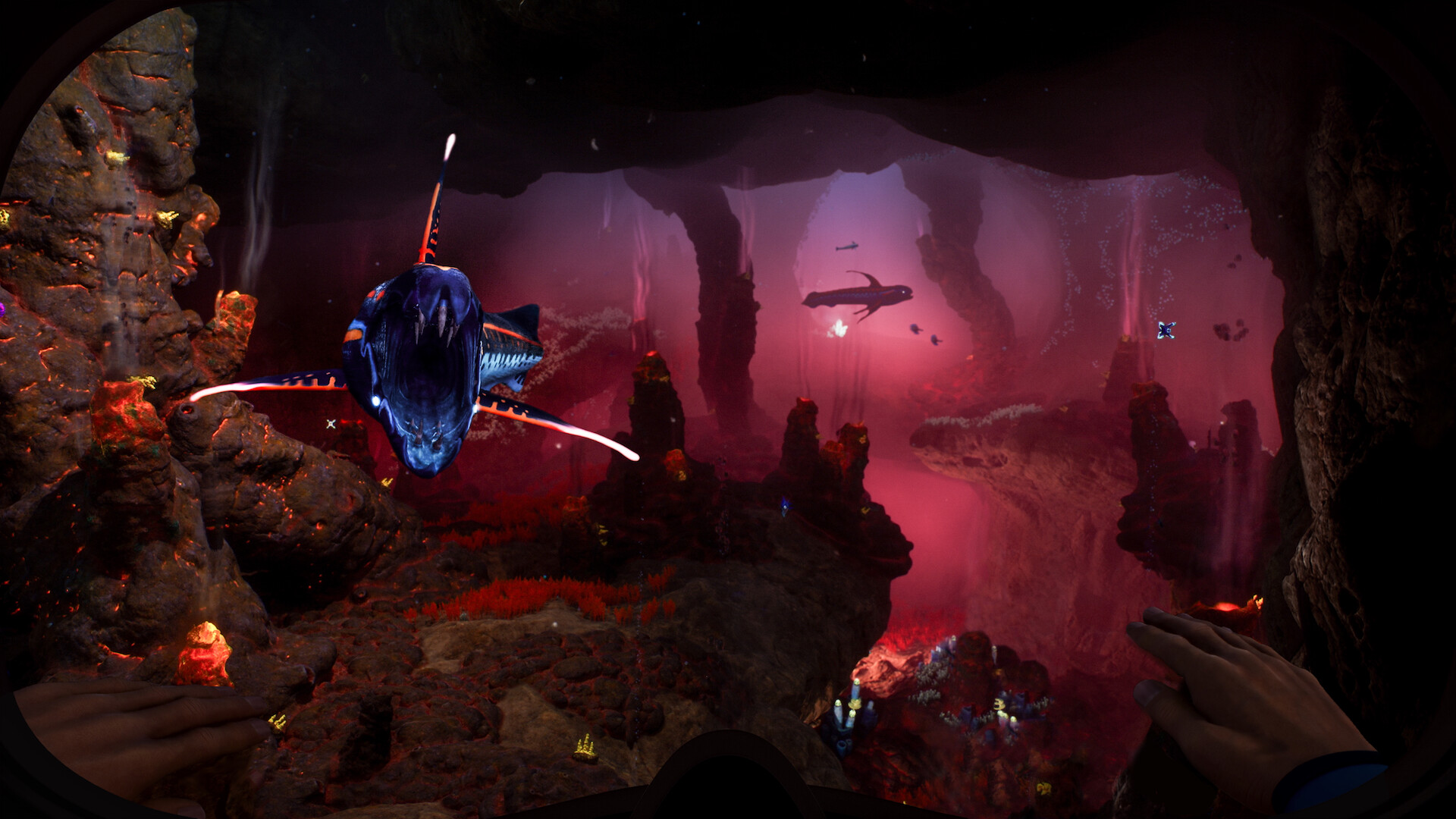
Alongside this, the game replaces breakable outcrops (limestone, sandstone, and shale rocks that dropped randomized materials) with resource-specific nodes on the ocean floor. Each node type yields a known, specific resource when collected by hand. This eliminates the randomness of resource gathering from previous games: players can visually identify and target the exact materials they need.
The Scanner has been upgraded with radar capabilities to help locate resource nodes and scannable objects in the surrounding area, reducing time spent searching in Zezura's larger map. Together, the resource-specific nodes, decimal tracking, and radar-equipped Scanner make resource gathering significantly more deliberate and predictable than in previous games.
The DNA Adaptation System is the most significant new survival mechanic in Subnautica 2. Using the Biosampler, players extract genetic samples from Planet Zezura's creatures and modify their own biology. The Steam store page describes it: "Scan lifeforms to learn about them and collect samples... evolve your genetics to adapt your body for survival."
Confirmed adaptation categories include:
Adaptation | Effect |
|---|---|
Pressure Tolerance | Survive at greater depths without vehicle protection. |
Digestion | Prevents the health damage from consuming raw fish. |
Axum Vision | Reveals environmental cues tied to the Axum civilization. |
Heat Tolerance | Survive sustained heat exposure in the Sulfur Pyres biome. |
The PDA has a dedicated "adaptations" section where players can view their current genetic modifications. Senior Narrative Designer Seth Dickinson described the mechanic's narrative significance: "A place of constant change, where the sea is alive and hungry, the rules of evolution are different, and alien DNA seeps into your bones. Here, you might be the last human being in the universe, or the first member of something new."
DNA adaptations provide a biological depth progression path alongside the traditional technology path. Instead of only relying on better vehicles and equipment to reach deeper biomes, players can modify their own body to withstand conditions that would otherwise require mechanical protection. The two systems work in tandem: technology extends range, while biology extends survivability.
The Blight is a mysterious bacterium spreading across Planet Zezura, disrupting the ecological balance of the ocean world. It is a central narrative threat, with the game's tagline describing the world as "out of balance." Blight-affected zones contain creatures that behave more aggressively and environments that become increasingly hazardous.
Leaked milestone documents revealed that the Blight replaced an earlier "ecosystem restoration" mechanic that was cut from the original scope. The restoration system would have let players repair environmental damage, but it was redesigned as an active threat instead. How the Blight affects specific survival mechanics (whether it degrades health, affects resource availability, or creates impassable zones) has not been officially detailed.
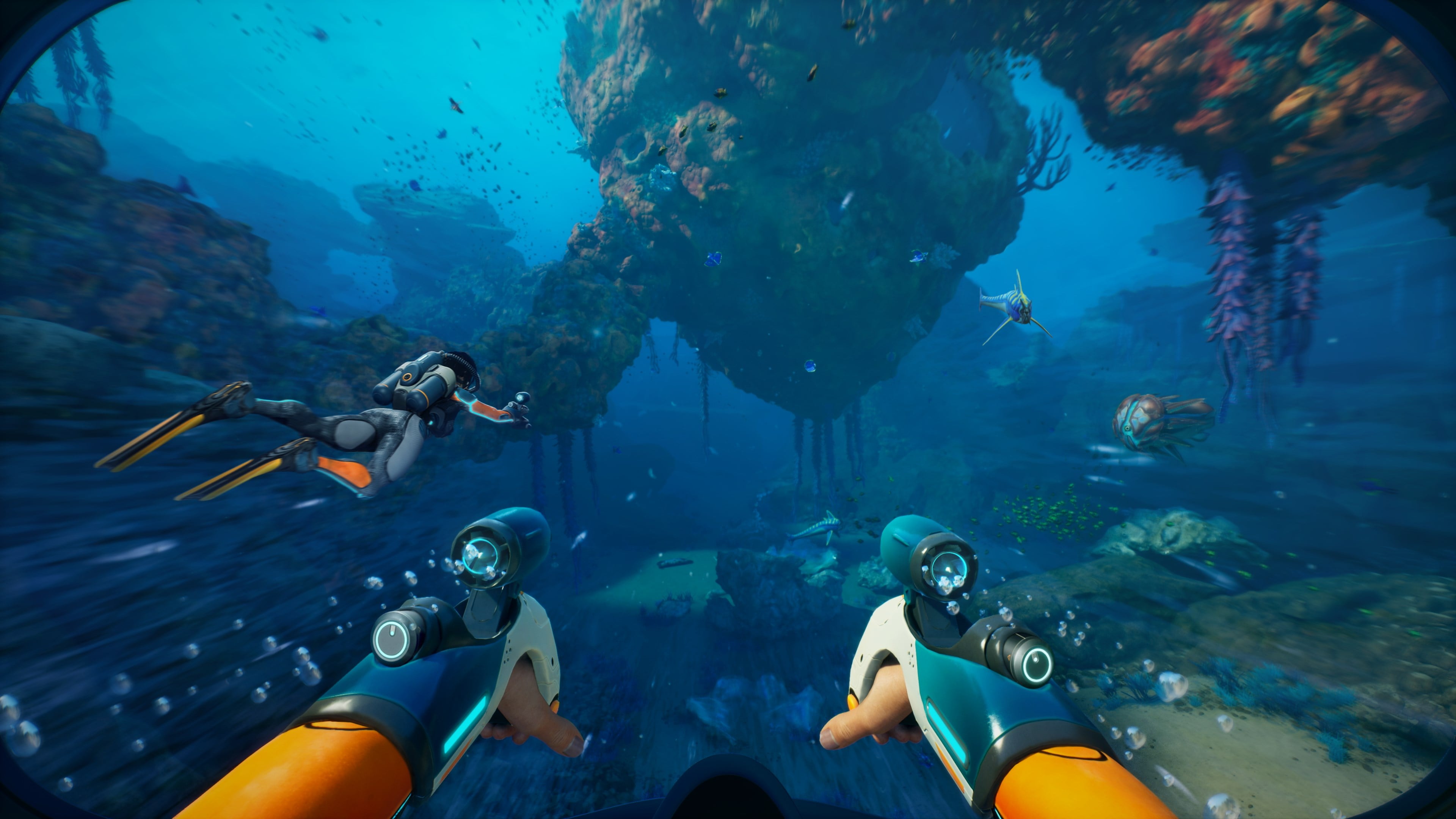
Depth acts as the primary progression gate in Subnautica 2, as in previous games. Vehicles and equipment have maximum depth ratings, and deeper biomes contain rarer resources and more dangerous creatures. The confirmed depth progression relies on two parallel systems:
System | How It Works |
|---|---|
Technology path | Scan alien ruins and technology to unlock blueprints for vehicles and equipment with higher depth ratings. The Tadpole has a base crush depth of 200 meters, upgradeable to 250 meters. |
Biology path | Use the Biosampler to collect DNA samples and gain adaptations like pressure tolerance and oxygen efficiency, allowing the player's body to survive at greater depths. |
The addition of co-op multiplayer (1-4 players) introduces shared survival dynamics. Gallegos stated: "Players really latched on to isolation, and that became so essential to Subnautica. Now with Subnautica 2, with a fresh start, new engine, we thought to ourselves, this is the moment where we can still make a game that can deliver on isolation for people that want that. But we can also have multiplayer."
Confirmed co-op survival features:
Shared bases require collective power management to keep life support active for all divers. Running out of power affects everyone.
The Dive Elevator enables coordinated resource runs, with teams descending together and hauling materials back to the surface.
Players can ride the exterior of the Tadpole with oxygen ports preventing drowning.
Shared blueprint unlocks mean the team can divide exploration duties to discover recipes faster.
Single-player saves can be converted to multiplayer sessions at any time.
All co-op is optional. "The important distinction there is that any part of the game isn't going to require cooperative play."
The survival experience is woven into the story, which targets approximately 15 hours separate from exploration time. The Noetic Advisor guides the player through the adaptation process and insists on continuing the mission despite the dangers. The gene-altering machine in the opening sequence establishes genetic modification as a planned component of the expedition, raising questions about the true nature of the mission. The PDA tracks both survival stats and active genetic adaptations, connecting the gameplay systems directly to the narrative.