
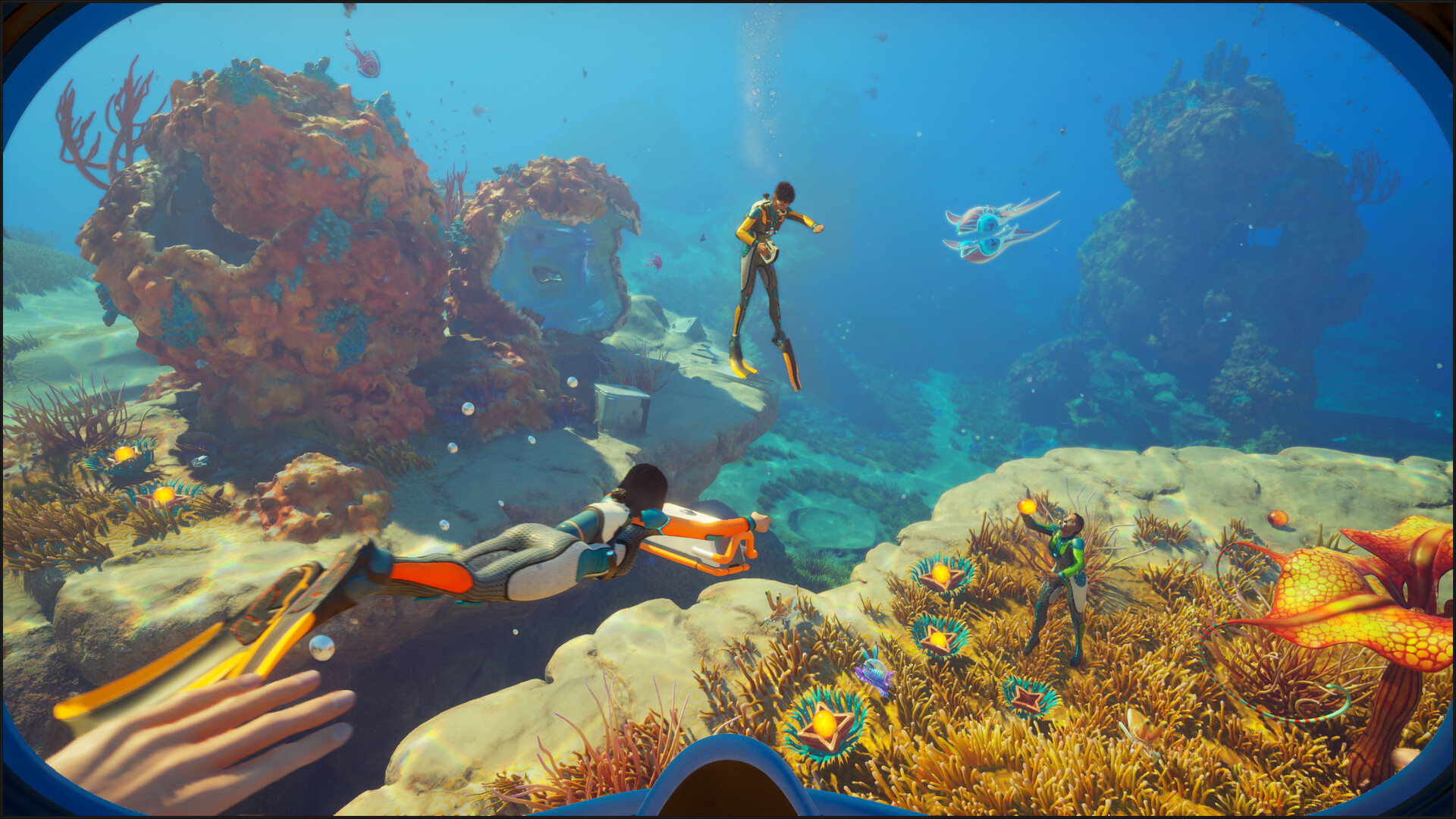
Subnautica 2 supports up to four-player online co-op, making it the first mainline Subnautica game with official multiplayer. Single-player is fully supported, and the entire game can be completed solo. The game uses peer-to-peer networking with full crossplay, so players on different storefronts and platforms can play together.
Design Philosophy
Design Lead Anthony Gallegos has been explicit about the boundaries: "The important distinction there is that any part of the game isn't going to require cooperative play." No puzzles need two players, no areas are locked behind multiplayer, and the full game can be completed solo from start to finish.
Gallegos addressed the tension between isolation and co-op directly: "Players really latched on to isolation, and that became so essential to Subnautica. Now with Subnautica 2, with a fresh start, new engine, we thought to ourselves, this is the moment where we can still make a game that can deliver on isolation for people that want that. But we can also have multiplayer."
Network Architecture
Subnautica 2 uses peer-to-peer (P2P) networking handling matchmaking and cross-platform connectivity. One player hosts the game session while others connect directly to them. Sessions are host-based: progress saves to the host's world, and there are no dedicated servers. The developers chose a platform-agnostic solution rather than platform-specific matchmaking to enable crossplay across all supported platforms.
The original development plan included dedicated servers, but this was shifted to P2P during development as part of the scope reductions documented before launch. Significant engineering work was required even for a P2P implementation, particularly around state synchronization for the game's complex physics and creature AI systems.
Multiplayer was baked into the architecture from early development, so inventory, base building, oxygen management, and vehicle systems were all designed to be network-aware rather than retrofitted onto a single-player codebase.
Session Management
The system uses drop-in/drop-out design:
Players can start a game solo and invite friends into their world at any time.
A single-player save can be converted to a multiplayer session from the main menu, keeping all existing progress.
Friends can join and leave without disrupting the world state.
A friend-code system lets players invite each other across platforms, alongside native platform friends lists (Steam, Xbox).
There is no local split-screen support. At launch, voice chat relied on external or platform options. In-world proximity voice chat arrived with the Buddy System update on August 19, 2026, the co-op release on the Early Access roadmap. Voices fade with distance as teammates swim apart, and the feature can be set to always on, push to talk, or always off.
Crossplay
Full crossplay is live across the platforms below. See the dedicated Crossplay page for friend-code details and current limitations.
Platform | Status |
|---|---|
PC (Steam) | Live |
PC (Epic Games Store) | Live |
PC (Microsoft Store / Xbox-on-PC) | Live |
Xbox Series X|S | Live |
Game Pass (Ultimate, PC) | Live |
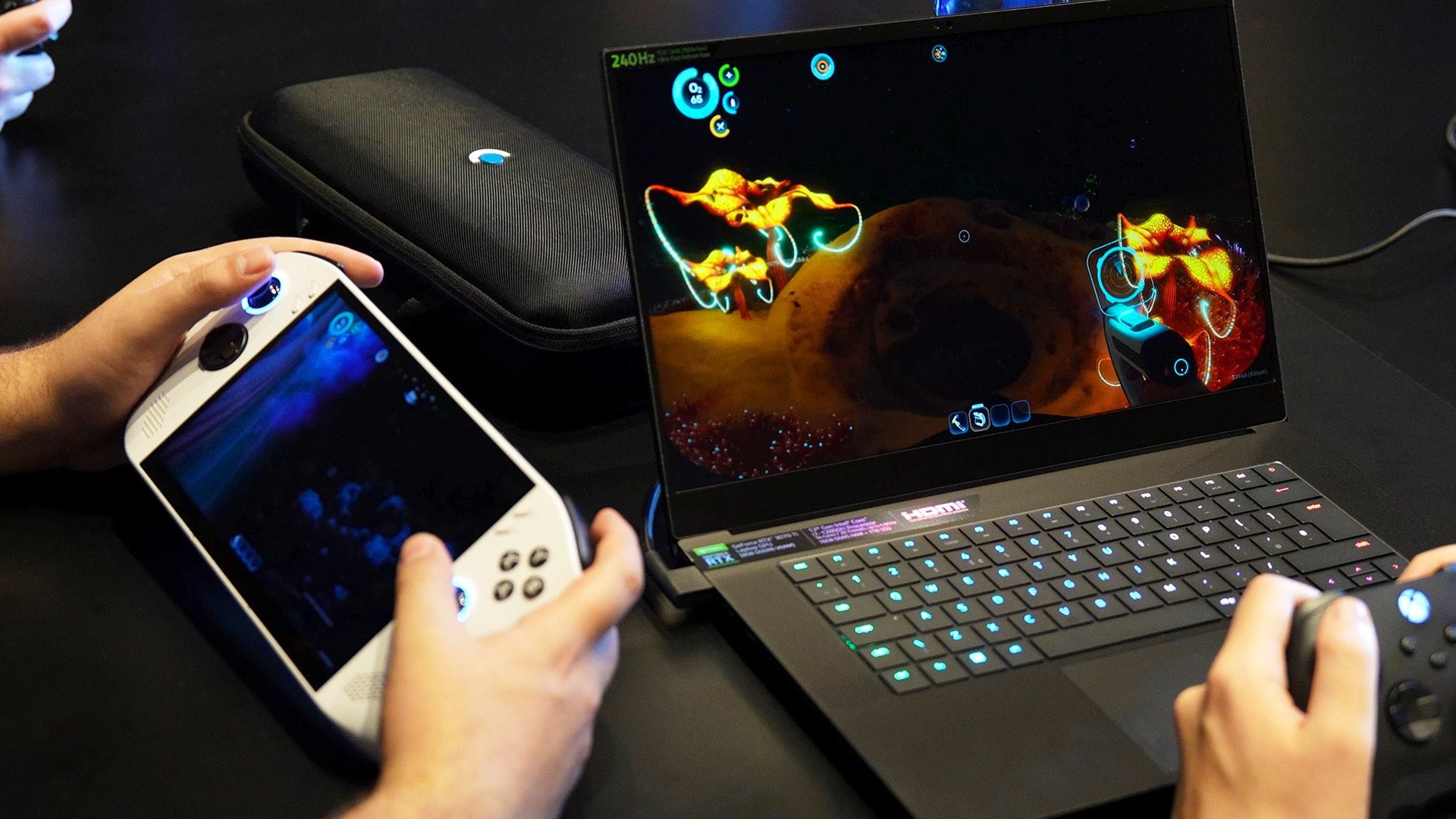
ROG Xbox Ally | Live |
PlayStation 5 | Not available at Early Access; not officially confirmed for any date |
PlayStation 5 is not available at Early Access and has not been officially confirmed. If a PS5 version ships later (possibly around the 1.0 release), its crossplay support has not been described.
Player Models and Animation
Adding co-op required the animation team to solve a problem unique to the franchise: visible player character models. Subnautica 2 is the first game in the series to render the player character's full body for other players to see. In co-op, all players see each other's movements, swimming animations, tool usage, and vehicle interactions. Complete player animation sets were built from scratch, including swimming in all directions, using tools, entering and exiting vehicles, riding the Dive Elevator, and interacting with base components.
Camera System
Players can independently choose between first-person and third-person camera views. The existence of fully animated player models, required for co-op visibility, makes the third-person option viable for the first time in the franchise. Each player's camera choice is independent and does not affect other players' views.
Shared Bases and Resources
When playing together, players share bases. Key co-op mechanics include:
Feature | Description |
|---|---|
Shared power | Power management is collective. Life support must stay active for all divers, and running out of power affects everyone. |
Individual oxygen | While power is shared, oxygen management remains individual to each player. |
Shared blueprints | Blueprints are bound to the save file. Any blueprint discovered by any player becomes available to the entire team. |
Open storage | Bases and storage containers have no locking system. All players in a session have full access. |
Simultaneous building | Players can build independently within the same world at the same time. |
Creature AI Synchronization
Creature behavior, particularly for large predators like the Collector Leviathan, uses Unreal Engine 5 behavior trees with a stimulus system that evaluates light, sound, and player actions in real time. In multiplayer, these AI behaviors must synchronize across all connected clients so that every player sees the same creature doing the same thing at the same time. The Collector's tentacles can grab, crush, and swat players independently, and its reactions must stay consistent across the network.
Planned Co-Op Update
The Buddy System update on August 19, 2026 delivered the co-op feature set: in-world proximity voice chat, player emotes, direct player trading, and a revive system for downed teammates, together with two new character options and two extra character colour schemes. The player revive system lets a teammate bring back a downed player before they reprint. A revived player keeps their equipment and regains a small amount of oxygen, while a downed player who would rather not wait can reprint immediately and respawn at their assigned Biobed. See Early Access and Development Roadmap for the full list.
Community Context
Co-op has long been one of the most requested features in the series, demonstrated by the popularity of community modding efforts that added multiplayer to the first game. At the same time, many fans feared multiplayer would dilute the series' signature isolation and tension. The developers' consistent framing of co-op as an optional layer on top of a solo-first design, rather than a restructuring of the core experience, has been the key reassurance.
Buddy System Update (August 19, 2026)
Early Access 1.2, titled Buddy System, is the update that turned co-op from shared exploration into shared play. It added the four features below, plus flinch reactions on several creatures and a set of base-building placement guides that make building together less fiddly.
Feature | What It Does |
|---|---|
Proximity voice chat | In-world voice tuned by distance, so teammates become harder to hear as they separate. Selectable as always on, push to talk, or always off. |
Player revives | A teammate can revive a downed player before they reprint. The revived player keeps their equipment and regains a small amount of oxygen. A downed player may instead reprint straight away at their assigned Biobed. |
Emotes | Wave, Clap, Thumbs Up, Thumbs Down and Frustrated, chosen from a radial menu. They work in water and on land, and are interrupted by gameplay input. |
Player trading | Players can interact with each other to hand over inventory items directly, rather than routing everything through a container. |
Character options | Jegna and Grace joined character customization, alongside two additional colour schemes. |
A short-range beacon that can be placed inside a carryable such as a locker. Carried in hand or inventory when reprinting, it extends black box range. |
Multiplayer sessions also handle Move mode more reliably for clients after this update, and bases can no longer be built inside a Great Jaw.
October co-op fixes
Buddy System Hotfix 2 on October 6, 2026 fixes voice activity detection so local and remote players are handled consistently. It also corrects the state where a player sees the multiplayer host as dead after their own character dies. These changes follow the August Buddy System features and the September hotfix.