

Biomes
Biomes in Subnautica 2 on the ocean moon Proteus. Covers depth-based progression, dynamic weather, environmental hazards, confirmed biomes (Start Zone, Kelp Forest, Coral Gardens, Sparse Plains, Jelly Plateaus, Overgrown Ruins, World Tree, VepZone, Void), handcrafted design, biome-specific resources and creatures, and Early Access expansion plans.
On This Page
The setting of Subnautica 2 is Proteus, an ocean moon orbiting a gas giant. In the current Early Access build the explorable ocean is divided into a small set of named regions, with further regions planned for later in development. The world is handcrafted rather than procedurally generated and uses Unreal Engine 5 features such as Lumen lighting and the Tufa Kit pipeline for rock formations.
There is no in-game map. Navigation relies on the compass and on beacons the player places, so learning the layout of each region by sight and memory is part of the exploration loop.
Each region has its own characteristic plant life, and the plants are often the quickest way to tell one area from another at a glance. The documented plant roster, sorted by group and region, is on Flora.
Confirmed Regions in the Early Access Build
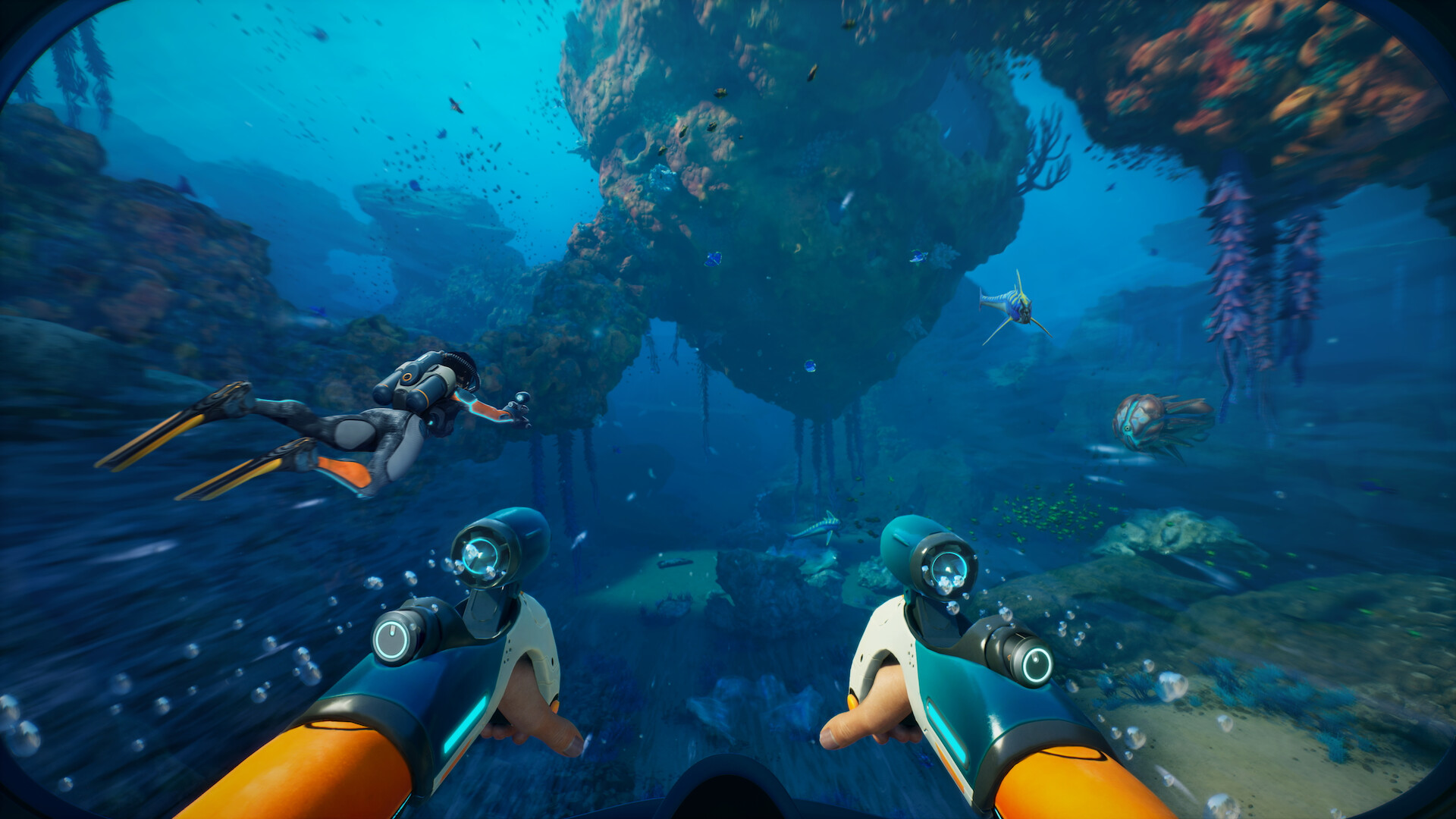
The current Early Access build ships with the regions below. Depth figures are approximate and describe the explorable range of each region.
Region | Approx. Depth | Status | Notes |
|---|---|---|---|
0 to 266 m | Early Access | Starting region wrapping the Lifepod. Sub-areas include the Shallows, Plateaus, Dolerite Spires, Necrolei Hills, Anemone Hills, Lead Zone, and the Graveyard (gated behind the Heat Tolerance adaptation). | |
0 to 250 m | Early Access | Open transitional region with a Tar Cascades sub-area. Home of the Collector Leviathan; very limited cover. | |
to roughly 827 m | Early Access | Second region about 1,000 m east of the start. Contains Observatory Island, the Karakorum Power Plant, Root Canyon (a Blighted wreck), Karakorum Metal Farms, and micro-areas (Needler Nest, Silver Mines, Thermal Vents). | |
to roughly 3,100 m | Early Access | Out-of-bounds boundary trench patrolled by leviathans. No resources; it marks the edge of the playable area. | |
Xanadu | Unconfirmed | Announced future | Out of bounds in the current build. Intended to house the World Tree and an Alien Crypt in a later update. |
Coral Gardens
Coral Gardens is the starting region, wrapping around the Lifepod splashdown and running from the surface down to roughly 266 m. It is the most varied region in the current build, broken into several sub-areas: the Shallows near the surface, the Plateaus, the Dolerite Spires (dolerite is a dark volcanic rock, fitting the columnar formations there), Necrolei Hills, Anemone Hills, and a Lead Zone. The Graveyard is a deeper sub-area gated behind the Heat Tolerance adaptation, so it stays inaccessible until the player has acquired that change.
Sparse Plains
Sparse Plains is an open, relatively barren transitional region running to roughly 250 m, with a Tar Cascades sub-area. It is the confirmed habitat of the Collector Leviathan. The flat, exposed terrain offers very little cover from the Collector's line of sight, which makes crossing it one of the tenser stretches of the early build. Light and sound discipline, plus flares for distraction, help avoid detection.
Karakorum
Karakorum is the second major region in the Early Access build, sitting about 1,000 m east of the starting area and reaching down to roughly 827 m. It contains Observatory Island (an Axum observatory), the Karakorum Power Plant, Root Canyon (a Blighted wreck), the Karakorum Metal Farms, and several micro-areas including the Needler Nest, Silver Mines, and Thermal Vents. It is closely tied to the Axum and to the Chapter 1 ending. See the Karakorum article for the full breakdown.
The Void
The Void is the out-of-bounds boundary trench surrounding the playable area, descending to roughly 3,100 m. It is patrolled by leviathans and holds no resources. It functions as the hard edge of the world rather than a region to explore, deterring players from straying past the intended boundary.
Xanadu (Announced Future Region)
Xanadu is an announced future region that is out of bounds in the current Early Access build. It is intended to house the World Tree and an Alien Crypt in a later update. The Chapter 1 ending sets it up: an Axum transmission points the player toward the World Tree in Xanadu, but the region itself is not yet visitable.
The Blight
The Blight is a spreading corruption present in the build. It shows up as a Blighted Coral sub-area and as Bloom Cankers that infect Angel Comb growths. Root Canyon in Karakorum is itself a Blighted wreck, tying the corruption into that region.
Areas Not Confirmed in the Current Build
Names that circulated before launch do not all describe regions at the same level. Kelp Forest and Start Zone are used in the wiki's tutorial and development-history coverage, while Jelly Plateaus and VepZone remain development labels whose final region status is uncertain. Overgrown Ruins is present-day terminology in the October 6, 2026 hotfix notes, which fix its currents and already-unlocked Blackbox signals; the Alien Ruins page covers that shipped area. The World Tree remains a distant landmark associated with unfinished future-region coverage. Do not read this list of names as a list of additional newly released biomes.
Dynamic Weather
A dynamic weather system affects underwater conditions. Storms and shifting currents can change how a region looks and feels over time, altering visibility and potentially redirecting fauna movement. This is the first dynamic weather system in the mainline series.
Depth-Based Progression
The gene modification system ties directly into which areas the player can reach. Using the Biosampler to collect genetic material and adapt the player's own body unlocks access to hostile zones. The Heat Tolerance adaptation, for example, gates the Coral Gardens Graveyard. This biological layer of progression runs alongside vehicle depth upgrades.
Handcrafted Design
The regions of Proteus are entirely handcrafted rather than procedurally generated. Every terrain feature, resource placement, and creature spawn point is deliberately placed by the development team, allowing for tightly designed exploration paths and staged moments of discovery.
The Unreal Engine 5 toolset supports this approach with several custom environment tools:
MeshBlend: a tool for seamless mesh blending, letting different terrain types and region borders transition smoothly without visible seams.
Tufa Kit pipeline: a pipeline for rock formations. Named after tufa, a limestone formed by mineral precipitation, it lets artists rapidly build varied, natural-looking rock structures across regions.
Region-Specific Resources and Creatures
Each region carries its own resources, creature species, and hazards. This distribution drives the exploration loop, pushing the player into newer and more dangerous areas for the materials needed in advanced crafting. The Collector Leviathan patrols Sparse Plains, while smaller fauna and the broader roster populate the other regions.
Future Regions
More regions are planned across the Early Access roadmap. New vehicles, craftables, regions, and leviathans are intended to arrive over the Early Access period, with Xanadu (housing the World Tree and an Alien Crypt) the most clearly signposted upcoming region.