
Resource nodes are a new resource gathering system in Subnautica 2 that replaces the randomized breakable outcrops from previous games. Each node on the seafloor of Proteus corresponds to a specific material and can be identified visually before collection. Combined with the new decimal inventory system that tracks resources as fractional quantities (e.g., "0.71 titanium"), the overhaul makes resource gathering significantly more deliberate and predictable. Both systems were shown in Dev Vlog 1 (April 23, 2025).
What Changed
Previous games in the series scattered breakable outcrops that returned a randomised material. Subnautica 2 replaces that with dedicated nodes: each raw material has its own visual node on the seafloor, so a player reads the terrain rather than gambling on a rock. Harvesting is deliberate, and the decimal inventory means a partial pull is still useful.
How Resource Nodes Work
Each type of raw material on Proteus has its own distinct node that appears on the seafloor. Players can identify a node's material type by its visual appearance before collecting it. Collection is done by hand; no tool is required to harvest basic nodes. This means a player who needs Titanium can locate Titanium-specific nodes, collect exactly what they need, and move on without wasting time breaking open random outcrops hoping for the right drop.
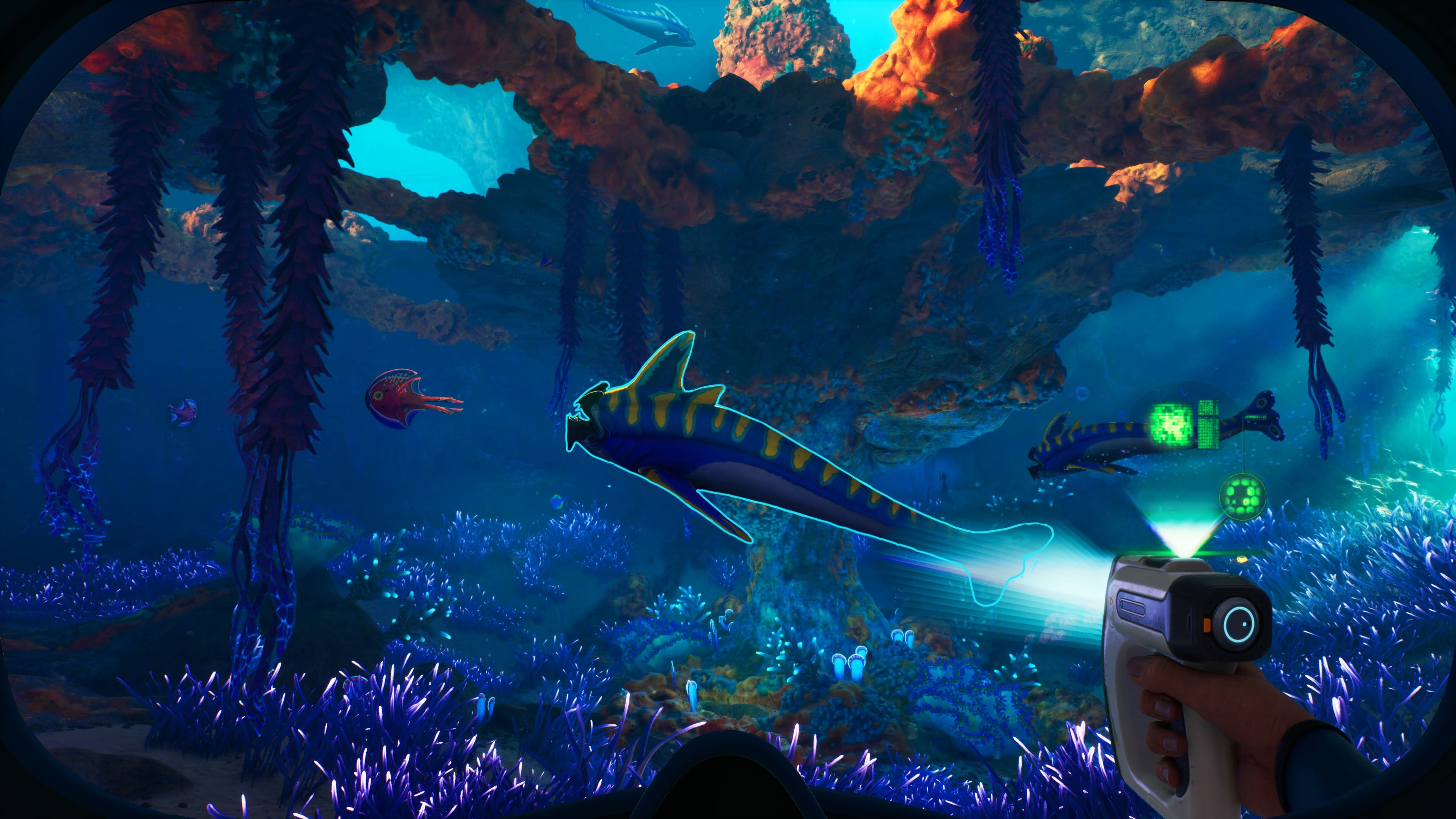
The Scanner's integrated radar hologram complements this system. The radar helps players locate resource nodes and scannable objects in the surrounding area. Together, the material-specific nodes and radar-equipped Scanner let players identify what they need and find where it is, eliminating two sources of frustration from the original gathering loop.
Decimal Inventory
Resources in Subnautica 2 are tracked as fractional/decimal quantities rather than whole-number item stacks. Dev Vlog 1 gameplay footage showed "0.71 titanium" in the player's inventory, confirming a meter-based resource tracking system. This means:
Partial harvesting from a node yields usable material rather than requiring a full unit
Crafting recipes may require precise fractional amounts rather than round numbers
Resource quantities appear on a continuous meter rather than as discrete items in inventory slots
This changes how players plan their crafting and base building. Instead of counting whole items, players track resource levels as continuous quantities that accumulate with each collection.
Biome-specific distribution
Following the design pattern of the original games, resource nodes on Proteus are distributed across biomes based on rarity and progression. Basic materials are available in the Start Zone and shallow biomes, while advanced and rare materials require venturing into deeper, more dangerous environments. This biome-specific distribution drives the core crafting progression loop: reaching new biomes reveals new materials, which unlock new blueprints, which enable access to even deeper areas.
Connection to Other Systems
Resource nodes feed into Subnautica 2's technology progression path, one half of the game's dual progression system. The other half is the DNA Adaptation System, which uses the Biosampler to extract genetic material from creatures rather than gathering physical resources. Both paths reward exploration and push players into new biomes, but through different mechanics:
Path | Source | Output |
|---|---|---|
Technology | Resource nodes + Scanner blueprints | |
Biology | Creatures + Biosampler | Genetic adaptations (pressure tolerance, night vision, oxygen efficiency) via the DNA Adaptation System |
Co-op resource gathering
In multiplayer sessions, resource gathering takes on a collaborative dimension. Players can split up to collect different materials simultaneously, then pool resources at a shared base. Shared blueprint unlocks (any player's discovery benefits the entire team) mean groups can divide exploration to discover what resources are needed faster. The Dive Elevator enables bulk transport of gathered materials from deep biomes back to the surface.
Silver and Troilite Spawns (May 2026)
A May 22, 2026 hotfix expanded resource availability for two materials at opposite ends of progression. Additional Silver resource areas were added in the early-game region, easing the early bottleneck on wiring and the Wakemaker. Additional Troilite resource areas were added in the late-game region, supporting endgame fabrication recipes. The change does not alter the underlying node mechanic; players still gather each material from its dedicated visual node, and the decimal inventory continues to track fractional quantities. These spawn additions are tracked alongside the full launch change history on the Updates and Patch Notes page.
Confirmed and Still Open
Several questions this section used to carry have been answered by the shipped build:
Named materials: Titanium, Copper, Silver, Quartz, Lead and Troilite are all confirmed node materials, alongside Acid, whose sources show as green dots in the Scanner HUD since the Buddy System update. Region names echo them, with a Lead Zone in the Coral Gardens and Silver Mines in Karakorum.
Renewability: most nodes regrow over time, but a handful of key ores do not return once gathered. Because some of those finite ores feed essential recipes, clearing a region of one before its blueprint is unlocked is a real risk. See Crafting and Resources for how to plan around it.
Tools: larger Copper deposits need the Sonic Resonator to break open, and some nodes carry a flag marking them as requiring it. Adaptive Measures corrected several nodes that had the wrong flag set.
Still open as of September 2026: the total count of distinct materials on Proteus, and how the decimal inventory behaves across shared storage containers in a co-op session.
October resource scanning correction
Buddy System Hotfix 2 on October 6, 2026 fixes the Scanner Station failing to find resources accurately. The note changes resource detection and does not publish a new map of node locations or altered mining yields.