
The Blight is a mysterious organism spreading across Proteus in Subnautica 2. It is disrupting the planet's ecological balance, corrupting both flora and fauna across multiple biomes. The Blight is a central narrative threat, directly tied to the game's premise that the world is "out of balance" and "too dangerous for humans to survive." Understanding and potentially combating the Blight appears to be a core objective of the game's story.
Official References
The Steam store page for Subnautica 2 references a bacterium spreading on Proteus. The page frames the player's situation with: "You are a pioneer traveling to a distant world, but something is amiss. The Noetic Advisor's insists you carry on the mission. This world is too dangerous for humans to survive... Unless you change what it means to be human." The questions "What happened here? What happened to you?" directly invite the player to investigate Proteus's ecological crisis.
The Voices From Beyond audio drama, which sets up the Subnautica 2 narrative, describes havoc spreading across the Ariadne Arm of the galaxy. Episode 4 includes a character questioning "was it negligence at Alterra? Some kind of miscalculation?" This suggests the ecological crisis may have a corporate or human origin rather than being purely natural. Episode 3 references Zezura as "the light at the end of the tunnel" for settlers fleeing whatever is happening, implying the colonization mission is a response to a wider crisis.
What is Known
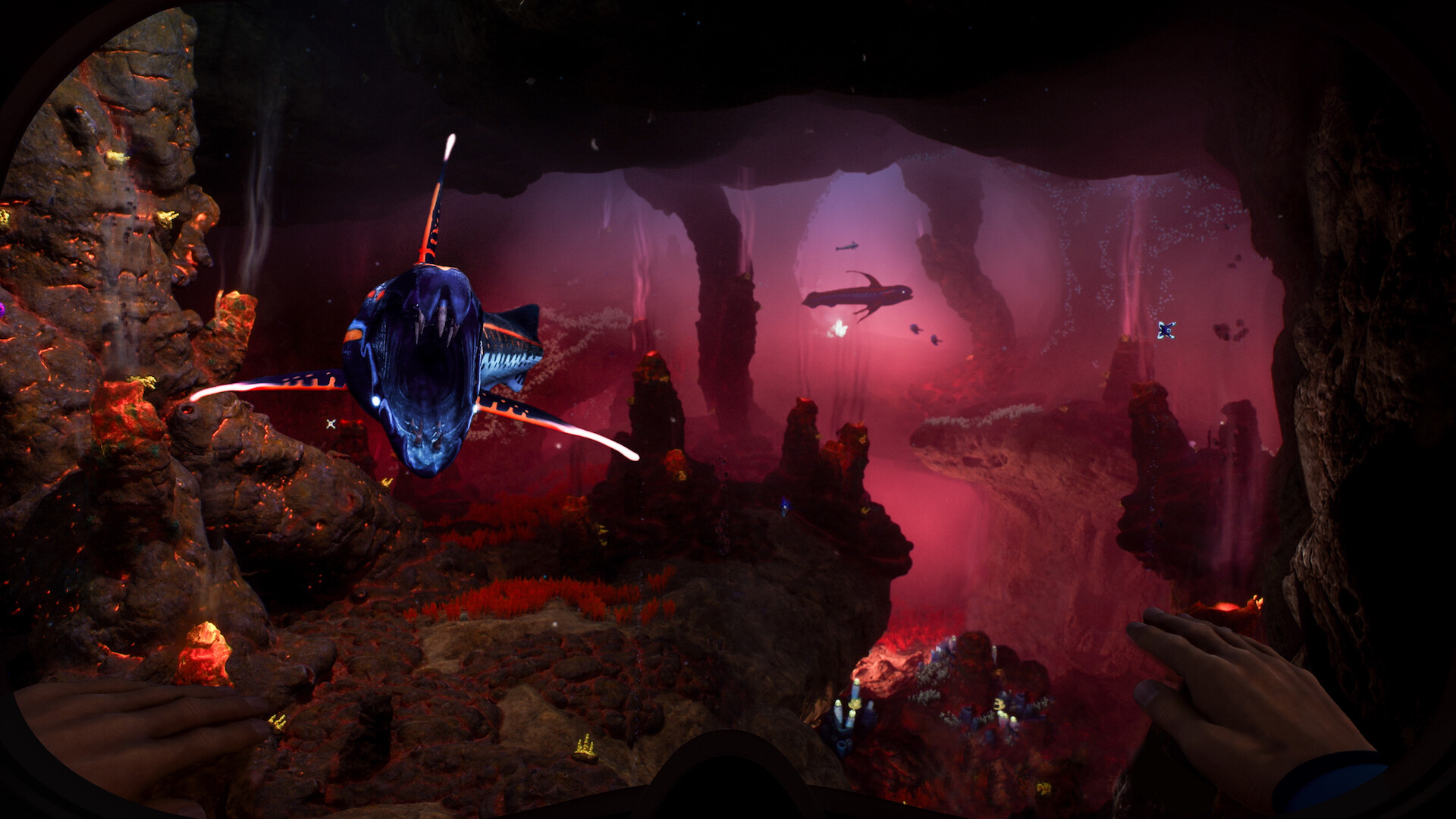
The Blight manifests as an environmental corruption spreading through Proteus's ecosystems. Multiple official descriptions confirm the planet's ecosystem is destabilized. Affected zones contain creatures that behave more aggressively and environments that become increasingly hazardous to the player. In the shipped build the Blight is met as Bloom growths and the Bloom Parasites that feed around them: growths seal crates and Angel Comb sites until they are broken apart with a Sonic Resonator pulse, and infested animals turn unusually hostile. Whether the Blight also degrades player health or resource availability directly is not stated in any first-party patch note as of September 2026.
Development Origins
The Blight replaced an earlier game mechanic called "ecosystem restoration" during the 2023-2025 development period. The original system would have allowed players to repair environmental damage. During development, the restoration mechanic was replaced by the Blight, shifting the design from a restorative system to an active environmental threat. See Cut Content for the full list of scope changes.
Connection to the DNA Adaptation System
The Blight is narratively tied to the DNA Adaptation System, the game's core new mechanic. The premise that Proteus is "too dangerous for humans to survive" unless they "change what it means to be human" directly frames genetic modification as the player's response to the ecological crisis. Senior Narrative Designer Seth Dickinson described this connection: "This is a world where alien DNA seeps into your bones... where you might be the last human, or the first of something new."
Dickinson expanded on this theme in promotional materials: "A place of constant change, where the sea is alive and hungry, the rules of evolution are different, and alien DNA seeps into your bones. Here, you might be the last human being in the universe, or the first member of something new." This language frames the Blight not merely as an obstacle but as a force that catalyzes the player's transformation. The ecological threat and the genetic modification system are two sides of the same narrative: the planet changes you because the planet itself is changing.
The Biosampler tool lets players collect genetic samples from creatures and modify their own biology. Confirmed launch Adaptations include Pressure Tolerance, Digestion, Axum Vision, and Heat Tolerance. These biological changes may be directly related to surviving in Blight-affected areas, though the exact relationship has not been disclosed.
Effects on Gameplay
Based on official descriptions, the Blight appears to cause:
Altered creature behavior, with Blight-affected fauna becoming more aggressive and unpredictable
Environmental degradation in affected zones, making navigation and survival more difficult
Disruption of the natural food chain and ecological balance
Visual corruption of flora and terrain in affected areas
How these effects interact with specific survival mechanics (oxygen, food, health, depth) and base building has not been detailed. The full scope of the Blight's gameplay role will be revealed during Early Access.
Bloom Parasite
The organism a player meets most often around an uncured infestation is the Bloom Parasite, a small infected cephalopod that feeds on the fluids of larger animals. Early Access 1.1 reworked it into the primary encounter creature for Bloom areas and rebalanced those encounters in the Coral Gardens and the ruins.
Its databank entry describes it as a vector rather than just a predator: it compulsively spreads its viral payload to hosts, prefers large predators as targets, and the transfer produces increased aggression and guarding behavior around other infected organisms. An unusually hostile animal in a Bloom area may therefore be carrying attached parasites, and the recommended response is to clear the parasites with a Sonic Resonator pulse rather than to engage the host.