

Vehicles in Subnautica 2 are used for exploration and depth progression across Proteus, and are built for both solo and co-op play. In the current Early Access build there is exactly one buildable vehicle: the Tadpole. Two other systems are often grouped with vehicles because they help the player move, but neither is a vehicle: the Wakemaker is a handheld propulsion tool, and the Dive Elevator is a base structure. The Trident, a larger multi-crew submarine, is cut from the launch build but announced as a planned future Early Access addition. No vehicles carry over from prior franchise entries; the lineup is built specifically for Proteus's mechanics rather than reusing earlier models.
The Only Buildable Vehicle: Tadpole
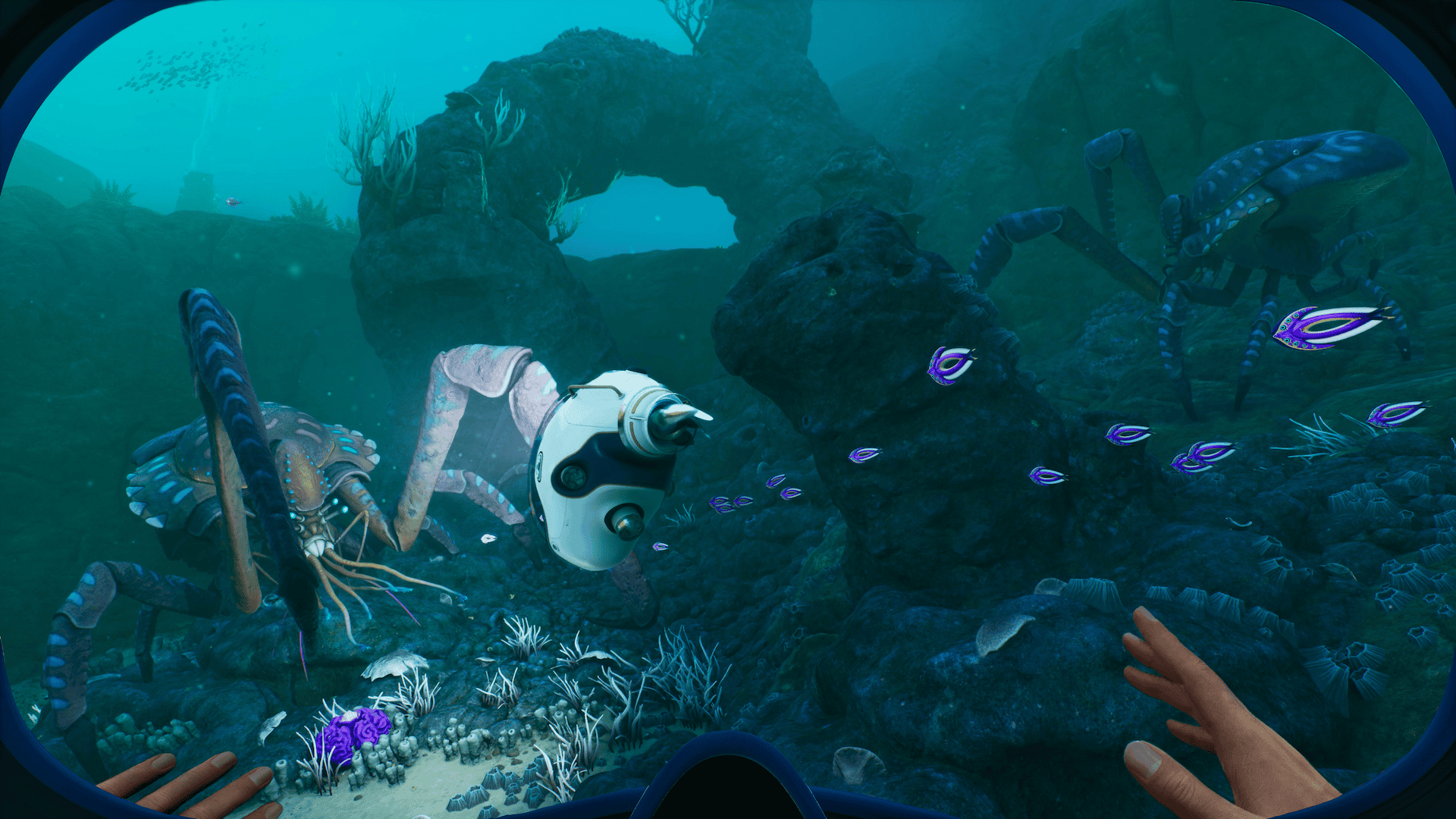
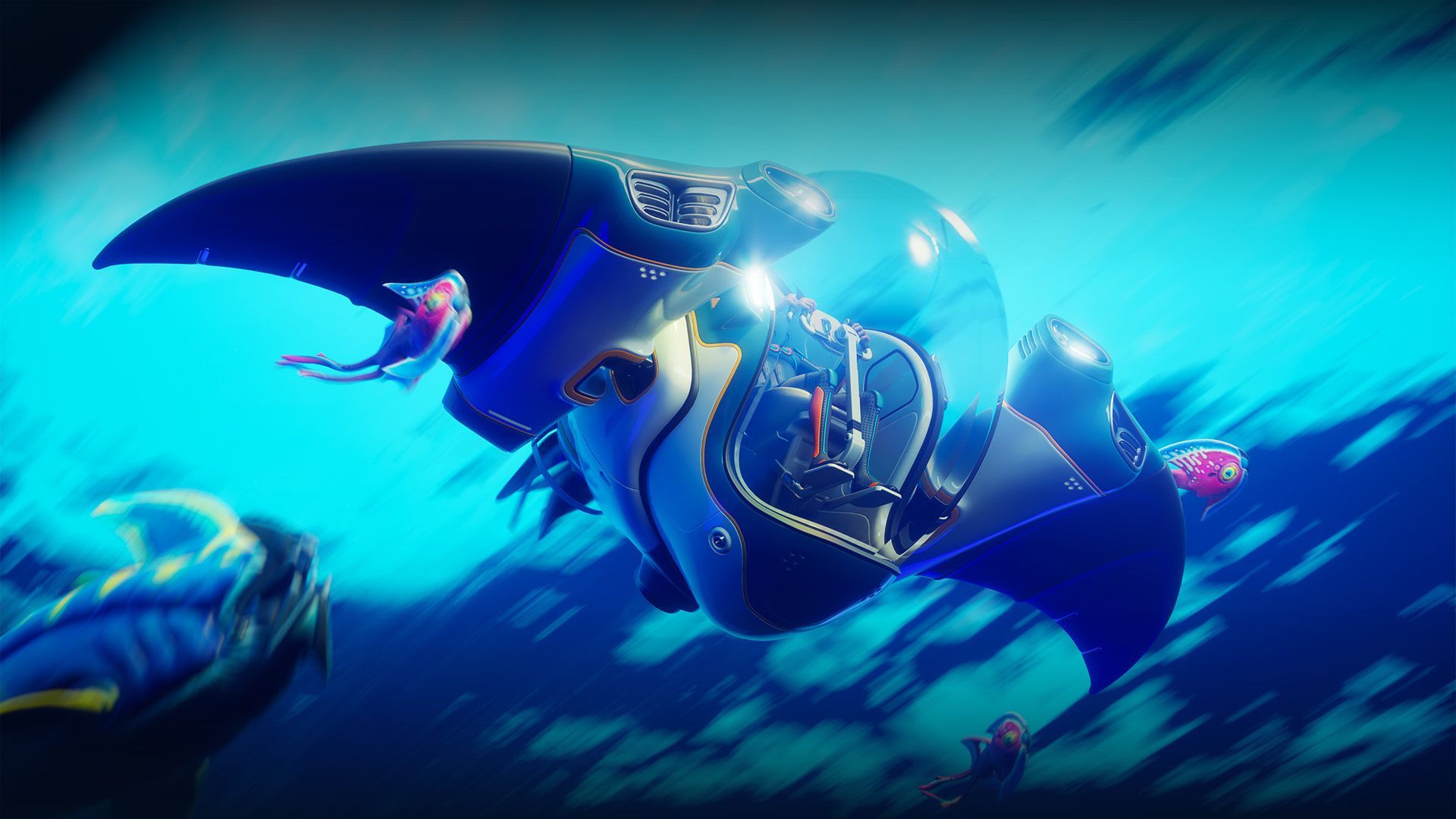
The Tadpole is the sole vehicle the player can build and pilot in the current build. It is a modular single-pilot submersible designed as the primary exploration craft. Its defining feature is a swappable chassis: the same core can be configured for different jobs by changing the chassis fitted to it, so one vehicle covers scouting, hauling, and general exploration depending on the loadout.
Confirmed Tadpole details:
Single pilot, co-op friendly: One player pilots the Tadpole from inside. In co-op, passengers can ride along by grabbing external handles on the hull, and they still receive oxygen while holding on, so a partner does not have to worry about drowning during the trip.
Swappable chassis: The Tadpole is modular and accepts different chassis for different roles, rather than being a single fixed configuration.
Exploration role: It is the workhorse for reaching new areas and gathering, the craft players rely on once they progress past personal mobility tools like the Wakemaker.
Design: A sleek, manta-ray-inspired profile with swept wings and a large forward window for visibility.
Post-launch hotfixes have tuned the Tadpole experience. The May 22, 2026 update fixed a bug that could teleport players back to base while exploring in a Tadpole and an infinite-oxygen exploit tied to dying while piloting one, and it reduced how strongly Hammerhead creatures are drawn to the vehicle’s lights. The full change history is on the Updates and Patch Notes page.
Tadpole Chassis Variants
The Tadpole's chassis can be swapped to change its role. The following variants are documented:
Chassis | Role | Notes |
|---|---|---|
ScoutRay | Fast scout | A speed-focused configuration for covering distance and exploring quickly. Well attested. |
Haul | Cargo | A cargo configuration for carrying materials. Well attested. |
Seafrog | Walking / exosuit (unconfirmed) | A walking or exosuit-style chassis, but less corroborated; treat as unconfirmed until verified in the build. |
Chassis-specific figures beyond the base profile listed further down (how each chassis changes speed, storage or crush depth) are not published in the patch notes as of September 2026. The Tadpole's own recipe is listed in the performance profile at the end of this page, and the Haul Chassis costs 4 Titanium Ingots, 3 Strontium, 3 Enameled Glass and 1 Dedicated Core; both are launch-build figures that no patch note through Buddy System Hotfix 1 has changed. See Crafting and Resources for how the scan-to-unlock blueprint progression works.
Not Vehicles: Wakemaker and Dive Elevator
Two traversal systems are commonly mistaken for vehicles. Both are documented on their own pages and are summarized here only to make the distinction clear.
Wakemaker (Handheld Tool)
The Wakemaker is a handheld twin-fan propulsion tool, not a vehicle. The player holds it and uses it to boost swim speed; it runs on a battery and renders the player visually obscured while in use. It belongs in the tools and equipment roster. For full details, see the Wakemaker page.
Dive Elevator (Base Structure)
The Dive Elevator is a base structure, not a vehicle. It is a vertical-traversal module that lowers players and objects through the water column, covering roughly 25 meters of descent per unit, stackable to go deeper, and carrying up to four players plus some objects. It is built and placed like other base-building modules. For full details, see the Dive Elevator page.
Cut From Launch: Trident
The Trident is a larger, multi-crew submarine. It is cut from the Early Access launch build, but it has been announced as a planned future Early Access addition, not permanently removed. It is not playable at launch. The Trident left a trace in creature design: the internal brief for the Collector Leviathan describes the creature as disliking "players, tadpoles, tridents, and anything it does not recognise," which shows the Trident was developed far enough to be factored into creature behavior before being held back. See the dedicated Trident page and Cut Content for more.
Future Vehicles
The vehicle roster is set to grow during Early Access. A larger, multi-person submarine (corresponding to the cut Trident) is planned for a later update, potentially closer to the full release. The original-series Prawn Suit is not in Early Access; a mech-suit successor is a future plan only and is not buildable in the current build. No names, final designs, or specifications for these future craft have been confirmed.
In the June 2026 developer update, the studio teased the return of a mech-suit vehicle chassis from the original game, commonly known as the PRAWN Suit, as part of upcoming content. As with the larger submarine above, it is a forward-looking plan rather than a buildable vehicle in the current Early Access build, and the studio has not published its final name, design, or specifications.
Vehicle and Traversal Overview
Name | Class | Availability | Key Detail |
|---|---|---|---|
Vehicle (submersible) | Buildable now (the only one) | Modular single-pilot sub; swappable chassis (ScoutRay, Haul; Seafrog unconfirmed). Co-op riders use external handles and keep oxygen. | |
Tool (handheld) | Available now | Battery-powered twin-fan swim-speed booster. A tool, not a vehicle. | |
Base structure | Available now | Vertical platform, about 25 m per unit, stackable, up to four riders. A structure, not a vehicle. | |
Vehicle (multi-crew submarine) | Cut from launch; planned for a future update | Larger crewed submarine; announced as a future Early Access addition, not permanently cut. | |
Mech-suit successor | Vehicle (planned) | Future plan only | A successor to the original-series Prawn Suit; not in Early Access. Details unconfirmed. |
Vehicle Progression
Subnautica 2 uses a scan-to-unlock blueprint progression. Players scan fragments scattered across the biomes to unlock blueprints, then gather resources to craft what they have unlocked. As players reach deeper, more dangerous areas, they unlock and build better gear, which in turn lets them push further. With the Tadpole as the only buildable vehicle for now, early traversal leans on the Wakemaker and the Dive Elevator, while deeper exploration centers on the Tadpole until the roster expands during Early Access.
Confirmed Tadpole Performance Profile
The following confirmed stats are documented for the Tadpole in the current Early Access build. Crush depth and chassis-specific top-speed numbers vary across community sources; the figures below reflect the most consistently corroborated values.
Stat | Value | Notes |
|---|---|---|
Base top speed | 8 m/s | Hull-only profile, before chassis swap. |
Base crush depth | 250 m | Stock vehicle, no upgrade modules installed. |
Depth Module Mk. 1 | 450 m | Standard Early Access upgrade. Installed at the Moonpool. |
Depth Module Mk. 2 | 800 m | Creative mode only at present; not in the Survival progression chain. |
Upgrade module slots | 4 | Hardpoints: 1 (the chassis-mounted weapon stand-in for utility tools). |
Fabrication of a stock Tadpole requires two Titanium Ingots, one Glass, one System Chip, and one Power Cell, processed at the Vehicle Fabricator inside a built Moonpool. Chassis variants (Scout Ray, Haul, Seafrog) are applied after fabrication and can be swapped without rebuilding the base hull.
October 2026 vehicle changes
The October 6 Buddy System Hotfix 2 corrects Tadpole docking orientations, boundary-return teleporting and recovery of destroyed Tadpoles with attached chassis. It also improves Leviathan grab attacks and Scout Ray visual effects. Shiver Leviathans no longer interact with unpiloted vehicles. See Tadpole for the vehicle-specific history.