Loading...
Loading...
Bio Burner
May 3, 2026 at 11:58 AM
Added 1 image (2026-05-03)
The Bio Burner is the starting power source in Outbound and the first component of the energy system that players interact with. It is mounted in the back of the camper van and burns biodegradable materials collected from the environment to charge the vehicle's shared battery. Every system on the van, from the electric motor to workstations, lights, and appliances, draws power from that single battery, and in the early game the bio burner is the only way to replenish it.
The bio burner comes pre-installed on the van at the start of the game. There is no unlock requirement or crafting cost; it is part of the player's default equipment. This makes it immediately available for use from the moment the journey begins.
The bio burner operates on a simple principle: players feed biodegradable resources into the unit, and it converts them into electrical energy that is stored in the van's battery. Each resource type restores a specific percentage of the battery's total capacity. As long as the player has fuel on hand, the bio burner can generate power at any time of day, in any weather, and at any location.
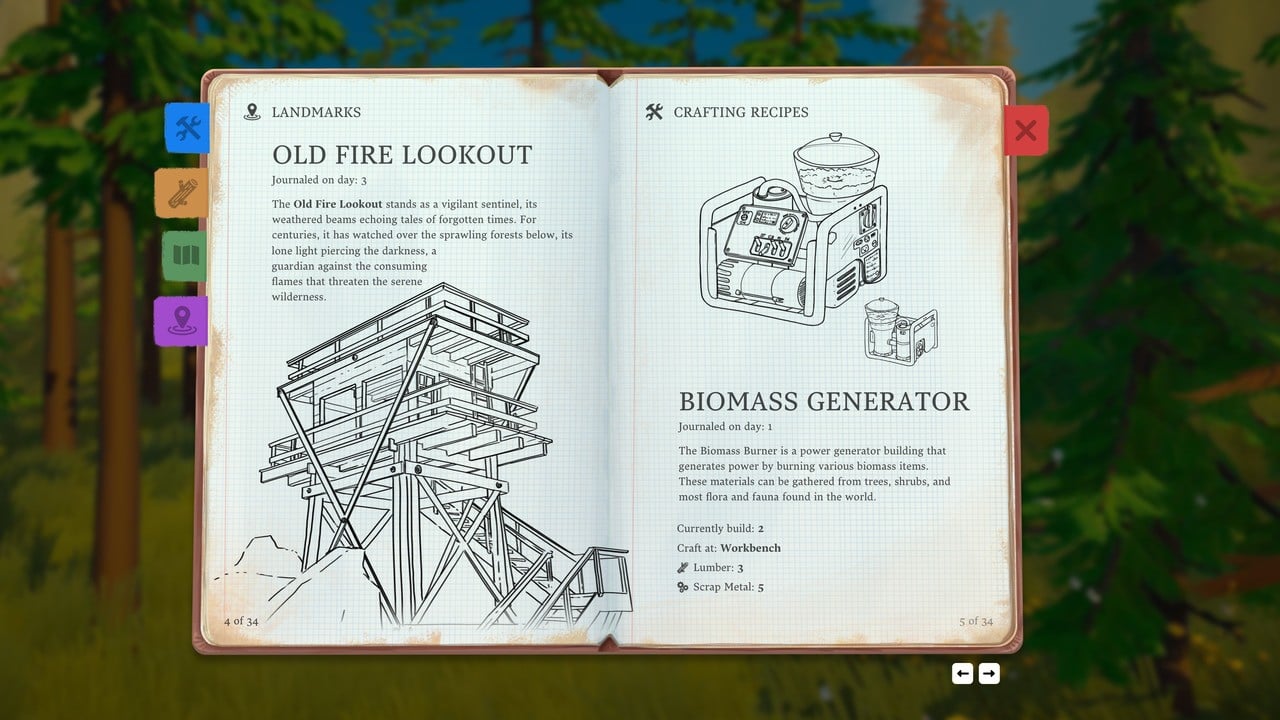
If the battery drains completely, the van stops moving and all powered equipment shuts down. This creates urgency around keeping a reserve of fuel in storage, particularly during long drives between biomes. The energy meter on the van's dashboard shows the current charge level, and monitoring it becomes second nature during the early hours of play.
The bio burner accepts biodegradable materials as fuel. Two resource categories have been confirmed, each with different gathering requirements and energy values.
Fuel | Energy Restored | How to Obtain | Tool Required |
|---|---|---|---|
Fibre | +1 (~10% battery) | Harvested from plants and bushes found throughout the wilds | None (picked by hand) |
Standard Lumber | +1 (~10% battery) | Cut from logs found in forested areas | Axe (Level 1) |
Light Lumber | +2 (~20% battery) | Cut from specific log types; only found as logs | Axe (Level 2) |
Fibre is the most accessible fuel source because it can be picked up by hand without any tools. It grows on plants and bushes scattered across most biomes, making it a reliable option for topping off the battery during short stops. However, each unit only restores about 10% of the battery, so players need to gather in bulk to make a meaningful difference.
Lumber provides the same 10% restoration per standard piece but requires an axe to harvest. Small logs can be picked up by hand, while larger logs must be chopped down first. Light lumber is the most efficient fuel, restoring roughly 20% per unit, but it requires a Level 2 axe and is found less frequently. Forested regions, especially in The Outdoors biome, offer the best supply of lumber.
Both fibre and lumber also serve as crafting ingredients, so players need to balance their fuel consumption against their crafting needs. Burning all available fibre for energy leaves none for recipes, and vice versa.
Works anywhere, anytime. Unlike solar panels, wind turbines, or hydro generators, the bio burner has no location, weather, or time-of-day restrictions. It produces power whether the van is parked in a dense forest at midnight or on a sunny hilltop at noon.
No unlock required. The bio burner is part of the starting equipment. Players do not need to discover blueprints from signal towers or progress through the technology tree to use it.
Immediate power on demand. Renewable sources depend on environmental conditions (sunlight, wind speed, proximity to flowing water). The bio burner generates power the moment fuel is loaded, making it useful for emergency top-ups when the battery is critically low.
Reliable fallback. Even after unlocking renewable energy sources, the bio burner remains available as a backup. During prolonged storms that block solar output or in biomes with poor wind conditions, it can bridge the gap.
Constant resource drain. The bio burner consumes physical resources every time it runs. Unlike renewables, which generate power passively, the bio burner demands active gathering. This creates a repetitive loop of collecting, burning, traveling, and collecting again.
Low energy per unit. At 10% battery restoration per fibre or standard lumber, players need roughly 10 units of fuel to fully charge the battery from empty. This means significant inventory space is occupied by fuel, especially on longer trips.
Competes with crafting. Fibre and lumber are also used in crafting recipes. Heavy reliance on the bio burner depletes materials that could be used to build workstations, furniture, or other equipment for the van.
Not sustainable long-term. As players expand their van with more workstations, lights, and appliances, power consumption increases. The bio burner's modest output struggles to keep pace with a fully built-out van, making the transition to renewable energy essential for late-game comfort.
The bio burner is the only power source that requires consumable fuel. All three renewable alternatives generate electricity passively once installed. The trade-off is that renewables come with environmental restrictions that the bio burner does not have.
Power Source | Fuel Required | Works at Night | Weather Dependent | Location Dependent |
|---|---|---|---|---|
Bio Burner | Yes (fibre, lumber) | Yes | No | No |
Solar Panels | No | No | Yes (needs clear sky) | No |
Wind Turbines | No | Yes | Partially | Partially (needs elevation) |
Hydro Generators | No | Yes | No | Yes (needs flowing water) |
For a full breakdown of each renewable source and setup strategies, see the solar panels and power article and the energy system overview.
The bio burner is designed as a stepping stone, not an endgame solution. Outbound's energy progression encourages players to move from burning resources toward generating clean, renewable power. This transition mirrors the game's broader sustainability theme.
Early game: Bio Burner dependence. The bio burner is the only available power source. Gameplay revolves around gathering fibre and lumber, feeding the burner, driving to the next destination, and repeating the cycle. Fuel management is a constant concern.
Mid game: Mixed energy. After discovering signal towers and downloading blueprints, players unlock solar panels, wind turbines, or both. The bio burner supplements these renewables during gaps in output (nighttime for solar, calm weather for wind).
Late game: Fully renewable. With a complete renewable setup covering solar, wind, and hydro, plus battery bank upgrades that store surplus power, the bio burner becomes optional. Players who have optimized their energy grid rarely need to burn resources at all.
Even at the late-game stage, the bio burner remains installed on the van. It is an emergency backup for situations where renewables temporarily fall short, such as extended storms that block both sunlight and reduce wind output.
During the early game, the bio burner creates a distinctive gameplay rhythm. Since every trip consumes battery power and the bio burner is the only way to recharge, players settle into a loop:
Stop the van in a resource-rich area (forest for lumber, meadow for fibre).
Gather biodegradable materials from the surroundings.
Load fuel into the bio burner to recharge the battery.
Drive toward the next destination, monitoring the energy meter.
Stop and repeat before the battery runs too low.
This loop encourages exploration of the immediate surroundings at each stop. Players who take the time to explore while gathering often discover crafting materials, hidden landmarks, and quest triggers they might otherwise drive past. The bio burner's resource demands, while initially inconvenient, push players to engage with the world on foot rather than simply driving through it.
The bio burner is mounted in the back section of the camper van. It is part of the vehicle's starting configuration and does not need to be built, placed, or repositioned by the player. The unit occupies a fixed location and does not interfere with the van's modular building system, so players are free to build around it when customizing the van's interior.
Because the bio burner is always present and takes no additional space from the player's build area, there is no penalty for keeping it even after transitioning fully to renewable power. It sits quietly in the back of the van, ready to be used if conditions demand it.
Stockpile before long drives. Before heading out on a cross-biome trip, gather extra fibre and lumber to carry as reserve fuel. Running out of battery in the middle of nowhere means walking back to gather resources on foot.
Prioritize light lumber when available. At 20% battery per unit, light lumber is twice as efficient as fibre or standard lumber. If you have a Level 2 axe, seek out light lumber sources before settling for regular fuel.
Balance fuel and crafting materials. Keep a mental tally of how much fibre and lumber you need for upcoming crafting recipes versus how much you can afford to burn. Overusing the bio burner can leave you short on building materials.
Transition to renewables early. The sooner you unlock solar panels or wind turbines from signal towers, the sooner you reduce your dependence on gathering. Even a single solar panel meaningfully extends the time between fuel stops.
Keep the bio burner as a backup. Even after setting up a full renewable grid, do not underestimate the value of carrying some fuel. Storms can knock out solar production, and calm weather can reduce wind output. A handful of fibre in the storage box provides peace of mind.
Use forest stops wisely. When parked in a forested biome, gather lumber in bulk. Forests offer the densest supply of wood, and stocking up during these stops reduces the pressure to scavenge in biomes where fuel is scarcer.
Energy System - Full overview of power generation and battery management
Solar Panels and Power - Guide to renewable energy setup and optimization
Camper Van - The vehicle and its systems
Resources - All gatherable materials in the game
Technology Tree - Blueprint unlocks and progression
Signal Towers - How to discover new blueprints
Survival Mechanics - Other systems that interact with energy management