

Overview
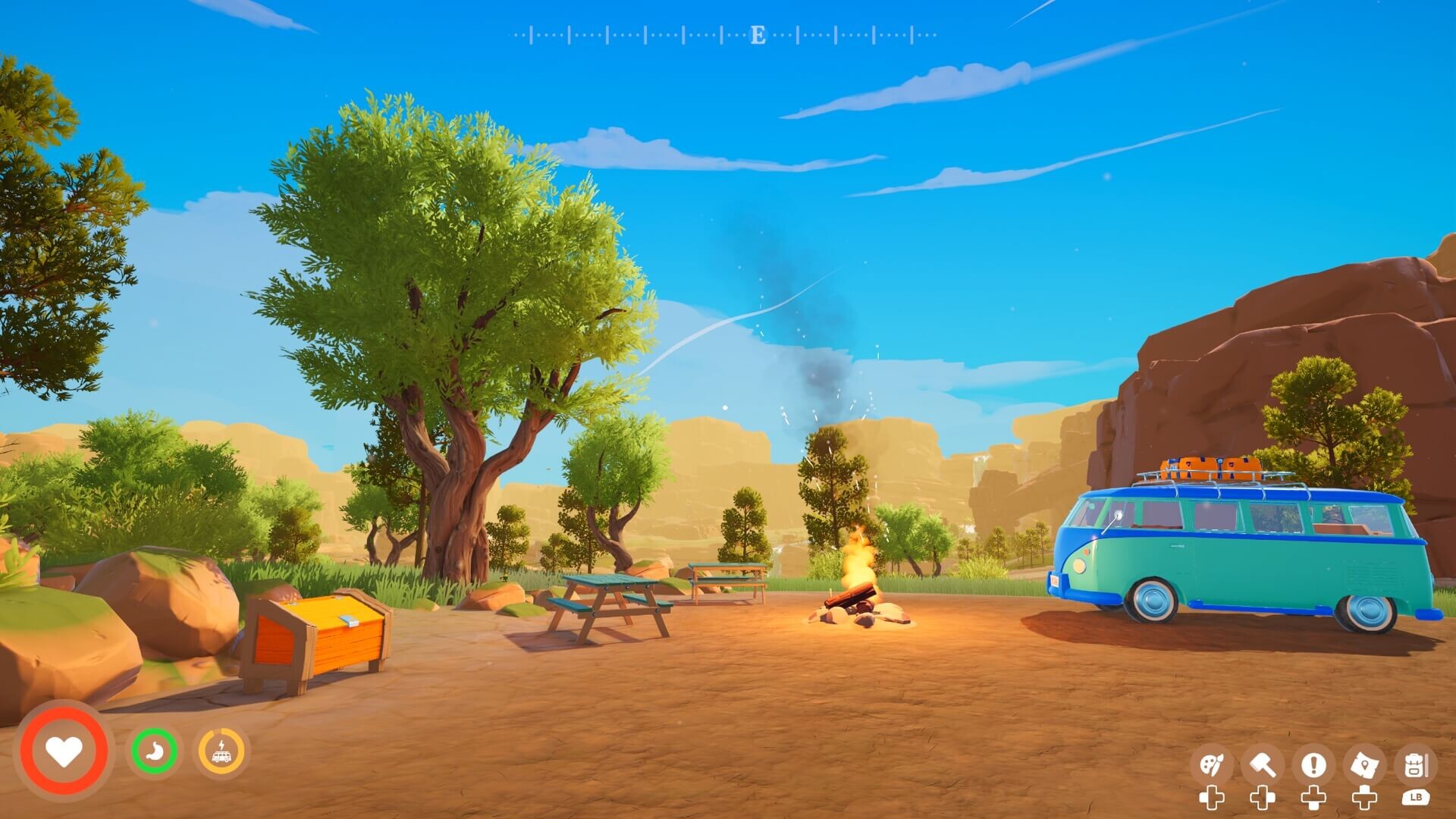
Outbound uses the term "cozyvival" for its approach to survival. Players manage hunger, health, and the camper van's battery power. There is no permanent death, no enemies, and no combat. When survival needs are neglected, the consequences are time-based slowdowns rather than progress-erasing penalties. The game is designed to stay relaxing even when things go wrong.
Hunger
An empty hunger meter reduces movement speed and work efficiency, and once it bottoms out it also chips away at your health a little at a time. The drain is small, so an empty stomach on its own will not end a run quickly, but it is why keeping a little food on hand is worthwhile on long trips.
Food | Hunger Restored | Source |
|---|---|---|
Raw berries | Small (a few points) | Gathered from bushes |
Bread | 22 | Baking Oven |
Pizza | 32 | Cooking Pot |
Mushroom Soup | 22 (also restores health) | Cooking Pot |
Health
Health is lost through environmental hazards like falling from heights. It does not regenerate on its own. Healing requires consuming specific items.
Healing Item | Recipe | Station |
|---|---|---|
Mushroom Soup | 2 mushrooms of one kind + 1 Water | |
Ginger Tea | 1 Ginger + 1 Water | Tea Station |
Lavender Tea | 1 Lavender + 1 Water | Tea Station |
Preparing healing supplies before long exploration trips is a practical habit. Mushroom Soup is the most accessible healing item early on, since mushrooms grow wild in the first biome; the two teas need ginger or lavender and a Tea Station blueprint, and both plants come from later biomes.
Van Battery
The van's battery powers all workstations and automated systems. If it runs empty, production stops until energy generation catches up. The Bio Burner can be manually refueled for emergency power.
Fuel | Energy |
|---|---|
Fibre | +1 energy |
Lumber | +1 energy |
Light Lumber | +2 energy |
Battery management is the closest the game comes to traditional survival pressure. Adding too many workstations without sufficient energy generation creates a power deficit that halts all production.
Fatigue and Night
The player character experiences fatigue as evening arrives. Running speed is reduced at night, which limits nighttime exploration. Some demo players noted that days pass quickly, which can feel restrictive when trying to complete tasks before nightfall. The day-night cycle encourages a natural rhythm: explore and gather during the day, manage the van and craft at night.
Encumbrance
The player has a limited personal inventory capacity. Carrying too many items while on foot slows movement. The dog companion helps by carrying extra supplies during foot expeditions. Regular trips back to the van to deposit resources keep the player nimble.
Death and Respawn
Outbound has no permanent death. Your health can still reach zero, usually from a long fall or from an empty hunger meter draining it over time, but the penalty is deliberately light. When you go down, you respawn the next morning with some of your health restored, and you keep everything you were carrying. There are no dropped items, no lost materials, and no progress rolled back.
Fall damage is low and is mostly a risk from very high drops, such as jumping off the top of a tall van build, rather than from ordinary climbing and exploring. Because the cost of dying is so small, food is genuinely optional in the early game, and many players skip cooking at first without any real downside, eating raw berries only when convenient.
Design Philosophy
The developers have been explicit that Outbound is not meant to punish. Hunger encourages cooking. Health encourages caution during climbing. Energy management encourages strategic thinking about power sources. But none of these systems can ruin a run. Marc Volger, co-founder of Square Glade Games, described the approach as providing structure without pressure: "Many people like the idea of going travelling with a camper van."
Player Feedback
Demo feedback noted that hunger and health feel similar in practice, with overlapping consequences (both reduce effectiveness when low). Some players suggested differentiating the two systems more clearly. The van battery system received more positive reception as a unique and engaging survival pressure specific to the game's mobile-home premise.