
Loading...
Loading...
Combat and Skill Chains
October 25, 2026 at 04:19 AM
Add target-of-target reading and per-slot skill priority, keeping the held macro and activation conditions distinct.
AION 2's combat blends classic tab-target MMO mechanics with action-game fundamentals. You select a target, but you also have to actively dodge, parry, and reposition to land back-attack and side-attack bonuses. There is no auto-combat in the current build; every rotation is hand-played.
Input | Purpose |
|---|---|
Targeting | Tab switches to the nearest enemy. In the default AION2 control mode you aim with the mouse and attack with a click; in the AION1 mode you click to move and to target, and an optional camera lock-on keeps the camera centred on the target |
Skills | Hotbar abilities; chains often unlock follow-up skills for a short window |
Dodge | Active directional dodge, a skill every class has, that evades by moving quickly in the chosen direction (Shift in combat on PC). The official guidebook notes that dodging just before a hit avoids its damage |
Block / Parry | Shield block for Templars and Clerics, and parry (the English client's name for a weapon block) for every class in the March 25, 2026 rework; Perfect Shield Block and Perfect Parry are rarer versions that stop most of the damage. See Blocking below |
Movement | Standard run plus glide and powered flight where allowed |
The official PC controls guide describes two control modes, switched with the / key. AION2 mode, the default, hides the mouse pointer: the camera follows the mouse, the character moves with WASD or the arrow keys, Shift sprints (using Stamina) or dodges in combat, and a mouse click is the basic attack; Alt shows the pointer. AION1 mode keeps the pointer visible: clicking moves the character and selects targets, dragging turns the camera, and double-clicking an enemy attacks it automatically. Only AION1 mode supports the camera lock-on option, which the guide recommends for one-on-one fights.
Skill tooltips tag skills as usable while moving, charge skills (up to three charge levels), toggles and skills that need no target. Each class also has a skill that only works on a staggered boss; see Stagger Gauge. Skill levels, specialties and presets are covered on Skills and Specialties, and every skill of the Sorcerer, Spiritmaster, Cleric and Chanter is listed on Sorcerer Skills, Spiritmaster Skills, Cleric Skills and Chanter Skills.
AION 2's store page sums up its combat as chaining skills together. On the Korean service the patch notes describe chains at the class level: many skills open a follow-up skill after they are used, and skill specializations add or change those follow-ups (Defiance's follow-up became a specialization option on July 8, 2026, for example). Since March 25, 2026 up to five Stigma skills can be equipped (six on the Korean and Taiwanese service since July 1, 2026), Mastery and Stigma skills share slots while the basic attack slot stays fixed, and charge skills gain 40% damage per charge stage instead of 20%. The Daevanion Board shapes the rest of a build.
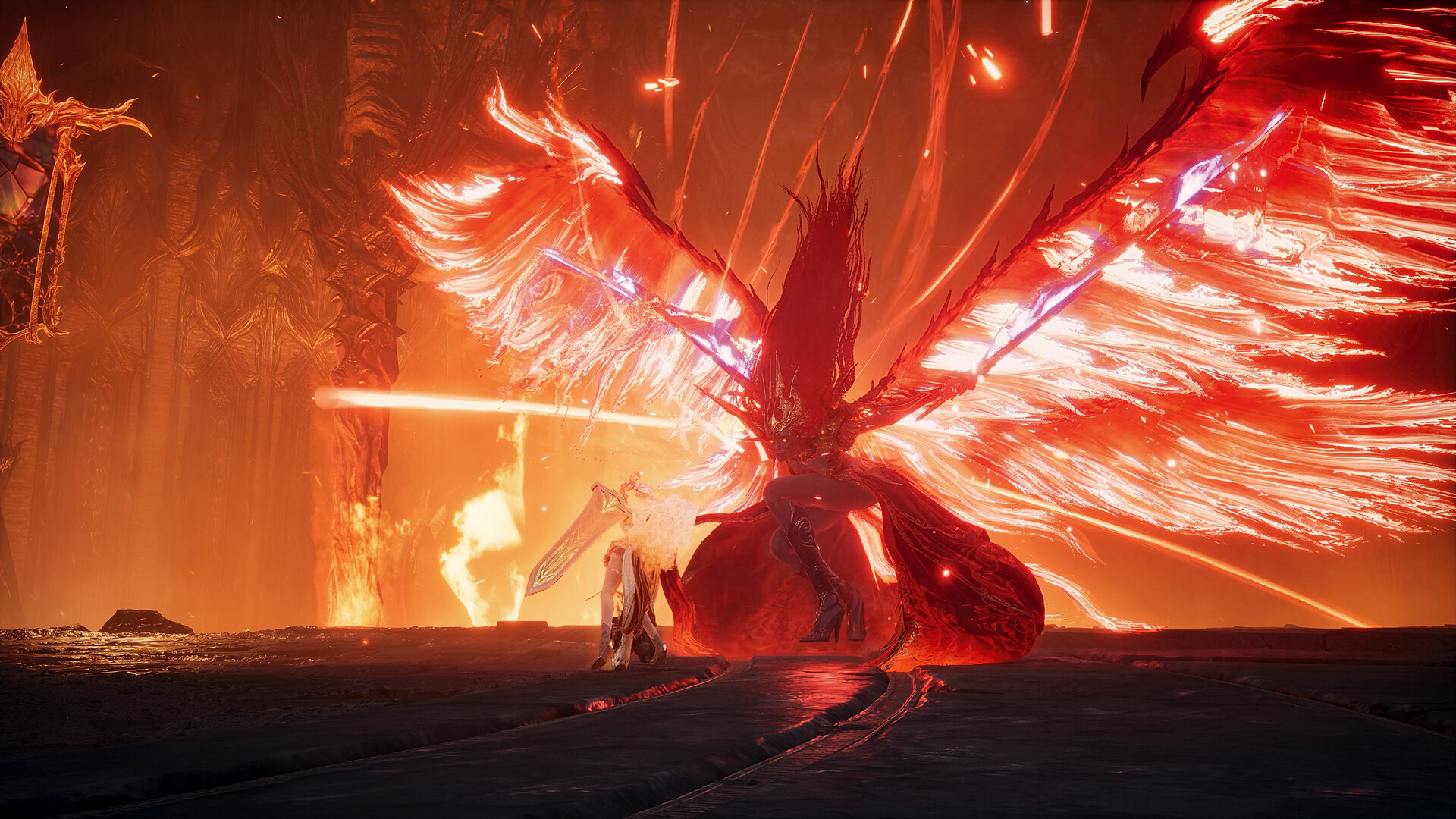
Animation cancelling is part of the skill curve. On January 28, 2026 NCsoft added an official skill macro to make cancels of the basic light and heavy attacks easier: each step has its own delay, the macro runs while its key is held, and manual input always takes priority. The macro moved to quickslot-based steps on May 27, 2026, when the minimum delay between steps dropped from 50 ms to 10 ms, and since July 15 macros are saved per skill preset. Third-party automation is a different matter; see Macros and Third-Party Programs.
Positioning matters, though the Korean patch notes describe it per class rather than as one game-wide rule. Several skills deal extra damage from behind, boss fights in Expedition, Transcendence and Sanctuary dungeons can show a marker for the boss's rear (and since July 1, 2026 its front, rear or both), and the Chapter 1 update on July 1, 2026 added a family of frontal stats: frontal damage amplification and tolerance, frontal attack and defense, and frontal critical hit and critical resistance. Aerial combat adds a vertical axis to all of this.
The April 22, 2026 patch on the KR and TW build reworked how damage converts into healing. HP Absorption is now defined in two parts: a share of the damage dealt, capped at 10% of the character's maximum HP, plus the same percentage of maximum HP restored. Absorbing 5% therefore means 5% of the damage dealt (up to 10% of max HP) plus 5% of max HP. Every class's specialization values were converted at the same time, and Nightmare boss attack and damage amplification were lowered by 2.5% to 15% to compensate. Since April 29 HP Absorption ignores the healing received stat, since July 22 it applies to a single target only, and the August 26 patch cut the absorption on several core skills that NCsoft judged excessive in both PvE and PvP. Recovery potions and elixirs moved onto a percentage-of-max-HP model with a hard cap in the same April patch, so players with very high HP pools hit the cap while average pools recover the full percentage.

The values below reflect the recovery items as tuned on the KR and TW live build. They scale to a percentage of maximum HP rather than a flat number, with a hard cap above the percentage. Treat the exact numbers as a current live-build snapshot; the global build follows its own balance schedule.
Item | Heal | Tick | Cap (live build) |
|---|---|---|---|
Life Potion | 1% of max HP per tick | Every 2 seconds | Up to roughly 1,000 HP |
Superior Life Potion | 2% of max HP per tick | Every 2 seconds | Up to roughly 2,000 HP |
Life Serum | 5% of max HP | Instant | Up to roughly 5,000 HP |
Superior Life Serum | 10% of max HP | Instant | Up to roughly 10,000 HP |
The exact conversion ratios and per-ability values in the overhaul are tuned on the KR and TW live build and shift with each balance patch. Treat any specific percentage as a snapshot of the current live build rather than a fixed global value; class skills that previously applied a flat life-drain effect were retuned individually as part of the same pass, generally converting a larger drain percentage into a smaller HP Absorption value.
Breakthrough, the equipment progression step beyond enhancement, also feeds survivability. Since April 22, 2026 each armor breakthrough stage adds a 1% maximum HP stat, and the December 31, 2025 patch doubled the defense and HP that armor and accessory enhancement and breakthrough grant. The Gear and Progression page covers how HP, mitigation, and absorption stats interact at endgame.
Follow-up patches on the live build refined a handful of combat-system interactions: protecting Tenacity and certain defensive effects from being stripped by effect-removal abilities, exempting a set of defensive and party-utility skills from cooldown-increase debuffs so they stay on their intended rotation under pressure, and reclassifying a few effect types so that different counters and immunities interact with them. These are live-build adjustments; the exact skill list shifts between patches, so use the in-game tooltips for the current behavior.
Two earlier changes on May 13, 2026 set up much of this. The Tenacity granted by Defiance can no longer be removed by skills that strip beneficial effects, and its +100% status effect resistance became full status effect immunity. In the same patch, the Impact-type hit option that Soul Inscription can roll on Guards became a status effect hit option. The July 8, 2026 patch then reworked Defiance's specializations, turning its follow-up into an option and moving the damage tolerance bonus during Tenacity to another slot. See Status Effects for the full rules.
The July 29, 2026 patch carried the same cleanup further. Defiance stopped benefiting from cooldown reduction effects. Two class passives that grant status resistance, the Ranger's Unyielding Resolve and the Sorcerer's Grace of Resistance, had their values retuned, and three defensive skills, the Gladiator's Tenaciousness, the Sorcerer's Hibernation and the Cleric's Salvation, were fixed so they no longer trigger off an Impact-type hit while the character is already sealed, feared or paralysed. Food and drink buffs also became immune to buff-removal effects, which stops an opponent stripping consumable uptime with a single dispel.
The August 26, 2026 patch applied a minimum cancel time to every skill in the game. NCsoft gave the reason as narrowing the variance in skill chaining, cancel timing and damage output that came from differences in players' game environments. Putting a floor under how early a skill can be cancelled evens out that spread, and it also caps how far a rotation can be compressed, so chains built around aggressive cancelling lose some of their ceiling.
Blocking was reworked on March 25, 2026. Besides the normal shield block and weapon block (called a parry in the English client) there are now a Perfect Shield Block and a Perfect Parry, which use the block chance, trigger at a low rate from any direction and stop most of the damage. Templars and Clerics have both shield blocks and parries; the other classes at the time could only parry. Shield classes ignore status effects on a shield block or Perfect Shield Block, and the other classes on a parry or Perfect Parry. Damage reduced by a block or parry has not been limited by a maximum since March 4, 2026, and since the March 25 rework the Gladiator's Focused Block and the matching Templar and Chanter skills also work against hits from behind.
The official guidebook describes flight as a way to move through the air that is started and stopped with V, uses the same movement keys as the ground, and speeds up with Shift; characters can attack and gather while flying. Gliding is a slow descent started with the Space bar in the air; holding forward glides faster and Shift gives a short burst. Flying and gliding drain the flight gauge, and a character whose gauge runs out falls. Flight and gliding share a cooldown, but switching from one to the other does not check it. Wind paths carry a character along without using the flight gauge, and riding one grants immunity to movement-control effects (since April 29, 2026). The October 7, 2026 Korean update fixed attacks made in the air sometimes failing to land on an in-range target. That fix is a Korean service change; the global October 7 patch did not announce the same combat change.
Several skills are built for the air. On January 14, 2026 the Assault skills (강습) became usable on the ground and while flying instead of only while gliding, and on February 25, 2026 the Gladiator's Rush Strike, the Templar's Shield Rush, the Assassin's Infiltrate and the Chanter's Tremor Crush became usable in flight. Rush Strike and Tremor Crush have a chance to knock down or stun when used after a Dodge or while flying. On October 7, 2026 NCsoft fixed attacks made in the air sometimes failing to land even within range. See Aerial Combat and Flight for flight in PvP and the Abyss.
PvP critical hits deal 1.25 times damage instead of 1.5, and PvP Double Chance (double damage) hits 1.5 times instead of 2 (January 14, 2026).
The PvP correction for a gap in item level starts at 80% and bottoms out at 35% (January 14, 2026).
Damage amplification and tolerance from skills are split into PvE and PvP versions, with the PvP version at half the PvE value; amplification and tolerance from gear and the Daevanion Board apply as shown in both (April 22, 2026).
PvP damage amplification and tolerance have no acquisition limit, and their formula cannot reduce damage below 20% (April 29, 2026).
All classes deal 30% less PvP damage (July 8, 2026).
Healing received in the Abyss and the Arena is reduced by 20% (August 12, 2026).
The Chapter 1 update on July 1, 2026 removed the caps on the main stats, attack, defense, accuracy, evasion, critical hit, critical resistance and block increases, and on damage amplification and tolerance. It set these limits instead: damage tolerance can reduce damage by at most 80%, cooldown reduction and skill cost reduction are capped at 60%, and movement speed at 150%. The critical stat's stated maximum chance was corrected from 50% to 80%.
AION 2 does not include the auto-combat or AFK farming systems common to many recent Korean MMORPGs. Every fight requires manual inputs, which puts a hard ceiling on multi-boxing and changes how grinding feels at endgame.
One qualification: the Korean and Taiwanese mobile client has a Mobile Support option that uses skills automatically while the player keeps a main target selected. The global release is PC only.
Elyos characters can practise west of Dawn Legion Base in Verteron; Asmodian characters can use the training area in Safe Haven, Altgard. Both have regular Training Scarecrows and Melee Training Scarecrows. Use a regular target to rehearse chains and cooldowns. The attacking melee variant also lets you practise defensive timing.
To compare setups, keep the target and test duration consistent, change one part of the build, and repeat the same rotation. The built-in meter controls are on User Interface.
During combat, red resource orbs restore HP, blue restore MP and green restore Stamina. Touch an orb to collect it without an interaction key. Take one when the corresponding resource is low and the route is safe. Boss attacks can also create coloured orbs with different rules, so identify the encounter mechanic before moving into one.
The indicator to the right of the selected target's nameplate shows whom it is currently targeting. Watch it to see when attention moves to another party member and to coordinate a tank swap.
In the Skill menu, assign up to four active skills to one quick slot. Pressing that slot uses the lowest available skill, checking upward when a skill cannot be used. Place frequently needed skills lower in the order; separate situational defenses and heals when you need to control their timing.
A Skill Order chooses an available skill within one slot. The held skill macro described above sequences quick slots, so it can activate a slot that already contains a Skill Order.