

PvP in AION 2 is built around two pillars: large-scale open-world faction warfare in the Abyss, and instanced PvP modes such as arenas and aerial battlegrounds. Both factions, Elyos and Asmodian, contest the Abyss continuously, and the open-world layer is where most of the IP's faction-war identity lives.
Two companion pages split this one up. Reshanta covers the Abyss as a place, layer by layer, and Battlegrounds covers the instanced and scheduled modes that run outside it.
The Abyss Layer
The Abyss, in-world Reshanta, is the contested middle layer of Atreia. It is split into multiple sub-maps with different rules:
Sub-Map | Flight | Notes |
|---|---|---|
Lower Reshanta | Full flight | Open-world aerial PvP; the canonical 3D battlefield identity of the IP |
Chaotic Ereshulanta Mid-Layer | Glide, walk, or run only | Added during Season 3 (April 8, 2026); emphasizes ground-level positioning and chokepoint control |
Season 3 Abyss Overhaul
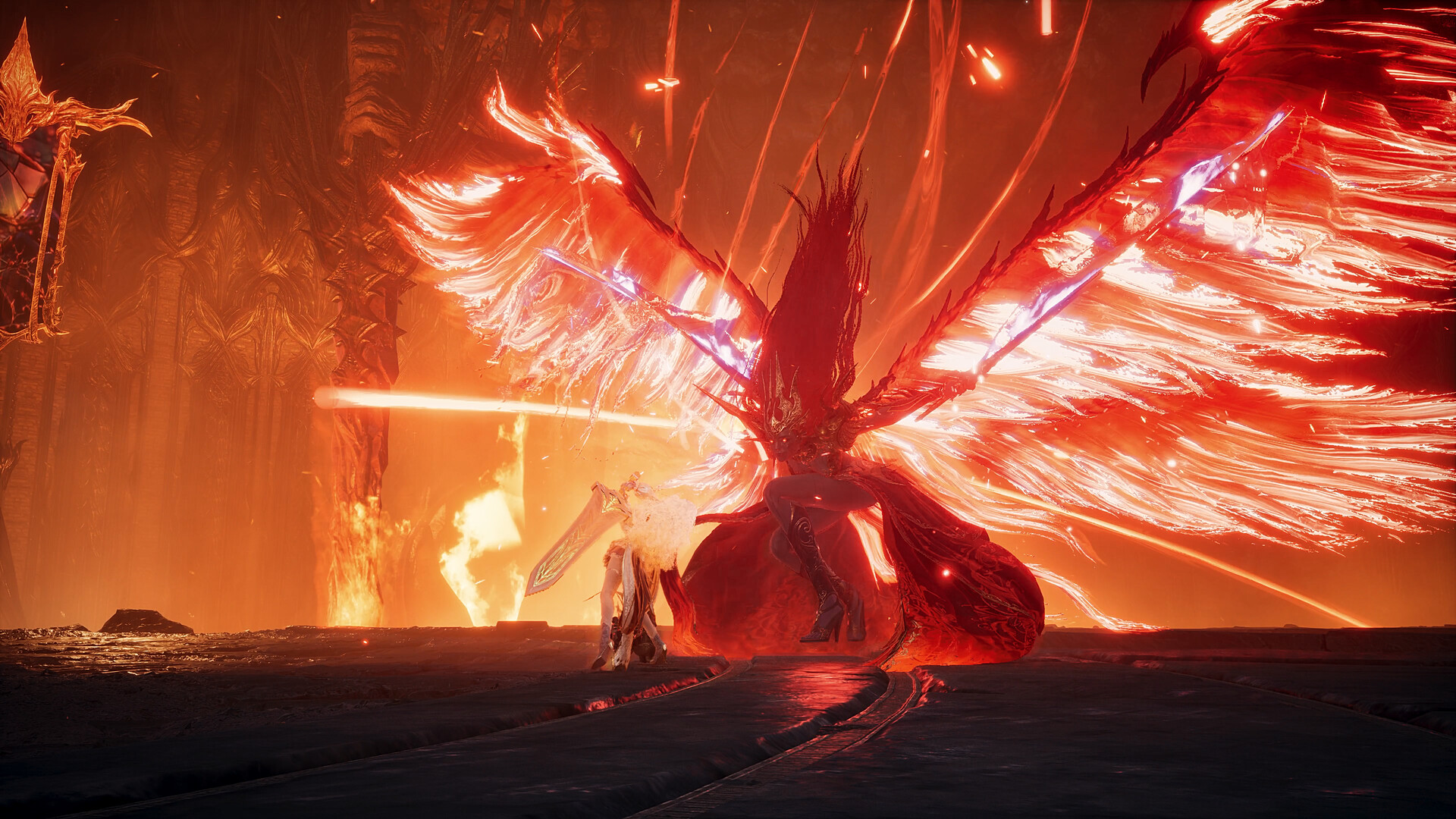
The Season 3 update on April 8, 2026 reshaped the Abyss layer on the KR and TW build. The legacy hotspot zone was removed; in its place the new Mid-Layer (Chaotic Ereshulanta) was added with restricted flight and its own contested objectives. Killing enemy faction players in the Mid-Layer grants a buff called the Reshanta Aura, which scales with consecutive kills and is the centerpiece of the Mid-Layer reward loop.
Two new mission tracks anchor the layer:
Ruler of the Lower Layer is a mission chain tied to Lower Reshanta objectives and aerial PvP performance.
Ruler of the Mid-Layer is a parallel mission chain tied to Mid-Layer ground objectives and the Reshanta Aura buff.
Server rematch behavior also changed in Season 3. Artifact conquest standings and the Abyss Corridor instance reset on the server-rematch cycle, so a faction that dominated late in a season cannot indefinitely lock the next season's opening. Post-conquest bosses spawn after each artifact flip and reward the faction that holds the territory at the time of clear. On the current Korean build, community trackers list Artifact occupation battles as running every Wednesday and Saturday at 22:00 KST; NCsoft has not published that schedule in its own notes, so treat the cadence as community-reported.
Abyss Equipment Potential
Season 3 introduced an Abyss Equipment Potential system that scales gear effectiveness in the Abyss layer. Equipment progresses through stages, with each stage adding a small but stacking PvP bonus that depends on the slot type. Weapons and guardians lean toward PvP damage, armor toward PvP damage resistance, and accessories toward a smaller damage bonus. The exact per-stage percentages and stage caps are tuned on the KR and TW live build; treat the values below as the current live-build snapshot rather than fixed global numbers.
Slot Type | Per Stage (live build) | Cap (live build) | Stat |
|---|---|---|---|
Weapons and Guardians | About +2.5% PvP damage boost | Around +10% at the final stage | Offense |
Armor | About +0.5% PvP damage resistance | Around +2% at the final stage | Defense |
Accessories | About +0.5% PvP damage boost | Around +2% at the final stage | Offense |
The per-stage percentages and stage caps above are tuned on the KR and TW live build; treat them as a current snapshot rather than fixed global numbers. Maxing the system out across a full set adds a meaningful but not overwhelming PvP edge: enough to reward sustained engagement in the layer, not enough to lock new players out of fights against established veterans. See Gear and Progression for how this stacks with the rest of the gear curve.
Later Live-Build Tweaks
Follow-up patches inside the Season 3 window tightened how the Abyss plays on the KR and TW build. A late-April patch lifted a PvP progression cap that had limited progression rate inside the layer and renamed several Abyss bosses with new portrait drops keyed to those encounters, aiming to keep contested objectives rewarding for high-activity players without inflating the PvP economy. A mid-May patch added quality-of-life changes inside the Abyss: it disabled the crafting UI while a character is inside an Abyss zone, closing a loophole where players crafted from contested ground without committing to the fight, and it began awarding partial objective credit to a player defeated in PvP near those objectives, so a near-miss engagement no longer pays out zero credit.
A follow-up broadcast in mid-May added a small but specific change to the Abyss reward economy: characters defeated in PvP near contested objectives now receive a small dimensional-core credit and a partial boss-monster contribution toward those objectives, so a near-miss engagement still pays out something rather than zero. A subsequent late-May patch increased the rate of contribution gains across the layer and improved the drop rate of the latest Arcana, which together speed up the loop for players who treat the Abyss as their main endgame.
The late-May Sanctuary patch added more structural changes to the Abyss. A new island area opened in the Middle Reshanta, reachable by riding Updrafts, where a player's position no longer shows on the minimap so that ambushes and flanking plays are harder to track. The patch also increased the stats of Abyss boss monsters and Artifacts, and it added a new gear line, the Archon Praetorian Captain Weapon and Guard plus an Elite Archon Praetorian Captain Weapon, available through the Abyss shop and Succession Crafting.
Open-World Faction PvP
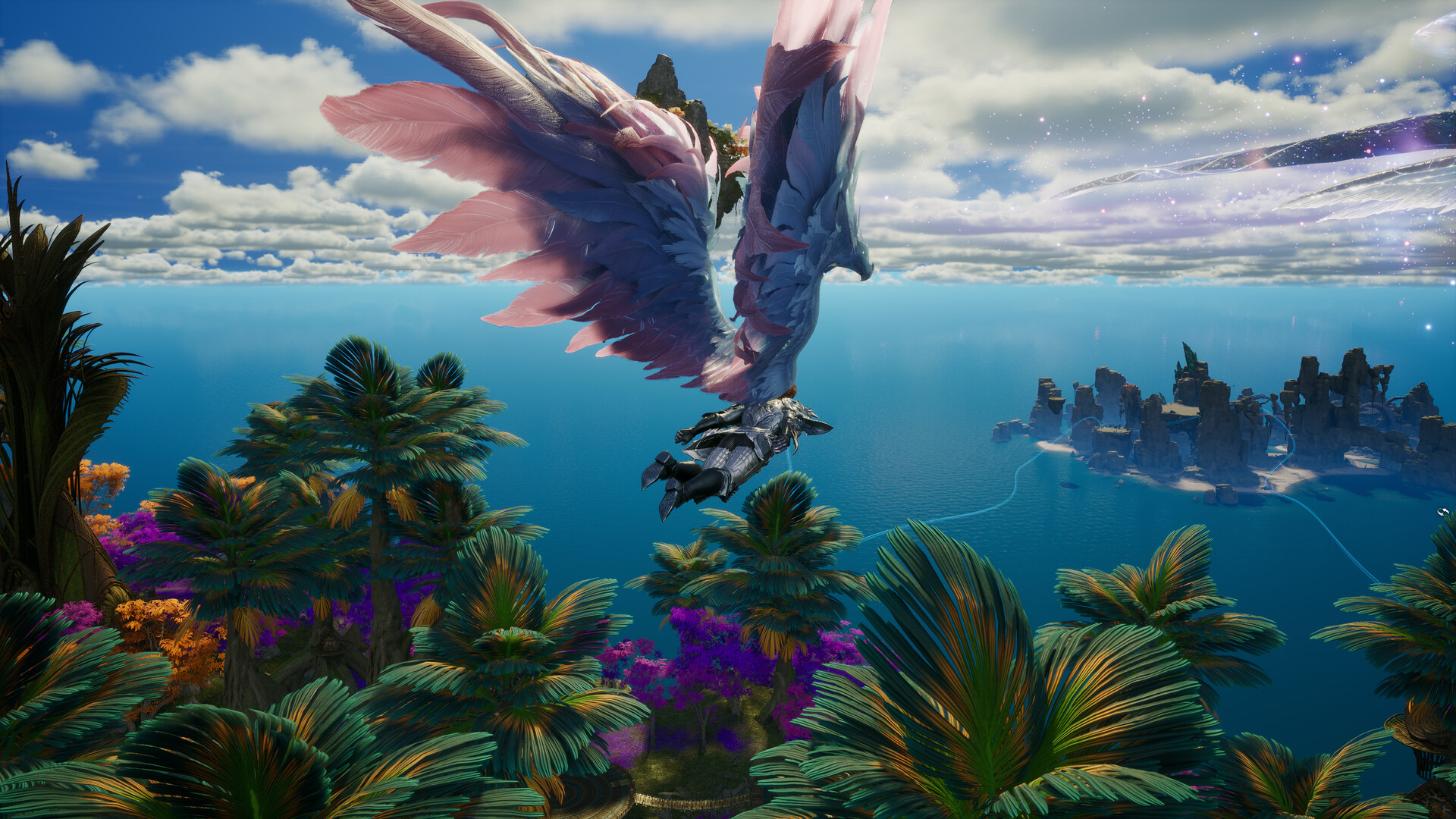
In Lower Reshanta and the active PvP zones, Elyos and Asmodian players can attack one another on sight. Faction-specific objectives (artifacts, fortresses, capture points) drive territorial control, and large-scale fights are common during prime hours. The 3D nature of Lower Reshanta means a fight can break out vertically: a small group ambushed from above can be dragged into the void before reinforcements arrive.
Aerial Battlegrounds
AION 2 also runs instanced aerial battlegrounds. These are queued PvP modes set on closed maps with full flight enabled, where two teams compete for objectives in 3D space. The battleground rotation changes with seasonal patches, swapping in new arenas with different layouts, sight lines, and resource node placement, so the active map pool reflects the current season on the live build.
Arenas
For players who want smaller-scale PvP, the arenas system provides 1v1 and small-group queued duels. Arenas use bracketed matchmaking and seasonal ladders.
Cross-Faction Etiquette
Open-world PvP only triggers when both players are flagged or when at least one is in an active PvP zone. Outside the Abyss, most non-PvP zones are safe; entering the Abyss is the deliberate choice that makes a player a PvP target.
Tips for New PvPers
Travel in groups. Solo Daeva in the Abyss are the easiest target on the map, especially when caught at a flight gauge low.
Watch the gauge. A fight you cannot finish before your flight gauge runs out will end with a forced glide downward, which is often a death sentence.
Learn the geography. The Abyss has fixed safe islands and known choke islands; knowing where reinforcements will appear matters as much as your build.
Push the Mid-Layer in groups. The Reshanta Aura buff scales with consecutive kills, so coordinated group play in Chaotic Ereshulanta dramatically out-rewards solo skirmishing.
New and Upcoming PvP Modes
NCsoft has rolled out several new PvP modes for the Korean and Taiwanese build. The Abyss Rift Zone, Battlefield: Siege, and Chaotic Upper Reshanta are live; Outland was announced as Chapter 1 content but had not shipped on the Korean and Taiwanese build as of September 13, 2026. The exact rules for teased modes may shift before they ship and before the global launch.
Mode | Type | Status | Notes |
|---|---|---|---|
Abyss Rift Zone | Up to 300 per faction | Live since June 17, 2026 (tuned June 24) | Large-scale faction battle on a shared field where bosses spawn in phases over the session. It is open to characters at level 45 and item level 3000 or higher, runs Tuesdays and Thursdays from 10 PM, and caps entry at up to 300 players per faction. Points are scored on boss kills, and rewards pay out per class-contribution ranking to the faction that lands the final blow; it does not affect Abyss season missions or rankings. The June 24 patch raised boss health, adjusted boss spawn positions and counts, and let PvP within 100m of a boss also score points. |
Battlefield: Siege | Stat-equalized battleground | Live since July 1, 2026 | A sports-style battleground where every participant's combat power, stats, and skills are normalized to the same level, so the outcome turns on play rather than gear. It shipped with the Chapter 1. Lands of Sand and Snow update. |
Chaotic Upper Reshanta | Contested Abyss field | Live since July 1, 2026 | A new open PvP field added with the Chapter 1 update, with restricted item levels and no bosses or artifacts, so fights turn on player skill rather than gear checks. |
Outland | Battle royale | Announced, not shipped as of September 13, 2026 | A battle-royale mode reported to support around 100 players. It was previewed at the June 14 Summer Festa as part of the horizontal AION2 THE NEXT roadmap but did not ship with the July 1 Chapter 1 update, and the exact cap is not yet confirmed in an official patch note. |
The Abyss Rift Zone launched at the June 17, 2026 maintenance and was tuned on June 24. Battlefield: Siege and Chaotic Upper Reshanta shipped with the July 1, 2026 Chapter 1. Lands of Sand and Snow update. Outland was named in NCsoft official material as part of the Chapter 1 content set, and had still not shipped as of September 13, 2026. Alongside these, the open-world Abyss layer and the instanced arenas and aerial battlegrounds described above are the established live PvP content.
Recent PvP Balance
The Korean and Taiwanese build keeps tuning PvP on the weekly patch cycle. The July 8, 2026 balance patch cut PvP damage by a flat 30% for every class, a game-wide change meant to slow burst kills and lengthen fights across the open-world Abyss, the aerial battlegrounds, and the arenas alike. The same patch adjusted battleground stats and folded in another round of per-class tuning. Treat the exact figure as a current live-build value; the global build may retune it before launch.
Abyss Rift Zone Rework (July 15, 2026)
The July 15, 2026 patch on the Korean and Taiwanese build reworked how the Abyss Rift Zone fills. The mode moved off server-versus-server matching and onto faction-wide integrated matching, so players are pooled by faction rather than by which server group they were matched into that week.
Cap cut to 300 per faction, down from 400 against 400, with boss health lowered to match the smaller turnout.
Overflow opens a new channel instead of refusing entry, so a full field no longer locks players out.
Entry closes when the preparation phase ends. Once the event is underway, no one else joins.
Players are redistributed after preparation to balance the channels. If a channel still totals under 200 players across both factions, or the two sides remain badly lopsided, that channel's event is cancelled.
Start time is fixed at 10 PM for everyone, with no staggered delay by matching group.
Parties and forces are dissolved on entry, and an event chat filter lets players coordinate with their whole faction inside the zone.
The same patch made players standing at their own team's resurrection point invulnerable in battlegrounds, closing the spawn-camping window. The August 12, 2026 patch then replaced that spawn-point invulnerability with a defense boost strong enough to cut incoming damage to almost nothing, with clearer visual feedback on the buff.
Battleground Matching Rework (August 12, 2026)
The August 12, 2026 patch on the Korean and Taiwanese build restructured how instanced PvP queues fill:
Co-op arena and battleground teams are now formed without regard to faction, so Elyos and Asmodian players can land on the same team.
Battleground queues accept only solo players or full five-player groups. Premade fives match other premade fives; solo players match solo players, with a class-balance correction applied across the two teams.
Players who stay out of combat for too long inside a battleground are force-ejected.
The entry debuffs that used to apply on joining a battleground (reduced healing received and reduced potion recovery) were folded into the baseline stats that apply inside battlegrounds. Potion recovery is unchanged against the old values, but healing received is 30% lower than before.
As with every balance entry on this page, these are live-build rules on the Korean and Taiwanese service and may be retuned before or after they reach the global build.
Abyss Rebalance (August 26, 2026)
The August 26, 2026 patch on the Korean and Taiwanese build pushed Abyss rewards and difficulty up together. Abyss bosses and dimensional cores gained stats, and the patch note flags those numbers as provisional and open to further adjustment. The damage amplification carried by Abyss equipment set bonuses rose at every breakpoint:
Set Pieces | Before | After |
|---|---|---|
2 | 10% | 15% |
5 | 12.5% | 20% |
8 | 15% | 30% |
12 | 20% | 40% |
The same patch reset artifact occupation and the Abyss corridor to follow a round of server rematching, surfaced corridor opening times inside the artifact panel on the HUD, and started paying out partial rewards when a rift-zone match fails to fill.
Server Structure and Abyss Matchmaking at Global Launch
For the global release, NCsoft has stated that Elyos and Asmodian servers are separate and that the two factions meet in the Abyss rather than sharing an open world. During the five-day Early Access window, Abyss matchmaking runs between Early Access servers only. After launch, servers are paired on how far along and how strong each one is, so a head-start server is not matched against a day-one server. See Global Launch and Platforms for the full server layout.
The first global livestream in August 2026 added two more launch-side details: the instanced battleground mode at global launch is an objective-based 10v10 with stat normalization, and a PvP toggle flag is available from the start everywhere except the Abyss, which runs faction-versus-faction PvP by default.
How the Chapter 1 PvP Modes Work
NCsoft published English descriptions of both Chapter 1 PvP additions on July 6, 2026, which settles the naming that earlier coverage rendered several ways. Battlefield: Siege is an objective mode in which teams capture three zones to accumulate points, and every team starts under identical conditions rather than carrying gear advantages in. Chaotic Upper Reshanta is a contested Abyss field where item level and combat power are capped and no bosses or Artifacts spawn, so it resolves on positioning and coordination instead of progression.
Both sit alongside the existing Abyss layer rather than replacing it. Note that Artifact occupation and the Abyss Corridor are reset whenever the live build re-matches servers against one another, so control of the map is deliberately impermanent across a matching cycle. The fourth Chapter 1 server matching took effect with the August 12, 2026 maintenance, resetting Artifact occupation and the Abyss Corridor for the new server groups.
Related Pages
Gear and Progression
Factions: Elyos and Asmodian