

Autonomous Decision-Making
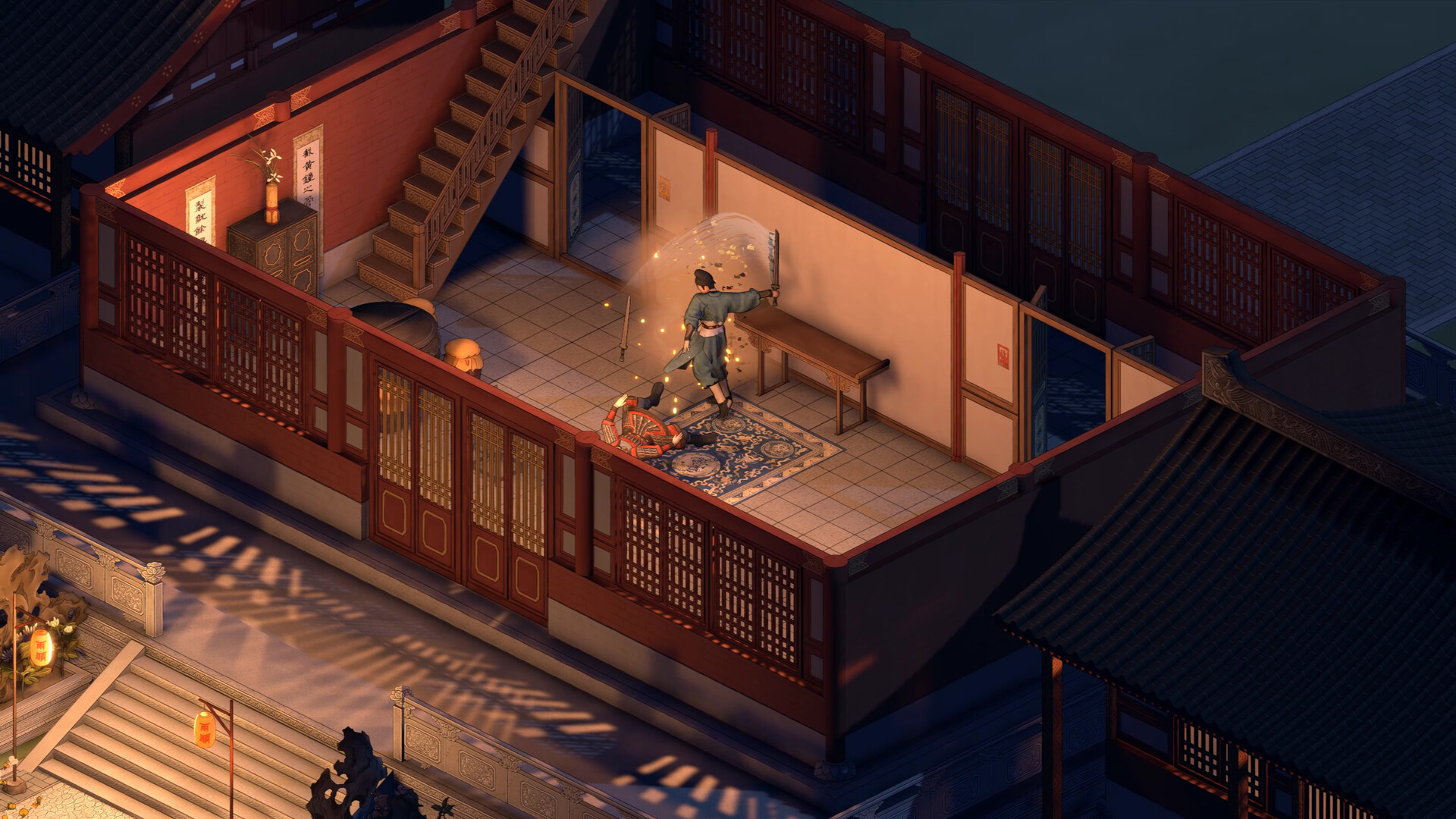
The central claim of The Bustling World's NPC system is that "every element in the game world thinks and decides independently, reacting uniquely to your actions." This is not scripted scheduling where NPCs follow predetermined daily routines of waking, working, eating, and sleeping at fixed times. Each NPC evaluates their circumstances and makes decisions based on their personality, their needs, and the current state of the world around them.
NPCs autonomously decide a wide range of actions. They choose where to work based on available jobs and their own skills. They select entertainment based on personal preferences. They decide where to live based on safety, affordability, and proximity to things they care about. They choose whether to flee from war zones or stay and endure. They decide whether to avenge a murdered family member based on their courage and attachment to the deceased. If a business opens nearby that needs workers, NPCs may apply. If a region's economy collapses, NPCs migrate to more prosperous areas.
Persistent World Simulation
These decisions happen continuously across the entire game world, not just in the player's immediate vicinity. While you are managing a shop in one city, NPCs in a town three regions away are making their own choices about their lives. The world does not pause outside your field of view. It keeps running.
The result is a world that changes on its own regardless of what the player does. Cities grow or shrink based on NPC migration patterns. Businesses open and close based on local demand. Conflicts arise between NPCs and groups without player involvement. The player is one actor in a world full of independent agents, each pursuing their own goals.
Individual Personalities
Every NPC has a distinct personality that influences how they react to events and make decisions. A cautious NPC avoids conflict and seeks stable employment. An aggressive NPC gravitates toward fighting, criminal activity, or military service. A social NPC forms many relationships and spends time in public spaces. A reclusive NPC prefers solitude and avoids crowded areas. These personality traits are not just descriptive labels. They directly determine what the NPC does when faced with a choice.
Personality affects how NPCs respond to the player specifically. An NPC who values honesty reacts poorly to being deceived. One who respects strength is more easily impressed by combat victories. One who values loyalty will remember if you helped them in the past. Understanding individual NPC personalities is useful for players who want to recruit allies, pursue romance, manage employees, or manipulate faction politics.
The personality system means that identical situations produce different outcomes depending on which NPCs are involved. Offering a bribe to a greedy official works. Offering the same bribe to an upright official backfires. Threatening a coward produces compliance. Threatening a proud warrior starts a fight. The same action has different results based on who you are dealing with.
Families and Social Networks
NPCs exist within family structures. They have parents, siblings, spouses, children, and extended relatives. These relationships are real and tracked by the game, not just background lore. A parent will prioritize feeding their children over their own comfort. Siblings may cooperate to build a family business or compete for inheritance. A spouse's death causes genuine grief that changes the surviving partner's behavior.
Beyond families, NPCs form broader social networks through shared workplaces, neighborhoods, and activities. They develop friendships, rivalries, and grudges. A dense web of relationships means that actions against one NPC ripple outward through their connections. Killing a merchant does not just remove one person from the world. It creates grieving family members, concerned friends, worried business partners, and possibly vengeful relatives who come looking for the killer.
These social networks also create information flow. NPCs talk to each other. News of the player's actions travels through social connections. A good deed witnessed by one person may be known by their friends and family the next day. A crime committed in front of witnesses spreads through the local community. Reputation is not an abstract number. It is the sum of what people have heard about you.
Interacting with Any NPC
The game allows players to socialize with any NPC in the world. Neighbors, local officials, merchants, beggars, wandering martial artists, soldiers, farmers, criminals, and even the king are all available for conversation. There is no separation between "important" story NPCs and "background" population. Everyone is part of the same system and can be engaged with on the same terms.
Interaction options include befriending, marrying, bribing, and confronting. The dark side of the game lets players lie, steal, threaten, and manipulate. The life simulation side lets players form genuine friendships, build community ties, and become a trusted member of a neighborhood. Both paths are open with any NPC.
This openness has practical implications. Want to befriend the local governor to gain political influence? Talk to them regularly and do things they appreciate. Want to bribe a guard to look the other way during a heist? Approach them with the right amount of money and hope their personality allows for corruption. Want to confront the leader of a rival faction? Walk up and start a conversation, though the consequences may be severe depending on where you are and who is watching.
Romance and Marriage
The main character can develop romantic relationships with certain fixed NPCs in the game. Romance is not available with every single NPC, but the specific pool of romanceable characters has not been fully detailed in public materials. What is known is that romance involves building a relationship over time through repeated positive interactions, similar to how friendships develop but through distinct romantic conversation options and shared activities.
Courtship is a gradual process. You cannot walk up to an NPC and propose marriage on first meeting. The relationship develops through regular interaction, gift-giving, shared experiences, and demonstrating compatibility. The NPC's personality affects what they find attractive or off-putting, so a one-size-fits-all approach to romance does not work.
Marriage is possible once a romantic relationship has developed sufficiently. Married couples share a household and resources. The spouse remains a full NPC with their own personality, and their behavior after marriage continues to be shaped by their traits and the state of the world. They do not become a static decoration. They have opinions, make decisions, and react to the player's actions just like any other NPC.
Hero Recruitment
Players can recruit heroes and martial artists to form a personal mercenary force. Each potential recruit is a full NPC with their own personality, history, combat skills, and conditions for joining. Some want payment. Others want proof of the player's martial ability. Some have personal goals or grievances that must be addressed before they commit.
Recruited heroes are individual characters, not generic soldiers. They retain their personalities after joining and may have opinions about the player's decisions. A hero who values justice might object to the player running a criminal operation. One who craves combat may grow restless during extended periods of peaceful commerce. Managing a mercenary force means managing individual relationships, not just issuing orders.
The quality and composition of the player's mercenary force matters. Heroes with different weapon specializations and martial arts backgrounds provide different tactical capabilities. Balancing the force with a variety of fighting styles makes it more effective across different combat situations than loading up on a single weapon type.
Employee NPCs
NPCs can be hired as employees for the player's businesses. Employees handle day-to-day operations: serving customers in restaurants, crafting goods in workshops, managing inventory in shops, and performing the routine labor that keeps a business running. The quality of employees directly affects business performance.
A skilled chef produces better meals that attract more customers and command higher prices. An experienced shopkeeper manages pricing and customer relations more effectively. An unskilled worker produces lower-quality output and may make mistakes. Hiring decisions are not just about filling positions. They are about finding the right person for each role.
Since employees are full NPCs with their own personalities, employment is a two-way relationship. Workers may quit if mistreated, underpaid, or unhappy with working conditions. They may demand raises if they believe their skills warrant better compensation. They may cause problems with other staff members if personality conflicts arise. The business owner cannot treat employees as interchangeable parts without consequences.
Voice Acting and Motion Capture
The developers invested in professional voice acting and motion capture to support what they describe as a "seamless story experience." NPC dialogue is voiced, giving interactions more personality and emotional weight than text-only conversations. The voice acting applies across the game's seven supported languages: English, Japanese, Simplified Chinese, Traditional Chinese, Korean, French, and German.
Motion capture was used for character animations throughout the game, from combat techniques to daily routines and social interactions. The combination of voiced dialogue and motion-captured movement is meant to make each NPC feel like a distinct person rather than a game object with a text box.
Whether every NPC in the game has unique voice lines or whether voice acting is limited to key characters and generic barks has not been fully clarified. What is clear from the trailer footage and the GDC 2025 demonstration is that the production quality investment is real and visible in the final product.
What This Means in Practice
In a typical playthrough, the NPC systems create situations that were never explicitly scripted. You might hire an NPC to work in your restaurant. That NPC has a family across town. If you get into a conflict with the faction that controls their neighborhood, your employee might quit and flee the region. Or they might stay because they enjoy the work and trust you. It depends on their personality, their family situation, and how bad things get.
The NPC system is the connective tissue that holds the entire sandbox together. Without autonomous, reactive NPCs, the crafting and business systems would operate in a vacuum. The faction dynamics would be mechanical rather than organic. The world would feel like a stage set rather than a living place. With them, every system gains weight because there are real characters affected by every decision.