

FireWo Games
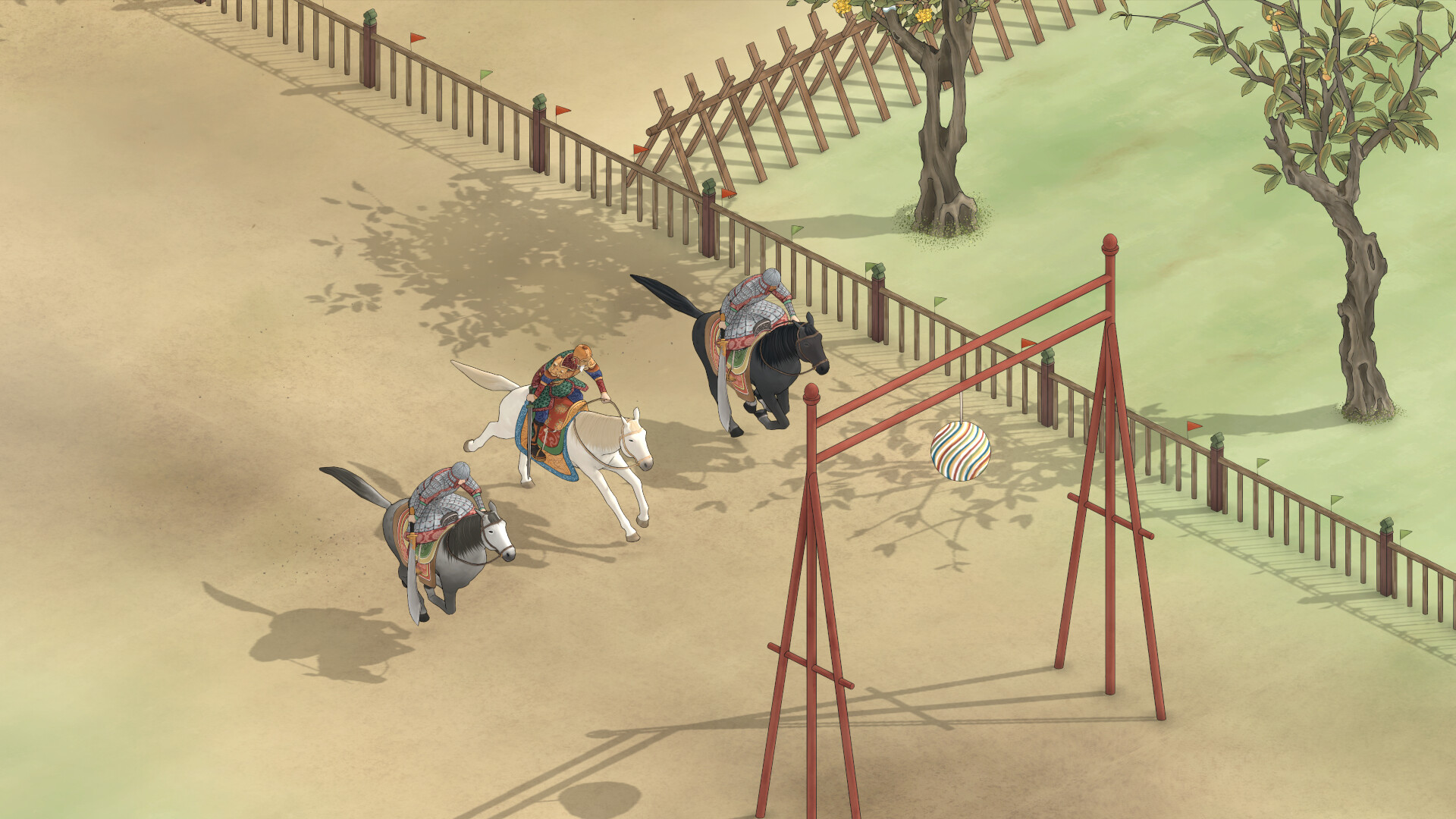
The Bustling World is developed by FireWo Games, an independent studio based in Chengdu, China. The studio was founded by a married Chinese couple who began working on the game together, just the two of them. For roughly four years, they built the game in near-total silence, creating systems, producing art, and designing the world without any public presence, marketing, or social media activity.
Chengdu has become a notable hub for Chinese game development in recent years. The city hosts studios working across mobile, PC, and console games. FireWo Games started as a two-person operation in this environment. The contrast between the studio's original size and the game's scope is one of the more striking aspects of the project's story.
Publishing Partners
The studio keeps its own staff on development and works through a publishing partner for everything around the release. The store page lists a single publisher of record, and that partner covers publishing strategy, storefront presence, English-language marketing, localization coordination, community management in western channels, and event appearances.
That arrangement has not been static. Coverage from the original late-2023 announcement cycle named a different, Beijing-based publisher, and that attribution still turns up in older articles and database entries. The current store listing supersedes it. Two companies being attached to a project at different points is common for Chinese indie games courting a domestic audience and an international one at once, since the two markets run on different platforms, press, and community expectations.
Early Development (2019-2023)
The founding couple spent approximately four years building the game before revealing it to the public. During this silent development period, they created the core simulation systems that drive NPC behavior, designed the interconnected gameplay loops for combat, crafting, business, and factions, produced thousands of hand-drawn art assets, and built out the world's geography and architecture.
The art pipeline alone accounts for an enormous amount of work. The team has produced over 5,000 hand-drawn art assets for the game. The developers have explicitly stated that no AI-generated art was used at any point in production. Every texture, from building materials to clothing patterns to environmental details to decorative objects, was created by hand. In an industry where AI art tools became widespread in 2023 and 2024, FireWo Games went in the opposite direction and made their hand-drawn commitment a point of differentiation.
Visual Pipeline and Physics
The hand-painted visual style required developing a rendering approach that produces fully 3D geometry with the look of traditional painting. The result looks like traditional Chinese painting that you can walk through, which is a distinctive look that required custom art direction rather than off-the-shelf rendering techniques.
Clothing physics were another major investment. The game simulates ancient-Chinese-styled garments, with flowing robes, layered fabrics, and accessories that react to character movement and environmental conditions. The developers describe this garment simulation as a first in gaming. Whether or not that specific claim holds up, the clothing behavior is clearly something the team spent significant development time on.
Engine and Story Presentation
The game is built in Unity. The studio began hiring Unity engineers when it incorporated in Chengdu in early 2024, and later recruitment rounds continued to list Unity engineering alongside design, level art, animation, modelling, and visual effects roles.
The developers have said that the story is delivered as a single seamless flow rather than as discrete cutscenes, and that this presentation layer was produced entirely with motion capture and human voice performance. A large part of the studio's Chengdu office is given over to a motion-capture area, and the same capture work underpins the animation sets described in martial arts and weapons.
The Kickstarter Campaign
On December 29, 2023, FireWo Games launched a Kickstarter campaign with a funding goal of $80,000 USD. At the time of launch, the game was reported to be approximately 60-70% complete. The campaign was intended to fund the final stretch of development and raise the game's profile among western audiences who might not otherwise encounter a Chinese indie game.
The campaign did not reach its goal. After just five days, on January 3, 2024, the Kickstarter was canceled. It had raised roughly $10,000 of its $80,000 target. The cancellation was attributed to feedback about the reward tiers rather than a fundamental lack of interest in the game. The developers later said the funding need was resolved through company investment, taking financial backing in exchange for equity only, without selling any other rights, so the team could keep prioritizing game quality.
As a goodwill gesture, FireWo Games promised free Steam keys to everyone who had backed the project during its brief run. The failed Kickstarter did not slow development. If anything, the attention generated by the campaign and its cancellation proved there was an international audience interested in the project, even if crowdfunding was not the right model for reaching them.
Rapid Wishlist Growth
Despite the Kickstarter's failure, The Bustling World's Steam page attracted enormous organic attention. Within 20 days of its initial announcement, the game accumulated over 150,000 wishlists. More than 60% of those wishlists came from outside China, demonstrating significant international interest in the project from its earliest days of public visibility.
This wishlist growth happened with minimal marketing spend. The game's concept, setting, and scope generated organic interest through gaming forums, social media discussions, press coverage, and word of mouth. The combination of an ancient Chinese sandbox setting, deep simulation systems across multiple genres, and the underdog story of a married couple building a game this ambitious resonated broadly.
For a game from a previously unknown Chinese indie studio, 150,000 wishlists in under three weeks is a strong signal. It indicated that the market existed for this type of game and that the language and cultural barrier between Chinese developers and western audiences could be crossed if the product was compelling enough.
Growth continued after that initial surge. On May 27, 2024, the developers announced that the game had passed 300,000 wishlists, and marked the milestone with a commemorative illustration and a thank-you post to the community. Doubling the count in roughly three months, still without a demo or a release date, confirmed that the early interest was not a one-off spike. The producer later put a finer point on the early curve, saying wishlists passed 250,000 within two months of the store page going live and that roughly seventy percent of them came from outside China. Two years on the game was still near the top of community-compiled wishlist rankings for unreleased Chinese single-player titles, which is unusual staying power for a project with no demo and no dated release.
2024 Milestones
In late December 2024, FireWo Games released a second gameplay trailer that showed updated systems and visual improvements since the Kickstarter era. The developers stated that the footage was captured entirely in-engine. The trailer demonstrated farming, combat, building, NPC behavior, and business management in action, providing the most comprehensive look at the game's current state up to that point. Coverage dated the release to either December 29 or December 30 depending on time zone, so the wiki gives the window rather than a specific day.
Through 2024 and into spring 2025, the development team published regular monthly update diaries on Steam. That run ended on 29 April 2025. In August 2025 a developer explained the gap: the studio had entered what it called a silent development cycle, with monthly updates paused for the duration, and said development itself was proceeding smoothly. Pressed later the same month, the same account said updates would gradually resume within nine months. That window has since passed without the diaries returning. These posts covered what the team was working on, showed new features and systems, and gave progress updates. The consistent communication helped maintain community interest during the long stretch between the Kickstarter cancellation and the next major public appearance.
Awards
2024 was also the year the project began collecting industry recognition. The game took three awards at the independent-game showcase held alongside that year's ChinaJoy trade show, and a fourth at a national game innovation competition whose ceremony was held in Shanghai on July 27, 2024.
Award | Competition | Date |
|---|---|---|
Best Art Game | ChinaJoy independent-game development awards | 2024 |
Best Original Game | ChinaJoy independent-game development awards | 2024 |
Most Anticipated Game | ChinaJoy independent-game development awards | 2024 |
Best Innovation in Chinese Culture | 4th China Game Innovation Competition | July 27, 2024 |
The culture award citation singled out the game's reconstruction of close to a thousand classes of everyday ancient object, including furniture, lamps, vases, paintings and calligraphy, and farming tools. Those objects are the same catalogue the construction system and property and housing articles describe. The producer later said this was the project's first awards run and that several nominations converted in the same cycle.
2025 Milestones
In January 2025, the game was officially revealed for overseas audiences, signaling a more organized push toward international markets with dedicated English-language press outreach and community building.
In February 2025, FireWo Games held their first Bilibili livestream during the Chinese Lantern Festival. Bilibili is one of China's largest video platforms, particularly popular with gaming audiences. The livestream gave Chinese viewers a live, unedited look at current development progress.
In late April 2025 the studio's art director spoke at an online developer-alliance event run by G-bits, the games company behind the game's publisher. Asked what separates the project from traditional Chinese role-playing games, he said that no single feature counts as innovation on its own, and compared development to cooking: familiar ingredients and techniques, combined in a different balance, produce something that reads as new.
The game's biggest public milestone came at GDC 2025 (Game Developers Conference) in San Francisco, held March 19-21, 2025. This was The Bustling World's first overseas offline event. Attendees could see the game running in person, ask developers questions, and evaluate the product firsthand. Feedback from GDC was positive, with attendees noting the depth of the simulation systems and the quality of the hand-drawn art.
GDC represented a turning point in the game's western visibility. Before GDC, the game existed primarily as trailers and screenshots for western audiences. After GDC, industry professionals and press who had seen it in person could speak to the quality of the actual product. That kind of firsthand validation is hard to achieve through online marketing alone.
In mid-2025, the developers shared an updated progress statement: development of the full launch version is targeted for completion before the end of 2026. The plan is to release on Steam first and then bring the game to other platforms in stages. A small-scale offline test was planned for late 2025 so a limited audience could try the build, with the playable demo still being polished. This is a development target rather than a locked release date, and the studio has not committed to a firm day-one date.
2026 Development Status
Public communication slowed through late 2025 and into 2026, and community threads began asking whether the project had been shelved. In March 2026 the developers answered that directly by posting fresh in-game imagery to their overseas social channel, explicitly to show that the game was still in production. The post drew a strong response from players outside China. Further posts followed through April and into early May 2026, showing night-time city activity and short clips of the world in motion, so the channel rather than the Steam diaries has become the working signal of progress. The Steam update diaries themselves have not resumed since April 2025. The video posts are dated: 15, 22 and 29 April 2026, then 6 May 2026, which is the most recent first-party activity of any kind at the time of writing.
2026 Strategic Investment
Business-registration records for the studio's Chengdu company surfaced publicly in late April 2026 showing a new shareholder: an investment vehicle wholly owned by Tencent's investment arm, holding a 12.5 percent stake. The records show when the change was entered on the register and when it was picked up, not when the round itself closed, so late April 2026 is the disclosure date rather than a deal date. It drew attention as one of the few recent cases of Tencent putting direct capital into a domestic single-player game, after several years of the company pulling back from independent titles.
Tencent is not the only outside shareholder. The same filings put a second games company at roughly 11 percent, from an angel round taken when the studio incorporated in 2024. That is the equity backing the founders were referring to when they said the Kickstarter shortfall had been resolved through company investment. The game is older than the company that makes it: the project dates to around 2019, while the legal entity was set up years later, once the founders started hiring.
Team Growth
By March 2025, the FireWo Games team had grown from its original two founders to over 50 members. This expansion happened gradually as the project's scope required more hands in art, programming, design, quality assurance, and production management.
Growing from 2 people to 50+ while maintaining a consistent creative vision is one of the harder challenges in game development. Many projects lose their identity when the team expands rapidly. In FireWo's case, the founding couple's four years of solo development established the game's direction, aesthetic, and design philosophy before the team grew. New team members joined a project with clear goals and existing systems rather than a blank slate, which likely helped maintain coherence.
Even at 50+ people, the team is small relative to the game's ambition. A sandbox with interconnected combat, crafting, business, farming, breeding, city management, faction diplomacy, and autonomous NPC simulation systems would typically require a much larger team. The five-plus years of development time partially compensates for the smaller headcount.
Platforms and Release
The Bustling World is confirmed for PC release on both Steam and the Epic Games Store. No console version has been announced. Despite a listing presence on other platforms, the game is not a mobile release.
The developers are targeting completion of the full launch version before the end of 2026, with a Steam-first release followed by other platforms in stages. No specific day-one date has been announced. Given that the game was reported as 60-70% complete in late 2023, an end-of-2026 launch window is plausible if the remaining development, testing, and localization work proceeds at a steady pace. The monthly Steam diaries have not indicated a precise release date.
The launch build is single-player. Multiplayer is not cancelled, though: a developer said in January 2025 that it had been moved into the post-launch update plan so the base game could ship sooner. Given the depth of the NPC simulation and the number of interlocking systems, keeping launch single-player reads as a scope management decision; adding networked play to a game this complex would multiply the development challenge significantly.
Language Support
The game lists support for seven languages: English, Japanese, Simplified Chinese, Traditional Chinese, Korean, French, and German. The store listing does break audio out from interface and subtitle support, and as of August 2026 it marks interface and subtitles for those languages while leaving the full-audio column empty for all of them. Separately, the developers have described the story sequences as carrying human voice performance, without saying which languages that covers. The most accurate reading is that text localisation is confirmed for all seven and that no per-language audio commitment has been published yet. Localization at this breadth is a significant undertaking for a team of around fifty people.