

Overview
The economy in The Bustling World simulates a living marketplace where almost 1,000 items and artifacts can be traded. Players trade items on the market freely and gain revenue from price fluctuations, but the system extends far beyond simple buy-low-sell-high trading. You can own and operate businesses, manage employees, compete with rival merchants, and even participate in an underground economy. The NPC systems drive autonomous economic behavior, meaning the market moves whether or not the player is actively trading.
Market Dynamics and Pricing
Prices in The Bustling World are not fixed. They fluctuate based on supply, demand, seasonal availability, regional production, and player actions. A crop that is abundant in summer costs less than the same crop in winter when supply drops. A city under military siege sees food prices spike. A successful trade route between two regions brings prices closer to equilibrium, while disrupted routes create arbitrage opportunities.
Property prices follow similar dynamics. The value of real estate fluctuates with market factors including location, surrounding development, economic conditions, and local demand. A shop in a busy commercial district costs more than one on a quiet side street. Building a market near a previously undeveloped area drives up nearby property values.
Players who pay attention to these price patterns can profit from them. Buying goods where they are cheap and transporting them to markets where they are expensive is the basic trading loop. The more you understand about regional production, seasonal cycles, and current events, the better your trading decisions become.
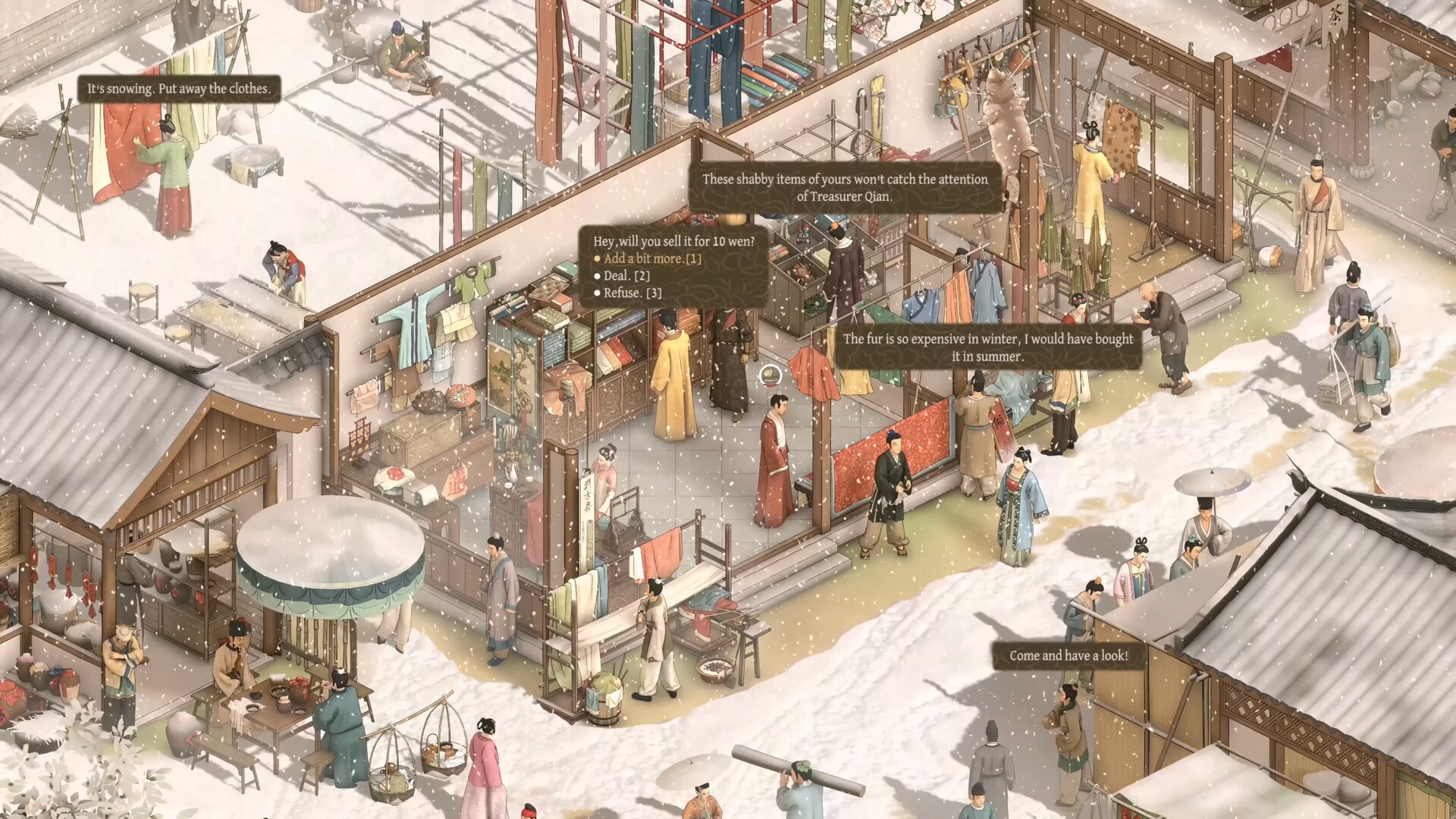
Everyday transactions are denominated in wen, the copper cash unit of the period, and a stated price is not always the final one. Buying and selling can open a bargaining exchange in which the player answers an offer by pushing for more, taking the deal, or refusing it outright. Amounts at street level are small: a single item changing hands for ten wen sits at the bottom of the same scale that runs up through shopfronts and property.
Business Types
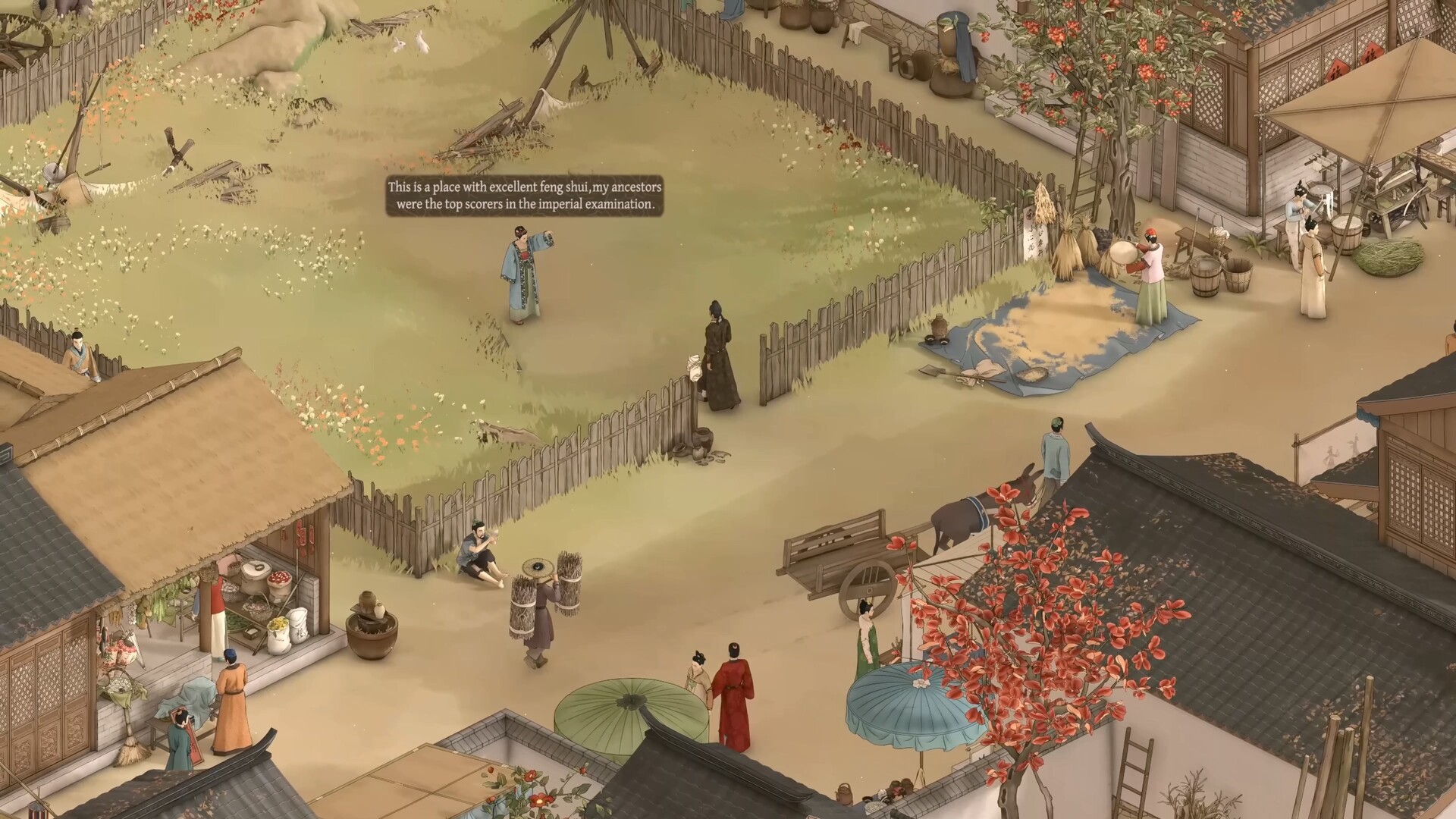
The game supports a wide range of business types. Confirmed options include restaurants, hotels, inns, pharmacies, banks, pawn shops, cloth shops, grain shops, and general retail. Each business type has its own mechanics, customer base, and profit structure.
A restaurant requires ingredients from the agricultural system, a skilled chef, and a location with foot traffic. An inn needs rooms, staff, and proximity to travel routes. A pharmacy needs medicinal herbs, knowledge of traditional remedies, and customer trust. Each business type connects to different parts of the game world, creating natural incentives for players to engage with multiple systems.
Business management involves hiring employees, managing daily operations, handling promotions, opening branch locations, and competing with opponents. Your employees are NPCs with their own skills and motivations. A talented chef makes your restaurant more profitable. An unreliable clerk loses customers. Staff management is part of running a successful business, and it connects to the broader NPC relationship system.
Business Competition
You are not the only merchant in the world. NPC-run businesses compete for the same customers, and rival merchants may try to undercut your prices, poach your employees, or corner the supply of key materials. Competition is not just a background flavor element. It affects your bottom line and requires active response.
Competitive strategies include price adjustments, quality improvements, location advantages, and in some cases, less ethical approaches. You can try to buy out a competitor's supply chain, hire away their best workers, or use your political connections to make their operations more difficult. The game does not draw a hard line between fair and unfair competition, leaving those choices to the player.
Underground Economy
Beneath the legitimate marketplace exists an underground economy with its own rules and participants. This includes casinos, secret banking operations, bandit organizations, and street begging operations. The dark side of the game world is reflected in its economy, and players who want to engage with criminal enterprise have economic systems built to support that playstyle.
Casinos offer gambling with all its associated risks and rewards. Secret banks operate outside the regulatory framework of legitimate financial institutions, offering services that regular banks will not. Bandits run extortion rackets, steal from caravans, and sell stolen goods through black market channels. Street beggars operate their own economic networks.
Named underground factions
Several specific underground factions operate within the game's criminal economy, and all three are named in official feature copy as examples of the hidden sects a player can seek out. The Beggar Gang, the Sunflower Sect, and the Red Clothes Sect are among the named groups. These factions can sell stolen goods on your behalf, teach you unique skills that are not available through legitimate channels, or find out secret information about other characters and factions. Each underground faction has its own specialties and reputation requirements.
Working with underground factions is profitable but carries risk. Criminal activity attracts attention from law enforcement, rival criminals, and morally-minded NPCs. Getting caught can lead to imprisonment, fines, or worse. The underground economy exists as a high-risk, high-reward alternative to legitimate business, and it connects to the broader crime and justice systems described in the exploration article's coverage of the wanted system.
NPC Economic Behavior
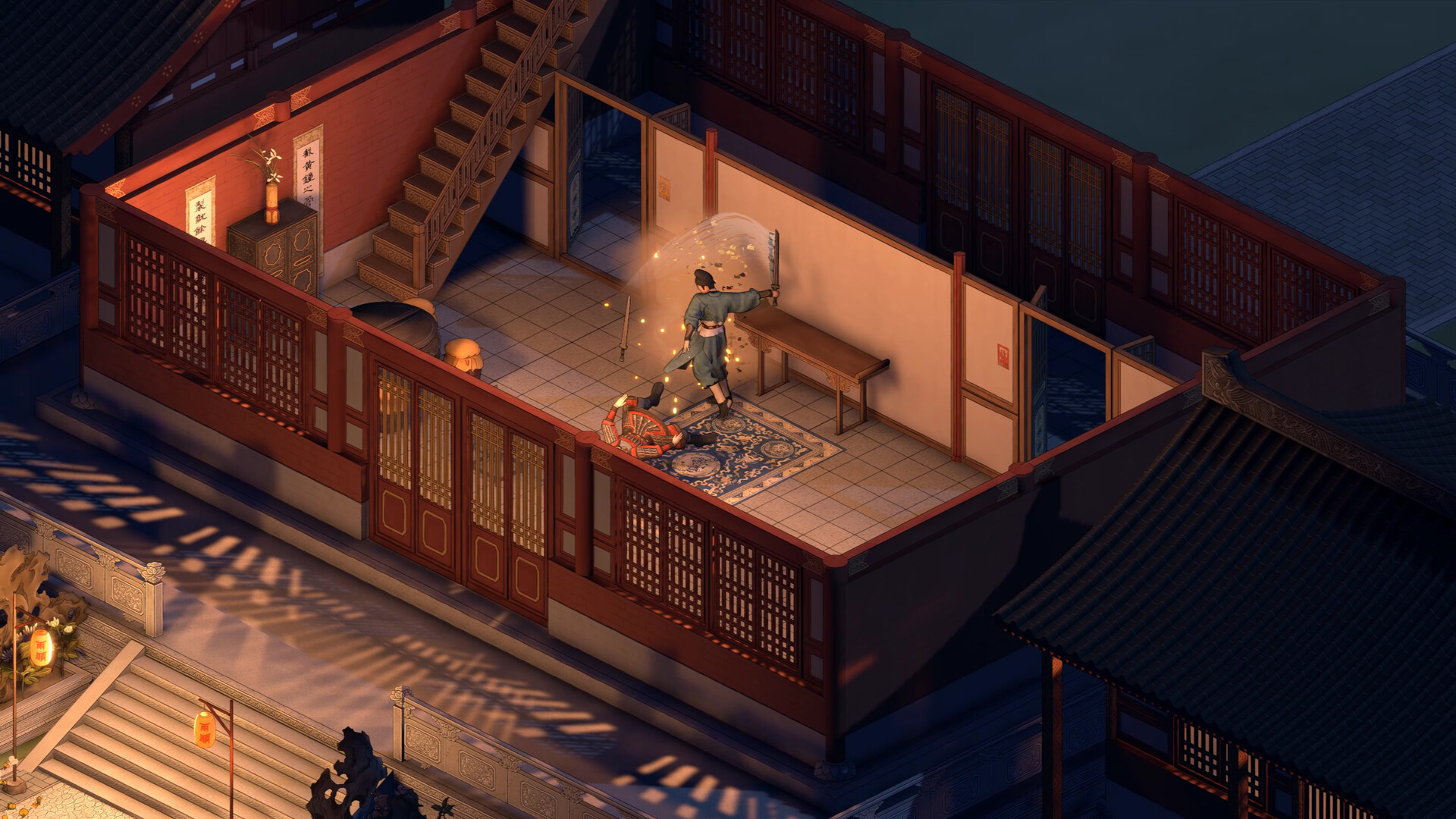
NPCs in The Bustling World engage in autonomous economic activity. They buy and sell goods based on their needs and preferences. They open businesses, seek employment, and respond to market conditions. This autonomous behavior means the economy is not a static system waiting for the player to interact with it. It runs on its own, and the player participates in a living market rather than driving a scripted one.
NPC economic decisions follow logical patterns. A farmer sells crops at the nearest market. A merchant seeks the highest profit margin available. A worker takes the best-paying job they can find. These individual decisions aggregate into market-level behavior that creates realistic price movements, business cycles, and economic geography.
The connection between NPC economics and city management is direct. A city with good economic policies attracts NPC merchants and workers. A city with oppressive taxation drives them away. The economic health of your territory depends on creating conditions where NPC economic agents want to operate, which ties back to zoning, policy, and infrastructure decisions.
Crafting-to-commerce pipeline
The crafting and business system creates a production pipeline that feeds into the economy. Raw materials from agriculture and mining are processed into finished goods through crafting, and those goods enter the marketplace as trade items. The progression from manual crafting to automated production scales up the volume of goods entering the economy.
A player who controls the full pipeline, from raw material production through crafting to retail sales, captures margin at every step. This vertical integration strategy is one path to wealth in the game. Another path focuses on trading, buying finished goods from crafters and selling them in markets where demand is higher. A third path skips production entirely and focuses on service businesses like inns and restaurants.
The economy is designed so that no single strategy dominates. Production-focused players need markets to sell their goods. Trade-focused players need producers to supply them. Service businesses need a population of customers with money to spend. These interdependencies create a balanced economic ecosystem rather than a single optimal path to wealth.
Trade Routes and Logistics
Moving goods between locations is not instant. Trade requires physical transport along routes that pass through the game world. Caravans carry goods between cities, and those caravans can be robbed by bandits or rival factions. The logistics of trade, including route planning, security arrangements, and timing, are part of the trading gameplay.
Trade route security connects to the military system. A player who controls territory along a trade route can protect their own caravans and tax or raid others. A player without military power must rely on hired guards or accept the risk of losses. The interaction between trade and military power creates one of the game's central strategic tensions.
Economic Scale
With almost 1,000 tradeable items and artifacts, the economy has significant depth and variety. Items range from basic commodities like grain and cloth to luxury goods like jade carvings and rare medicines. Each item has its own supply chain, market dynamics, and customer base. The diversity of tradeable goods means there is always another market to explore, another product to specialize in, or another business opportunity to pursue.