

Overview
Exploration in The Bustling World sends players into untamed wilderness where they battle creatures, track fugitives, and search for hidden martial arts techniques. The game's 3D camera gives a wide view of the surrounding terrain, which is useful when scanning for landmarks, following animal tracks, or spotting distant ruins partially concealed by vegetation. Unlike linear adventure games where exploration funnels you down corridors, the sandbox here lets you wander in any direction from the start, though the difficulty of what you encounter varies with the region.
The world is built around seasonal cycles that directly change what you can access. Certain paths freeze over in winter and become passable. A cave entrance might be hidden behind a waterfall that only flows during the rainy season. These seasonal shifts also trigger different events across the game world, meaning the same area can feel quite different depending on when you visit it. Exploration rewards include collectible weapons from the eighteen weapon types, secret martial arts manuals, crafting materials, and lore fragments tied to the history of the various factions.
Wilderness and Creatures
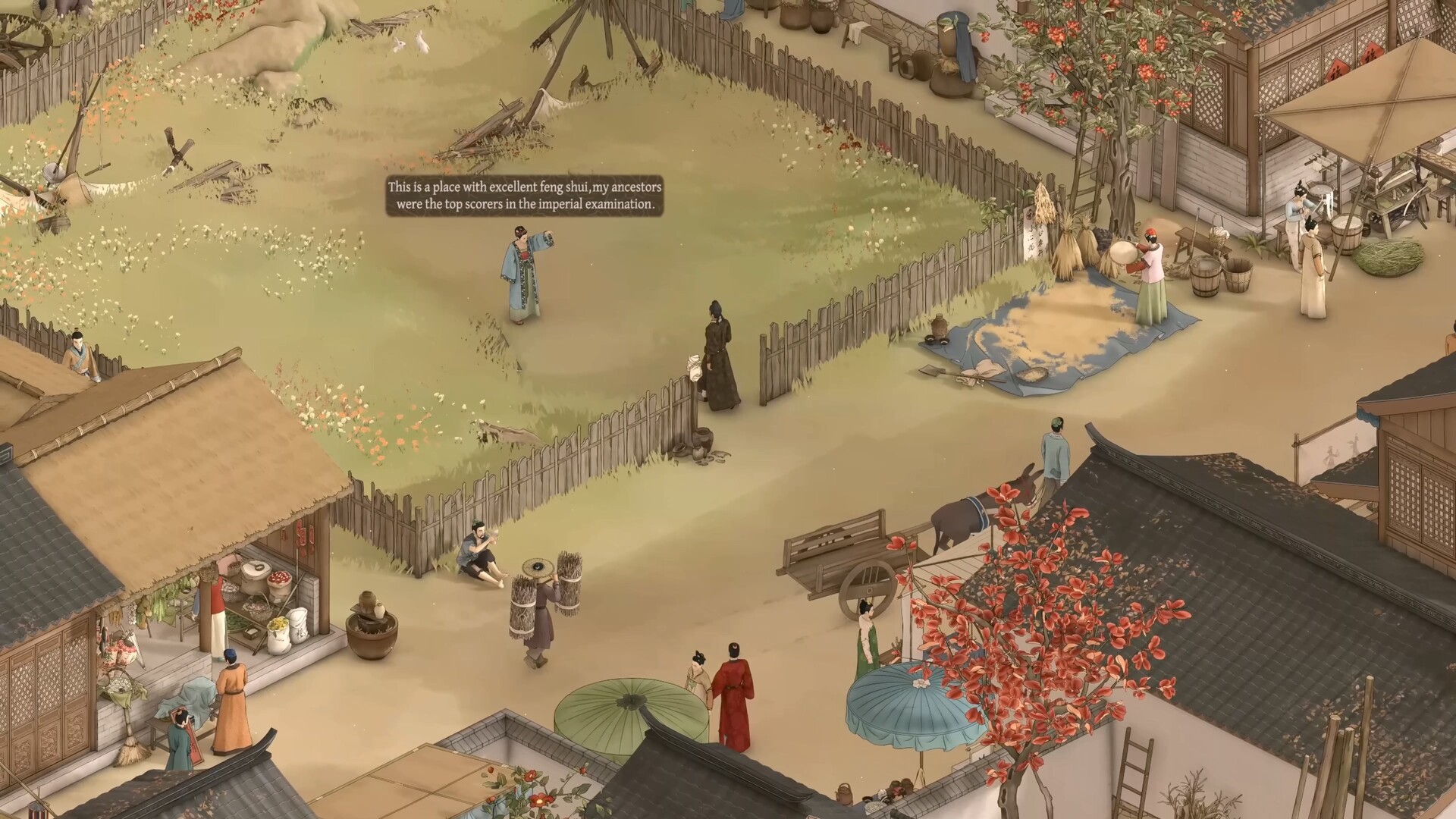
Over 30 creature species inhabit the wild areas of the game. These range from common animals you might encounter on any roadside to dangerous predators that guard specific zones. Players can hunt creatures for materials used in crafting, but the system goes further than simple combat-and-loot. High-level species can be caught alive and tamed using different weapons and tools. The capture method matters: certain creatures respond to certain approaches, and the weapon you bring determines your options.
Animals are not simply scattered at random across the map. They follow behavioral patterns tied to time of day, weather, and season. Predators hunt at night. Herding animals travel in groups along predictable routes. Learning these patterns is part of the gameplay loop, especially for players pursuing the more rare species that only appear under specific conditions.
Captured creatures have multiple uses. Some can be trained as mounts for faster travel. Others provide materials through breeding programs, where mutation chances can occasionally produce upgraded variants. The agriculture system handles the domestication side in more detail, but it is worth noting that wild capture feeds directly into that pipeline.
Getting Around
Tamed animals are not the only way to cover ground. The developers have shown sedan chairs and carriages as travel options, drawn from period paintings and produced in several styles. Carriages can also be modified, and stealing one is a recognised criminal act in its own right under the crime and wanted system. Which conveyance you arrive in is not purely practical either, since visible wealth feeds the same social read that clothing does.
Bounty hunting and fugitives
The bounty hunting system gives players contracts to track down specific targets. These are not simple waypoint-following quests. Fugitives have behavioral patterns and routines, and tracking them requires paying attention to clues in the environment. Some targets hide among civilian NPCs, using the game's social systems as cover. Others flee into the wilderness and set up camps in remote areas.
The reward structure scales with difficulty. Low-level bounties might ask you to find someone in a nearby town, which is straightforward once you know how the NPC schedule system works. Higher-level targets are genuinely difficult to locate. They move between regions, leave false trails, and sometimes have allies who interfere with your pursuit. Completing bounties earns money and reputation, both of which feed into other progression systems.
Crime, Wanted Status, and Consequences
The game supports a full criminal pathway during exploration. Stealing and robbery are both options available to the player. Lockpicking sits in the same toolkit, presented alongside stealth and treasure hunting as a way into places that are otherwise shut. If you are discovered committing a crime, you receive a "wanted" status with varying intensity depending on the severity of the offense. At higher wanted levels, bounty hunters will actively pursue you across the game world.
If you are arrested, you face a choice: accept trial or escape from prison. The judicial system is not purely punitive. Players can attempt to bribe officials to reduce or dismiss charges. You can also destroy incriminating documents that serve as evidence against you. These options add a layer of strategy to criminal activity, making it possible to engage in crime while managing the consequences.
The most severe punishment is a death sentence, which results in permanent death and forces the player to reload a save. This ties directly into the death and save system. The risk of capital punishment makes high-level criminal activity a gamble, since getting caught at the wrong time can cost significant progress. The criminal system connects to the dark side of the game's broader social systems, where underground factions and black markets offer support to outlaw players.
Temples, Caves, and Ruins
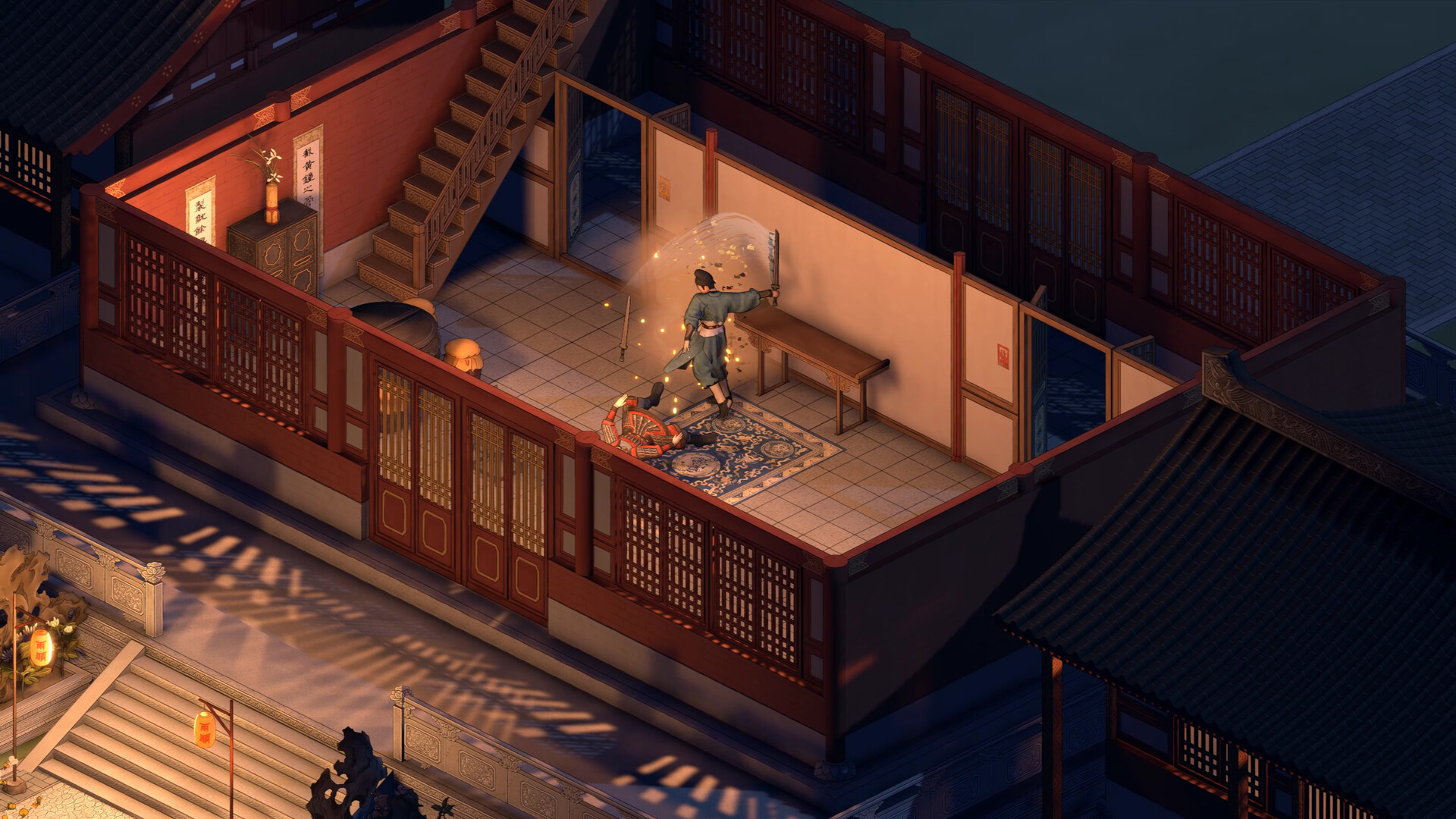
Scattered across the map are interior locations that function as self-contained exploration zones. These include Buddhist temples perched on mountainsides, cave networks that wind deep underground, and the remains of ancient settlements overtaken by nature. Each interior location has its own layout, and many contain mechanisms and traps that require puzzle-solving to navigate.
Ruins are particularly important because they tend to contain martial arts treasures. A collapsed fortress might hold a weapons cache with a rare blade. A sealed chamber inside a cave might contain a training manual for an obscure fighting technique. The placement of these rewards is hand-designed rather than randomized, which means experienced players can share information about where to find specific items, and there is a real sense of discovery when you stumble onto something new.
Trap design draws on period-appropriate technology. Pressure plates trigger crossbow bolts. Pivot stones shift walkways. Water channels can flood chambers. There are no laser grids or electronic locks. Everything fits the ancient Chinese setting, and the solutions usually involve observation and experimentation rather than finding a specific key item.
Fantastical Locations
While most of the game world is grounded in historical Chinese geography and architecture, certain locations draw directly from mythology and religious cosmology. Xiao Xi Tian (Lesser Western Paradise) is a location inspired by Buddhist cosmology, representing a paradisiacal realm that exists outside ordinary geography. Yam King Difu is based on the realm of the King of the Underworld from Chinese folk religion, a subterranean domain associated with judgment of the dead.
These fantastical locations are late-game or hidden-content areas. They are not accessible from the main map through normal travel. Reaching them requires completing specific quest chains, discovering hidden entrances, or meeting particular conditions that the game does not spell out directly. The world and setting article covers the broader geography, but these mythological zones represent a different design philosophy: they are where the game leans into the supernatural elements of wuxia fiction rather than the historical simulation that dominates most of the sandbox.
Seasonal changes and area access
Seasons in The Bustling World are not just cosmetic. They have mechanical consequences for exploration. Rivers freeze in winter, creating new crossing points. Mountain passes become blocked by snow. Certain plants only grow in specific seasons, affecting which crafting materials are available in a given region. The game marks some areas as seasonally restricted, meaning you physically cannot reach them outside the correct time window.
Seasonal events also change the social landscape of the world. Market towns become busier during harvest festivals. Bandits may become more aggressive when winter food shortages hit. Military patrols shift routes. All of this affects exploration because the density and type of encounters you face in any given area is partly determined by the calendar.
The interaction between seasons and the festival system creates natural pacing for exploration. Certain competitions and celebrations only happen at specific times of year, and traveling to the right location during the right season is itself a form of exploration. You cannot just fast-travel to everything; some rewards require planning your movements around the yearly cycle.
Weapon and Martial Arts Discovery
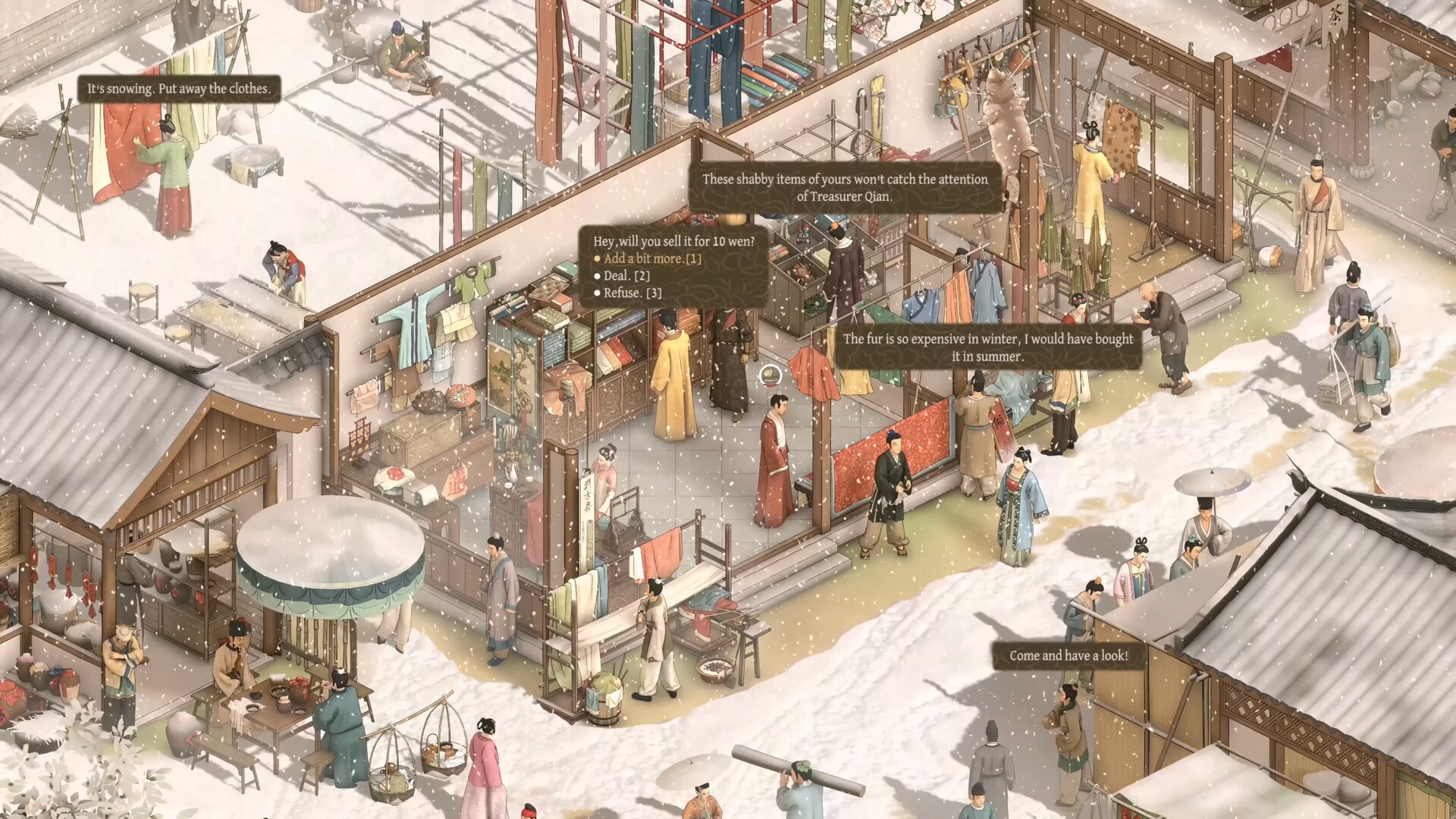
One of the primary rewards for exploration is expanding your combat repertoire. The game features 18 collectible weapon types drawn from the Eighteen Arms of Wushu tradition. Many of these must be found by exploring specific locations: a monastery might teach staff techniques, while a bandit hideout might yield an unusual hook weapon. They are not all available from shops or quest rewards.
Beyond weapons, martial arts secrets are hidden throughout the world. These are technique manuals or training opportunities that teach specific fighting styles, combos, or special moves. The location of each secret is fixed, but the game does not mark them on your map. Word of mouth between NPCs, environmental clues, and lore fragments found in other locations can hint at where to look, but the actual discovery relies on thorough exploration.
This approach means two players can have genuinely different combat capabilities depending on where they have explored. A player who spent hours combing through mountain temples might have a defensive fighting style built around staff and spear techniques, while someone who infiltrated underground criminal networks might fight with daggers and concealed weapons. Neither path is objectively better, but each reflects the player's exploration choices.
Perspective and Navigation
The game uses a 3D camera with a wide, elevated view, which has specific implications for exploration. The viewpoint lets you see obstacles, terrain changes, and landmarks from a distance, making it easier to plan routes through unfamiliar areas. Some things are still hidden behind buildings or terrain features, rewarding players who change the camera angle or approach areas from multiple directions.
Navigation does not rely on a minimap compass arrow pointing you toward objectives. The world is designed to be read visually. Paths follow logical routes between settlements. Rivers lead to towns. Mountain passes channel movement through specific corridors. Learning the geography is part of the experience, and the developers have stated that they want players to develop a mental map of the world rather than following UI markers.