

Overview
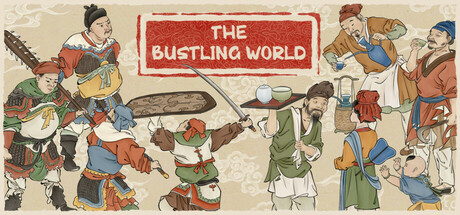
The Bustling World is an open-world sandbox RPG set in a fictional version of ancient China. It is developed by FireWo Games, a studio founded by a married couple that has since grown to over 50 people. The game has been in development for over five years.
There is no single genre label that fits. The developers have described it as a blend of Stardew Valley, The Sims, Mount and Blade, and Civilization. You can be a farmer, a merchant, a warlord, a martial artist, a criminal, or a city builder. The game does not pick one of these and make the others secondary. They all exist as parallel systems in the same sandbox.
The game is not a blank slate, and the developers have been more specific about this than early coverage suggested. In September 2025 a developer confirmed the game has a designed protagonist with their own backstory and main story, and in October 2025 another reply confirmed there are quests and an end-game scenario, described as flowing naturally rather than as a checklist. What the sandbox offers is freedom in how you spend your time around that spine: the systems do not gate each other behind story progress, and most of what you can do is available whenever you want it.
Setting and Art Style
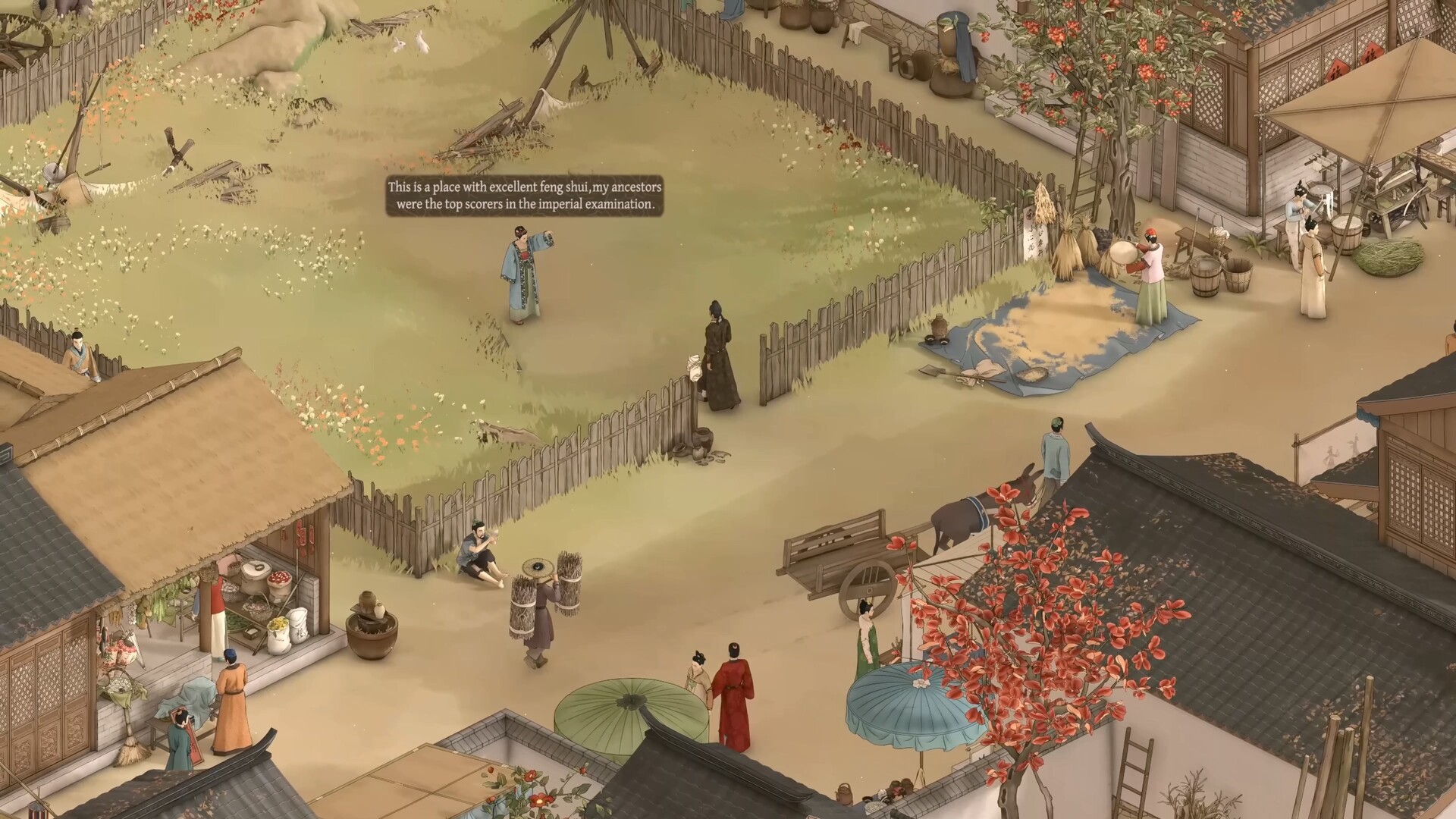
The world draws from Tang and Song Dynasty architecture, Chinese mythology, and traditional painting styles. The art team created over 5,000 hand-drawn textures. The developers have stated that no AI was used in the art production. The developers have shown a central city, Yong'an City, that the player can grow into a thriving settlement over the course of a playthrough.
The game uses fully 3D rendering with a hand-painted visual style that looks like traditional Chinese artwork come to life. The producer has described the approach precisely: the art adopts the flat, fine-brush look of classical gongbi painting, but everything is built as real three-dimensional geometry underneath, which he called a rare combination among 3D games. That is why external descriptions of the game vary between calling it 3D, 2.5D, and isometric. The geometry is genuinely 3D; the painting style is what makes it read otherwise. Clothing physics simulate ancient-Chinese-styled garments, which the developers describe as a first in gaming.
Farming and animals
There are over 60 plant varieties, each requiring specific soil type, water, and temperature conditions. Farming is not just decoration. Crops feed into cooking, trade, and business management.
Over 30 animal species are available for materials, combat companions, and transportation. Breeding mechanics include mutation chances, and rare species can be found in the wild.
Crafting and building
The crafting system covers cooking, textile weaving, and metallurgy. Players can progress from manual craftsmanship to mass production by hiring workers and building production lines. Separately from the crafting chain, close to 1,000 designed items and artifacts exist as furnishings and trade goods: furniture, lamps, vases, fine china, paintings, and farm tools among them.
Building uses nearly 2,000 components based on Tang and Song Dynasty architecture. You can buy and decorate properties, plan cities, assign NPC housing, and construct businesses from the ground up.
Business Management
You can establish and run restaurants, hotels, inns, pharmacies, banks, pawn shops, cloth shops, and grain shops. Each business requires hiring employees, managing pricing, and competing against other establishments.
Official feature copy is blunt that competition is not confined to fair play: alongside promotions and opening branches, it offers the option to employ cunning methods against rivals, which points to sabotage and espionage sitting inside the business simulation.
Martial arts and combat
The game references "eighteen kinds of weapons" in the Jianghu, a nod to the traditional Chinese Eighteen Arms of Wushu. Players explore the world, find weapons and obtain martial arts secrets from various sources.
Combat activities include bounty hunting, catching fugitives, wiping out bandit camps, and exploring temples, caves, and ruins. You can recruit martial artists to form a personal mercenary force. Martial arts tournaments exist as competitive events.
There is also a military layer. You can recruit and command armies, defend territory, and wage war against rival factions.
Factions and diplomacy
The world contains martial arts schools, underground gambling dens, secret banks, outlaw strongholds, secluded sects, and beggar gangs. Named factions include the Sunflower Sect, the Beggar Gang, and the Red Clothes Sect, all three named in official feature copy as examples of the hidden sects a player can seek out. That list is illustrative rather than complete, and the English forms of the names may differ in the shipped build.
Player interactions with factions go far beyond quest-giving. You can trade with them, learn their techniques, uncover their secrets, manipulate them, join them, eliminate them, or rebuild them. For territories you control, you manage policy across military, culture, economy, and research.
Diplomacy with other factions is influenced by geography, military strength, and population. Options include peace talks, trade agreements, threats, alliances, espionage, and warfare.
Criminal Activities
You can steal carriages, break into houses, operate in stealth with "night cloaks," form gangs, and accumulate a wanted level. The criminal path is a full gameplay loop, not just a side distraction.
NPC AI
Every NPC has independent personality, family ties, and social relationships. They autonomously decide where to live, where to work, whether to flee from war, and whether to avenge family members. Player actions alter NPC behavior across the world.
This is not scripted scheduling. NPCs make independent decisions based on their traits and the state of the world. If you destabilize a region, its residents react.
Activities
Beyond the main systems, the game includes fishing, painting, playing music, pet fighting card games, cooking competitions, horse racing, lion dancing, iron flower launching, and other activities drawn from Chinese cultural traditions.
Development Status
FireWo Games launched a Kickstarter in December 2023 with an $80,000 target. It was canceled five days later after feedback about backer rewards. At the time, the game was reported as 60% complete. The studio said at the time that it would relaunch with better rewards, and never did. Funding came instead from outside investors taking equity in the company: an angel round in 2024, and a 12.5 percent stake held by a Tencent-owned investment vehicle that showed up on the studio's business register in April 2026.
The game accumulated over 150,000 Steam wishlists within 20 days of its initial announcement. It appeared at GDC 2025 in San Francisco, its first overseas event. The development team posted monthly update diaries on Steam through to 29 April 2025. In August 2025 a developer said the studio had entered a silent development cycle and paused those updates, adding that development was proceeding smoothly and that announcements would gradually resume within nine months. That window has passed and the diaries have not returned.
Platforms: PC via Steam and Epic Games Store. No console version has been announced, and despite a listing presence elsewhere the game is not a mobile release. The developers are targeting completion of the launch version before the end of 2026, releasing on Steam first and then on other platforms in stages. No specific day-one date has been announced.
Language Support
Interface and subtitles in English, Japanese, Simplified Chinese, Traditional Chinese, Korean, French, and German. The store listing has not committed to full audio in any of those languages, though the developers have said the story sequences carry human voice performance. Single-player only.