

Breeding and Genetics
Complete guide to breeding and genetics in Starsand Island. Covers all 11 breedable species with 55+ variants, the rarity tier system (Common, Rare, Super Rare, Special), DNA trait inheritance, the Breeding House and Selective Breeding House, sheep color breeding, Love Feed, ranching automation stations, and breeding strategies.
On This Page
Overview
Breeding is one of the core mechanics within the Ranching profession in Starsand Island. By pairing a male and female of the same species, players can produce offspring with unique color variants, inherited DNA traits, and special abilities. Rare breeds command higher product value, unlock new crafting materials (such as colored wool from sheep), and are required to advance through the Rancher profession tiers. The system is built around a core loop of selective breeding, trait management, and patience.
There are 11 breedable animal species in the game with over 55 individual variants spread across four rarity tiers. Each species has one or two purchasable base variants plus several rare variants that can only be obtained through breeding. One additional species, the Queen Bee, is obtained from wild Giant Beehives rather than through breeding.
Getting Started
To begin breeding, you need to unlock the Rancher profession by visiting Pastelle at the Green Pasture Ranch, located northwest of Hopeland. After completing the Apprentice Rancher quest, you can purchase your first animals from Pastelle's shop. Breeding requires three things in a single enclosure (hutch, coop, or barn): a male and a female of the same species, and at least one empty slot for the offspring. Both parents must be fed and clean. Each enclosure allows one breeding event per day, and the baby appears overnight.
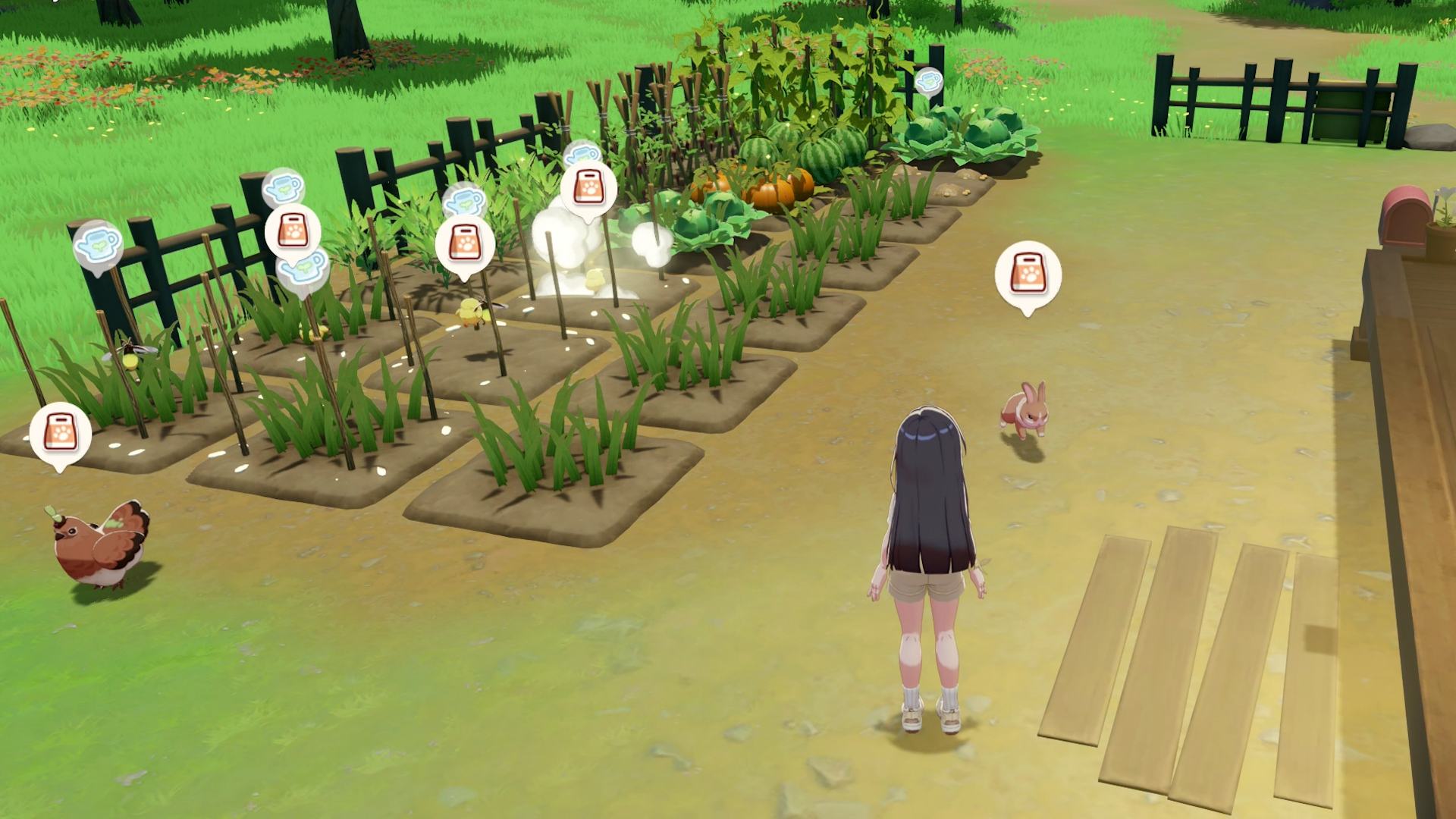
Animals must reach adulthood before they can breed. Growth times vary by species: rabbits and chickens mature in 3 days, while larger animals like horses and alpacas take 7 days. Feeding animals daily and keeping their happiness high speeds up growth slightly and improves the quality of their products. Each enclosure can hold a maximum of four animals, so at least one slot must remain open for the offspring to appear.
Rarity Tier System
Every animal variant in Starsand Island is assigned an internal rarity code that determines how it can be obtained. The game uses a numerical coding system visible in the game data, which maps to four distinct rarity tiers.
Code | Rarity Tier | How to Obtain | Examples |
|---|---|---|---|
01 | Common | Purchasable from Pastelle's shop at the Green Pasture Ranch. Can also appear through breeding. | Common Rabbit, Common Chicken, Spotted Deer, Snowool, Common Horse |
02 to 11 | Rare | Breeding only. Produced by pairing two animals of the same species. Some sheep color variants also obtainable through Bio-Research stamps. | Lop-eared Rabbit, Pearl Chicken, White Duck, Spotted Pig, Fluffhorn, White Horse, Ebowool, Red Sheep |
99 | Super Rare | Breeding only. Lowest probability of any breeding outcome. Often requires many attempts over multiple in-game weeks. | Luna Rabbit, Golden Chicken, Glazed Duck, Puffhog, Pyrox, Cloud Sheep, Ink Horse, Phoenix Ostrich |
199 | Special | Found in the wild at a specific location. Cannot be bred or purchased. | Luna Deer (Moonlit Forest only) |
The rarity code directly affects breeding probability. Common variants (code 01) appear frequently, while Super Rare variants (code 99) have the lowest chance of appearing as offspring. Special variants (code 199) exist entirely outside the breeding system. Sheep use an extended code range from 01 through 11 because they have more color variants than any other species.
The Breeding House
The Breeding House is a dedicated structure that allows you to isolate a specific male and female pair for controlled breeding. It unlocks at the Intermediate Rancher rank and costs 3,500 coins from Pastelle's shop. Place it on your farm like any other building.
The Breeding House offers several advantages over enclosure breeding. You can choose exactly which two animals to pair, which gives you more control over trait inheritance. The pair breeds once per day inside the house, and the offspring appears in the morning. This is essential for targeting rare color variants or stacking positive DNA traits.
The Selective Breeding House
The Selective Breeding House is an advanced breeding facility that provides finer control over which DNA traits are passed to offspring. It becomes available at the Expert Rancher tier. There are two ways to obtain it.
The first option is to purchase the blueprint from Pastelle at the Green Pasture Ranch for 30,000 coins. The second option is to craft it at a Worktable III using the following materials: Alpaca Wool x8, Spring x8, Eternal Alloy x6, Musk x8, and Meteor Plank x6.
When using the Selective Breeding House, you can select which parent's traits should be prioritized during inheritance. This biases the probability toward the chosen parent's DNA traits, making it significantly easier to stack multiple positive traits on a single bloodline. However, the Selective Breeding House does not influence which color variant the offspring will be. Color outcomes remain RNG-based regardless of which breeding structure you use.
DNA Traits
Every animal in Starsand Island can carry DNA traits that affect its behavior, breeding capability, and products. Traits are visible on each animal's info panel. There are six positive traits and three negative traits.
Positive Traits
Trait | Effect |
|---|---|
Workaholic | Animal performs more work cycles per day (weeding, pest control, snail clearing) |
Twins | 30% chance to produce an extra offspring when breeding |
Precocial | Growth period reduced by one full day |
Bulkiness | Animal grows physically larger (cosmetic effect only) |
Strong | Breeding cooldown reduced by one day |
Optimism | 50% chance for happiness to double when rising; less brushing required to maintain mood |
Negative Traits
Trait | Effect |
|---|---|
Pride | Animal cannot be petted, making it very difficult to maintain high happiness |
Petiteness | Animal stays smaller than normal (cosmetic effect only) |
Bloom | Happiness boost decreased by 1 point per interaction |
When building a breeding lineup, prioritize parents with Strong (faster breeding cycles) and Twins (more offspring per attempt). Workaholic is the most valuable trait for utility animals assigned to weeding, pest control, or snail clearing. Sell or release any animals carrying Pride immediately, as the inability to pet them creates a persistent happiness problem that affects product quality.
Trait Inheritance
Offspring inherit traits from their parents according to probability-based rules that the community has tested extensively. While exact numbers have not been officially confirmed by the developer, the following estimates are widely used by experienced breeders.
If one parent has a trait, the offspring has roughly a 60% chance to inherit it.
If both parents share the same trait, the inheritance chance rises to roughly 90%.
There is approximately a 5% chance of a random mutation, where the offspring gains a trait that neither parent has.
Offspring typically carry 1 to 3 traits, though higher counts are possible.
The Expert Rancher certification quest requires breeding a rabbit with 5 genes.
To maximize your chances of getting desired traits, use the Breeding House to pair two parents that both carry the same positive traits. Over several generations, you can stack multiple positive traits on a single bloodline. The Selective Breeding House at Expert tier takes this further by letting you bias inheritance toward one parent's DNA profile.
Animal Species and Variants
Below is the complete list of every breedable animal species and its variants, verified against the game's internal data. Each species has one Common (code 01) base variant purchasable from Pastelle, one to several Rare variants (codes 02 through 11) obtainable through breeding, and one Super Rare variant (code 99) that is the hardest to breed. Sheep are the exception, with an expanded code range to accommodate their many color variants.
Rabbits
Variant | Code | Rarity | Source | Notes |
|---|---|---|---|---|
Common Rabbit | 01 | Common | Purchase (75 coins) | Brown and white; clears up to 5 weeds per day |
02 | Rare | Breeding | Soft, large drooping ears | |
03 | Rare | Breeding | Round, white body | |
99 | Super Rare | Breeding | White/pink with glowing effect; clears up to 15 weeds per day |
Chickens
Variant | Code | Rarity | Source | Notes |
|---|---|---|---|---|
Common Chicken | 01 | Common | Purchase (300 coins) | Brown; clears up to 5 bugs per day |
02 | Rare | Breeding | White feathers | |
03 | Rare | Breeding | Jet-black feathers | |
99 | Super Rare | Breeding | Gold feathers; clears up to 15 bugs per day; lays gold-quality eggs by default |
Ducks
Variant | Code | Rarity | Source | Notes |
|---|---|---|---|---|
Common Duck | 01 | Common | Purchase (300 coins) | Yellow; clears up to 5 snails per day from rice fields |
02 | Rare | Breeding | White feathers | |
03 | Rare | Breeding | Green feathers | |
99 | Super Rare | Breeding | White/pink with glowing effect; clears up to 15 snails per day |
Pigs
Variant | Code | Rarity | Source | Notes |
|---|---|---|---|---|
Common Pig | 01 | Common | Purchase (650 coins) | Pink; searches for truffles; droppings can be used as farm fertilizer |
02 | Rare | Breeding | Multicolored pattern | |
03 | Rare | Breeding | Sharp tusks, wild appearance | |
99 | Super Rare | Breeding | Blue/green fluffy body; rideable when fully grown |
Cows
Variant | Code | Rarity | Source | Notes |
|---|---|---|---|---|
Common Cow | 01 | Common | Purchase (650 coins) | Black and white; produces milk when fully grown |
02 | Rare | Breeding | Black with long flowing hair | |
03 | Rare | Breeding | Brown with large horns | |
99 | Super Rare | Breeding | Blue body; can walk on water; rideable when fully grown; does NOT produce milk |
Only the Common Cow currently produces milk. Rare cow variants (Fluffhorn, Hornox, and Pyrox) do not give milk, so keep at least one Common Cow if you need a steady milk supply.
Sheep
Sheep have the most variants of any species in Starsand Island with 12 distinct types. Colored sheep produce wool matching their fleece color, making them essential for crafting colored fabrics and furniture. The Snowool and Ebowool are both purchasable from Pastelle, while all other variants must be bred.
Variant | Code | Rarity | Source | Wool Color |
|---|---|---|---|---|
01 | Common | Breeding | Black (darker shade) | |
02 | Common | Purchase (650 coins) | White | |
03 | Common | Purchase (650 coins) | Black | |
04 | Rare | Breeding | White (fluffy texture) | |
05 | Rare | Breeding | Red | |
06 | Rare | Breeding | ||
07 | Rare | Breeding | Yellow | |
08 | Rare | Breeding | Green | |
09 | Rare | Breeding | Cyan | |
10 | Rare | Breeding or Bio-Research (72 stamps) | Blue | |
11 | Rare | Breeding | Purple | |
99 | Super Rare | Breeding | Special (ethereal cloud effect); rideable |
Horses
Variant | Code | Rarity | Source | Notes |
|---|---|---|---|---|
Common Horse | 01 | Common | Purchase (1,350 coins) | Brown; rideable by two people (duo mount) |
02 | Rare | Breeding | Snow-white; required for the Senior Rancher quest | |
03 | Rare | Breeding | Jet-black coat | |
99 | Super Rare | Breeding | Black and white bicolor with artistic pattern; duo mount |
Deer
Variant | Code | Rarity | Source | Notes |
|---|---|---|---|---|
01 | Common | Purchase (1,350 coins) | Native deer; rideable | |
02 | Rare | Breeding | Pure white coat; rideable | |
Lucky Deer | 03 | Rare | Breeding | Large antlers; rideable |
199 | Special | Moonlit Forest (wild) | Cannot be bred or purchased; riding only | |
99 | Super Rare | Breeding | Blossoms and foliage design; rideable |
The Luna Deer is the only animal in the game with the Special rarity (code 199). It is found exclusively in the Moonlit Forest and cannot be bred, purchased, or sold. It functions as a riding mount only.
Musk Deer
Variant | Code | Rarity | Source | Notes |
|---|---|---|---|---|
Common Musk Deer | 01 | Common | Purchase (1,350 coins) | Males secrete musk (crafting material) |
02 | Rare | Breeding | Reddish-brown fur | |
03 | Rare | Breeding | Dark brown to black coat | |
99 | Super Rare | Breeding | Glowing ethereal variant |
Alpacas
Variant | Code | Rarity | Source | Notes |
|---|---|---|---|---|
Common Alpaca | 01 | Common | Purchase (2,750 coins) | Rideable; produces wool |
02 | Rare | Breeding | Rebellious, spiky hairstyle; rideable | |
03 | Rare | Breeding | Neatly parted fur; rideable | |
99 | Super Rare | Breeding | White fluffy, candy-like appearance; rideable |
Ostriches
Variant | Code | Rarity | Source | Notes |
|---|---|---|---|---|
Common Ostrich | 01 | Common | Purchase (2,750 coins) | Rideable (fast runner); produces eggs and feathers |
02 | Rare | Breeding | White feathers; rideable | |
03 | Rare | Breeding | Golden feathers; rideable | |
99 | Super Rare | Breeding | Phoenix-like tail feathers; rideable |
Bumblebees
Bumblebees operate differently from other ranch animals. Rather than purchasing bumblebees directly, players obtain Queen Bees from Giant Beehives found in the wild across the island. Queen Bees are placed into Beehives on your farm, which become available at the Intermediate Rancher tier for 2,500 coins from Pastelle's shop.
Once a Queen Bee is placed in a farm Beehive, she produces worker bumblebees and honey over time. Honey is a valuable cooking ingredient and sells well at shops. Bumblebees from the hive also act as pollinators for nearby crops, which can improve crop quality and yield. Multiple Beehives can be placed on your property for increased honey production.
To find Giant Beehives in the wild, look for them hanging from trees in forested areas, particularly around Verdant Field and the outskirts of Starsand Town. Approach carefully and interact to collect the Queen Bee. Each Giant Beehive provides one Queen Bee. Bumblebees cannot be bred.
Sheep Color Breeding
Sheep color breeding is one of the most discussed topics in the Starsand Island community. Based on extensive community testing, sheep color outcomes appear to be largely random rather than following predictable color-mixing rules. There is no confirmed formula where combining two specific colors guarantees a third color. Instead, the breeding system uses an RNG-based roll each time offspring are produced.
Recommended starting pairing: Snowool + Ebowool. This combination is widely considered the best starting point because it can produce Fluffwool, Duswool, and Blue Sheep as results. From there, any combination of Snowool, Ebowool, Fluffwool, and Duswool parents can potentially produce any color variant, including rarer colors like Red, Orange, Yellow, Green, Cyan, and Purple.
Key findings from community testing:
Specific parent color pairings do not determine offspring color. Two Blue Sheep are not more likely to produce another Blue Sheep than a Snowool + Ebowool pair.
Blue and Orange Sheep can also be obtained through the Islandpedia Bio-Research system by completing 72 stamp entries, bypassing breeding entirely.
Cloud Sheep is the Super Rare variant (code 99) and is confirmed to be significantly harder to breed than any other color. Community reports suggest it has the lowest probability of any sheep variant.
Players report needing anywhere from a handful of attempts to 200+ in-game hours for rare variants like Purple and Cloud Sheep. The variance is high because the system is RNG-based.
Running more breeding pairs simultaneously produces faster results. Three or more barns dedicated to sheep breeding is recommended for anyone targeting rare colors.
The Selective Breeding House can bias DNA trait inheritance but does not guarantee or influence specific color outcomes. Its value for sheep color breeding is limited to passing down positive traits like Strong and Twins to make the breeding process faster.
Breeding the White Horse
The White Horse is a mandatory requirement for the Senior Rancher quest. It cannot be purchased or found in the wild; it must be bred. Players typically need 15 to 25 breeding attempts to produce one, though luck can reduce or increase that range significantly.
The recommended strategy involves several steps:
Purchase 15 to 20 horses to build a large gene pool. You will need at least 3 barns to house them all.
Check every horse's DNA profile immediately and sell any with negative traits, especially Pride and Bloom, since these make breeding less efficient.
Keep horses with the Strong trait (reduces breeding cooldown) and Twins trait (chance for bonus offspring) as your primary breeders.
Fill all breeding slots continuously with no idle time. Two brown horses can produce a White or Black Horse as a mutation.
If an Ink Horse (black and white bicolor) appears, keep it. Breeding an Ink Horse with a lighter-colored partner has been reported to increase the odds of producing a White Horse.
Use Love Feed to reset breeding cooldown faster if available.
Be patient and persistent. The White Horse is the single most time-consuming breeding goal required by the Rancher profession quest line.
Love Feed
Love Feed is a special feed type produced by the Love Feeder station. When given to an animal, it resets the breeding cooldown, allowing that animal to breed again without waiting for the normal cooldown period. This is extremely useful when chasing rare variants, as it effectively doubles (or more) the number of breeding attempts you can make per day.
Each animal species has its own Love Feed variant. The Love Feeder station becomes available as you progress through the Rancher profession tiers. There are 11 Love Feed types corresponding to the 11 breedable animal species: Love Rabbit Feed, Love Chicken Feed, Love Duck Feed, Love Pig Feed, Love Cattle Feed, Love Sheep Feed, Love Horse Feed, Love Deer Feed, Love Musk Deer Feed, Love Alpaca Feed, and Love Ostrich Feed.
Love Feed is most valuable during targeted breeding campaigns for Super Rare variants. Combining Love Feed with the Strong DNA trait (which already reduces cooldown by one day) creates the fastest possible breeding cycle.
Animal Products
Each species produces different items when kept fed and happy. Higher happiness (150+) increases the chance of premium-quality products, which sell for more at shops.
Animal | Products | Purchase Price |
|---|---|---|
Rabbit | Wool, Poop | 75 coins |
Chicken | Egg, Feathers, Poop | 300 coins |
Duck | Egg, Feathers, Poop | 300 coins |
400 coins | ||
Pig | Truffles, Poop (fertilizer) | 650 coins |
Cow | Milk, Poop | 650 coins |
650 coins | ||
650 coins | ||
Horse | Mount (2-person), Poop | 1,350 coins |
Mount (1-person), Poop | 1,350 coins | |
Musk Deer | Musk (male only), Poop | 1,350 coins |
Alpaca | Mount (1-person), Wool, Poop | 2,750 coins |
Ostrich | Mount (1-person), Eggs, Feathers, Poop | 2,750 coins |
Golden Chickens lay gold-quality eggs by default. Luna Rabbits clear 15 weeds per day compared to 5 for Common Rabbits. Glazed Ducks clear 15 snails per day. Colored Sheep produce wool matching their fleece color (red sheep yield red wool, blue sheep yield blue wool, and so on), which is essential for crafting colored fabrics and decorative items.
Ranching Automation Stations
As you progress through the Rancher profession tiers, several automation stations become available for purchase from Pastelle at the Green Pasture Ranch. These stations reduce the daily manual labor needed to maintain your animals.
Station | Rancher Tier | Cost | Function |
|---|---|---|---|
Breeding House | Intermediate | 3,500 coins | Controlled pairing of two specific animals for targeted breeding |
Intermediate | 5,500 coins | Automatically feeds animals in the enclosure, removing the need for daily manual feeding | |
Intermediate | 4,500 coins | Keeps animals clean automatically, maintaining hygiene without manual brushing | |
Intermediate | 4,500 coins | Automatically collects eggs from chickens, ducks, and ostriches | |
Senior | 5,500 coins | Plays soothing music that gradually increases animal happiness over time | |
Senior | 4,500 coins | Boosts the friendship level between animals in the same enclosure | |
Expert | 30,000 coins (or craft at Worktable III) | Advanced breeding station that can bias DNA trait inheritance toward selected parent traits | |
Expert | 15,000 coins | Automatically milks cows and sheep, collecting milk without manual interaction | |
Expert | 15,000 coins | Automatically shears wool from sheep and alpacas |
Each automation station must be placed inside or adjacent to the relevant enclosure (barn, coop, or hutch). Investing in Feeding Troughs and Cleaning Pods early at the Intermediate tier frees up significant daily time. The Expert-tier stations are expensive but essential for large-scale ranching operations.
Tips for Efficient Breeding
Always check an animal's DNA before adding it to your breeding program. Sell animals with Pride immediately.
Pair animals that share the same positive traits to maximize the chance of passing those traits to offspring (roughly 90% when both parents match).
Keep a spreadsheet or notebook to track which pairs have produced which variants. This helps you identify productive combinations faster.
Build multiple enclosures to run several breeding pairs in parallel. More attempts per day means faster results.
Use the Breeding House for targeted pairings when chasing specific rare variants.
Keep at least one Common variant of each species for reliable product output while you experiment with rare breeds.
Animals with the Workaholic trait make the best weeders, pest controllers, and snail clearers. Breed for this trait on your utility animals.
Use Love Feed from the Love Feeder station to reset breeding cooldowns when targeting Super Rare variants. Combining Love Feed with the Strong trait creates the fastest possible breeding cycle.
For sheep color breeding, start with a Snowool + Ebowool pair. This combination can produce Fluffwool, Duswool, and Blue Sheep, giving you a foundation for further color breeding.
The Selective Breeding House is worth the 30,000 coin investment or the Worktable III craft. It does not help with color outcomes, but it significantly speeds up trait stacking across generations.