

Overview
Pokemon Pokopia has a warm, nostalgic soundtrack that accompanies players as they explore, build, and interact with Pokemon across the game's five regions. The music blends familiar melodies reimagined for the cozy settlement-building setting with original compositions that complement the game's relaxed pace. Critics have described the soundtrack as "soothingly nostalgic," capturing the spirit of classic Pokemon games while fitting Pokopia's new gameplay style.
Composer Junichi Masuda contributed brand-new arrangements for Pokopia, continuing his decades-long role as the franchise's primary music composer. Masuda is known for blending orchestral and electronic elements while maintaining the recognizable "Pokemon sound" that has defined the series since 1996. The game features 43 collectible Music CDs spanning all nine generations of mainline Pokemon games, each rearranged to fit Pokopia's cozy atmosphere. These CDs are playable through DJ Rotom's in-game music system or through crafted CD Players placed around the settlement.
DJ Rotom and the Music System
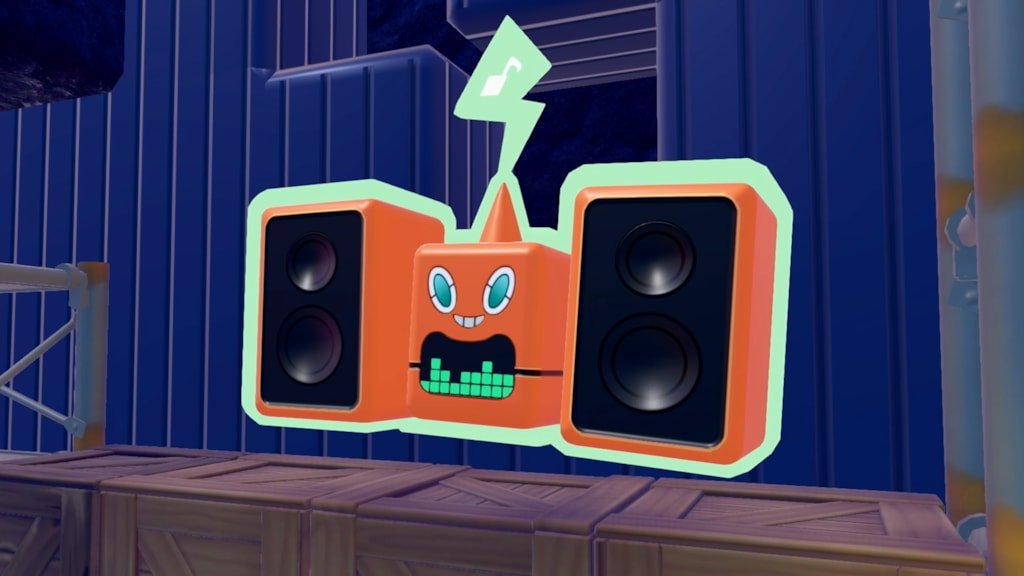
DJ Rotom is a unique NPC that inhabits a mini stereo system, taking the exclusive Stereo Rotom form. Its typing is Electric/Normal, which is unique to Pokopia and notably debunked the long-running fan theory that Pokopia would introduce a Sound type. DJ Rotom holds the exclusive DJ specialty and is found during the Time to Party! quest in Rocky Ridges, sealed inside a cave accessible via Rollout. After rescue, DJ Rotom manages the in-game music player and does not require a habitat to live in.
How the Music Player Works
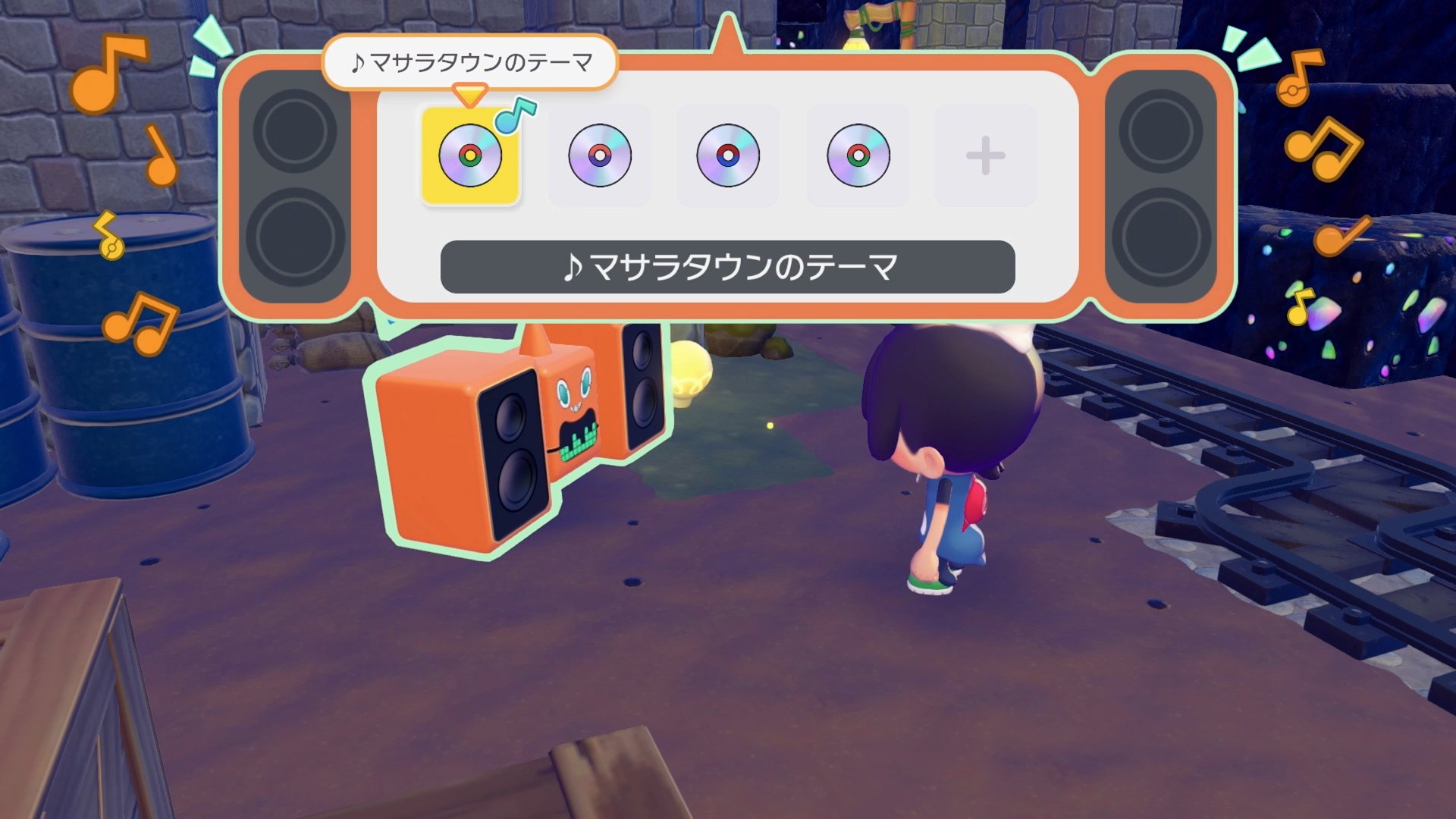
To add music to DJ Rotom's playlist, talk to it and select the option to give CDs. DJ Rotom can hold up to 5 CDs at a time. Tracks play in order from left to right and then loop. Players can skip between tracks by interacting with Rotom. The music is proximity-based, meaning it only plays when you are near Rotom. However, Rotom can follow the player around, providing a mobile soundtrack while you build, explore, or manage your settlement. Extra CDs beyond the 5-slot limit must be stored in your inventory or Storage Boxes. You can also talk to DJ Rotom to check the current mood of all nearby Pokemon, which is especially useful during party events and the Time to Party! quest.
Warning: Do not give CDs to Professor Tangrowth. He will pocket them and not return them. Only give CDs to DJ Rotom to add them to the music rotation.
Collecting CDs
Music CDs are scattered throughout the world as collectible items. The primary method is using Rock Smash on Glowing Spots found in walls and floors throughout all five regions. CD drops from Glowing Spots are random, so consistent farming is needed to collect all 43. Lucky Days cause more Glowing Spots to appear, increasing your chances of finding CDs. Additional collection methods include using the Dowsing Machine with a Search-specialty Pokemon to find Buried Treasure blocks that may contain CDs, checking fixed locations where specific CDs are guaranteed (such as the Pewter City Theme near the Museum in Rocky Ridges, or The S.S. Anne CD aboard the S.S. Anne in Bleak Beach), and earning CDs as quest rewards from certain challenges. One CD can also be found on a bookshelf during the initial encounter with DJ Rotom in the Rocky Ridges cave.
CD Player (Crafted Item)
In addition to DJ Rotom, players can craft a standalone CD Player for independent music playback. The crafting recipe is 1 Pokemetal, 1 Glass, and 1 Iron Ingot. The CD Player can play music independently and activates nearby Hype-specialty Pokemon, causing them to dance. It is also a component of the Music and Magazines habitat (1 CD Rack + 1 Magazine Rack + 1 CD Player), which attracts Kricketot (common), Kricketune (common), and Rotom (rare, Rocky Ridges only).
All 43 Music CDs
The 43 collectible CDs span all nine generations of mainline Pokemon games. Each track is a rearranged version of a classic composition, reimagined with acoustic, orchestral, and ambient elements to match Pokopia's cozy settlement atmosphere. Generation I has the most representation with 16 CDs. This reflects Pokopia's setting in a reimagined Kanto region. The complete list organized by generation:
Generation I: Red and Green (16 CDs)
The largest group, covering iconic Kanto locations that correspond to areas in Pokopia. The Pallet Town theme plays with a gentle acoustic guitar arrangement, while the Fuchsia City Theme has been reworked with desert-wind instruments to match the Withered Wasteland. The Vermilion City Theme carries coastal vibes fitting for Bleak Beach, and the Pewter City Theme has earthy percussion matching Rocky Ridges. The tracks are: Title Screen, Pallet Town, Oak's Lab, Road to Viridian City, Pewter City Theme, Pokemon Center, Caves of Mt. Moon, Road to Cerulean City, Fuchsia City Theme, Pokemon Gym, Road to Bill, Vermilion City Theme, The S.S. Anne, Rocket Hideout, Silph Co., and Battle! (Gym Leader Battle).
Generation II: Gold and Silver (3 CDs)
Three tracks from the Johto region: Union Cave, Ecruteak City, and Bell Tower. The Bell Tower track is particularly fitting given the game's inclusion of Ho-Oh and the Clear Bell crafting mechanic.
Generation III: Ruby and Sapphire (2 CDs)
Two Hoenn region tracks: Fortree City and Sootopolis City. The Fortree City theme evokes treetop settlement building, while Sootopolis City has a serene, water-adjacent ambiance.
Generation IV: Diamond and Pearl (3 CDs)
Three Sinnoh tracks: Route 209 (Day), Mt. Coronet, and Game Corner. Route 209 is a fan favorite known for its cheerful melody, making it popular for settlement background music.
Generation V: Black and White (3 CDs)
Three Unova tracks: Driftveil City, Route 10 (Unova), and Dress Up With Props. Driftveil City's jazzy arrangement works well as background music for busy crafting sessions.
Generation VI: X and Y (4 CDs)
Four Kalos tracks: Snowbelle City, Boutique, Super Training!, and Contest Spectacular. The Boutique track is thematically appropriate when organizing furniture and decorating homes.
Generation VII: Sun and Moon (3 CDs)
Three Alola tracks: Hau'oli City (Day), Aether Paradise, and Ultra Ruin. Hau'oli City's tropical vibe makes it a popular choice for Bleak Beach settlements.
Generation VIII: Sword, Shield, and Legends: Arceus (5 CDs)
Five tracks covering both Galar and Hisui: Wild Area (North), Wyndon, Rose Tower, Battle! (Gym Leader) 1, and Jubilife Village. The Jubilife Village theme from Legends: Arceus is especially fitting for Pokopia's settlement-building gameplay.
Generation IX: Scarlet and Violet (4 CDs)
Four Paldea tracks: South Province, The Academy, Area Zero, and Battle! (Gym Leader) 2. Area Zero's mysterious ambiance works well for the more advanced areas of Pokopia like Sparkling Skylands.
Hype Specialty and Mood
Pokemon with the Hype specialty dance when music plays nearby from DJ Rotom or a CD Player. When they dance, the mood of all nearby Pokemon increases in a cascading multiplier effect, making everyone in the area happier. The key Hype-specialty Pokemon are Ludicolo (the easiest to obtain during the Time to Party! quest via the Uplifting Duckweed habitat), Volbeat, and Illumise (both attracted via the Hydrated Flower Bed habitat). Keeping at least one Hype Pokemon stationed in each area near a CD Player or DJ Rotom creates a persistent mood boost that raises comfort levels passively.
Region-Specific Music
Each of Pokopia's five regions has its own ambient background soundtrack that plays during exploration. The music transitions smoothly as players move between regions. Palette Town features bright, cheerful melodies with acoustic instruments reflecting the grassland home base setting. The Withered Wasteland has subdued, atmospheric tones with sparse instrumentation matching the arid desert environment. Bleak Beach plays laid-back, breezy music with wave-like rhythms and light percussion suited to the coastal vibe. Rocky Ridges uses bold, earthy compositions with deeper tones matching the mountainous terrain. Sparkling Skylands has ethereal, floating melodies with chime-like instruments that capture the magical atmosphere of the sky islands.
Sound Design
Beyond the soundtrack, Pokopia's sound design contributes significantly to the overall atmosphere. Pokemon have their own characteristic sounds and reactions that change based on their comfort level and current activity. Crafting stations produce satisfying audio feedback, with each station type (Workbench, Furnace, Cutting Board, Bread Oven) having distinct sounds. Environmental audio includes flowing water, rustling leaves, birdsong, wind, and rain, all of which vary by region and weather conditions. The audio design helps distinguish each area and makes the world feel alive and responsive to player actions.
Tips
Farm Glowing Spots on Lucky Days for the best chance at finding new CDs. Lucky Days cause more spots to appear.
Use the Dowsing Machine with a Search-specialty Pokemon for additional CD discoveries in Buried Treasure blocks.
Keep DJ Rotom following you while building for a mobile soundtrack that keeps the atmosphere lively.
Station a Hype-specialty Pokemon (Ludicolo, Volbeat, Illumise) near DJ Rotom or a CD Player to create a persistent mood boost for the entire area.
Check fixed CD locations first: the bookshelf in DJ Rotom's cave, the Museum area in Rocky Ridges, and the S.S. Anne in Bleak Beach all have guaranteed CDs.
Extra CDs beyond DJ Rotom's 5-slot limit must be stored elsewhere. Swap CDs in and out of the playlist to hear different tracks.
Craft CD Players and place them near habitats with Hype Pokemon for passive comfort boosts across multiple areas.