
Loading...
Loading...
Pokemon Pokopia
March 12, 2026 at 10:47 PM
Accuracy update (2026-03-12)
Pokemon Pokopia (Japanese: Poco a Pokemon) is a life simulation spin-off for Nintendo Switch 2, released worldwide on March 5, 2026. Developed by Game Freak and Koei Tecmo's Omega Force and published by Nintendo and The Pokemon Company, it is the first Switch 2 exclusive Pokemon game. Players control a Ditto that has transformed into human form, tasked with restoring a desolate, withered version of Kanto into a thriving Pokemon paradise through building, crafting, terraforming, and befriending Pokemon.
The game draws comparisons to Animal Crossing, Minecraft, Dragon Quest Builders, and Viva Pinata. Unlike mainline Pokemon games, Pokopia has no battles and no evolution. Instead, the core loop revolves around learning environmental moves from befriended Pokemon, creating habitats to attract new species, building homes and infrastructure, and raising each area's Environment Level.
The world has withered and humans have disappeared. The only remaining resident is Professor Tangrowth, who lives alone in the ruins of Kanto. At the start of the game, Ditto emerges from an old Poke Ball in the Withered Wasteland and discovers a discarded Pokedex containing a photograph of a Pokemon Trainer alongside a Ditto. Upon seeing the image, Ditto copies the form of the trainer, setting out to restore the desolate world under Professor Tangrowth's guidance.
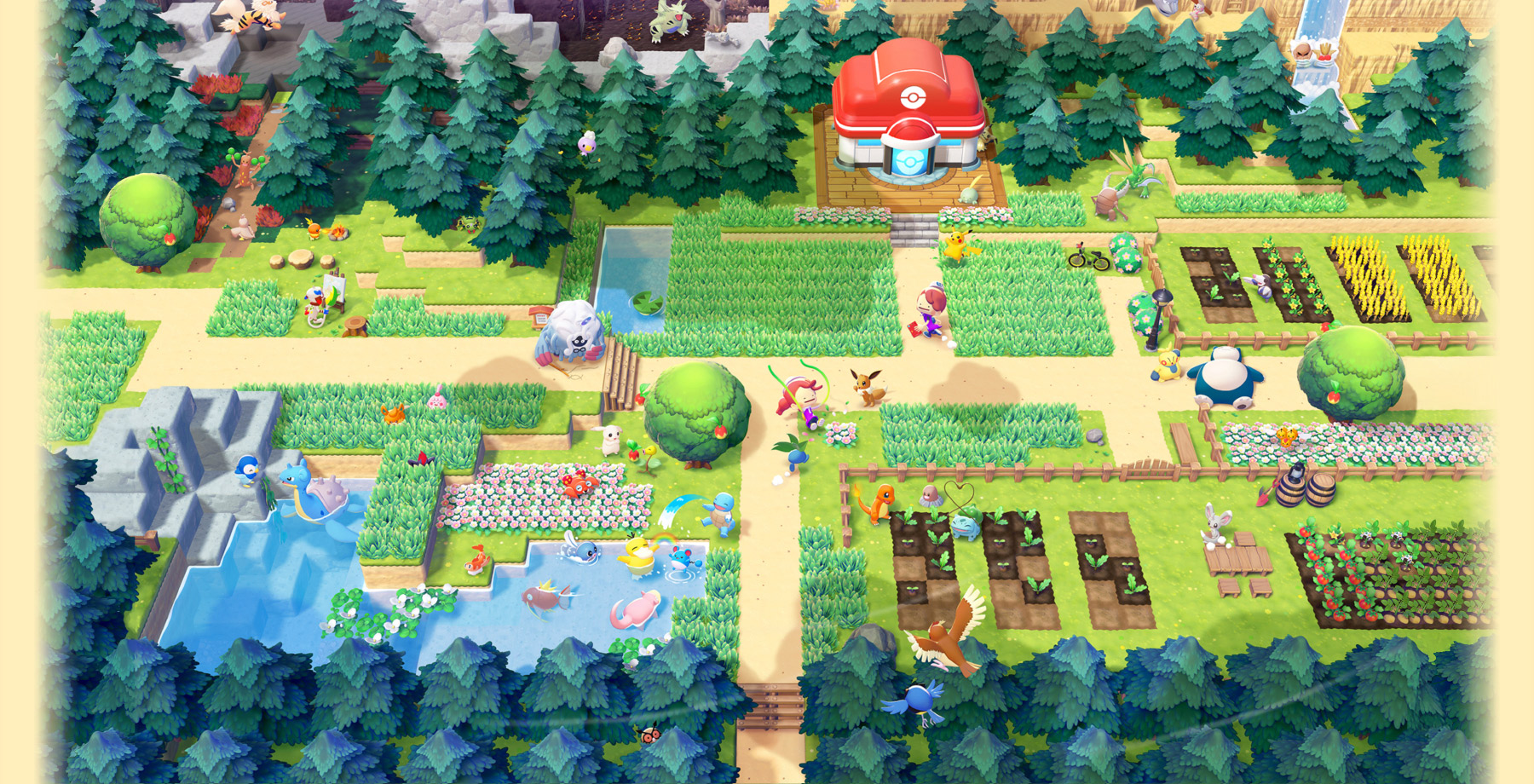
The relationship between Ditto and the lost trainer forms one of the game's emotional through-lines. Ditto chose to mimic the shape of someone it cared for, carrying that memory forward as it works to rebuild. Scattered throughout the world, "Human Records" provide context about what happened to the humans who once lived in the regions, with each record referencing characters and locations from the original Pokemon Red and Blue.
While Pokopia presents itself as a cozy life simulator, its underlying narrative is surprisingly dark. The world did not simply "wither" on its own. Data logs scattered throughout the derelict Silph Co. headquarters in the Saffron area reveal that humanity faced a catastrophic climate crisis caused by severe weather disturbances. Unable to sustain life on the planet, humans evacuated Earth and took refuge in space.
Before leaving, humans implemented the Pokemon Conservation Project, an initiative to safely store all remaining Pokemon in a massive digital storage system similar to the PC boxes used by Pokemon Trainers in the mainline games. The intention was to preserve Pokemon digitally until conditions on Earth improved enough for humanity to return. Terminal logs found in Silph Co. include entries like "Day 5472: Subjects stable," hinting that the Pokemon may have been trapped in digital stasis for thousands of days with no sign of the humans coming back.
The Human Records collectibles found across all five regions provide fragments of this story, referencing characters and locations from the original Pokemon Red and Blue. Professor Tangrowth himself is a relic of the old world, having lived with a human Pokemon Professor before the evacuation. His surprise at encountering Ditto in human form reflects how long it has been since any human presence existed in the world.
The named NPCs each carry their own connections to this backstory. Peakychu exhausted her electricity healing sick Pokemon during the crisis. Mosslax slept through the entire apocalypse after losing a fight. These Pokedex entries paint a picture of a world where Pokemon survived the collapse in different ways, some through sacrifice, some through sheer obliviousness, and all of them now rebuilding without the humans who once cared for them.
Pokopia uses a real-time day-night cycle tied to the Nintendo Switch 2 system clock, as well as dynamic weather conditions that affect the environment. There are over 300 Pokemon to discover and befriend, each with predetermined specialties that determine the tasks they can perform. Pokemon do not evolve; evolved forms exist as separate, rarer species with their own Pokedex entries and habitats.
Ditto learns 14 moves from befriended Pokemon, using physical transformation to mimic their abilities. These moves function as environmental tools rather than combat attacks: Water Gun hydrates terrain, Cut harvests wood, Rock Smash breaks stone, Surf enables water traversal, and Glide provides aerial mobility. Seven unique Special Pokemon (Professor Tangrowth, Peakychu, Mosslax, Smearguru, DJ Rotom, Chef Dente, and Tinkmaster) have exclusive specialties unavailable to any other species.
The gameplay loop centers around building habitats to attract specific Pokemon, inviting them into homes, raising their comfort levels through furniture and food, and increasing each area's Environment Level to unlock new shops, recipes, and story progression. Crafting and cooking systems provide hundreds of recipes for furniture, building materials, infrastructure, and meals.
Pokopia features five explorable regions, each inspired by a city from the original Kanto region:
Region | Kanto Inspiration | Unlock Condition | Key Features |
|---|---|---|---|
Fuchsia City | Starting area | Tutorial region; learn first 6 moves; Mysterious Mural; Mew encounter | |
Vermilion City | Complete "Yawn Up a Storm" quest | S.S. Anne; initially dark (Peakychu lights it); Surf, Camouflage, Suck Up Liquids | |
Pewter City | Complete "Yawn Up a Storm" quest | Pewter Museum (Rainbow/Silver Feathers); Strength, Rollout; Chef Dente; Game Corner area | |
Celadon City | Complete main quests in all three prior areas | Elevated floating platforms; Glide, Waterfall; final story area | |
Pallet Town | Tutorial completion | Sandbox building area; all grass/hedge types available; Eevee and Eeveelution exclusives |
Dream Islands provide daily-visit destinations with rare materials, Stardust, and encounters with legendary Pokemon (Entei, Suicune, Raikou) depending on which Poke Doll you give to Drifloon.
Pokopia supports 1 to 4 players through local and online multiplayer. Players can visit each other's islands, build together, gather materials, and participate in minigames including Hide-and-Seek (using Camouflage) and Jump Rope. Cloud Islands provide persistent online worlds that remain accessible even when the host is offline, allowing collaborative building over time. Items and materials gathered in multiplayer transfer back to the visitor's own world.
After rolling credits (approximately 20 to 40 hours), significant content remains:
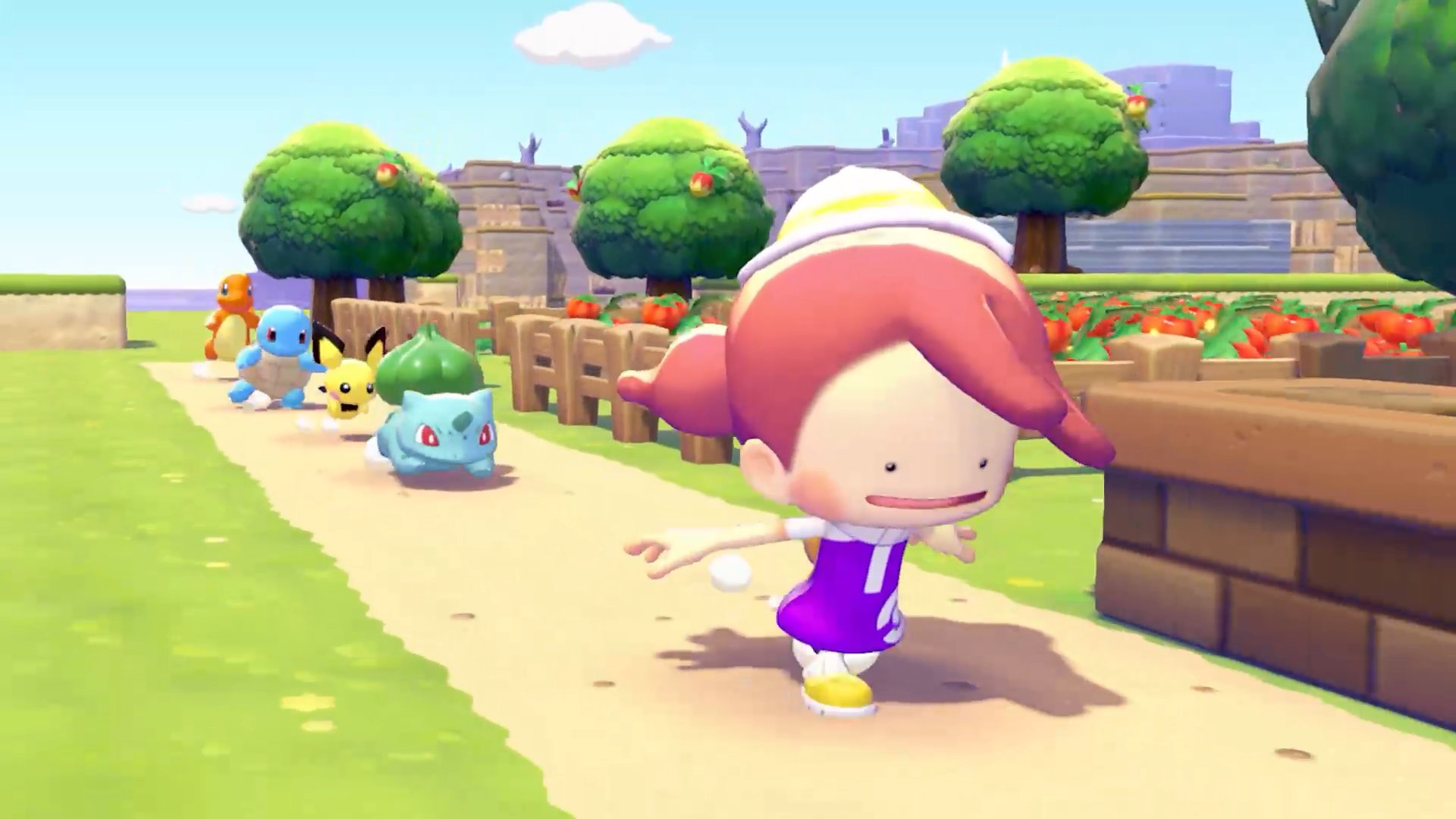
Magnet Rise: The final move, learned from Magnemite after completing the Team Initiation Challenge. Enables vertical flight and mid-air block placement for ambitious building projects.
Pokedex completion: Over 300 Pokemon to discover and befriend, with many rare species requiring specific habitats, weather conditions, or time-of-day requirements.
Human Records: Lore items scattered throughout the world that explain what happened to the humans. References characters from the original Pokemon Red and Blue.
Lost Relics: Professor Tangrowth appraises these into furniture items. Gimmighoul trades appraised relics for rare collectibles at the Rocky Ridges Museum.
Recipe unlocks: Hundreds of crafting, building, and cooking recipes discovered through exploration, Pokemon requests, and shop progression.
Limited-time events: The first event, "More Spores for Hoppip," added Hoppip, Skiploom, and Jumpluff as new species shortly after launch.
Pokopia was conceived by Shigeru Ohmori, director of Pokemon Scarlet and Violet. While developing Scarlet and Violet, Ohmori began exploring non-battle gameplay possibilities. He created a prototype inspired by his early work designing maps for Pokemon Ruby and Sapphire on Game Boy Advance, recalling how "that feeling of Pokemon appearing when I was creating the habitat was very interesting."
The Pokemon Company suggested partnering with Koei Tecmo's Omega Force for production support. Takuto Edagawa (game director, previously Dragon Quest Builders 2 and Wild Hearts) and Marina Ayano (art director, also from DQB2) led the Omega Force side. The combined team became the largest development team in Omega Force's history since the studio was founded in 1996. Producer Kanako Murata from The Pokemon Company facilitated the collaboration.
The name "Pokopia" combines multiple references: poco a poco (Italian/Spanish for "little by little," reflecting the slow-life gameplay), Pokemon, copy (referencing Ditto's Transform ability), and utopia. Ohmori explained: "We searched for an expression that would convey the newness that would make children want to play and the slow life that is the hallmark of this game." The team established two core design keywords: "chill" and "pop."
Pokopia was announced via Nintendo Direct on September 12, 2025. Digital pre-orders opened November 12, 2025, with physical pre-orders following the next day. The physical version uses Nintendo's new game-key card format. Version 1.0.1 launched on March 4, 2026, one day before release, with bug fixes.
Pokopia received widespread critical acclaim, becoming the highest-rated Pokemon game in Metacritic history with an aggregate score of 89/100 (surpassing Pokemon Y's previous record of 88). OpenCritic awarded it an 88 with a "Mighty" designation. It tied with Resident Evil Requiem as the highest-rated game of 2026 at launch.
Outlet | Score |
|---|---|
IGN | 9/10 |
Game Informer | 9/10 |
GameSpot | 9/10 |
Nintendo Life | 8/10 |
VGC | 5/5 |
Siliconera | 10/10 |
GamingBible | 10/10 |
Dexerto | 10/10 |
CGMagazine | 10/10 |
Critics praised the "moreish cosy gameplay loop," overflowing charm and content, and how the game feels like "the freshest Pokemon experience in a long time." IGN's review described it as "a real treat" that "presses all the nostalgia buttons for longtime fans." VGC called it "Pokemon's best spin-off," noting that "late-game grinding doesn't dull an adventure that's as full of discovery at 100 hours as it was at one."
Common criticisms included Building Kit wait times that slow progress, a finicky aiming system for Rock Smash, and the ease of losing track of materials across multiple storage boxes. The game runs at a solid 60fps on Switch 2 in both handheld and docked modes, with minor dips during extensive building on large blank islands.
Pokemon Pokopia achieved immediate commercial success upon its release on March 5, 2026. The game sold over 2.2 million copies within its first four days on sale, making it one of the fastest-selling Nintendo Switch 2 titles at launch.
Physical copies sold out at most major retailers across North America, Europe, and Japan. Supply shortages drove secondary market prices on platforms like Amazon to $79.99, well over the game's $69.99 retail price.
The strong debut had a measurable impact on Nintendo's stock price, which rose approximately 15% over two trading days following the launch. Investor confidence reflected both the game's performance and broader optimism about the Nintendo Switch 2 platform.
Critics rated the game at 89 on Metacritic (based on 50 reviews), making it the highest-rated Pokemon game on the platform. OpenCritic recorded an average score of 88 from top critics with a 94% recommendation rate. The Metacritic user score settled at 8.5 out of 10, the fourth-highest user rating in the Pokemon franchise's history.
Detail | Value |
|---|---|
Platform | Nintendo Switch 2 (exclusive) |
Developer | Game Freak, Koei Tecmo (Omega Force) |
Publisher | Nintendo, The Pokemon Company |
Release date | March 5, 2026 |
File size | 10 GB |
Players | 1-4 (local and online) |
Frame rate | 60fps (handheld and docked) |
Languages | Japanese, English, French, German, Italian, Korean, Spanish, Chinese (Simplified/Traditional) |
Age ratings | CERO: A, ESRB: E, PEGI: 3 |
