Loading...
Loading...
Difficulty and Progression
September 16, 2026 at 03:51 AM
Corrected Hellwalker gating (selectable on a first playthrough), settled the Sixty-Six Days counter as sixty-six deaths, and added its save rules, its ending and the achievement structure
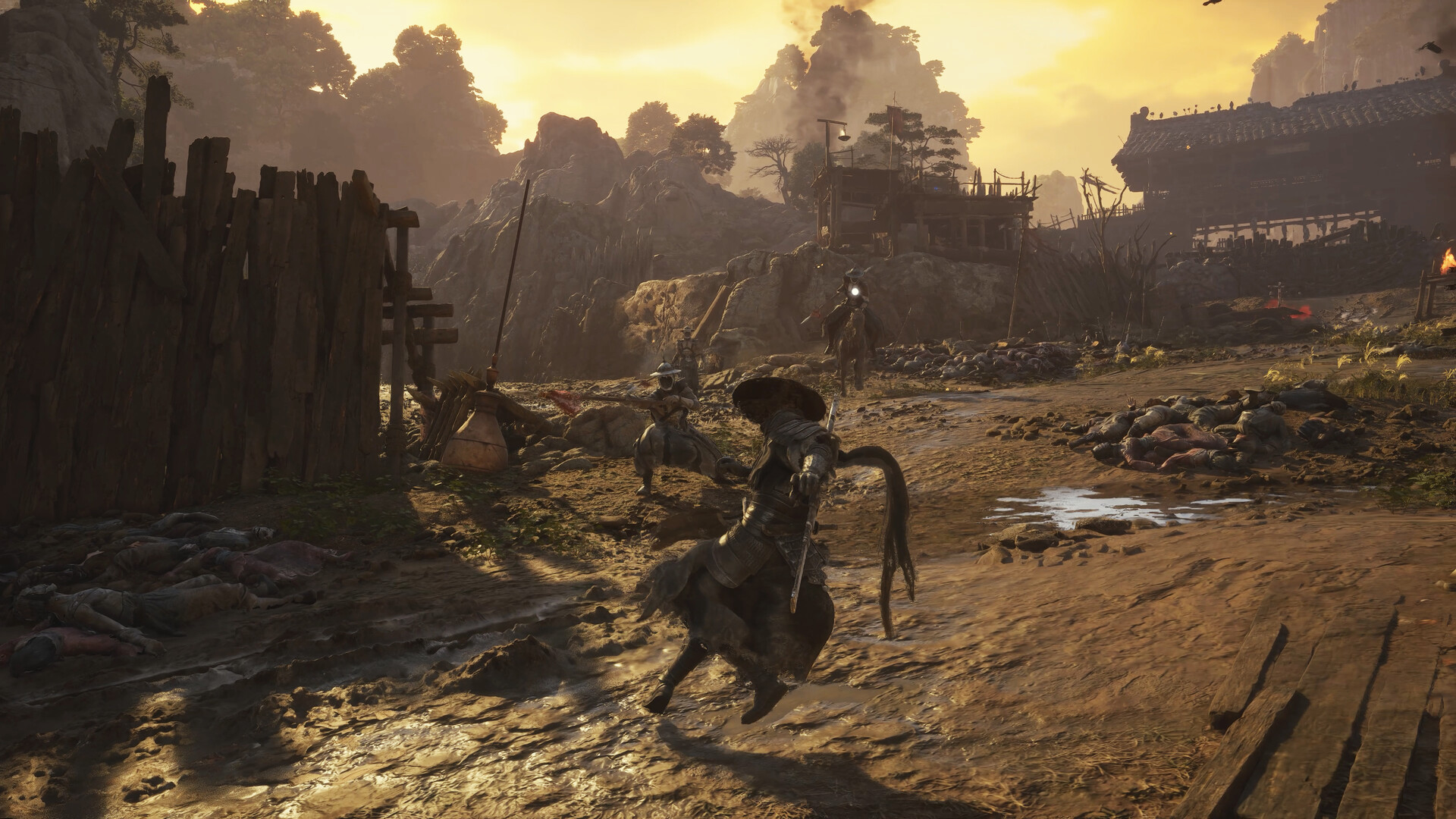
Phantom Blade Zero has four named difficulty levels. Earlier hands-on previews called the standard tier Gamechanger; the August 2026 gameplay showcase names the four tiers as they appear below. This is a deliberate break from the typical soulslike formula, where games like Dark Souls and Sekiro offer a single fixed difficulty. S-GAME wants the combat to be accessible at multiple skill levels.
Wayfarer - The most accessible tier, built for players who want the story and the cinematic action without much pressure.
Pathbreaker - The standard tier. It sits between Wayfarer and Hellwalker and is the closest match to the balance the combat was designed around.
Hellwalker - The hardest of the three tiers a player can select on a first playthrough. Enemy intelligence stops being pattern-based and turns adaptive: bosses read the player's distance, their missed swings, and any habit they repeat, then answer it in the moment rather than running a fixed script.
Sixty-Six Days - The only tier gated behind New Game Plus, unlocked once the story has been cleared on any of the other three. It builds on Hellwalker and adds permadeath. The counter is a pool of sixty-six deaths rather than a clock of in-fiction days, and on the first playthrough the remaining-days figure carries story meaning only and does not affect play at all.
An important mechanical detail: the parry window is only 2 frames shorter on the hardest difficulty compared to the standard difficulty. That is a small difference. S-GAME has designed the difficulty scaling so that the core timing skills you learn on Wayfarer still apply at higher levels. The challenge comes from enemy behavior, damage, and aggression, not from radically changing the fundamental combat feel.
Two of those tiers have been described in more detail than the rest. Wayfarer is built as what the director calls a complex easy difficulty rather than a simple damage reduction: enemy AI and the animation set are tuned so that a surrounded player triggers the kind of exchange a wuxia film would stage, resolving into an execution or an outright kill. Liang has said he cleared the game on Wayfarer more often than on either middle tier during testing, because it let him explore and trigger side content without holding combat tension the whole way.
Sixty-Six Days started as the plan for the entire game. The 2018 concept had no difficulty selector at all: one punishing tier, sixty-six deaths, then a restart, with each attempt expected to reach a little further than the last. The studio dropped that as the shape of the whole game, on the reasoning that spending twenty to thirty hours only to lose the run permanently would leave most players with a game they could never finish. Streamer reactions to the idea were enthusiastic enough that it survived as the optional top tier instead.
There is no traditional experience-based leveling system. Soul does not gain levels that increase a number on a stat screen. Instead, progression comes through finding items that increase health and stamina, similar to the fragment system in the Darksiders games. You find an item, your health goes up. You find another, your stamina increases. The progression is concrete and tied to exploration and completion rather than grinding.
This design choice keeps the focus on player skill and weapon mastery rather than stat inflation. A difficult boss is not meant to be solved by going away, grinding levels, and coming back with higher numbers. It is meant to be solved by learning its patterns, choosing the right loadout, and executing better.
The build system gives players the following loadout slots:
Slot | Details |
|---|---|
2 primary weapons (Blades) | Your main melee tools. See the weapons article for full details. |
2 secondary weapons (Phantom Edges) | Activated with R2 for ranged attacks, status effects, or traversal. |
2 potions | Consumable slots for healing or buff items. |
2 accessories | Passive stat modifiers and special effects. |
The combination of Blade choice, Phantom Edge choice, potions, and accessories creates a build system with meaningful variety. A player running Jagged Steel (Bleeding) with Flaming Mane (Burning) has a completely different approach than someone using Juggernaut (parry charges) with Night Owl (ranged bow). The build matters because it changes not just your damage output but your entire combat flow.
Two further options sit alongside those slots. Accessories pair with a weapon rather than sitting apart from it, so a loadout is built as weapon-and-accessory combinations instead of four independent picks. Summoned allies can also be called in to fight alongside Soul, which gives a build a way to cover a weakness it cannot cover through weapon choice alone.
Each weapon has its own upgrade and evolution system. Upgrades improve a weapon's base stats. Evolution changes the weapon more fundamentally, potentially altering its properties or unlocking new abilities. This means early-game weapons are not automatically obsolete later. If you invest in upgrading and evolving a weapon you like, it can stay viable throughout the entire game. See the weapons article for details on individual weapons.
Because a Reforging Talisman resets a weapon's level and refunds every material invested in it, experimenting carries no lasting cost. Materials poured into a weapon that stops suiting the build can be pulled back out and spent on the replacement, which matters in a game with more than 30 primary weapons to try.
Stealth kills are available when approaching enemies from behind or above. There is also an eavesdropping mechanic that lets you listen in on enemy conversations for information or tactical advantage. Stealth is not the primary mode of play, but it gives players an option to thin out groups before committing to open combat. The eavesdropping mechanic suggests that some information or quest triggers are only accessible through stealth.
On higher difficulties, boss AI becomes more sophisticated. The Huangxing boss, for example, uses fighting game-style analysis that tracks the player's patterns and adapts. If you keep dodging in the same direction, the boss will start predicting it. If you rely too heavily on one combo, the boss will learn to counter it. This forces players to vary their approach and use the full range of their available tools. It is one of the clearest examples of how higher difficulties change the game beyond just damage and health values. See the characters article for more on confirmed bosses.
When you die to a boss, you do not always restart from the beginning of the fight. If you have reached the boss's second phase, you restart from phase 2. This cuts down on repetition. You already proved you can handle phase 1, and the game does not make you prove it again every attempt. This applies across all difficulty levels, including Hellwalker.
Item | Description |
|---|---|
Main story | 20 to 30 hours |
Side content | approximately 20 additional hours |
Total | roughly 40 to 50 hours for a thorough first playthrough |
The main story follows the 66-day arc described in the story and lore article. Side content includes additional missions, character encounters, and optional bosses. All bosses shown in demos so far are side content. S-GAME has not revealed any main story bosses.
After completing the main story, several endgame activities are available:
Activity | Description |
|---|---|
Multiplayer dungeons | Described in 2023 pre-release interviews as cooperative dungeon content. It has not been re-confirmed since, and every storefront listing shows the game as single-player only. |
Boss rushes | Rematch campaign bosses and fight hidden bosses not available during the main story. |
Rogue-like "abysses" | Procedurally structured challenge content with rogue-like elements. |
These endgame modes extend playtime well beyond the 40-50 hour first playthrough estimate. The boss rush mode includes bosses that do not appear in the campaign at all, giving endgame-focused players new encounters to learn.
New Game Plus is confirmed. It allows players to replay the story with their existing weapons, upgrades, and progression intact. Sixty-Six Days is the one difficulty it gates: the other three tiers, Hellwalker included, can all be picked on a first run. The studio's stated reason for replaying is the arsenal rather than the difficulty. Weapons that drop from late bosses, from the final boss and from hidden bosses arrive with so little of the campaign left that they function as collectibles on a first run, and they were built out in full anyway, with more motion capture and more involved mechanics than the early weapons carry. New Game Plus is where that late arsenal is meant to be used.
The permadeath tier runs under its own rules rather than as a damage multiplier on top of Hellwalker Mode.
Rule | Detail |
|---|---|
Unlock | Second playthrough only. Clearing the story once on Wayfarer, Pathbreaker or Hellwalker opens it. |
Baseline | Matches Hellwalker for enemy behaviour and damage, then adds permadeath on top. |
Counter | A pool of sixty-six deaths. Story progress spends it as well, so a careless run loses ground from both directions. |
Saving | Separate save data from every other difficulty. The game writes automatically the moment Soul touches a bell, and there is no manual save. |
Reloading | Not possible past a mistake. The run records every failure and the player cannot roll back to before one. |
Running out | Produces its own ending, with a short cinematic of its own. After it plays, that run's data becomes permanent history and the game offers a fresh start. |
The bells that trigger the autosave are the same ones used for fast travel, which is covered under Exploration and Map Structure.
Every achievement in Phantom Blade Zero can be earned within the first three difficulty tiers, and the platinum can be earned in a single playthrough played start to finish on Wayfarer. Sixty-Six Days is deliberately kept out of the achievement list, so the hardest tier is something a player opts into for its own sake rather than to complete a set.
Liang has put the intent plainly: whether or not a player has the skill or the experience for this kind of game, committing to exploring the world is enough to finish it with the platinum on a first run. The PC release carries achievement support on the storefront as well, though no achievement count or list has been published as of mid-September 2026.
The overall progression design reflects S-GAME's stated goal of making a game that is accessible at multiple skill levels without sacrificing depth. The four difficulty settings, the phase checkpoints, and the build variety all push in that direction. At the same time, the no-leveling system, fighting game-style boss AI, and Hellwalker difficulty ensure that skilled players have real challenges to pursue. The game is not trying to be easy or hard. It is trying to let players choose. See the overview for the broader picture of what kind of game Phantom Blade Zero is.
Hellwalker is not just a numerical bump. The published director quotes are explicit that the parry window narrows by only roughly two frames, while enemy behaviour is the actual lever that makes the mode different. Bosses gain at least one new attack or phase variation, movesets are reshuffled, and AI loops react to the player's habits in real time. The Huangxing fight is the specific case the studio has documented: his Hellwalker form uses a state-driven decision loop that picks moves based on the result of his last attack, making the fight feel closer to a PvP duel than to a scripted enemy. See Hellwalker Mode for the full breakdown and Huangxing for the per-boss notes.
Difficulty design has been stable in the studio's public messaging across the December 2025 release-date trailer, the CES 2026 hands-on, the Drunken Sword behind-the-scenes video, and the gamescom Latam 2026 three-boss public demo. The structure that shipped puts Wayfarer, Pathbreaker and Hellwalker all in the first-playthrough selection and gates only Sixty-Six Days behind New Game Plus. Preview coverage from the 2025 demo tour described Hellwalker as a New Game Plus unlock, which the final structure supersedes. The studio has confirmed development is in its final stages ahead of the October 29, 2026 worldwide launch, revised from an earlier September 9, 2026 target.