

Phantom Blade Zero's combat is built around a set of layered skill systems rather than a single ability menu. There is no numeric level tree to climb; instead the game gives the player tools to mix and match from named subsystems, with progression coming through items, weapons, and Phantom Edges found in the world.
Core Skill Systems
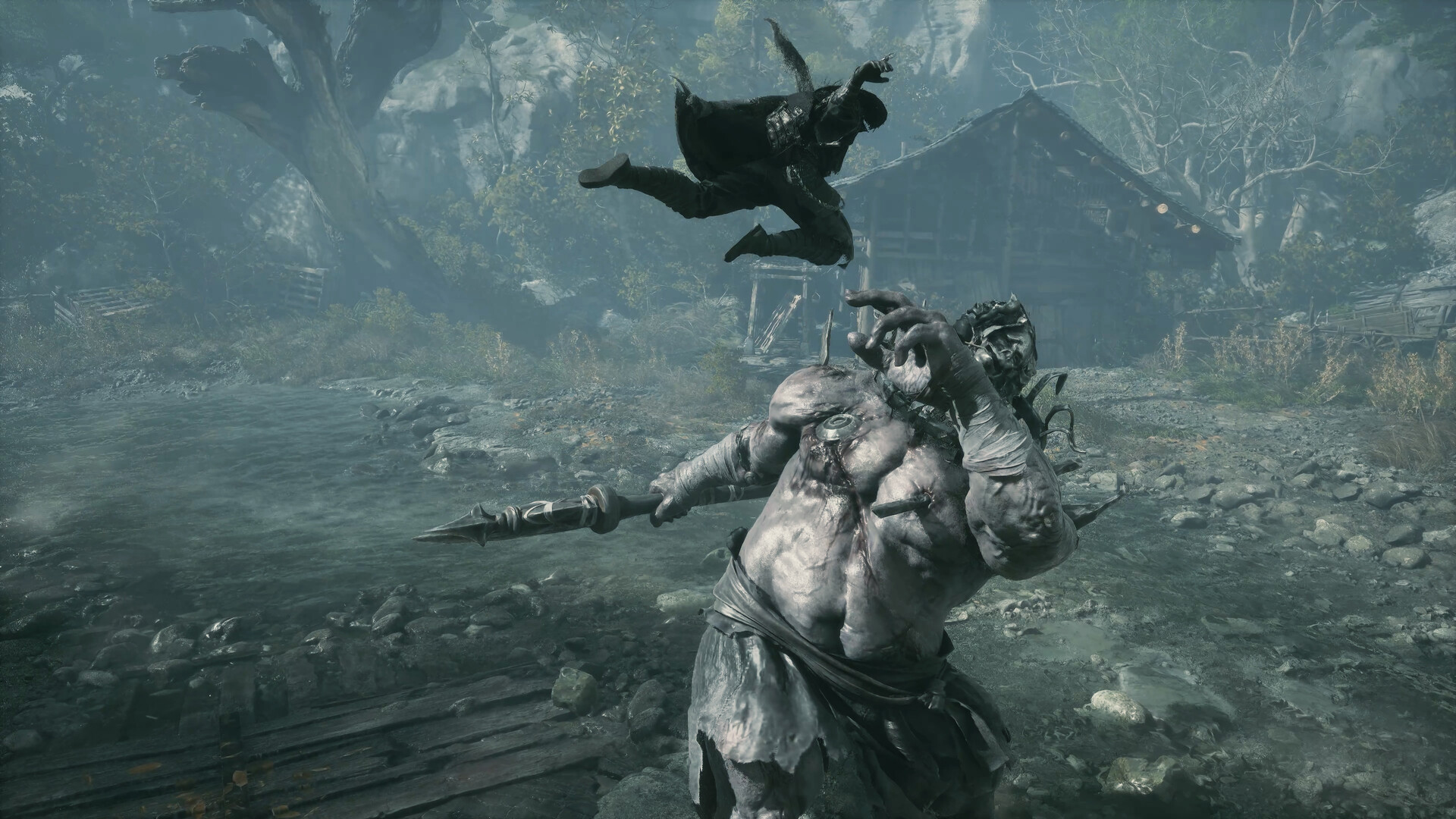
Sha-Chi System: the game's named combat energy meter. Builds with successful aggression and is spent on enhanced strikes and weapon-specific specials.
Weapon Switching: mid-combat swaps that fully recover Sha-Chi and let combos chain across two Blades.
Phantom Edges: 25 customisable secondary weapons activated on R2; some double as traversal keys for the world's metroidvania-style locks.
Ghost Steps: the game's teleport-style reposition, used to escape grabs and re-open punish windows.
Power Surge: each Blade has its own signature ultimate, charged through Sha-Chi spend and built around the weapon's identity.
Brutal and Killer Moves: the blue- and red-flash finisher system that rewards reading enemy stagger and burst windows.
Parry and Deflection: timing-based defence; the parry window only narrows by roughly two frames between standard difficulty and the hardest difficulty mode.
Stealth and Assassination: optional approach option for thinning crowds and unlocking eavesdrop-triggered intel before committing to open combat.
Per-Blade Skill Branches
Skill growth in Phantom Blade Zero is tied to weapons rather than to a character class. Each of the 30+ Blades has its own moveset, its own Power Surge ultimate, and its own way of interacting with the other subsystems. Picking up a new Blade is the closest equivalent to unlocking a new skill tree.
Skill Branch | Driving Blade | How It Plays |
|---|---|---|
Sustained pressure | Stacks the Bleeding meter on a single target until Hemorrhage triggers a damage burst; rewards staying on one enemy. | |
Parry-charge offence | Juggernaut | Each successful parry banks a charge; the L2 spends those charges on overwhelming power swings. Pairs cleanly with a parry-friendly Phantom Edge. |
Fast multi-hit chains | Twin short swords with high attack count; fills Sha-Chi quickly through hit volume rather than per-hit weight. | |
Space control | Sanguine Reach | Polearm reach trades raw speed for arena control; the L2 wide swings handle groups when paired with a faster swap Blade. |
Defensive counter loop | Flexible snake-sword tuned around parry-then-counter rhythm; sits at the top of the parry-weighted skill branches. | |
Dodge invulnerability | Twin rings; the player briefly phases out of existence during dodges, opening up a safer, mobility-first skill path. | |
Ranged and mixed range | Dual swords of different lengths; the shorter sword can be thrown and returns, supporting a hybrid skill loop that mixes ranged pokes with close-range follow-ups. |
Phantom Edge Customisation
Sitting beside the Blade kit, Phantom Edges add a second layer of skill choice. Each Edge brings either a tactical role (ranged pokes, status-effect buildup, area control) or a traversal role (specific Edges unlock specific level locks in the metroidvania-style maps). The S-GAME team has confirmed that roughly ten of these key-lock pairings exist across the game's world.
Night Owl: charged longbow shots used for boss phases that punish melee.
Man-Cutter: dodge-cancel axe that doubles as a barrier-breaking traversal key.
Flaming Mane: fire-spewing mask that fills the Burning meter for Ignition bursts.
Ink Cut: three-hit medium-range tool with bonus damage against the Huangxing boss fight.
Bashpole: sledgehammer with an aerial ground-pound and a traversal floor-break.
Power Surge and Ultimates
Every Blade has its own Power Surge: a per-weapon ultimate that consumes Sha-Chi and represents the cinematic peak of that weapon's identity. Power Surge animations are mocap-captured and tuned to feel like the climax of a Hong Kong action sequence rather than a generic burst-damage button. Because Power Surge spends Sha-Chi, the skill loop rewards aggressive play that builds the meter first and chains directly into the ultimate.
Skill Acquisition Through Combat
There is no levelling tree to grind. Skill acquisition is tied to two loops: picking up new Blades and Phantom Edges by progressing through the world and its bosses, and learning each weapon's moveset deeply enough that the per-weapon mechanics (Bleeding stacks, parry charges, throw-and-return rhythms, dodge invulnerability) become second nature. The Steam feature list confirms that defeating enemies grants their weapons and signature techniques, so the roster you can draw from grows as the campaign continues.
How Skills Pair With Difficulty
On Hellwalker, the hardest tier a player can pick on a first run, every enemy interaction changes. Boss AI starts adapting to the player's habits, parry timing tightens by roughly two frames, and movesets are reshuffled. Players who stick to one Blade's skill branch are punished hardest; the loadout (two Blades, two Phantom Edges, potions and accessories, with six accessory slots reported from the October 2026 press preview) becomes a real puzzle rather than a fixed setup. See Hellwalker Mode and Difficulty and Progression for the layered detail.