
Premise
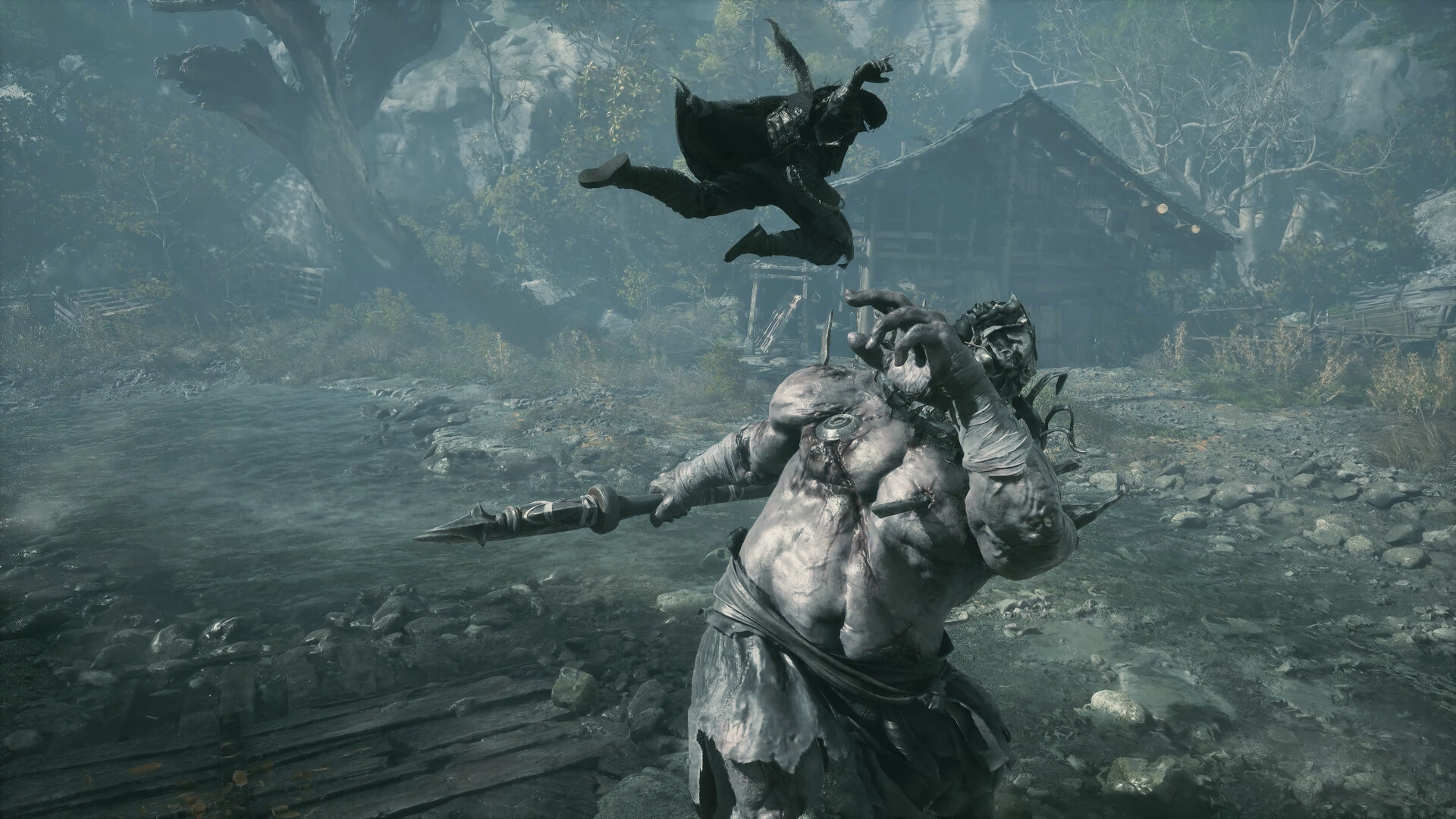
Soul is an elite assassin and the youngest senior leader ("Will") of The Order, a shadow organization of assassins headed by Mu Tianmiao. Soul is framed for the murder of Mu Tianmiao, his own adoptive father and the patriarch of The Order. In the process, Soul is gravely wounded in the heart. A mystic healer provides a temporary cure, but it comes with a deadline: 66 days to live.
That countdown is the entire narrative framework. Everything Soul does is shaped by the clock. He needs to find out who truly killed Mu Tianmiao, why they framed him, and whether the conspiracy goes deeper than a single murder. He also needs to survive long enough to do any of it.
The Conspiracy
The murder of Mu Tianmiao is not a simple assassination. It is the visible surface of a larger conspiracy within and around The Order. Soul's investigation peels back layers of the organization's internal politics, revealing competing factions, hidden agendas, and alliances that extend beyond The Order itself. See the characters article for the people involved in these factions.
The primary antagonist is Zuo Shang, Soul's former best friend. Their bond was destroyed by what the developers describe as Zuo Shang's "endless ambition." Zuo Shang's strategy is to wait out Soul's 66-day countdown rather than confront him directly. He does not need to win a fight. He just needs Soul to run out of time.
Narrative Style
Soulframe Liang has described the narrative approach as direct storytelling, not cryptic. Unlike games that scatter lore fragments for players to assemble, Phantom Blade Zero tells its story through dialogue, cutscenes, and character interactions. Liang has said: "Love isn't declared loudly; it's suggested through small gestures." The writing aims for subtlety in how characters express emotion, but the plot itself is meant to be followable without a wiki or lore deep-dive.
The tone is serious. This is not a lighthearted wuxia adventure. People die badly. Betrayal has real weight. The 66-day clock means there is no time for filler or side diversions that do not matter. Every interaction Soul has carries the weight of limited time.
Horror Elements
S-GAME has drawn tonal parallels to Resident Evil and Alan Wake for certain sections of the game. Horror is not the dominant genre, but it bleeds into specific areas and encounters. The Phantom World contains things that are not just dangerous but genuinely wrong: twisted creatures, body horror, and environments designed to unsettle. The blending of wuxia martial arts with horror is part of the Kung Fu Punk aesthetic. It is a world where a swordfight can happen in a temple that looks haunted.
Multiple Endings
The game has multiple endings. Confirmed ending types include:
Ending | Description |
|---|---|
Good ending | The best outcome for Soul. |
Bad ending | Things go wrong. |
Very bad ending | Things go very wrong. |
Possible "perfect" ending | Hinted at but not confirmed. |
There is also a unique case: dying at the very beginning of the game counts as an ending. Soul's 66-day countdown starts with a fight, and if you lose that fight, the game acknowledges it as a conclusion. Your story just happens to be very short.
What determines which ending you get has not been fully explained. Player choices during the story likely play a role, and it is possible that optional content or character relationships factor into the outcome.
The Order
The Order is the shadow organization at the center of the plot. It controls the jianghu from behind the scenes through a network of assassins, informants, and political leverage. Mu Tianmiao was its patriarch. His death creates a power vacuum that every faction in the game is trying to exploit. Soul was one of The Order's best operatives, and his investigation forces him to confront the organization he served his entire life.
Connection to Prior Games
Phantom Blade Zero shares its world with Phantom Blade: Executioners, the earlier S-GAME release, but it is not a continuation of it. The studio has described the game as a fresh start built on the story foundations of the first two Rainblood titles, with a plot that departs from what the earlier entries established and asks no prior knowledge of them.
Before the Phantom Blade series, S-GAME made the Rainblood games. The original Rainblood: Town of Death (2008) told the story of a martial artist with 64 days to live. The shift from 64 to 66 days in Phantom Blade Zero is a deliberate callback. Soulframe Liang has called Phantom Blade Zero the spiritual rebirth of the idea he had as a student nearly two decades ago. See the development history article for the full timeline.
Content Length
S-GAME has provided rough estimates for game length. See the difficulty and progression article for how difficulty settings affect pacing.
Item | Description |
|---|---|
Main story | 20 to 30 hours |
Side content | approximately 20 additional hours |
Total | roughly 40 to 60 hours with side content |
The main story is the 66-day arc. Side content includes additional missions, character encounters, and exploration that flesh out the Phantom World without being required for the main plot. The side content includes all currently revealed bosses, since S-GAME has stated that no main story bosses have been shown yet.
Themes
Betrayal, loyalty, and mortality run through the narrative. Soul spent his career killing people on behalf of The Order. Now the same organization is turned against him. There is an open question about whether he deserves sympathy, given his past. The game does not seem interested in making him a clean hero.
The Phantom World reinforces the tone. It is dark, violent, and populated by people with competing agendas. Nobody is straightforwardly good. The jianghu is a place where survival depends on skill, alliances, and information. The 66-day clock makes everything more urgent for Soul, but the world's problems would exist with or without him.
Multiple Endings In The Steam Feature List
Multiple endings appear directly in the official Steam feature list. The studio has confirmed the structure (good, bad, very bad, and a hinted-at perfect path) but has not disclosed how specific player choices route to specific endings. Side-quest completion and key character relationships are the obvious levers. S-GAME has since clarified that the game has no honor system and no numeric morality meter; what carries across is whether the player acted with chivalry in optional content, and that shapes the main story and which ending it reaches. Specific routing remains undisclosed pre-launch.
Confirmed Narrative Beats As Of 2026-05-17
With launch under three months out, the narrative envelope has stabilised. The setup is the 66-day countdown that starts after Soul is framed for the patriarch's murder; the antagonist is the former best friend whose strategy is to wait the clock out; the world is a darker, jianghu-inflected Ming Dynasty take with horror bleed-in; and the playthrough closes with one of several endings. S-GAME confirmed on August 6, 2026 that development was complete, ahead of the October 29, 2026 worldwide launch that was revised from an earlier September 9, 2026 target.
Cross-link references for context: The 66-Day Countdown, The Order, The Phantom World, Soul, Zuo Shang, Side Quests and Branching Story, Characters.