Loading...
Loading...
Animals
August 26, 2026 at 12:19 AM
Added the two breeding prerequisites (two animals with needs mostly met plus a free shelter nearby) and the naming and happiness systems
Post-launch patch notes also name an Auto Feeder, an automated feeding device that fits the game’s wider automation systems. As its name suggests, it keeps animals fed without the player topping up stations by hand. It has its own interface, and an early post-launch fix corrected how that interface behaved after a backpack upgrade.
Animals are part of life in Solarpunk. The game has no combat, so animals are kept and cared for rather than hunted. Players coexist with their animals, feeding and watering them so they stay healthy and provide resources.
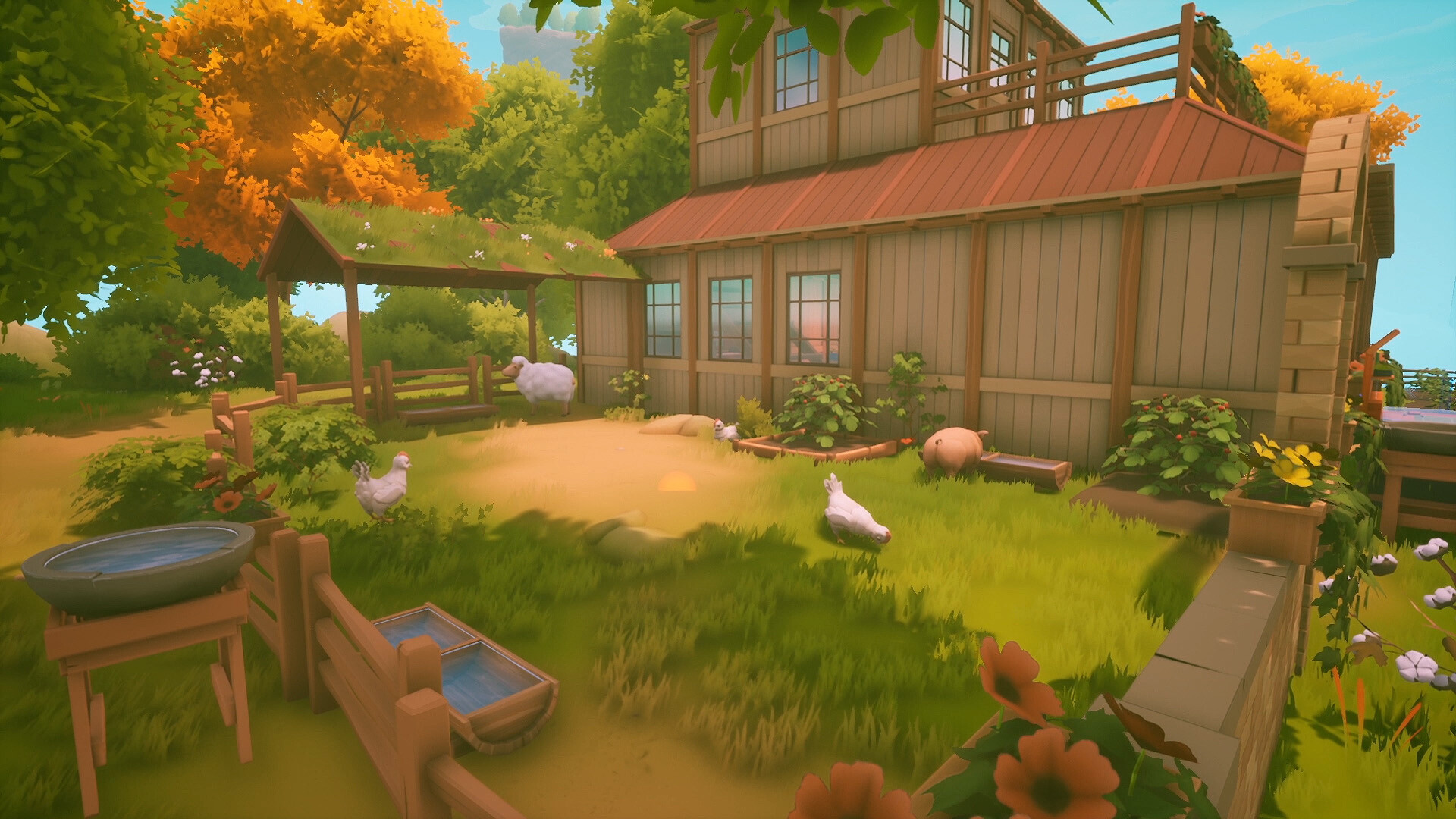
Pigs are a confirmed animal in Solarpunk. When treated well, pigs dig up truffles from the ground as they roam the island. Truffles are a resource that pigs are the source for, which makes them worth keeping.
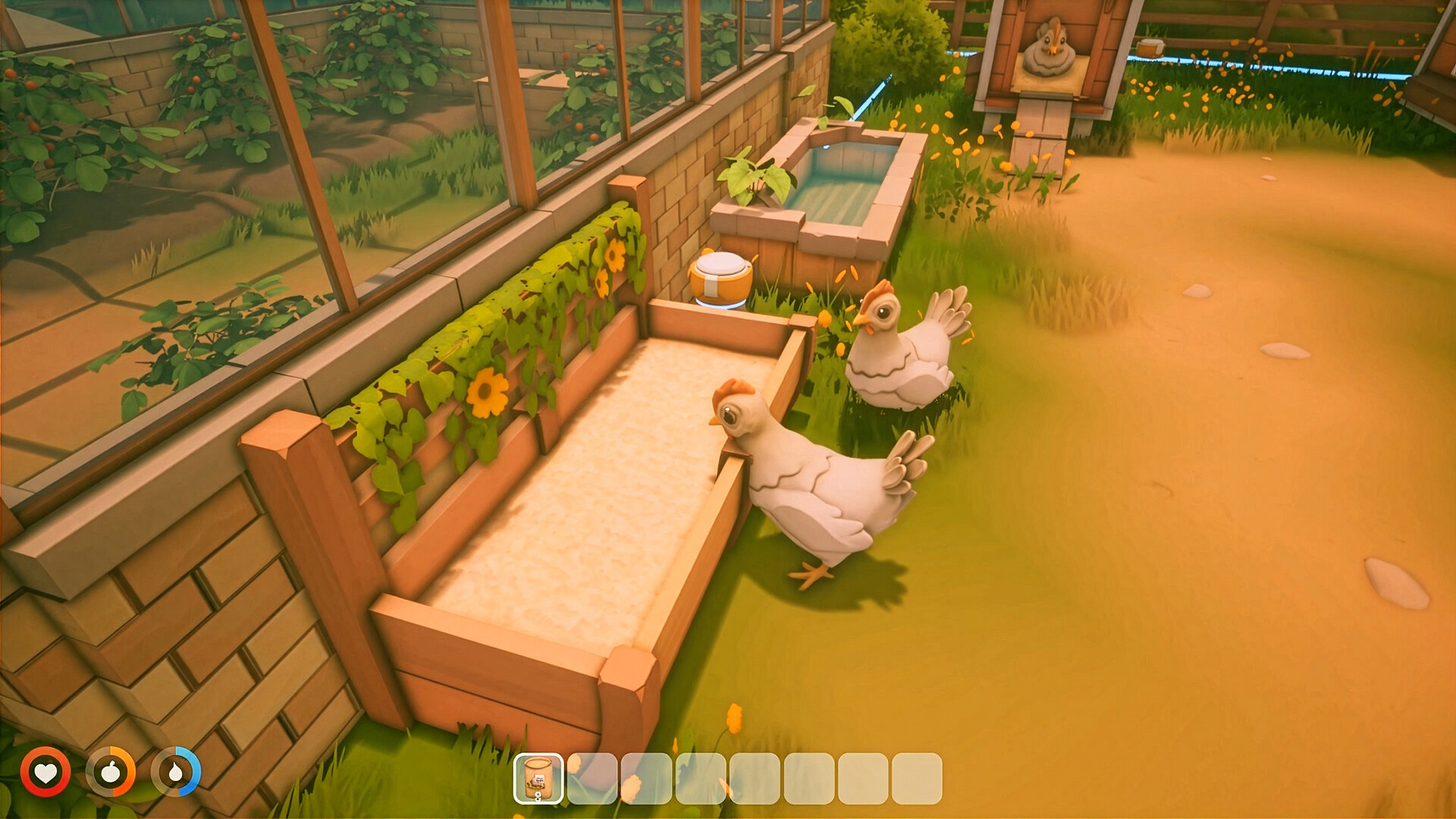
Caring for animals uses dedicated feeding stations and water stations. Players place these near where animals are kept, and animals come to them to eat and drink. Keeping animals fed and watered is what allows them to thrive and produce resources.
Place feeding and water stations close together so animals do not travel far between them.
Keep pigs in areas with open ground where they can dig for truffles.
Treat animals well; pigs only dig up truffles when they are properly cared for.
Animals reproduce rather than being bought or spawned, and the game applies two conditions before it will let that happen:
You need two animals whose needs are mostly fulfilled. Hungry or thirsty animals will not breed, so the feeding and water stations above are a prerequisite rather than a convenience.
There must be an empty shelter nearby for the new animal to occupy. Building the shelter first is the step most often missed.
With both conditions met, the pair can reproduce on their own. Because a shelter has to be free, growing a flock is a building problem as much as an animal-care one: each expansion needs housing in place before the next generation arrives.
Individual animals can be given names, and each one has a happiness value that can be raised to its maximum through consistent care. Both have their own achievements, so neither is a cosmetic flourish. Keeping food and water stocked is what drives happiness up, which in turn keeps the flock breeding.
The Solarpunk design treats animals as residents of the player's islands rather than as resources to harvest or threats to defeat. The game has no combat and no hunting loop. Every animal interaction is built around care: keep them fed, keep them watered, and they produce in return.
That decision changes how survival pressure works. In hostile survival games the food chain rewards killing the right creatures; here the food chain rewards farming and cooking, with animal-based ingredients coming from the coexistence model rather than from corpses. The pig and truffle relationship is the cleanest example: well-treated pigs dig truffles for the player, while the pigs themselves stay on the island.
Pigs are the animal most closely associated with the game because of the truffle loop, but they are not the only species with a named behaviour. Developer posts across the closed beta and the post-launch patch notes name several more, each with its own quirk:
Animal | Named behaviour |
|---|---|
Pigs | Dig up truffles from the ground as they roam, provided they are well cared for. |
Chickens | Follow trails of wheat, seek shelter at night, and take cover when it rains, tying them into the weather system. |
Sheep | Attracted by corn rather than wheat, a change the developers made during the closed beta. |
Bees | Kept via the Beehive, which can only be placed in suitable biomes. The developers ruled out the snowy mountains as too cold, making bees the clearest example of a biome-restricted animal across the islands. |
Several husbandry systems sit on top of the roster:
Breeding. A breeding system was built during development, so animal populations can be grown rather than only found.
Naming. Animals are given a random name when they spawn, and players can rename them using an Animal Tag.
Happiness and output. Well-treated animals produce loot, which is the mechanism behind the pig and truffle relationship rather than a pig-only special case.
Transport. Animals can be moved around a base with a Transport Item that sends them to a Receiving Station placed wherever the player wants them.
Behaviour. The animal AI was rewritten during the closed beta so that animals react to their surroundings, move correctly, avoid one another, and find food and water more reliably. Round feeding and water stations were introduced alongside smarter pathfinding after players reported animals getting stuck and going idle.
What is still not published is a full species list with stat tables, per-animal yield figures, or growth timers. The developers have named behaviours rather than numbers, so treat individual output rates and breeding times as unconfirmed until they appear in the live build or in patch notes.
System | Connection to Animals |
|---|---|
Truffles dug up by pigs feed into the recipe loop; cooking provides timed buffs that reduce hunger and thirst. | |
Plants and animals share the island, so layout planning around farming plots also shapes where animal stations go. | |
Feeding stations and water stations are built items placed near where animals are kept. | |
Up to four players can share the island. Co-op groups often dedicate one player to animal and farm chores while others build or explore by airship. |