

Overview
The weather system in Solarpunk creates dynamic conditions that affect several systems, including energy generation, airship flight, and farming.
Day and Night Cycle
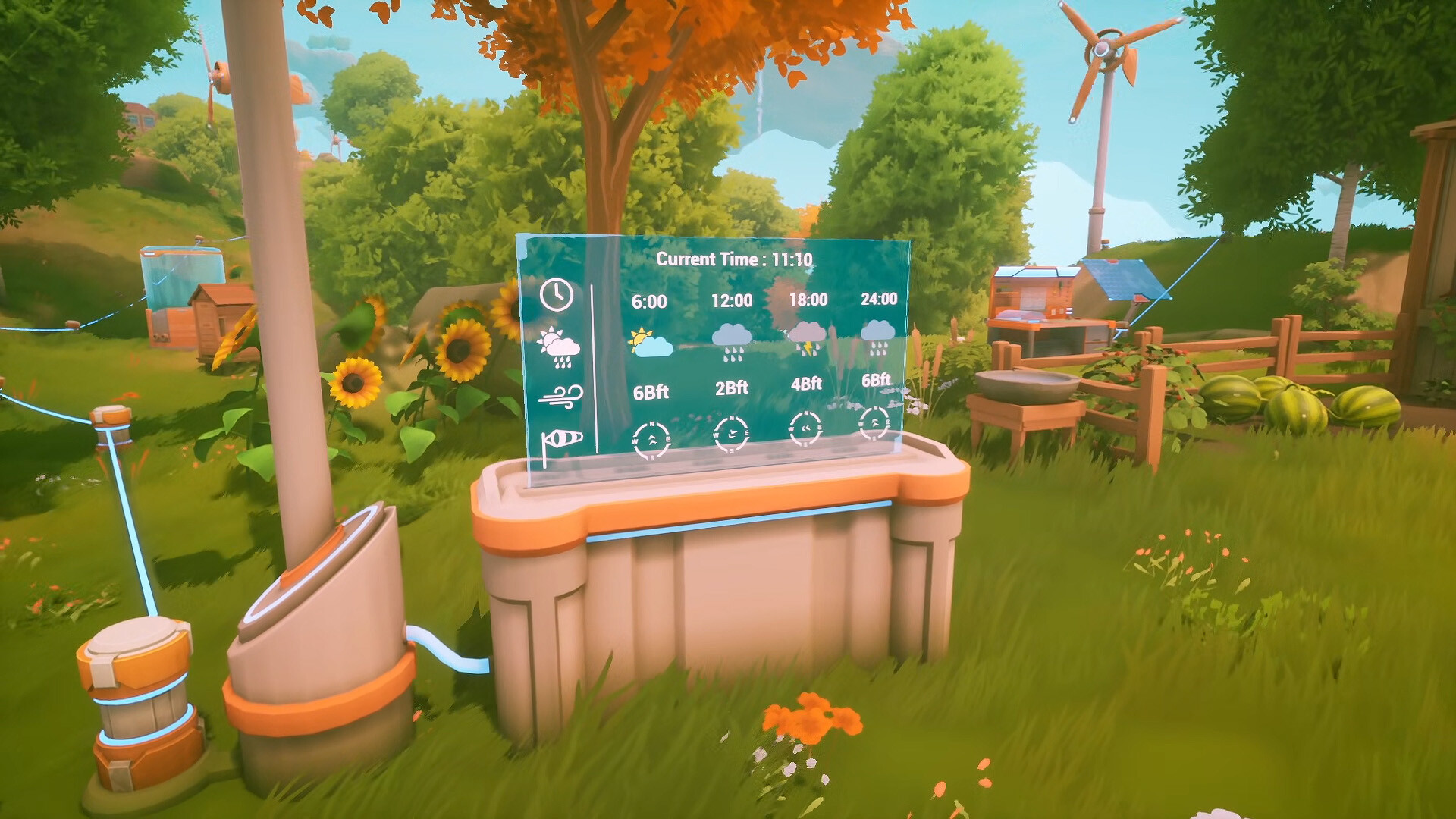
Solarpunk has a dynamic day/night cycle. The cycle directly affects the Energy System: solar panels only generate power during daylight, so batteries must store enough energy to keep machines running through the night.
Nighttime can be skipped by sleeping, which is the standard way to move past a dark stretch without waiting it out. It is one of the most commonly unlocked achievements in the game, so most players find it in their first session. Sleeping does not pause anything else: the game has no pause feature at all, and opening the menu leaves the world running.
Storms
Storms are the most impactful weather event. During a storm:
Effect | Details |
|---|---|
Crop damage | Unprotected crops can be destroyed by storms, which makes greenhouses an important investment for any serious farm. |
Reduced solar output | Cloud cover and storm conditions reduce the output of solar panels, straining the energy grid. |
Wind
Wind is an environmental factor that affects airship flight. Wind direction and strength change over time and can push the airship off course, so players plan their flights with the weather in mind. An optional simplified flight mode turns this off, so wind no longer affects the airship. Energy generation is also affected by weather, which is why combining solar power with other sources matters.
Weather and Gameplay Summary
Condition | Affected system | Impact |
|---|---|---|
Daytime | Energy | Solar panels generate power |
Nighttime | Energy | Solar panels stop; stored battery power is used |
Storm | Farming, Energy | Unprotected crops can be destroyed; solar output drops |
Wind | Pushes the airship off course while flying |
Weather and Energy Strategy
Because the Solarpunk energy system pulls from sun, wind, and water, weather is not a flat penalty: it shifts which generator carries the grid. A cloudy day cuts solar output, but it tends to bring more wind, which keeps turbines spinning. A still, clear day favours solar over wind. Storms hit both, which is why batteries and a mix of generator types are the standard answer rather than relying on one source.
On the farming side, the answer to storm damage is greenhouses. Greenhouses protect crops from storm damage and let players keep planting through bad weather; without them, an unprotected outdoor plot can lose its harvest when the next storm rolls in. Combining greenhouse-protected staples with outdoor crops that recover quickly is the usual mid-game farm layout.
Weather and Airship Flight
Wind is also the variable that most affects airship travel between distant islands. The airship's onboard battery is charged by its own solar panels, so daylight matters for range; wind matters for steering. Flying in calm conditions is fastest; flying in storm conditions costs more battery to hold course.
Weather and World Type
One weather hazard can be switched off entirely. In the relaxed world type described on World Options, lightning cannot strike the player at all, which removes the single most dangerous part of being outdoors during a thunderstorm. Storms still occur and unprotected crops are still destroyed, so greenhouses remain necessary either way; only the personal risk is removed.
What Is and Is Not Publicly Confirmed
Confirmed: dynamic day and night cycle; dynamic weather independent of the day cycle; storms that damage unprotected crops; weather effects on solar, wind, and water energy output; wind effects on airship steering.
Not confirmed: a named seasons system (no public confirmation that the year is divided into named seasons beyond day/night and weather); named storm tiers or severity categories; weather-specific creature behaviour beyond standard animal care; seasonal rainfall scheduling. Rain itself does water unprotected crops: objects that need water, including farmland, grow boxes, rain collectors and water troughs, detect rainfall and whether they are sheltered.
Thunderstorm Loop Fix
The September 30 Steam update, version 1.3.0, fixes thunderstorms getting stuck in a loop for some players. Normal weather and storm protection remain part of the game. The announcement placed console rollout after platform approval; a matching live console version remains unconfirmed as of October 8.