
Loading...
Dynamic World Events
November 2, 2026 at 06:49 AM
Keep preview simulation claims within their evidence scope and add specific documented citizen-event and stronghold conditions.
Pywel was described in earlier coverage as feeling active even without the player watching. Crimson Desert was described there as presenting unexpected world events: Bandit ambushes, wildlife encounters, faction skirmishes, traveling merchants and weather hazards. The older account attributed them to internal simulation rather than pre-placed scripts; that engine-level distinction is not newly established for every encounter here.
A hands-on preview put it plainly: "Dynamic events occur throughout the world and without warning (bandit ambushes, wildlife encounters, faction skirmishes), giving the impression of a world that isn't merely staged and waiting for the player to interact with it." Early community-sourced materials described the system as generating "infinite procedural events" tied to the day-night cycle and ecosystem, though Pearl Abyss has not used that exact phrasing in the inspected patch passages. The earlier overview additionally claimed official confirmation of simulation rules rather than a fixed roster; retain that attribution as an earlier account, not a technical rule proven by the specific event examples below.
Earlier bandit-encounter reports described attacks on travelers and denied fixed scripted locations. They attributed triggers to region, time of day and possibly player progression. Those spawn and scaling rules remain earlier reports. The Crimson Desert region is particularly dangerous for ambushes, given its lawless reputation.
The Contribution guide gives a narrower documented example: helping citizens can involve defeating a few bandits in random events that do not appear in the quest list. This supports that particular encounter channel, not every proposed spawn-time, scaling or infinite-procedural rule in the older overview.
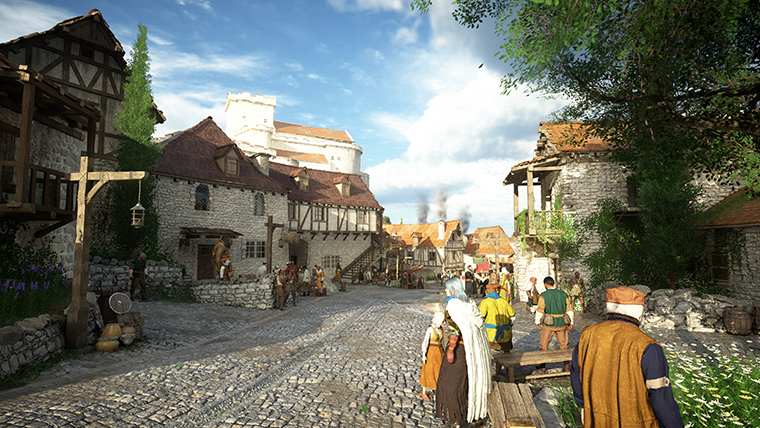
During large-scale battles, you have a choice in how to handle them. one encounter: "Skirmishes erupted all around us, and I could easily try to help press each one to resolution, or I could bust through with my trusty steed and aim to cut the head from the snake to resolve it once and for all." You can engage, help NPCs fight, or ride straight through.
Merchant caravans move between settlements. These are not fixed vendor locations but mobile NPCs traveling along routes. Encountering one gives you a chance to trade, though some coverage suggests they may also be targeted by bandits, creating emergent multi-party encounters.
Animals in Pywel are not background decoration. Multiple sources describe a functioning ecosystem where wildlife, enemy mobs, and non-combatant NPCs operate under behavior patterns. Creatures roam freely, defend territory, and appear or disappear based on conditions. Some animals are mountable, including bears, wolves, and eventually dragons. See Mounts and Traversal for details on taming and riding.
Animal stampedes have been mentioned in preview materials as an emergent event type. A herd moving through an area can disrupt whatever you are doing, and the implication is that these are triggered by the ecosystem simulation rather than a timer.
Pywel has "dozens and dozens" of factions per Pearl Abyss. These groups clash with each other across the map, and their fights can break out around you as you travel. Unlike Faction Wars missions (which you actively undertake), these skirmishes happen on their own. You can intervene, ignore them, or use the chaos as cover to slip past.
Sandstorms in the Crimson Desert region, blizzards in Pailune, fog banks in lowland areas: these are driven by the dynamic weather system and have gameplay consequences. Reduced visibility is confirmed, and stamina effects from wind are tied to the gliding system. Some weather events are localized, affecting a specific area while neighboring zones stay clear.
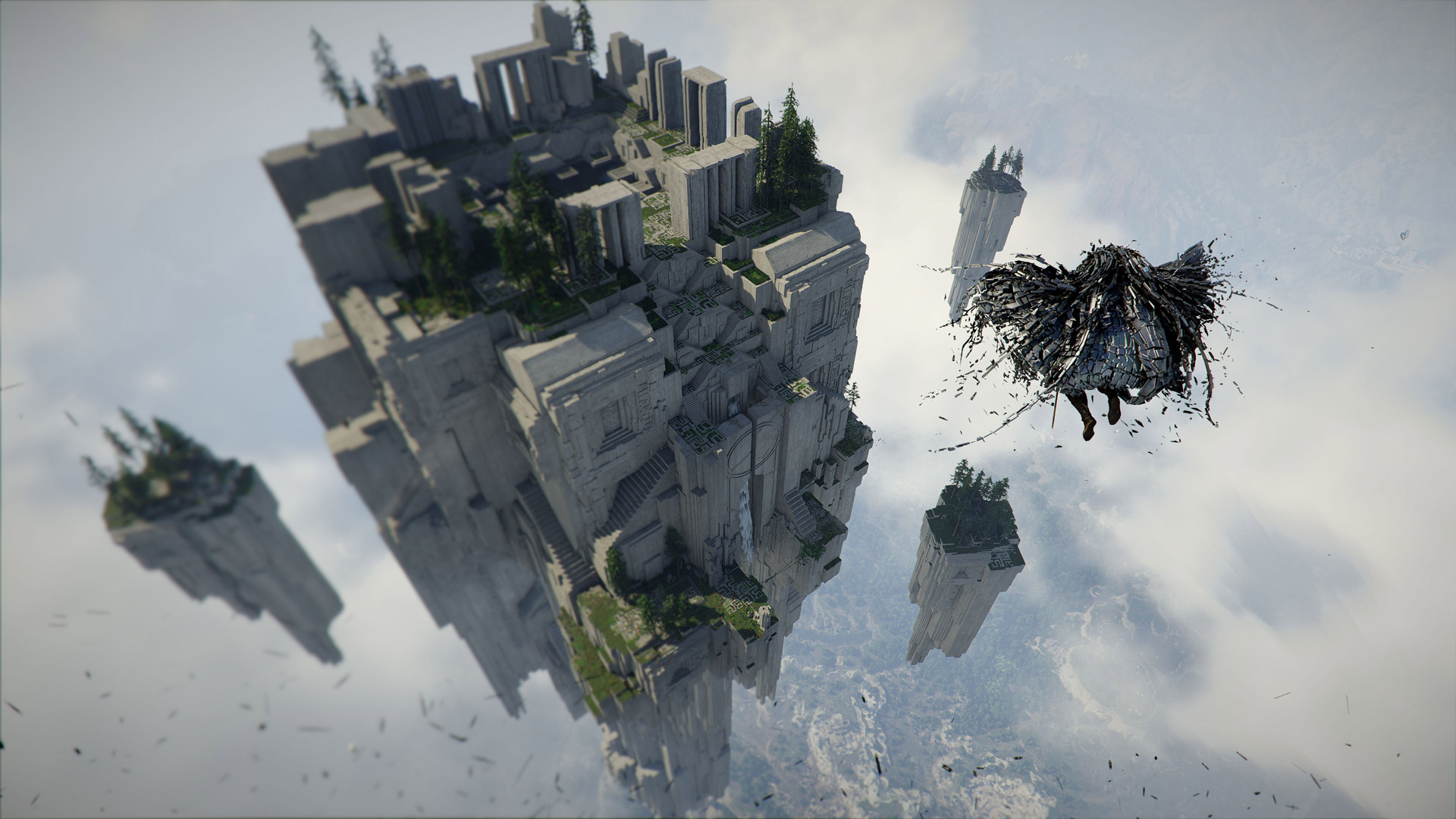
Pearl Abyss was described in the earlier overview as not having published a technical diagram. The following table records that overview's proposed interactions among time, weather, ecosystem behavior, faction state and progression; it is not a newly established engine architecture or universal trigger table:
Feature | Description |
|---|---|
Day-night cycle | Time of day affects which events can fire. Bandits may be more active at night. Certain wildlife appears only during specific hours. Merchants travel during the day. |
Weather | Current conditions influence event types. Storms may drive wildlife into unusual areas or make roads more dangerous. |
Ecosystem simulation | Wildlife follows behavior patterns rather than fixed spawn points. Animals have territories, routines, and reactions to player presence. Wearing ghillie suits for camouflage affects how wildlife responds to you during hunting. |
Faction state | The political state of a region affects what kinds of events occur there. An area you have liberated may have fewer bandit ambushes. Contested territory has more skirmishes. |
Player progression | While not explicitly confirmed, the scaling of dynamic events likely accounts for player level or gear, given that the rest of the game's systems do. |
Earlier settlement-routine account: The living world extends to non-combat NPCs in settlements. Merchants haggle with each other, guards patrol routes, and villagers follow daily schedules. Named NPCs in major towns have specific routines tied to the time of day: shops open in the morning and close at night.
NPCs also react to player behavior. Theft triggers a visible "Crime: Theft" overlay and a bounty notice. Hostile actions make nearby NPCs turn against you. Producer Seongwoo Lee stated: "All villagers going about their daily lives and every NPC, event, and side quest in the game were created for a purpose."
Earlier liberation account: After you liberate a settlement from hostile occupation, displaced residents move back in. Vendors reopen. New quests appear from returning NPCs. The world state changes based on your actions. See Faction Wars for details on how liberation reshapes territories.
Earlier world-reactivity interpretation: The dynamic event system feeds into broader design. Time, weather, NPC routines, and political shifts all interact. A region's faction state affects its economy. Weather affects which events fire. Time of day affects NPC availability. The intent, according to multiple developer statements, is a world that "moves forward with or without the player."
Earlier design coverage attributed the phrase "world full of distractions" to Pearl Abyss and expected emergent situations to interrupt travel. Keep that as the earlier coverage account rather than a newly measured guarantee of event frequency or player-independent simulation.
Stronghold replay has explicit published conditions. Patch 1.05.00 applies re-blockades after loading screens to eligible strongholds at a set probability under time and condition requirements; a changed frequency waits until previously planned events have been initiated. Patch 1.08.00 extends this to bandit camps and ruins. Patch 1.10.00 adds Battle and Reconstruct stages and Protection requests through a regional contribution assessor for major strongholds. These specific systems do not establish that every wildlife, weather or caravan encounter follows the same rules.
The exact rules governing event frequency, spawn conditions, and scaling have not been detailed. How much player choice actually alters the long-term event mix in a region is unclear. Whether dynamic events can chain together (e.g. a bandit ambush on a merchant caravan that you happen to witness) has been implied but not confirmed. The boundary between "emergent" and "procedural with randomized triggers" is also fuzzy. Pearl Abyss has used both terms at different points.
Item | Description |
|---|---|
The environmental system that drives many events | |
Deliberate faction content vs. emergent skirmishes | |
How geography shapes event types | |
Settlements and Towns | NPC routines and town life |
Mountable wildlife encountered in the world |