

This article is incomplete
Some sections are missing or need additional details. Help improve it by contributing.
Overview
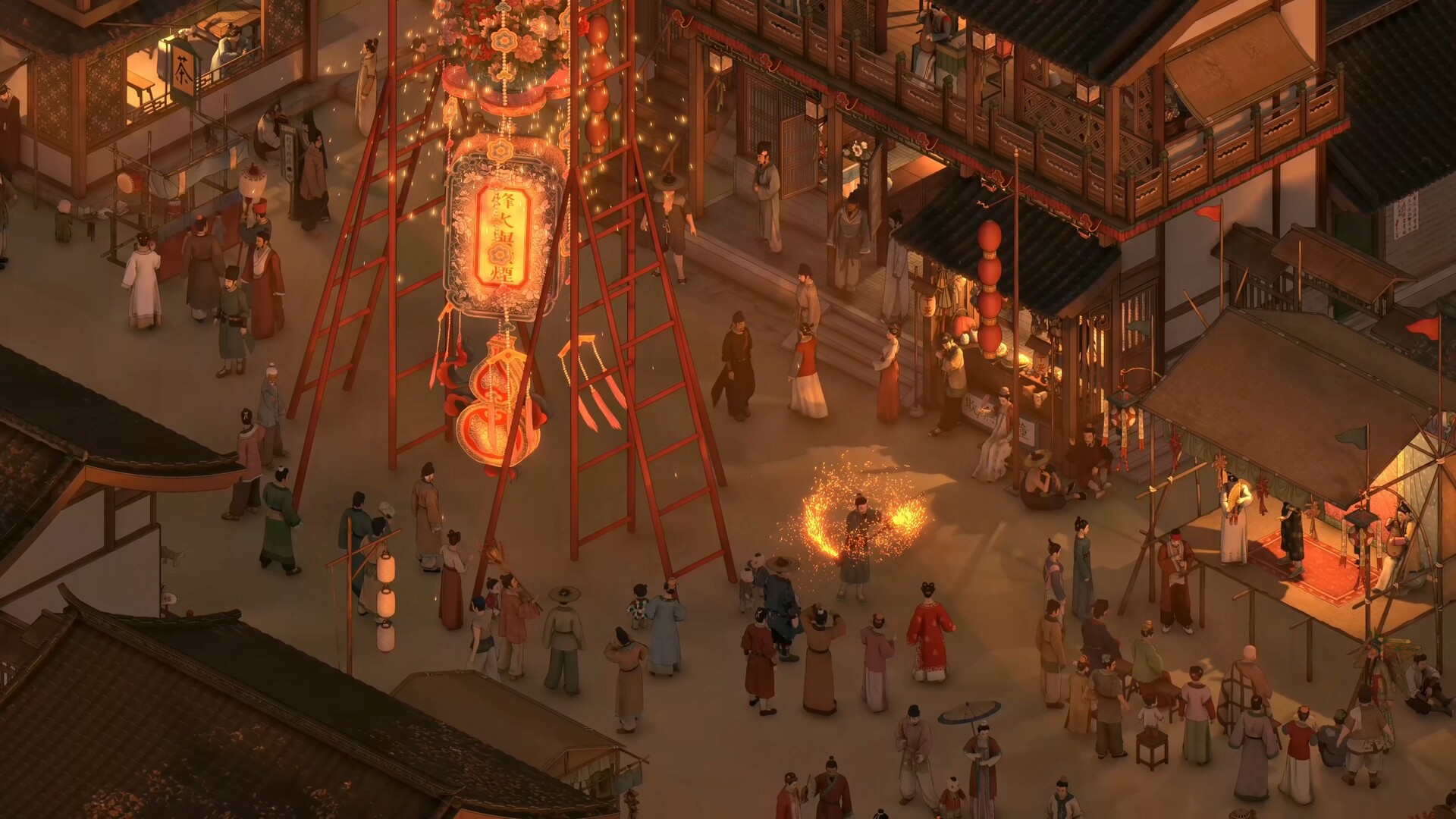
Festivals and events bring the world of The Bustling World to life beyond its core gameplay systems. These are celebrations, competitions, and leisure activities that punctuate the calendar and give players reasons to engage with cultural traditions, show off their skills, and earn rewards. The game recreates traditional Chinese festivals with attention to cultural detail, while also offering a range of competitive and casual mini-games that fit naturally into the sandbox.
Lion Dancing
Lion dancing is one of the traditional performances recreated in the game. This is a form of dance in Chinese culture where performers mimic a lion's movements in a lion costume, traditionally performed during the Chinese New Year and other celebrations to bring good luck. The game recreates the visual spectacle of lion dancing as a participatory event rather than a passive cutscene.
The level of detail in the lion dancing animation reflects the developers' focus on authentic cultural representation. The movements follow traditional choreography patterns, and the performance context matches historical practice. Players can observe or participate, depending on the event structure.
Iron Flower Launching
Iron flower launching (Chinese: da tie hua, literally "beating iron flowers") is an ancient tradition recreated in the game. The practice involves throwing molten iron into the air to create spectacular displays of sparks, similar in visual effect to fireworks but produced through metalwork rather than gunpowder. For historical context, this tradition dates back to the Northern Song dynasty (960-1127 CE), when blacksmiths performed it during festivals as a cheaper alternative to fireworks. The practice has survived into the modern era and was added to China's national intangible cultural heritage list.
The game recreates this tradition with considerable visual fidelity. Molten iron arcs through the night sky and bursts into cascading sparks against the darkness. The technical challenge of rendering this effect in the game's hand-painted 3D engine is notable, and the developers have shown it off in multiple trailers and promotional materials. It is one of the more visually distinctive features of the game and speaks to the depth of cultural research behind the project.
Seasonal event triggers
Seasonal changes in the game world open and close certain areas and trigger different events throughout the year. Festivals are tied to the seasonal calendar, meaning specific celebrations occur at historically appropriate times. Spring festivals, harvest celebrations, winter markets, and midsummer competitions all follow the rhythm of the agricultural year.
The seasonal trigger system means you cannot simply attend every festival whenever you want. If you miss a seasonal event, you need to wait until the next cycle to participate. This creates a natural rhythm to the game year and rewards players who plan their activities around the calendar. It also encourages extended play sessions, since experiencing everything requires living through the full seasonal cycle.
Competitive Events
The game includes several competition types where players can test their skills against NPC opponents. Winning brings honor and money, making competitions a valid income source and reputation builder. The confirmed competition types cover a range of the game's systems.
Item | Description |
|---|---|
Pet Fighting cards | a card-based competition involving trained animals |
Cooking contests | prepare dishes under time pressure, judged on quality and creativity |
Martial arts contests | combat tournaments with structured bracket formats |
Luban building contests | architectural challenges named after Lu Ban, the legendary Chinese master craftsman |
Horse racing | test your mount's speed and your riding skill |
Each competition type draws on different player skills and game systems. A player who has invested in cooking will perform well in culinary contests. A player who has trained warhorses will have an edge in racing. The variety of competition types means that different playstyles all have opportunities to compete and earn rewards.
Culinary showdowns and cooking
Cooking competitions are among the more detailed mini-games. Players prepare dishes using ingredients sourced from the agriculture system, applying recipes learned through the chef profession described in the character progression article. Competitions judge dishes on multiple criteria, and the results depend on ingredient quality, recipe mastery, and execution under time pressure.
Outside of formal competitions, cooking is a leisure activity that any player can engage in. You can cook meals for personal consumption, to satisfy the hunger mechanic, to sell in a restaurant business, or simply for the satisfaction of mastering a recipe. The cooking system has enough depth to occupy players who enjoy that kind of gameplay without being required for those who do not.
Martial arts competitions
Martial arts tournaments provide a structured competitive framework for the combat system. These are organized events with rules, brackets, and prizes. They differ from regular combat encounters in that they take place in controlled environments with specific victory conditions. You cannot simply overwhelm an opponent with numbers or ambush them from behind. Tournaments test individual fighting skill.
Tournament participation requires meeting entry requirements, which may include reputation thresholds, faction membership, or entry fees. The rewards scale with the difficulty of the competition and the skill of the opponents. High-level tournaments attract the strongest NPC fighters, making them both more challenging and more rewarding.
Leisure activities
Beyond organized festivals and competitions, the game has a range of leisure activities that players can pursue at their own pace. Fishing, painting, and playing music are all confirmed leisure activities. These are not just flavor animations. They have their own progression systems and produce tangible outputs.
Fishing provides food and occasionally rare catches that have value in cooking or trade. Painting creates artworks that can decorate your properties or be sold. Music performance improves your social standing and can attract audiences of NPCs. Each leisure activity is a small gameplay loop that has a change of pace from the more intense systems like combat and trade.
The inclusion of leisure activities reflects the game's focus on simulating a full life in ancient China rather than focusing exclusively on action or strategy. A player who spends an in-game afternoon fishing by a river is having a valid gameplay experience, not wasting time. The sandbox supports multiple speeds and intensities of play.
Rewards and Progression
Festival participation and competition victories provide rewards including money, reputation, rare items, and social standing. Winning a martial arts tournament increases your reputation as a fighter, which can open doors with certain factions. Placing well in a cooking contest builds your reputation as a chef, which attracts customers to your restaurant.
The reward structure ties festivals and events back into the game's core progression systems. They are not isolated entertainment. They are integrated into the economy, the social simulation, and the character progression loops. A player who actively participates in festivals and competitions progresses differently than one who ignores them, but both paths are viable.