

Origins
The concept for Pokemon Pokopia originated with Shigeru Ohmori of Game Freak. During the development of Pokemon Scarlet and Violet, Ohmori recalled his earliest work as a map designer on Pokemon Ruby and Sapphire, where he found the process of designing Pokemon habitats deeply satisfying. He noted that "the feeling of Pokemon appearing when I was creating the habitat was very interesting" and envisioned a full game built around that concept.
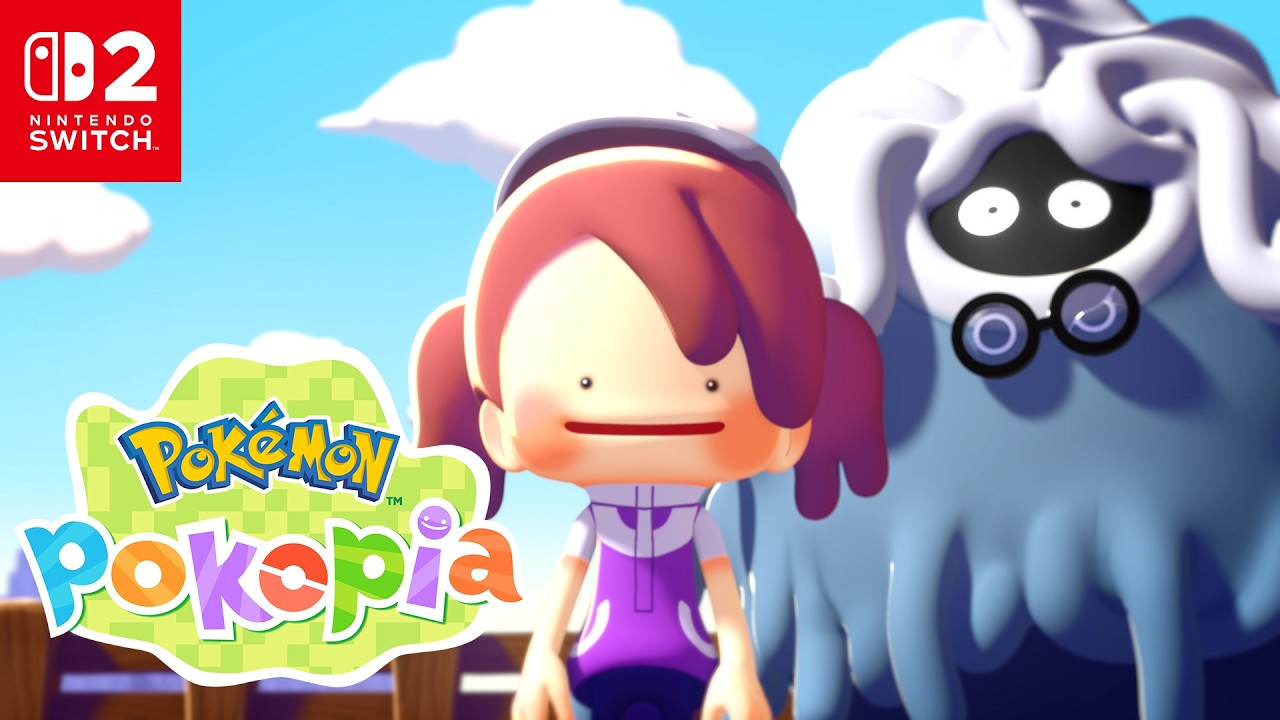
After Scarlet and Violet's development wrapped, Ohmori began prototyping with a team of approximately three people. The prototype focused on environmental creation and Pokemon habitation, with Ditto already chosen as the protagonist because "Pokemon aren't very good at using tools; Ditto transforming solves this." Ohmori also created a concept video showing the art style he envisioned, including Ditto's human transformation. Six months later, the small team presented the prototype and video to The Pokemon Company. That same concept video was later reworked into the first trailer shown at the September 2025 Nintendo Direct.
The Name "Pokopia"
The game's title was deliberately chosen to be "a slightly looser title" than the standard "Pokemon [Subtitle]" naming convention. Ohmori has explained in a developer interview that the name draws from two sources:
"Poco a poco" (Italian/Spanish): meaning "little by little" or "gradually," reflecting the game's relaxed pace where players restore environments piece by piece.
"Poko poko" (Japanese onomatopoeia): representing a scattered, here-and-there sound, connecting to the block-placing mechanics central to gameplay.
These elements were combined "in a Pokemon-style way" to create the Japanese title "Poko a Pokemon," which became "Pokemon Pokopia" internationally. The "little by little" philosophy permeates the entire game design, including the music, which features arrangements of classic Pokemon BGM that gradually evolve closer to their original versions as the player restores each area.
Omega Force Partnership
Game Freak lacked experience in the sandbox building genre, which led The Pokemon Company to recommend a collaboration with a studio that had proven expertise. Koei Tecmo's Omega Force division was selected, having previously developed Dragon Quest Builders 2, which shared similar DNA with Ohmori's vision: a sandbox building game built around a beloved franchise with strong creature and character personality.
Chief Director Takuto Edagawa described Ohmori's prototype as providing "such a clear rundown of what Game Freak wanted to achieve" that Omega Force immediately understood their role. The partnership brought together Game Freak's deep understanding of Pokemon with Omega Force's technical expertise in building systems. Both Edagawa and Art Director Marina Ayano were new to the Pokemon franchise, bringing fresh perspectives from their Dragon Quest Builders 2 experience.
Pre-Production and Alignment
Before entering full production, the teams spent approximately 3 to 4 months in a pre-production alignment phase. During this period, they ironed out gameplay mechanics, tweaked central design concepts, and resolved potential development hurdles in advance. The alignment process also involved philosophical discussions, including questions about why and how a Pokemon develops trust with others, which directly informed the game's befriending mechanics.
Producer Kanako Murata confirmed that "Pokopia's development wrapped up pretty quickly thanks to this collaborative planning effort." The extensive pre-production groundwork eliminated major obstacles before official development commenced, allowing the actual production to proceed smoothly.
Art and Sound Direction
Art Director Marina Ayano, a Dragon Quest Builders 2 veteran, established the art direction around two keywords: "chill" and "pop." This resulted in the game's clean, colorful pop-art visual style that is distinct from recent mainline Pokemon titles. The art direction deliberately avoided the realistic trend seen in Scarlet and Violet, instead opting for a bright, inviting aesthetic inspired by sandbox and life-simulation games.
The sound design was built around two thematic concepts: "creation and transformation" and "reconstruction and recovery." Music in each area starts as simplified, ambient versions of classic Pokemon BGM. As players restore the environment and increase the area's level, the music evolves and layers build up, gradually approaching the original source tracks. This creates a dynamic soundtrack that rewards progress with increasing musical richness.
Key Development Staff
Role | Name | Studio | Notable Background |
|---|---|---|---|
Concept Creator and Senior Director | Shigeru Ohmori | Game Freak | Director of Pokemon Scarlet/Violet; map designer on Ruby/Sapphire |
Chief Director | Takuto Edagawa | Omega Force (Koei Tecmo) | Game Director of Dragon Quest Builders 2 |
Art Director | Marina Ayano | Omega Force (Koei Tecmo) | Art Director of Dragon Quest Builders 2 |
Producer | Kanako Murata | The Pokemon Company | Pokemon Company veteran |
Omega Force assembled the largest development team in the division's history for this project, surpassing even Hyrule Warriors in team size. Every game element was created collaboratively between Game Freak, Omega Force, and The Pokemon Company, with significant back-and-forth between the studios rather than a one-sided supervision relationship.
Design Philosophy
The development team aimed to create "a different type of game that's not an RPG," which Ohmori acknowledged "was a challenge" for Game Freak. The game draws inspiration from Animal Crossing (life-simulation pace), Minecraft (sandbox building), and Viva Pinata (creature attraction through environmental design). The team focused on a non-violent Pokemon experience centered on habitat creation and Pokemon personality expression.
A key design decision was letting players choose between two building approaches: having Pokemon construct buildings gradually over time (cozy, hands-off) or manually stacking blocks themselves (creative, hands-on). This dual approach accommodated both casual and dedicated builder playstyles.
Story mode completion takes approximately 20 to 40 hours, with extensive post-game content through Cloud Islandsbuilding projects, and Legendary Pokemon quests.
Announcement and Release Timeline
Date | Event |
|---|---|
September 12, 2025 | Surprise announcement at Nintendo Direct (10 PM JST) |
November 12, 2025 | Digital pre-orders opened |
November 13, 2025 | Physical pre-orders opened; March 2026 release date confirmed |
February 27, 2026 | Featured in Pokemon Day 2026 Pokemon Presents (30th anniversary); new trailer with DJ Rotom and Chef Dente |
March 2, 2026 | Developer interview published with name-origin details |
March 4, 2026 | Day-one patch (Version 1.0.1) released at approximately 4 AM UTC |
March 5, 2026 | Worldwide simultaneous launch |
March 9, 2026 | First limited-time event: "More Spores for Hoppip" |
Notable Firsts
First Pokemon game exclusive to Nintendo Switch 2.
First game published by Nintendo to use the Game-Key Card system for physical releases (no game data on the cartridge; download required).
First Pokemon game co-developed with Koei Tecmo since Pokemon Conquest (2012).
First Pokemon spin-off with Mystery Gift functionality.
First spin-off with a unique Pokedex numbering system, the first in several years for a Pokemon spin-off.
Largest development team in Omega Force's 30-year history.
Technical Details
Specification | Details |
|---|---|
File Size | 10 GB (base game) |
Performance | Solid 60fps in handheld and docked modes |
Physical Edition | Game-Key Card (download code; no game on cartridge) |
Launch Patch | Version 1.0.1 (mandatory for online features) |
Players | 1-4 (local and online) |
Languages | Japanese, English, French, German, Italian, Korean, Spanish, Simplified and Traditional Chinese |
Critical Reception
Pokemon Pokopia launched to the highest critical scores in franchise history. It holds an aggregate score of 89, making it the highest-rated Pokemon game.
Critical reception clustered around 5/5 or near-perfect scores at launch, with isolated criticism of late-game building quest pacing as the most common complaint among reviewers.
Common praise centered on the gameplay loop balance, customization depth, and the sheer amount of content that remains engaging at 100+ hours. Minor criticisms focused on late-game grinding that can disrupt pacing and occasionally unruly camera controls.
Commercial Performance
Pokemon Pokopia sold over 2.2 million copies in its first four days on sale, surpassing initial projections and making it one of the fastest-selling titles on the Nintendo Switch 2.
Physical copies sold out at most major retailers across North America, Europe, and Japan within the first week. Supply shortages pushed secondary market prices well above the game's $49.99 retail price, with listings on Amazon and other platforms exceeding $80.
The game's successful launch contributed to a 15% increase in Nintendo's stock price over two trading days following release. Analysts attributed the surge to both Pokopia's performance and broader confidence in the Switch 2 platform's commercial viability.
Critical and Industry Response
With an aggregate score of 89, Pokopia became the highest-rated Pokemon game on the platform. A separate top-critic average of 89 was recorded with a 98% recommendation rate. The user score settled at 8.7 out of 10, the fourth-highest user rating in the franchise's history. awarded the game 4.5 out of 5 stars, calling it "my new cozy obsession." Critics frequently compared Pokopia to Animal Crossing: New Horizons and Dragon Quest Builders, with many reviewers stating that it surpassed both.
Common praise centered on the satisfying creative gameplay loop, thoughtful Pokemon lore references, and the intriguing post-apocalyptic storyline. The most frequent criticism involved the recipe unlock system, which some players found frustrating, and certain building quests that felt overly prescriptive.
Post-Launch Support
No paid DLC has been announced as of launch. Game Freak and Koei Tecmo plan to support the game through free limited-time events that introduce new Pokemon and seasonal content. The first event, "More Spores for Hoppip," began on March 9, 2026, featuring three exclusive Pokemon and running through March 24. Over 300 Pokemon are available at launch, with more planned for future events. Players who purchase the game by January 31, 2027 receive a Ditto Rug as a bonus item.
The game also contains an Easter egg teasing Pokemon Winds and Wavesthe next mainline title, suggesting ongoing franchise connections through Pokopia's post-launch content.