

Overview
The campaign runs two main storylines in parallel. One is a faithful adaptation of the source novel, following its canonical arcs as they unfold. The other is an original personal storyline built around the player's own Beyonder. Both progress at once, and the player experiences Klein Moretti's legend through their own journey rather than by playing as Klein. The studio's own store copy is unambiguous on this point: "but remember, that is Klein's legend," and "your extraordinary story will still be written by yourself."
The original storyline is set roughly two years after the events of the novel's first book. The adaptation is planned across several years of content updates, and at launch the studio restated the commitment plainly: the source faithful line will keep receiving updates until the whole novel is in the game.
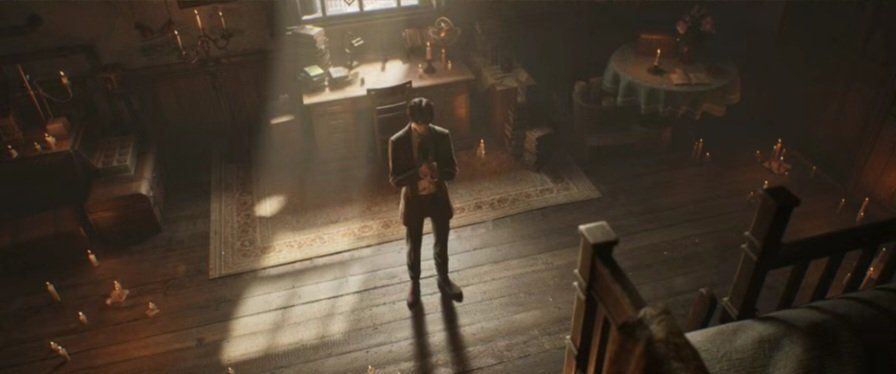
The Two Story Tracks
The tracks carry different names in different studio materials, and the wiki records both rather than merging them. Store copy calls the player's own track the personal main line (个人主线); the studio's day by day launch guide calls it the reality main line (现实主线). Whether these are one label for one thing or two labels for two related structures has not been settled. The source faithful track is consistently called the 原著主线.
The personal line. Named chapters, with the day of the launch schedule on which each unlocked:
Chapter | Chinese title | Unlocks |
|---|---|---|
Chapter 2 | 真正的非凡者 A True Beyonder | Day 1, pre unlocked |
Chapter 3 | 暗涌的危机 Undercurrent Crisis | Day 2 |
Chapter 4 | 镜中的廷根 Tingen in the Mirror | Day 3 |
Chapter 5 | 廷根守护者 Guardian of Tingen | Day 5 |
The source faithful line. Six chapters are named; further chapters exist in the interface with their titles withheld, so no total is stated here.
Chapter | Chinese title | Unlocks |
|---|---|---|
Chapter 1 | 灰雾之上 Above the Gray Fog | Day 1 |
Chapter 2 | 意外的访客 The Unexpected Visitor | Day 2 |
Chapter 3 | 黑荆棘安保公司 Black Thorn Security Company | Day 4 |
Chapter 4 | 成为非凡者 Becoming a Beyonder | Day 6 |
Chapter 5 | 第一次正式委托 The First Formal Commission | Day 7 |
Chapter 6 | 安提哥努斯笔记 Antigonus's Notes | Day 9 |
A point that looks like a contradiction and is not: the player joins Black Thorn Security on day one of their own story, while the chapter titled Black Thorn Security Company sits at day 4 on the source faithful line. These are two separate inductions on two separate tracks. The day one join is the player's own; the chapter is the retelling of Klein's induction from the novel's chronology.
The studio also named a main quest, 时代的浪潮 (Tide of the Era), among the content live on launch day.
The cumulative fix notice of August 26, 2026 uses the same two track vocabulary and is the clearest first party restatement of it since launch week. It names 《廷根守护者》 and 《暗涌的危机》 on the 现实主线 and 《意外的访客》 on the 原著主线, and it identifies the fourth 现实主线 chapter both by number and by name, 《镜中的廷根》, with an 异变狼人 (mutated werewolf) among the enemies fought inside it. It does not settle the naming question above: it uses 现实主线 throughout and does not mention 个人主线 at all.
The Opening
The campaign opens in a death loop nightmare. The player character is born already carrying evil god contamination and dies twenty times over at the very start, escaping the repeating nightmare only by triggering an evil sacrifice ritual. Mr. Fool meets the player inside that nightmare and hands over a Fool card that grafts abilities from the player's future fate onto them, which is why a Sequence 9 character already has Spirit Vision and divination. That mechanic is covered on Mr. Fool's Grafting.
The first character the player meets on waking in Tingen is Audrey Hall, who gives a one to one psychological therapy session to bring them out of the contamination nightmare. Shortly afterwards the player is hired straight into Black Thorn Security as a Night Watcher with no interview, arranged by Leonard and framed openly as a well connected hire. The studio draws the contrast with Klein directly: where Mr. Fool worked his way up from a clerical job, the player's entry point is pure connections. A pre creation minigame plays this for comedy, themed as signing a fourteen year employment contract with Black Thorn and rewarding a Black Thorn branded iron rice bowl and a fine gold contract prop.
Klein's Story in Four Stages
The source faithful track is built around Klein Moretti and is condensed into four named stages, delivered as continuing updates rather than all at once.
The Struggle of a Mortal (凡人的挣扎).
The Awakening of an Actor (扮演者的觉醒).
The Birth of a God (神明的诞生).
The War against Oneself (自我的战争).
Each stage is a milestone rather than a single patch, and the four together read as a history of the Fool the player can walk through. The player still experiences these beats as their own Beyonder. See Player Character for that distinction.
Side Story Programs
Two named side content programs run alongside the main lines.
意难平 (Unresolved Regret) is the studio's own category name for the beloved side character stories, described as rolling those characters' stories out one at a time. Its flagship is 美梦成真 (A Dream Come True), a large original storyline written specifically to give Dunn Smith and Daly the chance to fight side by side again and resolve their unfinished romance. It shipped split in two parts, 上 on day 1 and 下 on day 2. Daly is confirmed as a Sequence 6 death spirit mentor and a former Night Watcher; her unsent birthday gift to Dunn is a plot hook recoverable through a half transparent messenger NPC.
Named side quest | Chinese title | Unlocks |
|---|---|---|
A Dream Come True, part one | 美梦成真(上) | Day 1 |
A Dream Come True, part two | 美梦成真(下) | Day 2 |
The Witch Tastes Rather Good | 魔女的滋味真不错 | Day 3 |
Tonight the Lute Is Gentle | 今夜琴声温柔 | Day 4 |
Time for Confession | 告解时间到 | Day 8 |
Death Aria | 死亡咏叹 | Day 10 |
百态 (Hundred Forms) is a separate slate of short vignettes, distinct from the main side quests, unlocking a few at a time across the first week: 厨王之王, 送你一朵塞维亚菊 and 魔女与野兽 on day 1; 消失的午餐, 机械迷局 and 医学奇迹 on day 2; 火柴微光, 烟囱里的孩子 and 百里挑蛋 on day 3; 愚者福音, 神圣毒药 and 吸血鬼的爱恋 on day 4; 内部资料 and 迷失塔罗 on day 5; 餐食改良计划 on day 6; 魔药茶会 on day 7. Note that the vignette 死亡咏叹 shares its title with a piano theme in the game's soundtrack, hand performed by the studio's own audio team; the two are recorded separately rather than merged.
The studio has described this layer as one off story content that does not push the main line, does not affect combat, and costs nothing, and has called it the backbone of the adaptation.
Side content has continued past the ten day opening schedule, and three additions are dated in the studio's own posts: an 老尼尔 (Old Neil) side line on the source faithful track on August 24, 2026; an 奥黛丽 (Audrey Hall) Connections entry, which is a relationship unlock rather than a quest line, on August 27, 2026; and an 阿兹克 (Azik) story side line on the source faithful track on August 28, 2026. No chapter structure has been published for any of the three. The dated record of post launch additions sits on Version History.
Named Characters and Antagonists
Name | Chinese name | Role in the campaign |
|---|---|---|
The Secret Order | 密修会 | The antagonist organisation behind the Clown and the tracker who followed Klein before he became a Beyonder |
Old Neil | 老尼尔 | The player's predecessor as Night Watcher, corrupted by the Hidden Sage (隐匿贤者), who taught him Life Alchemy while he sought a way to revive his dead lover |
Little Elliot | 小艾略特 | The kidnapping victim in the First Formal Commission chapter |
Ryle Bieber | 瑞尔·比伯 | An Antigonus family descendant turned into a two metre humanoid monster by a cursed notebook, and a boss in Antigonus's Notes |
The Viscountess | 子爵夫人 | The May Manor boss, transformed after sacrificing to the Fallen Mother Goddess |
Daly | 戴莉 | A Sequence 6 death spirit mentor, former Night Watcher, and Dunn Smith's unfinished romance |
Investigation and Detective Work
Many quests are investigations rather than fights. The player examines crime scenes, cross references lore in their journal, conducts divinations and decides which suspect to confront. Outcomes branch by Pathway: a Seer who divines correctly may identify a culprit through a Beyonder specific route, an Apprentice may find a hidden passage and ambush them, a Spectator may reach into the suspect's mind for a confession. The same case can be solved differently by different Pathways, and rewards are flavoured to match.
Players who join the Tingen Nighthawks under captain Dunn Smith take on a sub track of investigative gameplay framed around the city's gas lit nights: walking crime scenes, examining fingerprints and ritual residues, interrogating witnesses through dice checked persuasion, cross referencing evidence, and bringing a suspect to Beyonder court.
Roselle Gustav's diary is treated as an active gameplay artefact rather than a cutscene prop. The player reads fragments and cracks its ciphers by hand, and cracked codes feed main line progression, brewing recipes and Mr. Fool vision unlocks.
Dice-Roll Exploration
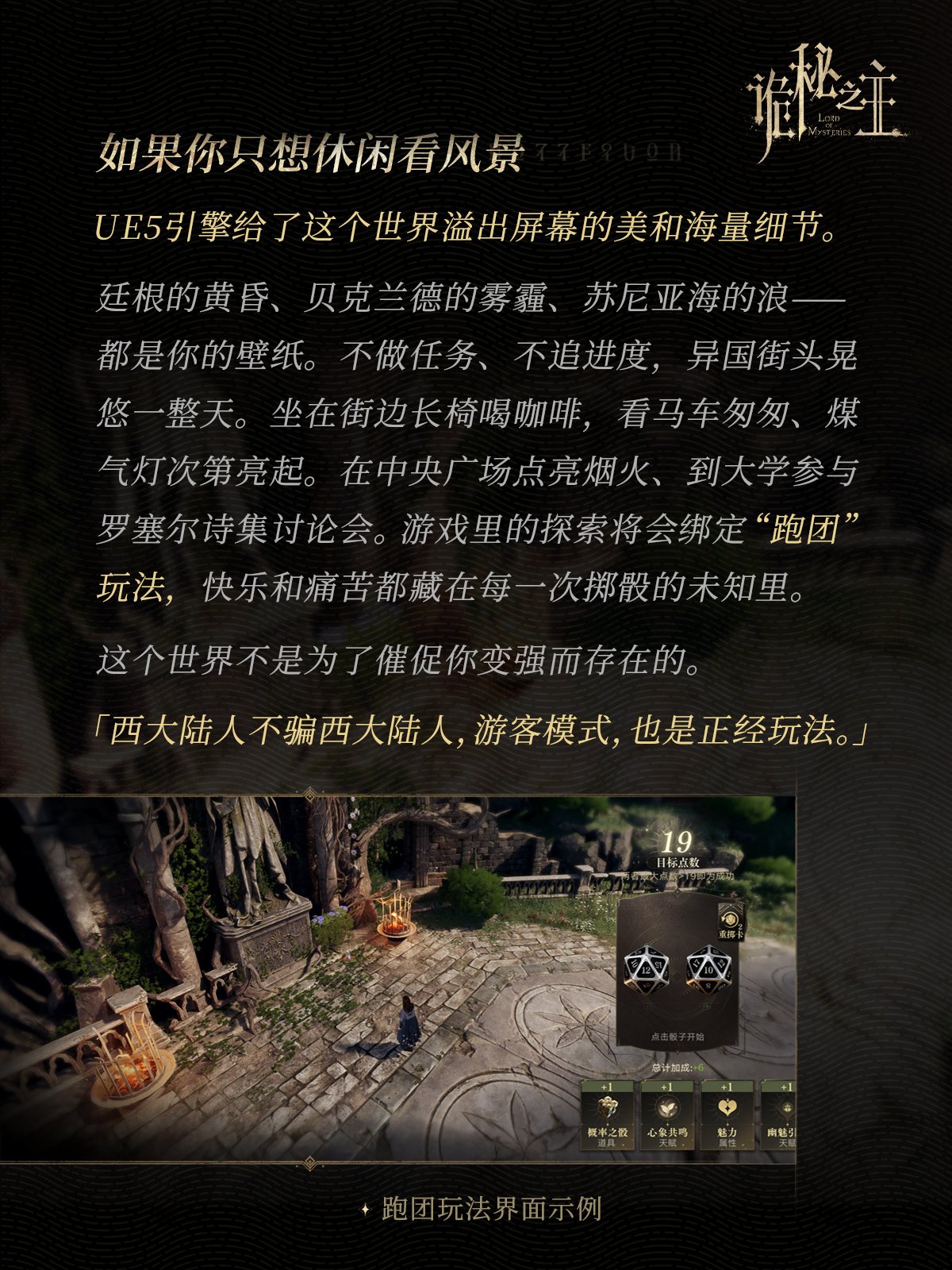
Alongside the investigation loop the game ships a tabletop flavoured dice roll layer, and it is one of the signature confirmed systems rather than a side flourish. The studio's own store copy sells it directly: tabletop adventuring, where the dice matter more than effort. Many in world interactions resolve through a dice check rather than combat: hidden doors, sealed shrines, statues blocking passages, mysterious manuscripts, and certain NPC persuasion attempts.
The player rolls two dice against a target value shown on screen, with a stack of modifier rows feeding the result. Modifier sources include carried items, with a Dice of Probability item granting plus one to the roll; Pathway aligned talents, with a Mental Resonance talent granting plus one on certain Pathways; character attributes, such as a Charisma bonus when persuading; and Pathway specific skills.
A worked example: a Seer facing a statue that blocks a hidden path can attempt a Charisma check against a target of 19 to charm it into opening. On a success the path opens. On a failure the player still has alternatives, such as destroying the statue with environmental tools or finding another way around. The studio's framing is that all of the player's fun and suffering sits at the mercy of destiny. Players arriving from tabletop influenced roleplaying games will recognise the shape: a roll, a modifier stack, a pass or fail, and fallback solutions for failed checks. A dice skin cosmetic slot (投骰皮肤) exists specifically to reskin these rolls.
Time-Bend Choices Through the Gray Fog
A second category of investigative gameplay takes the player into the Gray Fog to witness past events. Certain campaign beats project the player's consciousness into recreations of events from the years before the campaign's start date, including closing arcs of the source material's first book. Inside those recreations the player can make different choices and sometimes resolve regrets the original narrative left open.
The framing is explicit: outcomes inside Gray Fog projections do not retroactively change the game's present. Past tragedies stay played out. Projection side choices feed Pathway progression, Acting checks and side character unlocks, but the calendar moves forward on the canonical track. The studio's line for the whole layer is that this time you are not a reader, you are the one experiencing it.
Mr. Fool Visions
Through the campaign the player periodically receives a Mr. Fool vision: a cinematic flashback to a scene from Klein's journey, narrated by Klein in his Mr. Fool persona. Visions trigger when the player crosses geography or meets NPCs that overlap Klein's history. They are unskippable on first encounter and rewatchable from the player's journal afterwards.
They serve a double purpose. Readers of the source novel get on screen recognition of canonical scenes; non readers get the world's mythology in digestible pieces; and both get narrative cover for why a brand new Beyonder's journey winds through the same landmarks Klein walked.
Choices, Reputation and Presentation
Major story choices feed faction reputation, Acting Method meters and downstream dialogue. They are not framed as good against evil but as how a character processes a situation, shaped by their Sequence archetype. Branching can affect which NPCs survive an arc, which faction extends a hand at a key meeting, and which advancement potions the player can craft cheaply later. Branches converge at arc endings to keep the narrative coherent; what changes is the route.
Story scenes run as real time cinematics rather than pre rendered video. Lighting, weather and the character's clothing carry over from gameplay into the scene. A cinematic camera can be set to activate automatically when entering main line, side line or source faithful line content, and an option suppresses exaggerated cosmetic effects during story scenes so a winged outfit does not overwhelm a quiet conversation.
Seasons
The live service is organised into seasons. Season one is named 大帝的归来·上 and runs from August 21 to October 14, 2026, centring on Roselle Gustav and the Fourth Epoch War of the Four Emperors. That season frame is also the fiction behind the Strategy Server competitive tier.
Density of Detail
The studio has pointed at the volume of one off narrative detail already in the build: an expense report filed by Old Neil in the Black Thorn office, a Shadows of the Past (往日之影) collection holding Klein's most cherished moments, a bouquet of Seville chrysanthemums from Melissa, Tingen street NPCs trading legends of Gehrman Sparrow, and schoolchildren gossiping about the composition Emperor Roselle famously plagiarised.
The world carries that texture into its background fiction too. One published vignette follows a single banknote through the city and records three deaths on the same day: a match box maker dying of sudden illness, a dock worker drowning himself in the Tassok River, and a ruined man setting himself alight in the West District poorhouse. The repeal of the Grain Law is referenced as the in world event that pushed farmers into poverty, and the smog over the city is tied directly to Roselle's industrialisation push.
Historical: The Test Builds
The Crimson Test of February 2026 covered only the earliest campaign material and capped progression at the lower Sequences. Story quests retelling the novel's events were solo only even then. The Gray Fog Test ran from June 26 to July 5, 2026. Neither client runs any more and neither test's data carried into the launch build. Quest content described from either test should be read as a snapshot of that build, not of the live game.