

Overview
PvP is the long term endgame of Lord of Mysteries and most of its ladder shipped at launch; the top tier, the Strategy Server, opened on September 17, 2026 with the Y1S1.2 update. The ladder runs from small instanced brackets through faction battlegrounds up to a thousand player same screen war, and above all of that sits the Strategy Server, a separate competitive tier only the strongest clubs reach.
The studio's framing is that the three content types are not alternatives: "PVP, PVE, PVX, these are not three options." A player can sink into side stories one day, take a grievance to a faction battlefield the next, and run a raid with three friends after that.
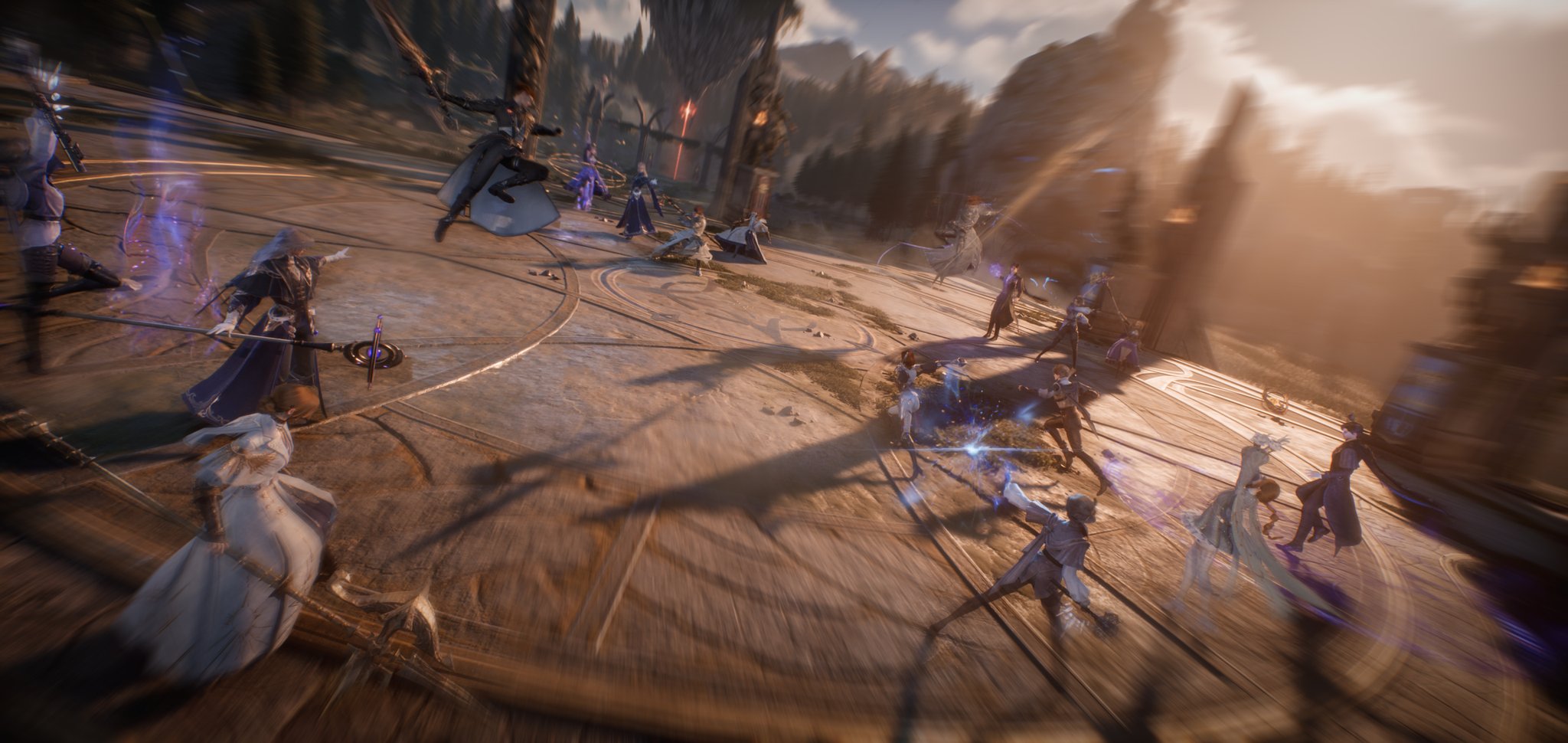
Bracket Sizes
Four instanced bracket sizes are confirmed, and every official per Pathway guide publishes separate talent recommendations for each one. Those guides were revised on August 27, 2026 and carry the same four labels after the revision: 3V3, 6V6, 12V12 and GVG.
Bracket | Named mode | Notes |
|---|---|---|
3v3 | Dominator's Clash | The smallest ranked bracket |
6v6 | 神座之争 Battle for the Throne God, and 众神之巅 as its tournament finals | Server wide competition at the top end |
12v12 | 命运时刻 Moment of Fate | A live rotation activity from day 2. Official day 2 messaging advises upgrading gear and bringing Beyonder substance first |
GVG | Guild versus guild battlefields and the four faction war | The mass scale layer described below |
The cumulative fix notice of August 26, 2026 names three ranked ladders that carry a 段位分 (rank points) score: 命运时刻, 主宰争锋 and 神座之争. Two of those, 命运时刻 and 神座之争, are the named modes in the 12v12 and 6v6 rows above; 主宰争锋 is the Chinese name of the smallest bracket, rendered here as Dominator's Clash. The notice is the clearest published statement that these brackets run a persistent rating rather than unranked matchmaking. See Version History for what else it records.
Player reporting from the second live day put Apprentice characters at the top of the three versus three leaderboard and Mystery Pryer characters at the top of six versus six. That is a snapshot of early live play from community sources, not a balance statement.
Arena Pact Custom Rooms
The Y1S1.2 update of September 17, 2026 added Arena Pact (竞技之约), a custom room mode for competitive matches. It opens at character level 39 from the main menu, where players create or join a room. Rooms work across servers: a host can invite friends or recruit through a shout, and players can filter rooms by mode or search by room ID or name to team up with Beyonders from other servers.
Mode | Format | Attributes |
|---|---|---|
Duel of the Brave (勇者对决) | 1v1 duel | Real attributes |
Dominator's Clash (主宰争锋) | 3v3 squad match | Fair attributes |
Battle for the Throne God (神座之争) | 6v6 team match | Real attributes |
Moment of Fate (命运时刻) | 12v12 battlefield | Real attributes |
Four Way League (四方联赛) | Four sides of up to 60 players each, 240 in total | Real attributes |
The host sets the room name, an optional join password, a level limit and voice chat permissions; a passworded room needs the right password, and joiners must also meet the level requirement. Inside the room players pick positions and can request swaps, and the host starts the match once everyone is ready and the mode's headcount and lineup requirements are met. A Four Way League room needs at least 60 players and balanced sides before it can start.
The Launch PvP Schedule
Modes unlocked across the first ten days on a published cadence. The times below are the ones the studio's own daily guide gives.
Mode | Chinese name | Opens | Time |
|---|---|---|---|
Final Hunt | 终末猎杀 | Day 1, daily thereafter | 19:00 to 20:00, staged at 猎龙城 |
Club Brawl | 俱乐部乱斗 | Day 2, daily thereafter | 12:00 |
Phantom of the Opera | 歌剧魅影 | Day 3, again day 10 | Costume phase 18:10, match 20:45; two matches at 19:00 on day 10 |
City Hunt Battle | 猎城战 | Day 4, again day 9 | 20:45 |
Four Way League | 四方联赛 | Day 9 | 20:00 |
Summit of the Gods | 众神之巅 | Day 10 | 14:00 finals |
One naming question is unresolved and should not be papered over. The studio's daily guide names a day three event at 20:00 as 俱乐部联赛 (Club League), while a separate harvest of the same schedule names a 20:00 event 四方联赛 (Four Way League). Whether these are one event under two names or two different events sharing a slot has not been settled, so both names are recorded here and neither is asserted as the only one.
Four Way League rounds run on a published calendar: round one opened at 20:00 on August 23, 2026 and round two at 20:00 on August 29, 2026. Community accounts put its format at four fixed teams and around 240 players.
Battlegrounds and the War of the Four Emperors
The flagship mass scale mode is 四皇战争, the War of the Four Emperors, staged at 猎龙之城 (Dragon Hunting City). The studio describes it as thousand player same screen combat and claims it as the first time Unreal Engine 5 has delivered that scale across PC and mobile at once. Clubs pre register, and factions are assigned rather than chosen: in the studio's own words, there are no permanent friends, only randomly assigned camps and a central King's Castle that has to be taken.
Faction | Chinese name | Kit identity |
|---|---|---|
Black Emperor Army | 黑皇军 | Positional defence and mass rooting |
Blood Emperor Army | 血皇军 | Burst rushes, lifesteal and summoned angels |
Night Emperor Army | 夜皇军 | Stealth and ambush, wide debuffs, vision suppression |
Nether Emperor Army | 冥皇军 | Undead summons and kill stacking buffs |
The battle runs in three phases: a preparation phase assigning squads, an outer outpost contest over recapturable points, and a final phase in which the central King's Castle unlocks for a large score bonus. Steam trains and siege engines appear on the field.
Two named battlegrounds sit below the four emperor war. 猎城战 (City Hunt Battle) is on the published ten-day launch schedule, opening on day four and again on day nine. The studio opened it with a post on its official social account on August 24, 2026 reading 「千人战场今日首开!」, the thousand player battlefield opens today, and its own strategy guides describe the mode with the same 千人 (thousand player) label. Read that label as the studio's framing for a large scale battlefield rather than a measured concurrency figure: no per instance cap has been published for it. Launch-week coverage put City Hunt Battle at up to 1,000 players on one field, which is consistent with the studio's own thousand-player claim.
高原战 (Highland Battle) is not named anywhere on that ten-day schedule, and for the first week of live service the only first-party document naming it was the Gray Fog Test closure notice of July 2, 2026, which ran it alongside City Hunt Battle on the test's final evening. That changed on August 28, 2026, when the studio posted 「小白都能看懂的高原战攻略! 最适合萌新的800人势力战,一图教你玩转!」 on its official social account and put a matching beginner's guide on its own strategy hub the same day. The post bills Highland Battle as the 800人势力战, the 800 person 势力战 or faction battle, and as the mass scale mode best suited to new players.
The 800 figure is the studio's own description of the mode's scale, dated to that post, and it is the only capacity figure the studio has given for Highland Battle. It is not stated as a hard concurrency cap, no cap figure has been published for the mode, and none is recorded here. Launch-week coverage had reported both battlegrounds going live together in the August 24, 2026 update.
The September GVG Calendar
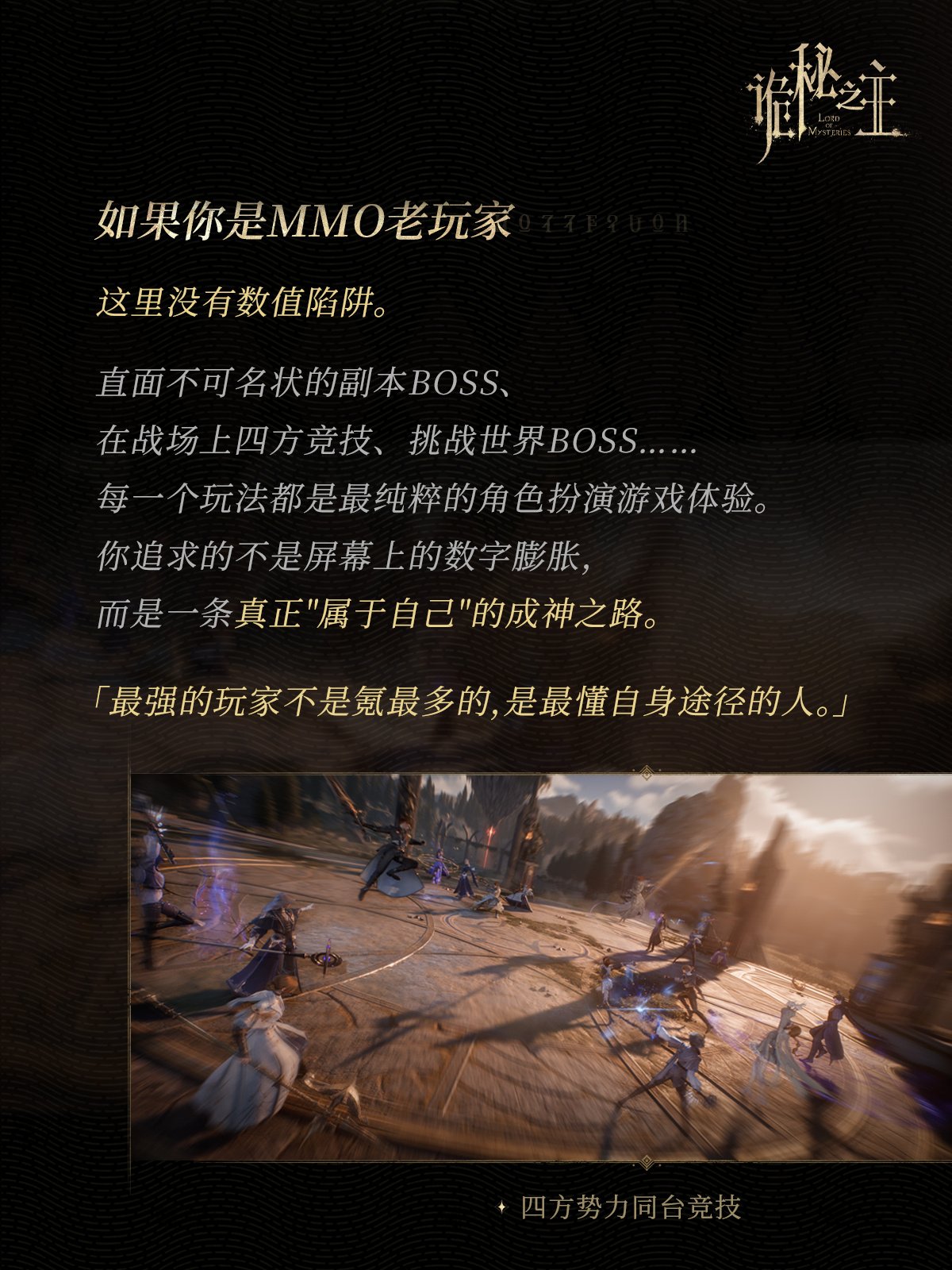
The studio publishes a monthly calendar of guild versus guild activities. The September 2026 edition, 9月GVG活动日历, went out on its official social account on September 2, 2026, and the same day opened 高原竞逐 (Highland Contest), a guild versus guild activity. Two entry rules were published with it: sign up ran from 19:00 to 20:30 on the activity day (the Y1S1.2 update of September 17, 2026 moved sign up for both Highland Battle and Highland Contest to 12:00 to 20:30 on the day it opens), and entry is individual rather than by club roster, so a player signs themselves up instead of being carried in on a club list. No further schedule detail for the rest of that month has been published. The dated record of post launch additions sits on Version History.
Mode Changes in the Y1S1.2 Update
The Y1S1.2 update, live on September 17, 2026, changed several existing modes.
Mode | Change |
|---|---|
Final Hunt (终末猎杀) | Weekend high multiplier windows moved to 12:00 to 18:00 and 19:00 to 22:00, with 18:00 to 19:00 as a regular window; weekdays stay 19:00 to 20:00. After the Saturday and Sunday refresh, weekly hunt progress above 10,000 carries into the next week at the Monday 08:00 reset |
Final Hunt dragon hunt | New participation rewards in five tiers, set by the share of the dragon's health the player's team dealt and settled at the highest tier reached, once per player per hunt by mail. Anyone inside the activity area during the event receives the base tier |
Summit of the Gods (众神之巅) | Participation and ranking rewards raised substantially: playing all six group matches totals 528 bound Gold Pounds, 18,000 Sol, 120,000 bound Sol, 6 Beyonder substance gift boxes, 15 gold spun thread and 300 Triumph Badges outside the weekly cap. Adds a team finder platform and a reworked champion statue model |
Moment of Fate (命运时刻) | Stronger Blessing of Battle Will (战意赐福) and Holy Protection (神圣庇护) buffs from fate light points; a stronger Fate's Favour (命运眷顾) buff in your own destined zone, and a new Fate's Punishment (命运惩戒) debuff that raises damage taken inside the enemy's; the damage boost from gathering anchors was adjusted |
Battle for the Throne God (神座之争) | MVP calculation rules adjusted |
Four Way League (四方联赛) | Higher per player cap on club auction dividends |
City Hunt Battle (猎城战) | Pathway specialisation and Pathway suppression attributes now apply to siege engines, which take slightly more damage |
Highland Battle (高原战) and Highland Contest (高原竞逐) | Sign up now runs from 12:00 to 20:30 on the day the battle opens |
All ranked brackets | At the start of every Dominator's Clash, Battle for the Throne God, Moment of Fate and Summit of the Gods match, the trigger cooldowns of the Bard's 烈阳之魂 and of the Sealed Artifacts 月亮纸人 and 许愿神灯 reset; PvP attribute correction values were retuned across modes |
Competitive gear boxes | Competitive equipment boxes from Final Hunt, City Hunt Battle, Highland Battle and Four Way League can also drop an extra tradable piece at the highest item level, once the item level 65 cap opens |
Club War Declarations
Club war declarations (俱乐部宣战), the home server mode in which one club challenges another, were reworked in the same update. The club level gap allowed between challenger and target fell from 2 to 1. The new Diplomat (外交官) post, which replaces the vice-president, can respond to a declaration, so either the president or the Diplomat can accept or concede on the club's behalf. A club renamed after a declaration now shows its new name and badge in the declaration list and in the match.
After settlement and until 08:00 the next day, members of the winning club can teleport to the losing club's grounds, where a Victory Feast (胜利宴席) opens at the loser's round table: winners collect 666 bound Sol, one large firework and one small firework from the feast steward NPC, and each winner gets a banana peel throwing skill with three uses that only works inside the losing club. Match history now shows the last 20 matches instead of the last seven days, and the update added declaration achievements and route guidance when tracking flags.
Orders and Clubs
Two organisational layers feed the competitive structure, and they unlock at different character levels.
Layer | Chinese name | Unlocks | What it does |
|---|---|---|---|
Order | 教团 | Level 19 | The first joinable group layer. Ranking the order to level 2 grants a limited time exclusive appearance |
Club | 俱乐部 | Level 28 | The competitive body. Runs a daily 俱乐部秘仪奉献 contribution task, the daily Club Brawl, and the league that feeds the Strategy Server |
Player guilds are styled in game as Divination Clubs in homage to the Tarot Club, with Tarot themed codenames assigned to members.
The Strategy Server
The Strategy Server (战略服) is the top competitive tier. Its qualifying month ran through the club league from launch, and the Strategy Server itself opened on September 17, 2026 at 12:00 for a four week campaign. In fiction it is a set of parallel spaces woven from Roselle Gustav's war memories through Hermit Pathway authority, drawing on the record he kept as the Knowledge Emperor of the Fourth Epoch War of the Four Emperors.
In outline: each service region holds several competitive divisions, only the top four clubs by division points advance, four divisions group into a war zone so sixteen qualifying clubs contest each Strategy Server, and divisions and war zones are redrawn every two months. The first month is a qualifying phase run through the league alongside faction battles, with opponents reassigned every two weeks. The studio's August 10, 2026 announcement said every Strategy Server reward would be an exclusive cosmetic; the update notice of September 16, 2026 lists the Divine Selection rewards as exclusive Strategy Server appearances together with progression items, Sol and bound Gold Pounds. The club placing first earns a permanent war banner that visibly upgrades as it adds further placements. Season one is named 大帝的归来·上 and runs from August 21 to October 14, 2026.
After a club wins a season, its banners appear across the home server: in the studio's words, the whole city takes on the winning club's atmosphere and its war flags fly over Tingen. The full structure, including the qualifying format, the separate auction house and the conquest reputation and war merit currencies, is covered on the Strategy Server page.
Since it opened, the Strategy Server runs its own weekly calendar: an always open Final Hunt with a dragon hunt on Thursdays and Saturdays, the Frostfall Lord (霜陨领主) stronghold battle on Thursdays, a Strategy Server City Hunt Battle on Saturdays, and Conquest Declaration (征服宣令) raids on other clubs' points on Sundays. The rules for each are set out on the Strategy Server page.
The City Underside
罪恶廷根 (Sinful Tingen), also called 城市暗面 (the City Underside), is a distinct play space layered over the city, unlocking at level 19. The studio contrasts it directly with ordinary play: in the ordered world you are a guardian running a tabletop style investigation, in the city underside you are a fugitive driving and shooting. Activity there raises a 悬赏值 (Bounty Value) meter that redeems for bound currency and, from day 4, blue mountain crystal and gold spun stone. The meter carries a weekly acquisition cap. Reporting describes the space opening up further after 20:00 each night as restrictions on NPC and player behaviour relax.
Open World PvP Rules
Community reports from testing describe the open world rules as follows, and they have not been restated in a published official document since launch.
The major cities, Tingen and Backlund included, are Protected Areas where open world PvP is not permitted under any circumstances, including from flagged enemy faction players.
Open world PvP is concentrated in dedicated wilderness zones outside city limits, which support skirmish bounties and feed faction territory progression.
Wilderness PvP is a separate loop from instanced arena content, with separate matchmaking, rewards and balance tuning.
PvP combat tuning differs from PvE across every mode: ability cooldowns scale longer, dodge invulnerability frames shorten, and the Acting modifier is muted so duels stay measurable. Pathway aligned synergies still apply, which is why mixed Pathway stacks outperform identical Pathway ones.
Playing at Scale
Because these modes put hundreds or thousands of characters on one screen, the settings menu carries controls that are effectively combat options. 同频玩家数 caps rendered player models on a slider from 0 to 100, with display priority modes: healers are advised toward ally priority and damage dealers toward enemy priority or the smart setting. A separate 效能模式 flattens global effects and other players' models specifically for hundred and thousand player battles. See Combat System for the rest of the option set.
Historical: PvP in the Closed Tests
The Crimson Test of February 2026 tested only instanced six versus six arenas and did not surface faction battles or sieges. The Gray Fog Test in June and July 2026 broadened that to three versus three and six versus six alongside the first public guild versus guild battles, and its finale week ran Four Way League on July 4, City Hunt Battle and Highland Battle the same evening, and Summit of the Gods on July 5 before servers closed at 21:00. Those same mode names shipped at launch on a new schedule. The studio reported that the test's heaviest guild battle put a thousand players on one battlefield with the frame rate holding, and committed to further hardware investment for launch scale.