
Loading...
Loading...
Combat System
May 31, 2026 at 10:37 AM
Removed the unverified dev-statement attribution and quotes from the design framing
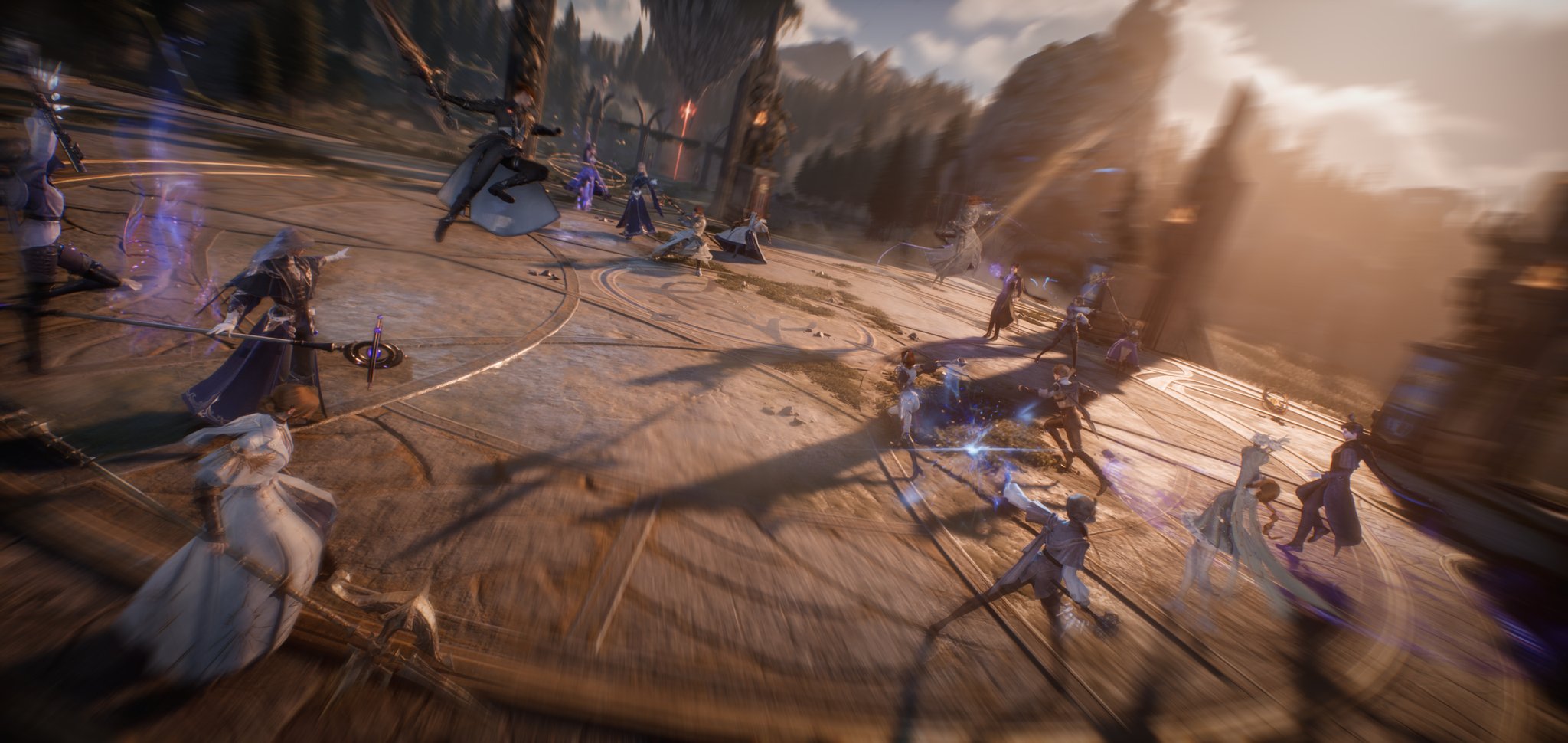
Lord of Mysteries uses a real-time third-person action combat system. Each Beyonder has light and heavy attacks, three to five Beyonder abilities tied to their Pathway and current Sequence, a dodge or parry option (Pathway-specific), and consumable item slots for tinctures, ritual props, and emergency potions.
Combat sits between Soulslike weight and MMORPG ability rotations. Stamina governs movement options and weapon swings; sanity governs Beyonder abilities. The two budgets are independent, so a melee-leaning character can sustain weapon pressure while saving Beyonder ability sanity for the encounter's apex moment, and a ritual-leaning character can do the inverse.
Sequence 9 player characters fight with substantially more variety than their Sequence number would suggest, because the Mr. Fool grafting mechanic loans them borrowed copies of higher-Sequence abilities at reduced strength. A Sequence 9 Spectator in the Crimson Test has access to mental attacks, healing spells, and a Mind Dragon summon despite their nominal Sequence 9 rank; a Sequence 9 Apprentice has access to a Sequence 5 Traveler-style blink. The grafted abilities are weaker than their canonical strength but are kit-defining for the player.
Group content uses the classic holy trinity composition: Tank, Healer, and Damage. Each of the six Crimson Test Pathways maps to a primary role:
Tank: Bard Pathway (Sun Pathway) acts as the primary tank, with Holy Song buffs and durable melee presence.
Healer: Spectator Pathway is the healer Pathway, with healing spells, mental support, and crowd control.
Melee DPS: Warrior Pathway (Twilight Giant Pathway) is the melee damage-dealer, mastering all weapons and combat styles.
Magic-damage Assassin: Apprentice Pathway is the burst-mobility assassin Pathway with magic damage.
Ranged DPS: Seer Pathway is the ranged damage-dealer, throwing tarot cards and channelling divinations.
Knowledge DPS: Hermit Pathway (Mystery Pryer) is a versatile damage-dealer leveraging mystery prying knowledge.
Each Pathway has secondary capability outside its primary role: the Bard tanks but also buffs and contributes melee sub-damage; the Spectator heals but also contributes mind-pressure damage; and so on. See the Pathway Roles page for a per-Pathway breakdown.
Light Attack: chains into combos. Pathway-specific weapon and ritual props.
Heavy Attack: slower, breaks guard, opens stagger windows.
Dodge / Parry: stamina-gated. Successful parries open a brief vulnerability window on the enemy.
Beyonder Abilities: a kit of Sequence-themed abilities augmented by Mr. Fool grafting at Sequence 9. Each costs sanity and has a cooldown.
Ultimate: a Sequence-specific signature ability with a long cooldown and a sanity cost large enough to feel like a commitment.
Consumables: tinctures, charms, ritual props, sanity teas, and emergency potions. Each consumable has a per-day limit to prevent stockpiling.
Most enemies have a stagger meter alongside their HP bar. Heavy attacks, parries, and certain Beyonder abilities fill the stagger meter. Filling it triggers a Stagger Break: the enemy is briefly immobilised and takes increased damage. Boss fights are paced around stagger windows; experienced groups time ability rotations to land their highest-damage abilities inside the stagger window for massive damage.
Every Beyonder ability is sanity-priced. Spamming the highest-tier abilities will melt the sanity pool quickly. Sustainable rotations interleave low-cost light attacks, weave in mid-cost abilities at every cooldown, and reserve the ultimate for a stagger or burn window. Group play eases this with healers (Spectator Pathway) and Bard Holy Song buffs reducing total exposure.
Dungeons use a 6-player party (1 tank, 1 healer, 4 DPS); raids use a 12-player composition (1 main tank, 1 off-tank, 2 healers, 8 DPS). Pathway specialisations cover all three primary roles, with Pathway-aligned synergies that reward mixed-Pathway compositions over identical-Pathway pile-ups.
AI companions can fill any empty role so dungeons launch immediately. AI companions are competent but not optimal; high-difficulty content rewards a full human party.
Each instanced encounter has multiple difficulty tiers, ranging from Easy (daily-style content) up to Nightmare (the apex-tier challenge with the most punishing mechanics and the highest reward bracket). Nightmare-mode boss DPS checks are tight enough that the difficulty hard-favours full human parties.
PvP is concentrated in Faction Warfare: open-world ganking, faction-vs-faction battles, and full city sieges. Combat tuning in PvP modes differs slightly from PvE: ability cooldowns scale longer, dodge invulnerability frames shorten, and the Acting modifier is muted to keep duels measurable.

The studio has publicly emphasised a pure-gaming design that prioritises roleplay and survival tension over inflated gear numbers.
On the question of who wins at high-end content, the dev message is direct: 'the strongest players aren't those who spend the most, but those who understand their pathway the best.' Combat performance is gated on pathway literacy, the Acting Method meter, Sanity discipline, and stagger-window timing, not on a monetised power ladder. This pairs with the cosmetic-only premium economy documented elsewhere in the wiki.
Boss content carries this framing forward, with high-end bosses designed as eldritch, cosmic-horror set-pieces rather than conventional health-bar fights: multi-phase telegraphs, raid-level world bosses, and faction-vs-faction battlefields that escalate up the Faction Warfare ladder.