

Overview
Lord of Mysteries uses a real time third person action combat system. Each Beyonder has light and heavy attacks, abilities tied to their Pathway and current Sequence, a dodge or parry option, and consumable slots for tinctures, ritual props and emergency potions. Combat sits between Soulslike weight and MMORPG ability rotations.
The studio frames the kit as three parallel lines running at once: melee weapons, firearms and Beyonder powers (冷兵器、热武器、非凡力量,三线全开). A single encounter can move between a greatsword combo, a revolver, and a Sequence ability without switching stance systems.
Stamina governs movement and weapon swings; sanity governs Beyonder abilities. The two budgets are independent, so a melee leaning character can sustain weapon pressure while saving ability sanity for the encounter's apex, and a ritual leaning character can do the inverse.
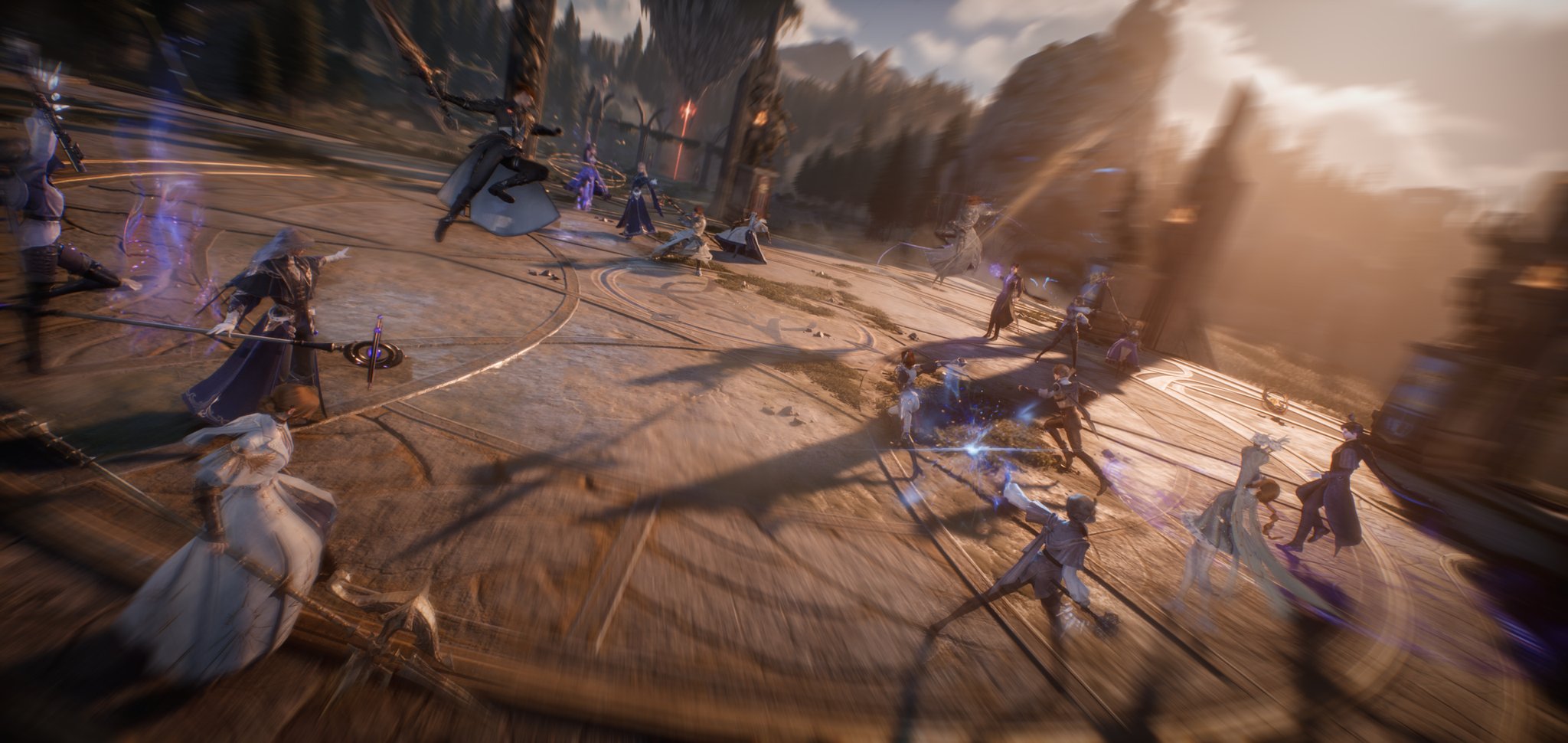
Sequence 9 characters fight with more variety than their Sequence number suggests, because Mr. Fool's grafting loans them borrowed copies of higher Sequence abilities at reduced strength. A Sequence 9 Spectator already has mental attacks, healing and a Mind Dragon summon; a Sequence 9 Apprentice already has a short range blink.
Skill Structure
Skills sit in three named layers, and the third is what separates this game's field play from a conventional MMO rotation.
Layer | Chinese name | What it covers |
|---|---|---|
Ordinary skills | 普通技能 | The general combat toolkit, the abilities used moment to moment in a fight |
Special skills | 特殊技能 | Pathway traits: passives, crowd control breaks and finishers unique to the Pathway |
Acting skills | 扮演技能 | Exploration and interaction tools gated by the Acting Method, growing as the character advances in Sequence |
Acting skills are not combat abilities. Each Pathway has a signature one that changes what the world lets the character do.
Pathway | Signature Acting ability | Effect in the field |
|---|---|---|
占卜 Divination | At puzzles and forks, a drawn card marks the wrong options rather than naming the right one | |
破障 Breach | Rocks, sealed chests and blocked rune doors become breakable, changing the state of a scene | |
心理暗示 Psychological Suggestion | Pulls a blocking guard into the subconscious sea to sleep, and 摄神取念 reads a silent NPC's memory | |
跃迁 Transit | Opens a portal and crosses cliffs, sealed roads and contaminated ground as a light orb | |
净化 Purification | Clears contaminated ground and unbinds spirit locked mechanisms that are otherwise non interactive | |
侦测 Detection | Reveals invisible footprints, hidden runes and wall patterns, and marks the correct path |
Holy Trinity Roles
Group content uses the classic tank, healer and damage composition. Each of the six launch Pathways maps to a primary role, with a secondary capability outside it.
Pathway | Primary role | Official combat description |
|---|---|---|
Tank and frontline protection | Master of every weapon and armour, especially melee greatsword work from single slashes into whirlwind chains | |
Healer and support | Restores party condition, since much of the damage in this world is mental; also a real combatant who weaves dreams | |
Melee physical damage and team support | Sustained melee damage with strong single target execution, powerful purification, and a brief purification effect granted to allies | |
Melee damage, mobility | A melee magic assassin type with high burst and high mobility, weak survivability, sticking to targets through varied movement tools | |
Ranged damage and crowd control | The king of control, using tarot cards as both divination tool and weapon | |
Ranged damage and control | A high spirituality mage who accumulates occult knowledge through a rotation, then converts it into a decisive strike |
The Bard is explicitly not the party tank: the studio's own role sentence for the Pathway calls it a melee physical damage class whose features are purification and death immunity. The Warrior holds the tank slot. See Pathway Roles for the full per Pathway breakdown.
Core Actions
Light attack: chains into combos, using the Pathway's weapon and ritual props.
Heavy attack: slower, breaks guard, opens stagger windows.
Dodge and parry: stamina gated. A successful parry opens a brief vulnerability window.
Beyonder abilities: each costs sanity and carries a cooldown.
Ultimate: a Sequence specific signature ability with a long cooldown and a sanity cost heavy enough to feel like a commitment.
Consumables: tinctures, charms, ritual props, sanity teas and emergency potions, each with a daily limit.
Control Schemes
Two operation modes ship, chosen during account and character setup and changeable afterwards in settings. The studio's guide notes that players coming from other MMOs usually just take Classic.
Mode | Chinese name | How it plays |
|---|---|---|
Classic | 经典模式 | Mouse hover targeting and casting. Hovering a party portrait lets a healer cast on that ally without clicking their model |
Action | 动作模式 | Reticle based with the cursor hidden by default, revealed with left Alt. A crosshair candidate target highlights whatever sits at camera centre |
Targeting and Assist Options
Target lock has four settings, and the studio's guide ties each to specific content rather than leaving the choice to taste.
Setting | Chinese name | Behaviour | Recommended for |
|---|---|---|---|
Nearest first | 优先距离最近 | Locks the closest enemy, including one off screen behind the player | The solo and duo instance 乌托邦剧院 |
Camera centre first | 优先镜头中心 | Locks the enemy nearest the centre of the camera even if a closer one is off screen | General combat |
Lowest health first | 优先血量最低 | Locks the lowest health enemy regardless of distance | Mass mob content such as 终末猎杀 |
Camera turns to target | 镜头转向锁定目标 | Re centres the screen on a locked enemy even from behind | Any content where losing the target is costly |
A one click combat assist (一键辅助) runs a baseline rotation. It has two priority modes: 移动优先 lets movement interrupt casting and is recommended for melee, while 技能优先 continues a cast through movement and suits ranged play. Dash dodging can be set not to break the assist loop, and a deliberate tap of a basic attack or skill still interrupts it. Players who do not want it in PvP simply leave it off.
Option | What it does |
|---|---|
移动到范围内施法 | Walks the character into range before casting instead of whiffing in place; the same logic applies to healers targeting allies |
技能冷却时普攻替补 | Substitutes a basic attack when a pressed skill is on cooldown, avoiding a damage vacuum |
主界面技能悬浮提示 | Shows a skill's description after hovering its icon for one second |
鼠标悬停智能索敌 | Stops non healers highlighting allies and healers highlighting enemies; present in Action mode as 候选智能索敌 |
战斗智能镜头修正 | Auto rotates the camera back to a locked target that leaves the screen |
技能震屏强度 | Adjusts screen shake intensity for combat feedback |
One targeting option carries a documented limitation. 鼠标悬停选择技能位置, which aims area and directional skills at the cursor, is a single global toggle rather than a per skill one. Turning it on redirects every skill, including during auto combat, and the studio's own guide currently advises against using it while asking for a more granular version later.
Combat assist display toggles cover the lock indicator dot, the indicator frame, the indicator line and the distance readout independently, and an off screen direction marker appears when a locked target leaves view. The enemy threat line (敌方仇恨指示线) is recommended specifically for players in the tank role so they can watch aggro shift during group content. There is currently no modifier plus skill self cast for healers, so the guide recommends binding "select self" to a dedicated key. Dodge defaults to left Shift and the guide suggests moving it to a mouse side button given how often it is used.
Large Scale Performance Options
Because the game runs hundred and thousand player battlefields, the settings expose crowd controls that matter in combat rather than only in the graphics menu. 同频玩家数 caps how many other player models render, on a slider from 0 to 100, with display priority modes for smart, ally first and enemy first. Healers are advised toward ally priority and damage dealers toward enemy priority or smart. A separate 效能模式 flattens global effects and other players' models specifically for mass PvP.
Stagger and Execution
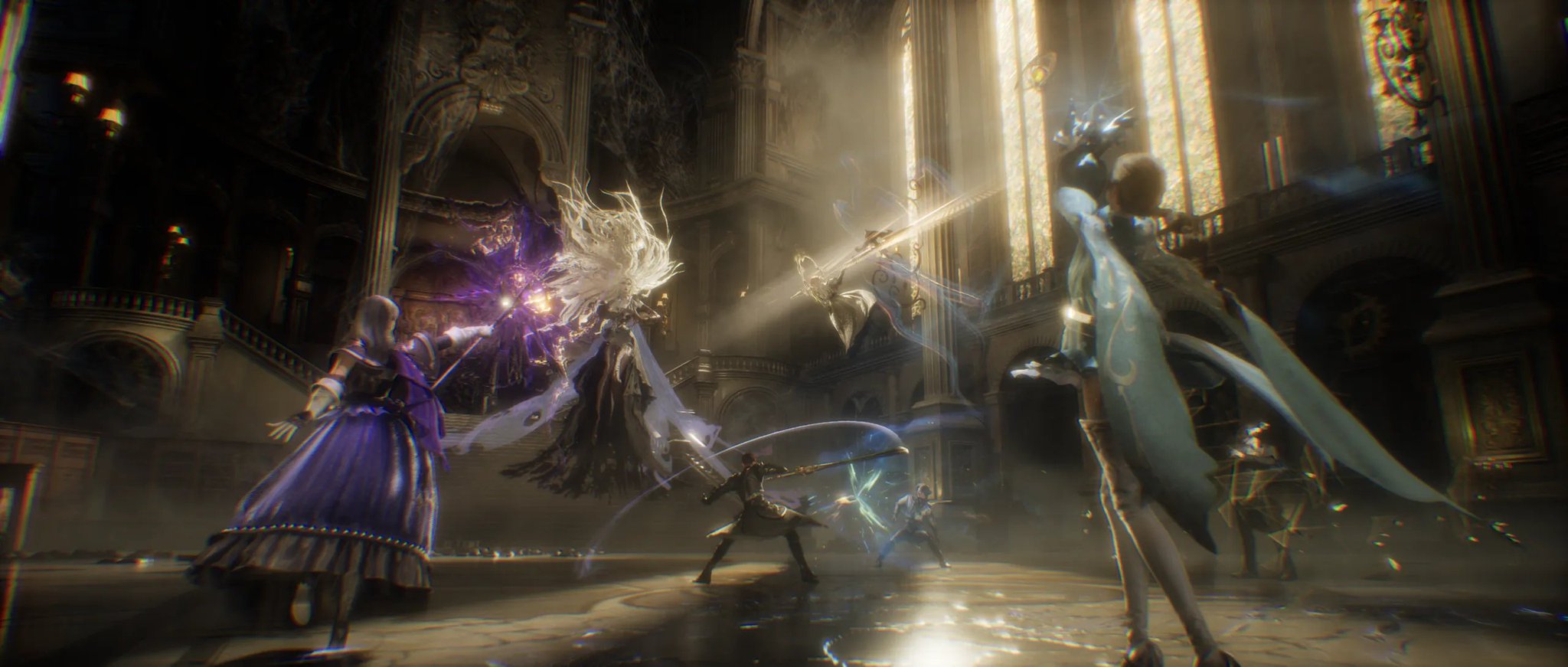
Most enemies carry a stagger meter alongside their health bar. Heavy attacks, parries and certain abilities fill it, and filling it triggers a Stagger Break: the enemy is briefly immobilised and takes increased damage. Boss fights are paced around these windows, and experienced groups time their highest damage abilities to land inside one.
Community guides report an execution (处决) prompt tied to enemy rarity, appearing at roughly 30 percent remaining health on trash, 20 percent on blue elites, 10 percent on gold rares and 5 percent on dark gold leaders and dungeon bosses, with the prompt suppressed during some bosses' armoured phase transition animations. These figures come from player written guides rather than published tables and should be treated as reported rather than confirmed.
Sanity Cost in Combat
Every Beyonder ability is sanity priced. Spamming top tier abilities empties the pool fast. Sustainable rotations interleave low cost attacks, weave mid cost abilities on cooldown, and hold the ultimate for a stagger or burn window. Group play eases the pressure through Spectator healing and Bard purification. See the Sanity System for how the meter behaves when it runs out.
Group Combat
Dungeons use six player parties (one tank, one healer, four damage) and raids use twelve player compositions. Open world world bosses have no party cap at all. AI companions can fill any empty role so a group launches immediately; they are competent but not optimal, and high difficulty content rewards a full human party.
Boss scripting is not uniformly grim. The studio has described encounters that make the party answer quiz questions, dance, or join a forced round of praising the Sun before the fight moves on, sitting alongside the cosmic horror register the rest of the boss roster uses.
PvP
PvP tuning differs from PvE: ability cooldowns scale longer, dodge invulnerability frames shorten, and the Acting modifier is muted so duels stay measurable. The ladder runs from three versus three up through six versus six and twelve versus twelve into battlefields and thousand player faction warfare, all covered on Faction Warfare and PvP. Open world ganking is confined to wilderness zones; the major cities are protected areas.
Design Framing
The studio's public messaging holds that progression is not about inflated numbers: that the strongest players are the ones who understand their Pathway best rather than the ones who spend the most. Combat performance is gated on Pathway literacy, the Acting Method, sanity discipline and stagger timing. How far that holds in practice is a separate question, because the Connections system does couple collected characters to a combat power stat. Monetization sets out what is documented and what is not.
High end bosses are designed as eldritch set pieces rather than conventional health bar fights, with multi phase telegraphs, raid scale world bosses, and faction battlefields at the top of the ladder.
Historical: The Crimson Test Build
The Crimson Test of February 2026 was PC only and capped progression at the lower Sequences. Combat descriptions dated to that build, including its six Pathway roster and its Sequence ceiling, describe a test client that no longer exists; beta data does not carry into the launch client. The role mapping above survived from that test to launch unchanged.