

Dungeons and Raids
Instanced group content in Lord of Mysteries: six player dungeons, twelve player raids, a solo roguelite, puzzle only Hidden Spaces and uncapped open world bosses, with the launch roster and its unlock schedule plus the version 1.2 additions, Tree of Abundance, Emperor's Second Advent and Brass Book challenges.
On This Page
Overview
Instanced group content in Lord of Mysteries runs at several sizes: six player dungeons, twelve player raids, a solo and duo roguelite, puzzle only Hidden Spaces, and large scale battlegrounds covered separately under Faction Warfare and PvP. Party content uses the tank, healer and damage composition and supports AI companion fill so a group can launch outside peak hours. Open world world bosses sit outside that structure with no party cap at all.
Raids are live. The beta era line that raid tier content was built but gated no longer describes the game: a level 63 twelve player raid opened on the eighth day of the launch schedule. Pathway to role mapping for the six launch Pathways is covered on Pathway Roles: Warrior tanks, Spectator heals, and Bard, Apprentice, Seer and Mystery Pryer cover damage, control and support.
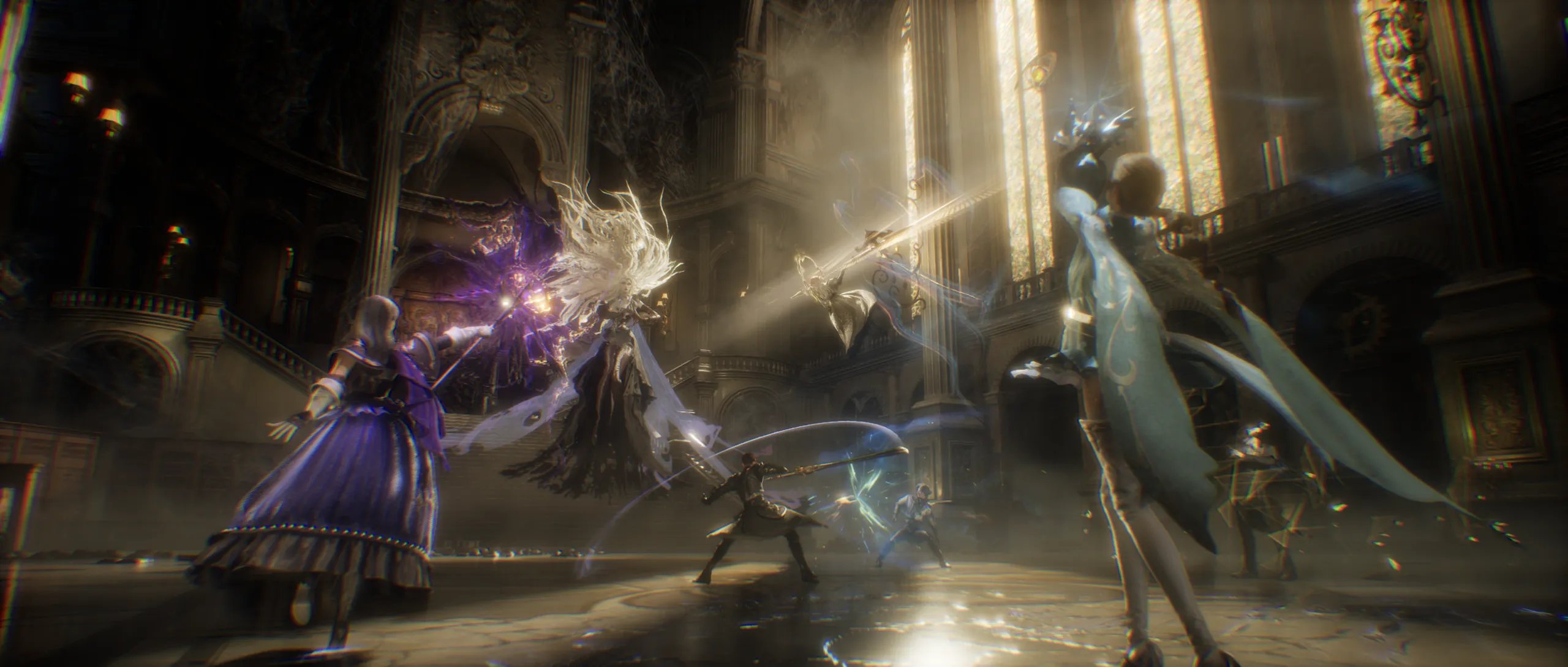
The Launch Instance Roster
The studio published a day by day opening schedule for the first ten days of the live service, which is also the clearest record of what instanced content shipped.
Instance | Chinese name | Format | Opens | Notes |
|---|---|---|---|---|
Wailing Black Market | 哀嚎黑市 | Party | Day 1, level 19 | The first dungeon in the Black Thorn Casebook (黑荆棘事件簿) series |
Utopia Theatre | 乌托邦剧院 | Solo or duo roguelite | Day 3, level 30 | Nightmare tier opens on day 4. Free Sequence power specialisation inside a run |
Antigonus's Notes | 安提哥努斯笔记 | Party | Day 3 | Drops 60 tier orange sets and gold branded gear. Refreshes on day 4 |
May Manor: Garden | 五月庄园·花园 | Twelve player raid, level 63 | Day 8 | Drops 62 tier orange sets and orange branded gear |
Legacy of Memory: Johnny | 记忆的传承·强尼 | Family instance | Day 4, August 24, 2026 | Opened in the August 24 update. The family-instance series has since been documented across several encounters, including Bonnie (邦尼), the Fire Dragon (火龙) and The Drill (钻头) |
The Drill | 钻头 | Family instance | Not published | Named in the launch roster and covered by a normal-difficulty walkthrough in the studio's strategy hub, but no opening date has been published. The cumulative fix notice of August 26, 2026 tunes it and names its 绝缘屏罩 (insulating screen) mechanic, which places it in the live build inside the first week |
The Golden Sin | 黑荆棘事件簿·黄金之罪 | Not published | Not published | Named as live content in the cumulative fix notice of August 26, 2026, which also names its boss, 洛克·金. No English rendering of that name has been published |
Traces of the Dead | 黑荆棘事件簿·亡者疑踪 | Not published | Not published | Named in the same notice. Its stages include 亡者隘口, the Pass of the Dead, and 破晓防线, the Daybreak Line |
Community guides describe further live encounters including a guild only ten player resource dungeon opening nightly at 20:00, and named difficulty variants of a werewolf encounter. Those are player written reports rather than published material and should be read as reported rather than confirmed.
The Black Thorn Casebook (黑荆棘事件簿) is a named sub series rather than a single instance, and the cumulative fix notice of August 26, 2026 is the document that establishes it: alongside 哀嚎黑市 it names 黄金之罪 and 亡者疑踪 as further entries under the same heading. The studio has published neither an opening schedule nor a total for the series. See Version History for the rest of what that notice records.
Version 1.2 Instances
The version 1.2 update of September 17, 2026 (see Version History) added a six player dungeon and a twelve player raid, a Brass Book challenge tier, and changes to the Black Thorn Casebook. The studio previewed both new instances on September 15, 2026, and the patch notes of September 16 list the rest.
Instance | Chinese name | Format | Opens | Rewards |
|---|---|---|---|---|
Tree of Abundance | 丰饶之树 | Six player dungeon | September 18, 2026 | Item level 64 adventure gear, new item level 64 adventure branded gear for the ring, hat and cloak slots, and cosmetics including a silver baboon head (银色狒狒头套), the cloak 大地之吻 and the 神眷 tier hairstyle 白枫往事 |
Emperor's Second Advent | 大帝重临 | Twelve player raid | October 2, 2026 (scheduled) | Item level 65 adventure gear, item level 65 branded gear for the amulet slot, and cosmetics including the headwear 知识的掠影 and the cloak 大帝的辉光 |
Tree of Abundance (丰饶之树)
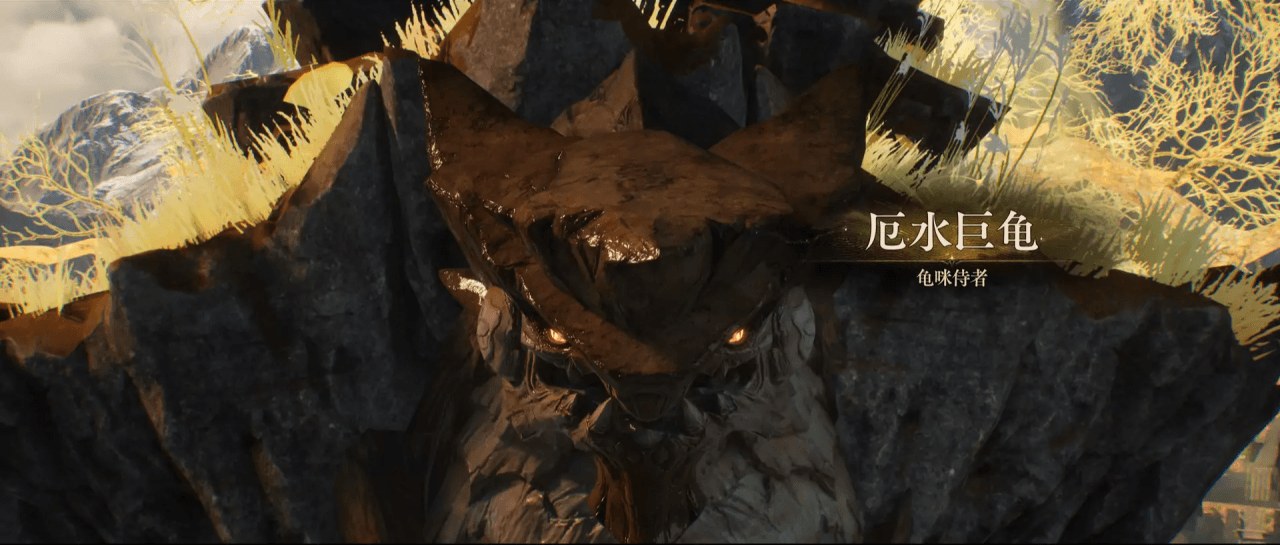
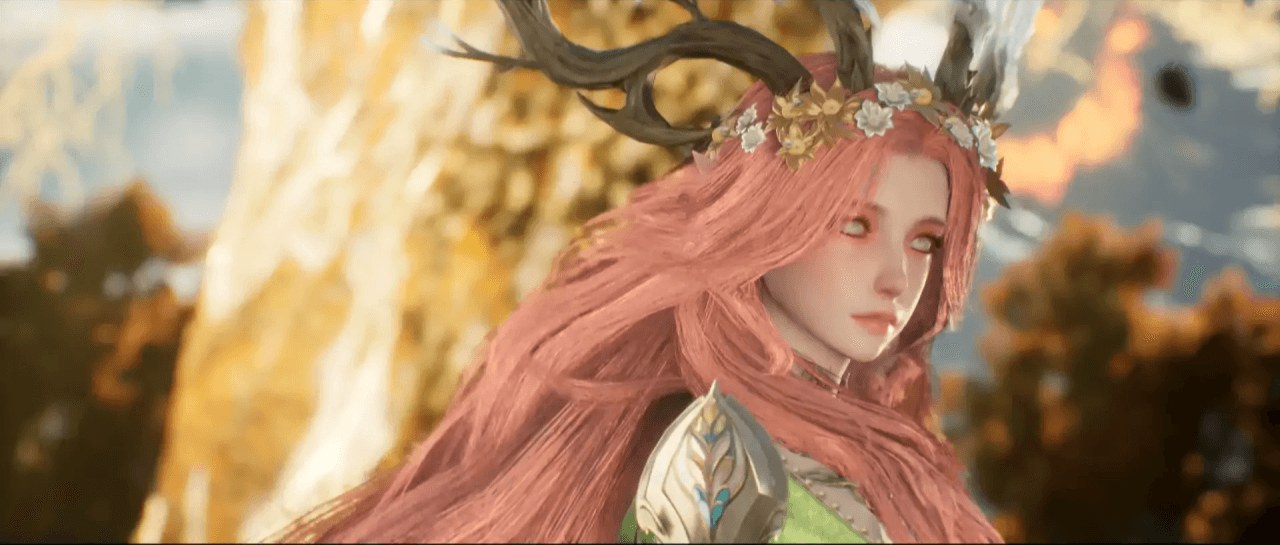
Three bosses stand in the Tree of Abundance. The first, 厄水巨龟, a giant turtle, holds Golden Autumn Lake (金秋湖) and summons waves the party has to dodge. The second is 舞王狒哥, the dance king baboon, who is strong and fights to a rhythm players must keep up with or be knocked out. The final boss is 西尔维娅, who commands the power of abundance through vine attacks and brings 菇勇者 (mushroom braves) into the fight; the studio's advice is to pull each of them away from the party separately.
One figure differs between two first party documents. The update day promotion describes the new dungeon's adventure gear as item level 65, while the detailed dungeon preview gives 64 for the Tree of Abundance and reserves 65 for Emperor's Second Advent. This page follows the detailed preview.
Emperor's Second Advent (大帝重临)
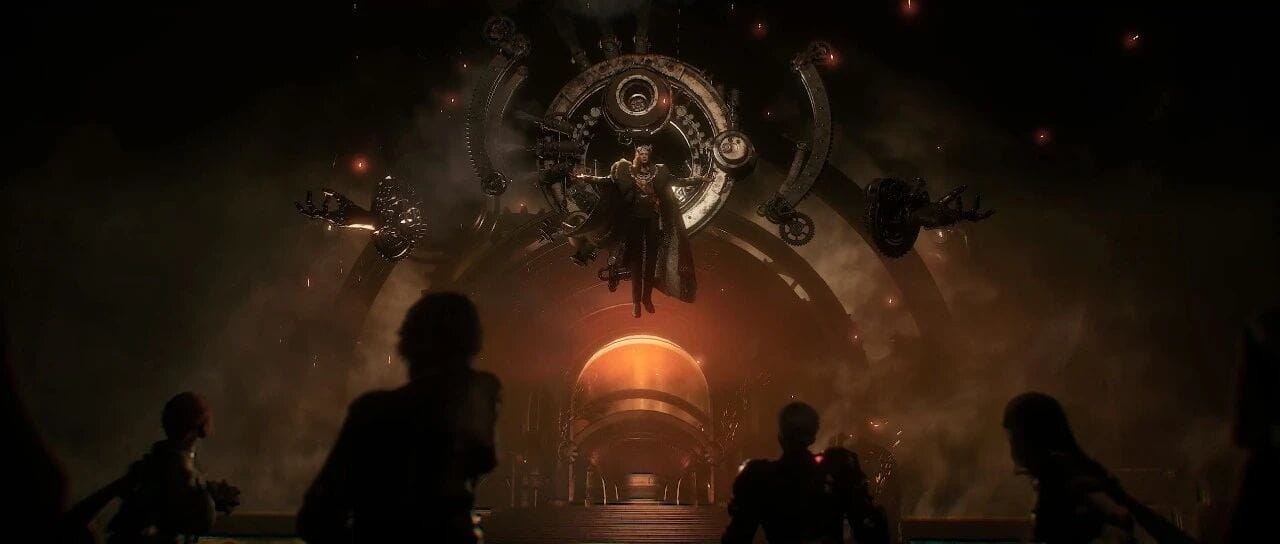
Emperor's Second Advent is the season raid, billed on update day as the season's final instance, and it is scheduled to open on October 2, 2026. It is not the same thing as the season name 大帝的归来·上. The raid will pit twelve players against what remains of Roselle Gustav in two phases. In the first, his residual will (残留意志) tests the raid in the manner of the Knowledge Emperor, and the group has to solve maths puzzles mid fight or take heavy damage. In the second, his polluted will (污染意志) shows the frenzied side of a Roselle corrupted by pollution, and near the end of the fight players help him recall good memories to hold off the Red Moon's pollution.
Brass Book Challenges (黄铜书)
The version 1.2 notes list Brass Book challenges for May Manor and for the Tree of Abundance, each a group challenge with its own rewards. The notes describe both as opening soon rather than giving a separate date, and they also fix a Brass Book progress reward icon that did not change after claiming, so a Brass Book progress track already existed before the update. No difficulty or reward table has been published as of September 27, 2026.
Black Thorn Casebook Changes
Version 1.2 adds a skip rule to the Nighthawk night watch runs: if the party includes a Nighthawk (值夜者) whose style score (风尚度) is 3,500 or higher, it can skip the minigame stages and go straight to the elite and boss fights. A season activity, Special Duty (特别执勤), was added as well, playable in a group or with AI teammates. Special Duty became the source of 【秘晶·归来】, which the notes schedule to leave the 秘宝 chest drop table at the 08:00 weekly reset on September 21, 2026.
Dungeon Auctions
From version 1.2, items in a dungeon auction are sold in order of starting price, with the highest starting prices coming last, and some high value items stay up for auction longer.
Dungeon Structure
A dungeon is a short to medium instance with a linear or lightly branching path through several mini encounters and a final boss. Mini encounters usually take one of three shapes: a kill room in a confined arena, a ritual room where a multi step ritual runs while waves attack, or a chase or puzzle room. The final boss is the signature encounter and scales mechanically with difficulty: every step up adds at least one new mechanic or changes how an existing one plays.
Clears are limited to one per day per dungeon according to community reporting, which puts the emphasis on weekly soft capped currency rather than raw farm hours.
Group loot has a shared layer, the public reward (公共奖励), and the studio changed how it shrinks. Originally the public reward fell in proportion whenever some members of the group had no public reward entries left. In an official Q&A on September 4, 2026 the studio announced a change for the following week so that players can carry friends through content: a twelve player raid with at least 10 members who still have public reward entries, or a six player party with at least 5, no longer loses any public reward. Below those counts, or with a group that is not full, the proportional reduction still applies. Members also cannot be removed from the group while a boss fight is in progress.
Difficulty Modes
Tier | Party expectation | Reward focus |
|---|---|---|
Easy | Solo or duo accessible with AI companion fill | Daily currency and gear fragment material |
Normal | Balanced for a full party. The standard reward target | Standard gear and materials |
Hard | Gear checked. Adds a mechanic and tightens the damage and healing pace | Mid tier ritual ingredients and rare cosmetics |
Nightmare | The apex tier. Multiple new mechanics and a strict damage and healing race | Top tier ritual ingredients and the rarest dungeon cosmetics |
Nightmare damage checks are tight enough that the tier hard favours full human parties. AI companions can complete it but at meaningfully lower clear rates.
Antigonus's Notes
This is the launch build's best documented party dungeon, and the studio published a mechanic by mechanic guide for its normal difficulty. It runs three encounters. The fight against Ryle Bieber is also the clearest in guide confirmation that the game runs a live holy trinity model: a protection role body blocks a channelled beam while a healer watches that player's health.
Encounter 1, Carriage Defence (马车保卫战).
Mechanic | What happens | Counter |
|---|---|---|
滞涩 Sluggish | The sealed artifact 2-049 randomly slows nearby allies and, after a delay, turns them into puppets | A Push (推动) button appears on the affected player; clicking it clears the slow |
猎龙帮 Dragon Hunter Gang | Stray gang members attack the carriage during the escort | Damage dealers must kill them promptly |
保卫马车 Defend the Carriage | On reaching the warehouse door, a large wave tries to destroy the carriage | Burn the wave down before the carriage falls |
Encounter 2, Ryle Bieber (瑞尔·比伯). An Antigonus family descendant corrupted by ancient knowledge in a cursed notebook into a two metre humanoid monster.
Mechanic | What happens | Counter |
|---|---|---|
失控射线 Runaway Beam | Ryle draws power from the family notebook and fires a continuous damage beam forward, blocked by the first player it strikes | A protection role player stands in front, pops a damage reduction skill and holds the beam while the healer watches their health |
失控之盾 Runaway Shield | Ryle reads the notebook and shields himself, then deals massive arena wide damage after a delay | Break the shield before the reading completes |
心灵迷宫 Mind Maze | Ryle summons a memory of the night city, trapping players and turning them into puppets, then begins the shield cast | Every trapped player must navigate the maze back to Ryle to un puppet themselves |
召唤2-049 Summon 2-049 | Ryle summons the sealed artifact, which creates a slow field around itself | The protection role pulls Ryle away from the field |
Encounter 3, The Clown (小丑). The Clown is tied to the antagonist organisation 密修会.
Mechanic | What happens | Counter |
|---|---|---|
爆炸彩带 Exploding Ribbon | A rectangular magic ribbon appears under every player and follows their movement, then explodes for arcane damage | Spread out so the explosion zones do not overlap |
定制礼物 Custom Gift | The Clown dreams up a giant bomb, marks a random player, and detonates at their location after a delay | The damage splits among nearby players, so stack on the marked teammate |
研究2-049 Studying 2-049 | The dream Clown studies the sealed artifact while illusion clones feed an invincibility shield; on completion every player is turned into a puppet | Break all the illusion clones as fast as possible to interrupt the study |
转盘戏法 Wheel Trick | A giant wheel assigns each player a card suit; after a delay, anyone not standing in the zone matching their suit is punished | Read the suit above your own head and move to the matching zone |
Utopia Theatre
The solo and duo roguelite runs on a weekly cadence. A run starts thin, because the character's kit inside the theatre is stripped back, then accelerates as in run pickups stack. Player guides describe six floors, each with a boss drawn at random from the map's elite pool rather than a fixed template, and a choice of one of three memory fragment affixes after each floor. Affixes fall into attack scaling, survivability scaling, and mechanic linked effects, an example of the last being a movement triggered burning ground patch that covers the area damage a single target class otherwise lacks. Whether the stacked total is enough decides the final floor. The floor count and affix structure come from player guides rather than a published table.
The studio's own settings guide recommends switching target lock to nearest first specifically for this instance, which independently confirms its solo and duo framing.
The cumulative fix notice of August 26, 2026 adds two things the player guides do not carry. It confirms the instance runs on the 普通, 困难 and 噩梦 (Normal, Hard and Nightmare) ladder rather than a bespoke one, and it names a boss, 亵渎魔女 (the Blasphemous Witch), along with her 亵渎之触 (Touch of Blasphemy) skill. She is the only Utopia Theatre boss the studio has named; the floor count and the affix structure above still come from player guides rather than a published table.
The version 1.2 notes of September 16, 2026 fix an abnormal number of available revives when a run starts in certain cases, fix the memory fragment 【廷根老司机】 misbehaving in specific situations, resolve a conflict between that fragment and 【狼人血脉】, and clarify some fragment descriptions and the weekly progress text. The same notes correct the title colour for the theatre's two player difficulty, a further first party confirmation of the duo mode.
Raids
Raids are twelve player instances pitched longer than dungeons, running one main tank, one off tank, two healers and eight damage or hybrid roles. Raid bosses scale on the same Normal, Hard and Nightmare ladder and add raid specific mechanics: concurrent two team objectives, split mechanic handling, and sanity pressure through multi phase fights. Raid loot is locked once per week per character per difficulty bracket, and the lockout clears at weekly maintenance.
May Manor: Garden (五月庄园·花园) is the named launch raid, level 63, opening on day 8 of the launch schedule. It extends the May Manor estate, which is both an official world map region and a dungeon, into raid content. The manor's contamination traces back to the Red Moon, and its boss, the Viscountess (子爵夫人), transforms into a special combat form after sacrificing to the Fallen Mother Goddess (堕落母神).
Emperor's Second Advent (大帝重临), scheduled for October 2, 2026, is the second named raid and the first added after launch. It is covered under Version 1.2 Instances above.
Hidden Spaces
隐秘空间 (Hidden Spaces) are a separate instanced category and they are puzzle content rather than combat. Three are confirmed by direct capture of the in game interface.
Hidden Space | Chinese name | Puzzle type |
|---|---|---|
House of Evil Spirits | 恶灵之屋 | A numbered tile logic room |
Ripper Theatre | 开膛手剧院 | A ritual and marionette stage set piece |
Book of Disorder | 失序之书 | A coordinate grid puzzle |
Completing a Hidden Space surfaced on the activity highlights page grants progress materials including 金纺线 and 历史明灯, the latter being the pull currency for the Connections system.
Two more Hidden Spaces arrived with the August 24, 2026 update, alongside the level cap rising to 56: 小丑轨迹 (Clown's Trail) and 心愿城堡 (Wish Castle). Their puzzle types have not been published in the same detail as the three above.
World Bosses
Open world bosses have no fixed party cap. Anyone in the zone can join and rewards go to players who contribute to the kill. Encounters have been run with over a hundred players engaging the same target while performance held. Because they sit in the open world rather than a locked instance, world bosses act as a rally point for a server and as one of the cap tier targets alongside twelve player raids.
Sanity Pressure
Boss tier encounters apply flat sanity hits during their set pieces. Standing through a high Sequence ritual, taking a boss's gaze, or surviving an ultimate phase all cost sanity. Successful groups budget tinctures and teas before the pull and pace attempts so the bar recovers between them. See the Sanity System for what happens when it does not.
AI Companions
AI companions are competent stand ins. They follow simple per role priority rules: tanks hold aggro and rotate cooldowns on telegraphed hits, healers triage by missing health and answer damage spikes, damage dealers run a baseline priority. They do not improvise around new mechanics, so high difficulty content leans harder on human players. Players can summon them in any combination, from a full AI party for solo play to a single slot fill.
Boss Design
High end bosses are written as eldritch set pieces rather than conventional health bar fights, and the studio places dungeon bosses, arena opponents and world bosses in one category of high stakes Beyonder content. The register is not uniformly grim: the studio has described encounters that make the party answer quiz questions, dance, or join a forced round of praising the Sun before the fight continues. An exploration ability that possesses a cat to squeeze through a fence gap into an anomaly space sits in the same playful register.
Historical: Beta Instance Roster
The Crimson Test of February 2026 surfaced a small dungeon roster aimed at the lower Sequences and did not open raid tier content. The Gray Fog Test in June and July 2026 added the Clown dungeon and Utopia Theatre, and opened May Manor: Garden on July 3, 2026 in its final days as the first raid size instance in any public test. Both tests are closed, their clients no longer run, and their data did not carry into the launch build. The instances named in them did ship: the Clown is now an encounter inside Antigonus's Notes, and Utopia Theatre and May Manor: Garden both opened on the launch schedule.