

Overview
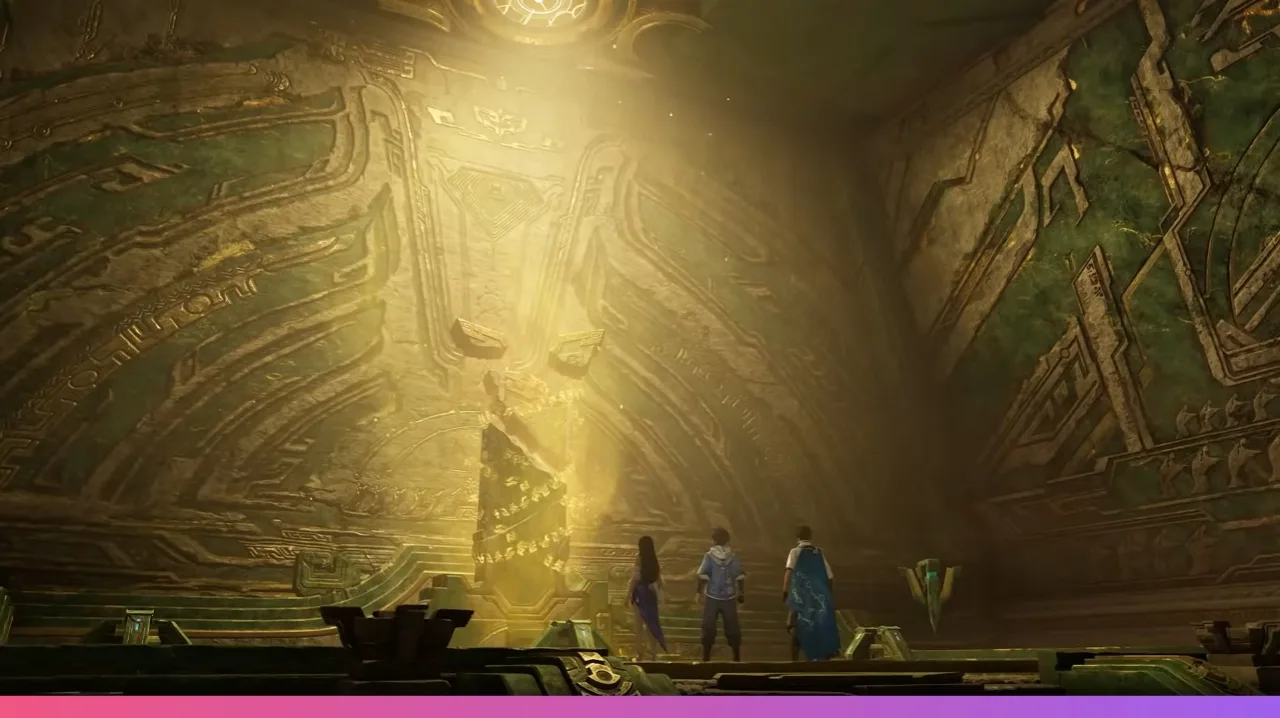
Honor of Kings: World draws heavily from China's Three Kingdoms period and broader Chinese mythology, but reimagines both through a fantasy-science fiction lens. Rather than recreating historical events directly, the game transplants iconic figures and stories into Primaera, a world with its own creation myth, divine history, and supernatural energy system called the Flow.
The Mythological Framework
According to the game's lore, the gods of Primaera were originally humans who escaped the destruction of their home planet using an advanced technology called the Ark. They used the "Heart of the Universe" as the Ark's core and traveled across several light-years to reach Primaera, an energy-rich planet. By harnessing spiritual essence underground through the Twelve Wonders they built (particularly the Sun Tower), these former humans transcended mortality and became gods. The leading god named herself Nuwa.
Nuwa created new humans on Primaera. Civilization advanced to a state resembling Imperial China but with advanced technology powered by Flow energy. The War of Gods, a civil war among the divine beings, devastated the world. Most gods were killed. With her dying strength, Nuwa sealed the Ark's core within the Twelve Wonders, hoping that a worthy successor might one day reclaim its power.
She entrusted two sages, Fuzi and Ziya (Jiang Ziya), with guiding humanity forward. Over time, the two developed opposing views on the human race's future, causing them to part ways and leading to the game's factional conflicts.
The Three Kingdoms in Primaera
The game adapts the Three Kingdoms conflict within this fantasy setting. The historical Wei, Shu, and Wu kingdoms are reimagined as competing powers in Primaera:
Kingdom | Description |
|---|---|
Wei Kingdom | is led by Cao Cao, described as a cunning and ambitious warlord who seeks to unify the land through power and strategic alliances. Sima Yi is his chief strategist. |
Shu Kingdom | was founded by Liu Bei, a virtuous leader valuing righteousness and Han Dynasty restoration. Kongming (Zhuge Liang) is the master tactician, and Huang Zhong fills the role of experienced veteran general. |
Wu Kingdom | is governed by Sun Quan, who inherited his father's legacy with an emphasis on naval strength. Sun Ce and Da Qiao's story intertwines romance with warfare. |
The Battle of Red Cliffs is referenced as a major narrative event. The rivalry between Kongming and Sima Yi, former allies turned enemies on opposing sides, drives much of the strategic conflict between the kingdoms.
Chinese Mythology and the Shanhaijing
Beyond the Three Kingdoms, the game draws from the Classic of Mountains and Seas (Shanhaijing) for creature and boss design. The Bi Fang raid boss, for example, is based on the mythical one-legged bird from that text, reimagined with mechanized elements.
The game also features characters from broader Chinese mythology and folk history. Yang Jian, chosen by Nuwa as her successor, carries a hidden third eye. Hou Yi, the legendary archer who shot down the nine suns, is referenced in Primaera lore but is not a confirmed playable Resonance. Mulan, the folk heroine who disguised herself as a man to serve in the army, fights with a dual-form weapon switching system.
Liu Cixin Collaboration
Liu Cixin, the author of The Three-Body Problem, collaborated on the game's world-building. He contributed to the science fiction layer of the mythology, helping shape the framework where ancient humans become gods through technology rather than through purely supernatural means. The game's lore draws in part from his 1997 short story "The Poetry Cloud."
Three Kingdoms and Mythological Figures
Figures from these traditions run through the setting, but appearing in the lore is not the same as being playable. Only two of the names below are confirmed playable Resonances in this game: Wang Zhaojun and Mulan, both in the S0 launch roster. The rest belong to the wider Honor of Kings setting and have not been confirmed as playable Resonances here, so their abilities and roles elsewhere in the franchise do not describe anything in this game.
Figure | Status in Honor of Kings: World |
|---|---|
Playable Resonance, confirmed in the S0 launch roster. Ice and snow sorcery. | |
Playable Resonance, confirmed in the S0 launch roster. Dual-form greatsword mechanic. | |
Not a confirmed playable Resonance. A signature figure of the wider setting. | |
Not a confirmed playable Resonance. Associated with the Green Dragon Crescent Blade in the source literature. | |
Not a confirmed playable Resonance. | |
Not a confirmed playable Resonance. One of the Four Beauties. | |
Not a confirmed playable Resonance. Named in Stargazing Range lore. | |
Not in the S0 launch roster. | |
Not a confirmed playable Resonance. | |
Not a confirmed playable Resonance. Tied in lore to the fallen god Diqun. |
Status in Honor of Kings: World
Three Kingdoms Lore is canonical Honor of Kings IP lore and applies to both the Honor of Kings MOBA and Honor of Kings: World, which share the same Primaera continent continuity. The Three Kingdoms cycle is an important source of MOBA heroes (Liu Bei, Guan Yu, Zhang Fei, Cao Cao, Zhou Yu, Zhuge Liang, Sima Yi, Lu Bu, etc.) and associated story material. None of these Three Kingdoms heroes are playable Resonances in the Honor of Kings: World S0 Season launch roster, though Zhou Yu and Zhuge Liang appear in Stargazing Range lore.