

Multiplayer
A comprehensive guide to multiplayer in Honor of Kings: World, covering the World Layering phantom system, cross-platform play, co-op story progression, dungeons, raids, matchmaking, AI companions, social features, guilds, interest groups, and team composition synergies.
On This Page
Overview
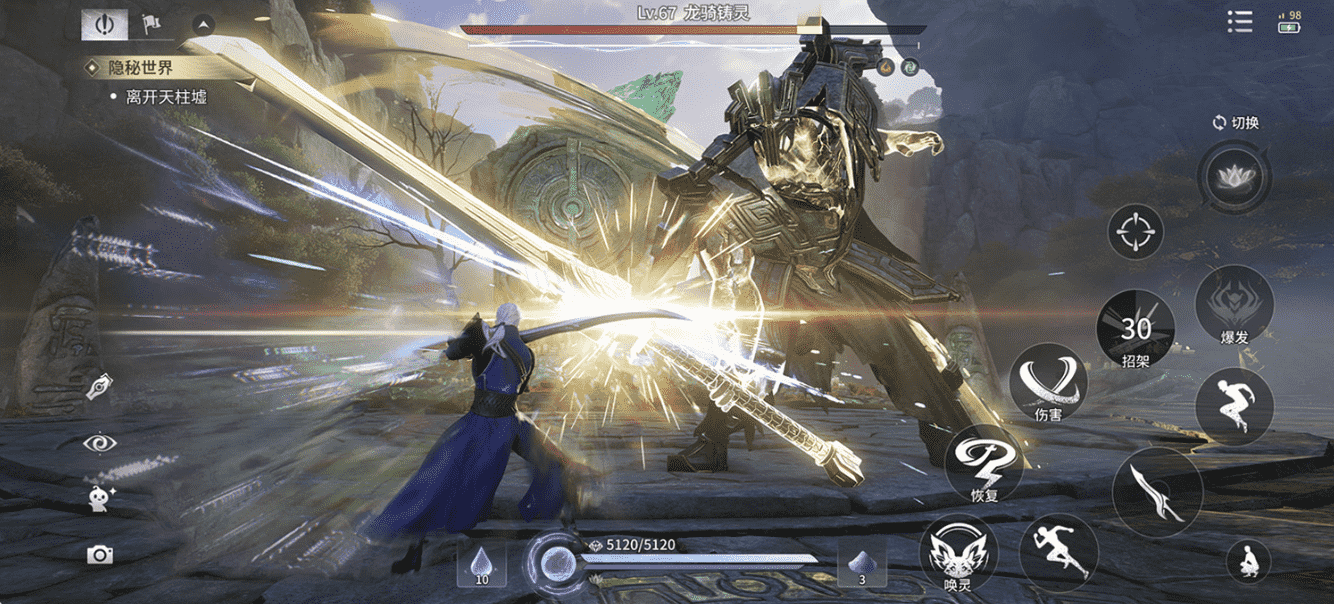
Multiplayer is a central pillar of Honor of Kings: World. The game supports cross-platform play between PC and mobile, with shared servers that allow players on different devices to group together seamlessly. Multiplayer content ranges from 2-player co-op story missions to 8-player raids, with multiple systems in place to help players find groups and ensure that solo players are never locked out of content.
Despite its shared-world elements and social hubs, Honor of Kings: World is not a traditional MMO. Multiple content creators who played at or shortly after the China launch described the game as an "MMO hybrid," a "glorified online co-op RPG," or a "hybrid between MMORPGs and Genshin-like games." The world design is similar to open-world action RPGs like Genshin Impact, but the game content leans more toward MMO-like systems with dungeons, raids, and structured group activities. Most content supports up to 4 players, while raids accommodate up to 8.
World Layering and Phantom System
Honor of Kings: World does not use a shared persistent world in the traditional MMO sense. Instead, each player has their own instanced version of the open world. When you explore the map, the enemies, wildlife, and resources you encounter belong to your instance alone. If another player kills a deer or clears a mob camp in their world, it has no effect on yours.
However, you are not completely isolated. The game renders "phantoms" (sometimes called "shadows") of other players who are in the same area. These phantoms appear as translucent silhouettes running through the world around you. You can see roughly 22 to 30 other player phantoms at any given time, depending on how crowded the area is. Rendering them as silhouettes is a deliberate performance optimization that reduces the graphical load of displaying dozens of fully modeled characters.
Phantoms cannot interact with your instance directly. They cannot attack your monsters, pick up your items, or interfere with your quests. However, you can interact with a phantom player to inspect their profile, send a friend request, or invite them into your party. Once a player accepts an invite and joins your world, they become a full participant: all mobs, resources, and quest progress are shared cooperatively.
You can also invite friends from your friends list to join your world at any time, bypassing the phantom system entirely. When friends enter your world, everything becomes cooperative. The phantom system effectively gives the game the social feel of an MMO (seeing other players around you, creating the sense of a living world) while keeping the moment-to-moment gameplay experience private and uninterrupted.
Multiplayer Hubs
While the open world uses the phantom and instancing system described above, major settlements like Chang'an and Frostcloud Town function as traditional multiplayer hubs. In these areas, players are fully visible to each other, can interact freely, display cosmetics, organize groups, and access shared vendors and services. These hubs create a persistent social environment between combat outings, similar to towns in traditional MMOs.
Cross-Platform Play
Honor of Kings: World uses a unified server architecture that does not segregate players by platform. PC and mobile players share the same game world, the same matchmaking pools, and the same social systems. A player on PC can invite a friend on mobile to their party, and both will experience the same content at the same time. This cross-platform approach ensures that the player population is not fragmented and that queue times remain short regardless of which device a player uses.
Cooperative Content
Story Mission Co-Op
Most story missions can be completed cooperatively with 2 to 4 players. When playing in a group, the mission's difficulty scales to account for the additional players, increasing enemy health and damage output to maintain challenge. Co-op story missions allow friends to experience the narrative together, with each player controlling their own Flowborn and equipped Flow styles.
Developer Q&A sessions confirmed that players can play everything in co-op, including the main story. However, there are specific rules around story progression when playing together:
Same story point required for shared progress. Both players must be at the same point in the story to progress together. If both are on the same quest, completing it in co-op advances both players' stories simultaneously.
Helping a friend who is further behind. If you have already completed a quest and join a friend who has not, you can help them clear it. You will receive rewards for participating, but your own story progress is not affected (you are not set back).
Joining a friend who is further ahead. If you join someone who is further ahead in the story than you are, you do not skip any content. You still need to complete all quests on your own to advance your story. The system prevents players from accidentally bypassing narrative content.
Side quests and exploration carry over. Side quests, riddles, collectibles, and chests completed in another player's world count toward your own world's completion. This means exploration done during a co-op session is not wasted; your progress on optional content is preserved when you return to your own instance.
Dungeons
Instanced dungeons are designed for groups of 2 to 4 players. These are self-contained challenges with multiple rooms of enemies, environmental puzzles, and a final boss encounter. Dungeon difficulty tiers provide increasingly challenging versions of the same dungeon with better loot rewards, encouraging repeated clears at higher difficulty as the party's gear and skill improve.
Raids
Raids represent the highest-tier group content in the game, supporting up to 8 players. These encounters are designed around complex multi-phase boss fights that require tight coordination between all participants. Raid bosses have mechanics that specifically demand team roles, such as players splitting to handle separate threats simultaneously, designated players managing aggro, and coordinated burst windows where the entire group focuses damage at once.
Raids offer the best equipment rewards in the game and serve as the primary endgame challenge for organized groups. Success in raids often depends on the party having a good mix of different Flow styles to cover damage, healing, and utility roles.
Party Formation and Matchmaking
Players can form parties through direct friend invites, interest group rosters, or the automated matchmaking system. Direct invites allow players to build a specific group composition, while matchmaking pairs available players of similar level and gear score for the selected content.
The matchmaking system uses rank-based criteria to pair players of similar progression level, reducing the chance of mismatched groups where one player significantly outpowers or undergears the content. Players can queue for matchmaking while continuing to explore the open world, and a notification alerts them when a group has been assembled.
Summoning System
For players who are struggling with a particularly difficult boss encounter, the summoning system provides a way to call for help from other players. Activating a summon signal broadcasts a request to nearby players or to the matchmaking pool, inviting them to join the fight in progress. This system is designed to reduce frustration during difficulty spikes by making assistance readily available without requiring pre-formed groups.
AI Companions
When a player queues for group content but cannot fill all party slots with human players, AI companions automatically fill the remaining positions. These AI-controlled characters use preset Flow styles and follow basic combat logic. This keeps that solo players can access all multiplayer content even during off-peak hours or when friends are unavailable.
AI companions are functional enough to complete most content at standard difficulty, though their performance does not match well-coordinated human players. For the hardest raid content, a full group of human players is strongly recommended.
Social Features
Social Hubs
Major settlements like Chang'an and Frostcloud Town serve as social hubs where players can meet, trade, display cosmetics, and organize groups. These hubs are populated with other players in real time, creating a persistent social environment between combat outings.
Guilds
The guild system provides a framework for long-term social organization. Guilds offer cooperative activities, shared progression goals, territory control mechanics, and dedicated guild spaces. Guild membership gives players access to exclusive vendors, group content queues, and social events that are not available to unguilded players.
It is worth noting that during a pre-launch developer Q&A session, the developers stated there would be no guild function at launch, with the game built primarily around friend lists and queue-based systems. The guild system appears to have been introduced at or shortly after the China launch, as guild features are present in the live client. Players interested in the full guild feature set should consult the Guilds and Societies article for current details.
Interest Groups
In addition to guilds, Honor of Kings: World has an "Interest Group" system. Interest groups are factions organized around a shared gameplay interest or activity rather than a traditional guild structure. For example, there are interest groups dedicated to PvP, exploration, crafting, and other focus areas. Players can join an interest group that aligns with their preferred playstyle and use it to find like-minded players for group content.
Interest groups complement the friend list and guild system rather than replacing them. They provide a lighter-weight social layer that makes it easier to connect with players who share specific goals, even if those players are not on your friends list or in your guild.
Friends List and Invites
The friends list is one of the primary social tools in the game. Players can add friends by interacting with phantoms in the open world, through matchmaking encounters, or by entering player IDs directly. Friends can be invited to your world instance at any time, making it the most direct route to cooperative play. The game's social design prioritizes the friend list as the primary connection method, with interest groups and matchmaking serving as discovery mechanisms for new connections.
Team Composition and Flow Style Synergies
The Resonance System encourages diverse team compositions in group content. Because each player brings two Flow styles, a 4-player party effectively has access to eight different combat kits. Teams that bring a mix of damage, crowd control, healing, and utility styles can handle a wider range of encounter mechanics than groups that stack a single damage type.
Elemental interactions between Flow styles also reward coordination. Applying elemental effects in sequence can trigger chain reactions that deal bonus damage or inflict enhanced status effects. These synergies give pre-made groups that plan their style loadouts a meaningful advantage over randomly assembled parties.
Genre Classification
A recurring point of discussion among players and content creators is whether Honor of Kings: World should be classified as an MMO. Multiple reviewers who played the China launch version explicitly stated that the game is not a traditional MMO. The world layering and phantom system means players do not share a persistent world with thousands of others in the way that games like World of Warcraft or Final Fantasy XIV operate.
The game occupies a middle ground. Its open-world structure, combat system, and solo exploration feel closer to action RPGs like Genshin Impact or Wuthering Waves. Its dungeons, raids, matchmaking queues, gear treadmill, and social systems (guilds, interest groups, social hubs) are drawn from the MMO tradition. Reviewers have used terms like "MMO hybrid," "MMO RPG hybrid," and "online co-op RPG with MMO elements" to describe this blend.
For players coming from traditional MMOs, the key differences are the instanced open world (no shared mob tagging or resource competition), the smaller group sizes (4-player cap for most content, 8 for raids), and the phantom system replacing the crowded server channels of typical MMOs. For players coming from single-player action RPGs, the key additions are the structured group content, persistent social systems, and live-service seasonal updates.
Not a Traditional MMO Economy
Honor of Kings: World does not follow the classic MMO template of player-to-player trading, grind-to-sell loops, and auction-house economies. The developers have stated in interviews that they are not pushing a heavy trading economy, and previewers have confirmed that the moment-to-moment loop does not revolve around farming items to flip to other players. Progression runs through your own account: World Level, talent investment, home building, and cooperative content. You can bring friends into a dungeon, dance together in a city, or visit each other's houses, but the game does not expect you to spend hours brokering deals as a core activity.
If you come to this game from a gear-flipping MMO background, adjust your expectations. The social layer is real and rich, but the financial layer between players is deliberately light so that most of the systems feel closer to a cooperative open-world action game with a persistent home plot than to a market simulation.
Private World Versus Public Hubs
The open world uses a layered presence model rather than a single shared shard. Public areas like cities and dungeon entrances are crowded social hubs. When you are in a city you will see many other real players around you, walking, emoting, socializing, and queuing up for group content. The moment you leave that hub and ride out into the wild map you drop into your own private world instance. You are still online, you are still in multiplayer, but you are no longer brushing past other players on the road.
This separation is intentional. It keeps the density of social encounters high where encounters are meaningful (hubs, lobbies, group queues) and keeps the exploration layer calm so that combat, story, and the open-world feel of traveling across the map do not get drowned out by other people's traffic. It also lets the game present cross-platform crowds in the hubs without needing to render those crowds across the entire map.
Blue Silhouettes and Invitations
While you are in your private world, other real players who are playing in their private worlds appear near you as blue silhouettes. They are not fully present in your instance. They are indicators that someone is doing similar content in a nearby area. From there the game exposes two gestures: you can invite that blue silhouette to join your world, or you can accept an invite to join theirs. If either of you accepts, you merge into one shared instance and can play together normally. This is the core flow for spontaneous co-op outside of matchmaking. See AI Companions for how solo players use bot teammates when they would rather not merge instances.
Social Activities: Dancing, Cards, Couples
The social layer in Honor of Kings: World goes beyond emote wheels. In hubs and private homes, players can dance together, play card games with each other, and engage in a formal in-game couple system where two players can register their characters as a couple. The couple system is a social relationship feature, not a marriage-minigame gate: it is a recognized status between two accounts that unlocks shared content and social flavor.
Dancing, card games, and couple registration sit alongside the other life-sim features covered in home building and pets. The game treats these as first-class systems rather than side toys, which is how it builds its identity as a social open-world action game rather than a pure combat MMO.
Optional by Design
Every multiplayer feature in Honor of Kings: World is optional. You are not required to join a guild. You are not required to group up for dungeons (see AI Companions). You are not required to have a couple. You are not required to hang around hubs. The game is built so that a pure solo player can play almost the entire content loop, and a pure social player can skip straight past the map traversal into hubs and houses and never run a solo instance. The design philosophy is that multiplayer enriches the experience without being a wall between you and the core content.