Loading...
How abilities work in Final Fantasy Resonance: learning skills from equipped Visions, mixing them across visions within a cost limit, Mastery Ranks, and the Mastery Ring.
Espers are the summons of Final Fantasy Resonance: how the three-turn summon structure works, the nine named espers and their finishers, Bahamut's confirmation as a player summon, and the published tactic for facing Shiva.
Awakening a Vision in Final Fantasy Resonance spends magicite to grant stronger abilities and higher-level skills and magic, across three stages of rising cost.
Rules for the Stagger Gauge in Final Fantasy Resonance: how enemies become staggered, the bonus phase, sweeping staggers, and the Japanese Break terminology.
Final Fantasy Resonance includes around 30 to 40 side quests, mostly character-focused, with character-specific rewards and ties to vision and esper unlocks.
Resonance Attacks are vision-specific ultimates unlocked by sweeping staggers in Final Fantasy Resonance. Trigger rules, effect types, Healing Wind, and the cinematic presentation.
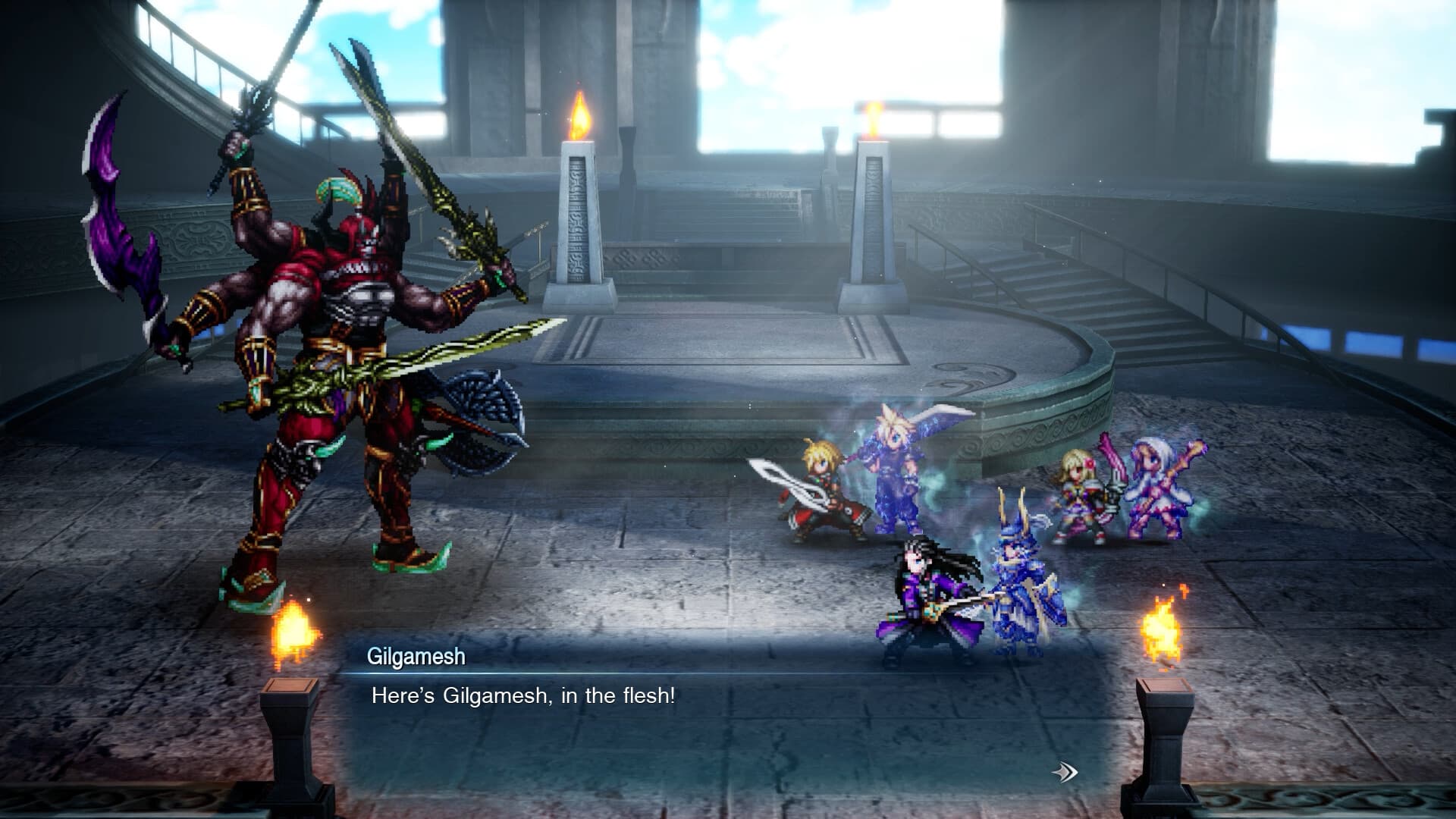
Gilgamesh is a wandering swordmaster encountered across Final Fantasy Resonance, with a final battle waiting on a distinctly big bridge.
The optional layer of Final Fantasy Resonance: Gilgamesh, Sephiroth, the Colosseum, the Chamber of Arms, Ultima Weapon, superboss-class enemies, weapon empowerment, and playtime estimates.
Limit Bursts are per-character finishers in Final Fantasy Resonance, unleashed once a limit gauge fills from staggering enemies or taking damage.
Secret Dungeons are optional high-difficulty dungeons in Final Fantasy Resonance, unrelated to the main story and aimed at players who want a harder test.
Mighty Foes are the powerful monsters presiding over Final Fantasy Resonance's caverns. Defeating them grants magicite, the material used to awaken Visions.
Ultima Weapon is an endgame superboss in Final Fantasy Resonance, waiting at journey's end and described by Square Enix as the most formidable of foes.