Loading...
Loading...
Building System
April 4, 2026 at 10:42 AM
Add wikilinks to table cells (2 new links)
The building system in Outbound is a grid-based modular construction system that lets players transform their camper van from an empty shell into a fully personalized mobile home. Construction uses modular parts that players craft from gathered resources and attach to the vehicle. Building happens inside the van, on its exterior walls, and on the rooftop, giving players three distinct zones to work with. The system is one of the game's primary creative outlets alongside crafting and exploration.
Co-founder Marc Volger has described the philosophy behind the system: "Crafting isn't just about survival, it's about expression." Every wall placed, workstation built, and decoration hung contributes to a home that reflects the player's personality and playstyle.
The van's interior serves as a protected workspace and living area. Players can place functional items such as the Crafting Table (built into the back of the van), stoves, storage containers, and garden beds. Decorative items include curtains, candles, rugs, shelving, picture frames, and potted plants. A well-organized interior makes daily routines smoother, since players access workstations frequently while on the road.
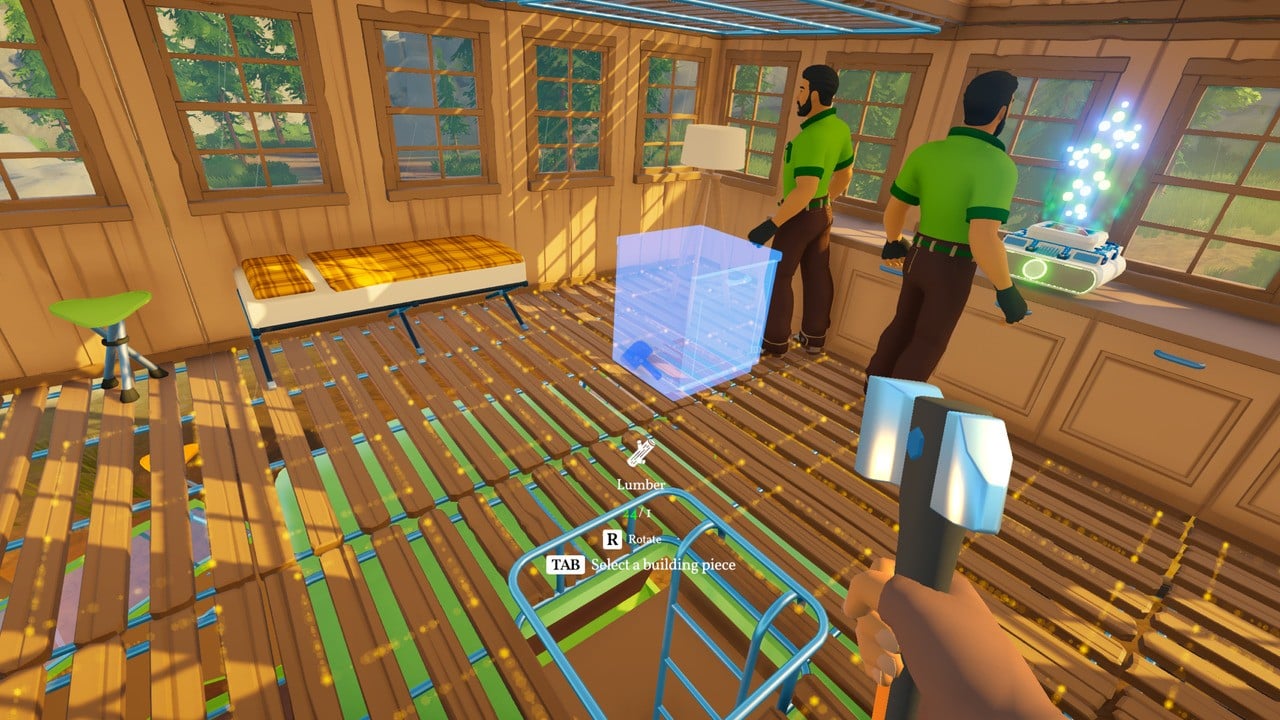
The interior layout affects both functionality and comfort. Keeping essential tools within reach while leaving room for personal touches is key. Players who focus on cooking might prioritize a stove and countertop near the entrance, while those interested in farming can dedicate interior space to indoor garden beds that stay protected during travel.
The roof is prime real estate for building. Energy modules like solar panels and wind turbines are typically mounted on the roof for optimal exposure. Players can also build platforms and structures upward to expand usable space, creating multi-level designs where a greenhouse might sit on the roof above a workshop interior.
With certain vehicle upgrades, players can attach rooftop racks for exterior storage and build foundations and walls on top of the van. Solar panels need unobstructed sky above them, so players must plan vertical builds carefully to avoid blocking sunlight. The van building guide covers layout strategies for balancing rooftop features with vehicle height.
The van's camper mode creates a pop-up second floor by expanding the roof section upward. This opens up additional space for storage, garden beds, workstations, and greenhouses. Activating camper mode is done when the van is parked and provides a significant boost to usable building area without needing rooftop construction.
The pop-up second floor is particularly useful for players who want more interior room without building tall, top-heavy structures on the roof. It folds back down automatically when the player enters driving mode.
Two tools are central to the building process. The power drill is used to assemble and secure modular parts, speeding up construction and ensuring precision. The paint sprayer applies colors and coatings to both interior and exterior vehicle surfaces, letting players customize the look of every component they build.
When placing modules, players can position, rotate, and connect building components on the grid. The grid covers the van's interior cabin, exterior walls, and rooftop zones. Removing a placed module returns its materials to the player's inventory.
Building components are crafted from resources gathered throughout the world. Core building materials include wood (from harvesting trees), panels, scrap metal, fibre, and paint. Lumber is especially important as it forms the base of most crafting recipes. Different modules require different combinations and quantities of these raw materials.
A Recycler device installed in the van converts collected litter and junk into Download Tickets. These tickets serve as currency at blueprint machines found throughout the world, connecting the resource-gathering loop to the blueprint progression system.
New building components are unlocked through the technology tree. Signal towers scattered throughout the world offer downloadable blueprints. Most signal towers present multiple options to choose from, and the available options vary between players for replayability. To download a blueprint, players need a Download Ticket obtained by recycling litter.
Signal towers can refresh their offerings over time, rewarding revisits to previously explored areas. The Workbench at the back of the van accepts downloaded blueprints and unlocks new crafting recipes, including building components like countertop workstations and advanced storage solutions.
The following table lists key building modules available for the camper van.
Module | Type | Description |
|---|---|---|
Crafting Table | Workstation | Built into the back of the van. Accepts downloaded blueprints and serves as the primary crafting station. |
Stove | Workstation | Used for cooking meals that restore health and provide buffs on the road. |
Storage Containers | Storage | Expand the van's storage capacity. Larger versions unlock through the technology tree. |
Garden Beds | Farming | Allow players to grow crops directly on or inside the van. See farming. |
Greenhouse | An enclosed growing space that protects crops during travel. Typically built on the rooftop. | |
Solar Panel | Energy | Generates power from sunlight. Best placed on the roof with clear sky above. See energy system. |
Wind Turbine | Energy | Generates power from wind. Output varies by biome and elevation. See energy system. |
Recycler | Utility | Converts collected litter into Download Tickets for acquiring new blueprints. |
Terrace | Decoration | An open platform for enjoying views from atop the van. Purely cosmetic. |
Modular Sofas | Furniture | A Kickstarter stretch goal. Mix-and-match sofa pieces that can be arranged in different configurations. |
Exterior paint changes the van's color scheme using the paint sprayer tool. Interior decorations include curtains, candles, fairy lights, gingham curtains, rugs, shelving, picture frames, and various ornaments. Decorative lighting illuminates automatically at night, adding ambiance to the campsite. Players can hang items from walls and ceilings to personalize every surface of the van.
Two Kickstarter stretch goals expanded the building system: Modular Sofas (mix-and-match seating components) and Building Plus (additional construction features and decorative options). These additions give players more variety when customizing their van's layout and appearance.
When the player enters driving mode, all built structures automatically fold into compact boxes attached to the van's frame. When the van parks, the boxes unfold back into their full layouts. This process is automatic and instant. Players never have to dismantle their base to travel, which is the building system's signature innovation.
The fold-away mechanic means the van functions as both a vehicle and a home without compromise. Multi-level rooftop builds, greenhouses, terraces, and interior setups all collapse neatly for transit. This design sets Outbound apart from traditional survival games where base-building is stationary.
Every module and item placed on the van adds to its total weight. The vehicle has a weight capacity that limits how much can be built before driving performance starts to suffer. In alpha patch v0.5.6, the base vehicle weight capacity was increased from 12 to 20, and further weight upgrades became available through the Researcher workstation.
Players must balance their desire for a fully loaded home with practical mobility. Building tall, heavy structures on the roof can affect the van's handling. Prioritizing lightweight modules and upgrading weight capacity through research helps maintain a smooth driving experience while still having all the comforts of home.
In multiplayer, up to four players share the same camper van and can build collaboratively. All players can place, move, and remove modules with changes visible in real time. One player might focus on interior workstations while another builds a rooftop greenhouse, allowing the group to specialize.
Multiplayer works through an invitation code that the host creates and shares with friends. The shared van reflects everyone's contributions, making the home a collaborative project that grows as the group explores together.
Keep solar panels on the highest point of the roof with nothing above them to maximize energy output.
Place frequently used workstations near the van entrance so you can access them quickly after parking.
Revisit signal towers periodically as their blueprint offerings can refresh over time.
Use the Recycler early and often. Collecting litter during exploration provides a steady supply of Download Tickets for new blueprints.
Upgrade your weight capacity at the Researcher workstation before committing to large rooftop builds.
In co-op, coordinate building zones with your group. One player handling the interior and another managing the rooftop prevents accidental overlap.
Use the pop-up second floor (camper mode) for extra space before resorting to tall rooftop structures that can affect driving stability.