
Overview
Parenting is one of the most detailed and rewarding gameplay systems in inZOI. From the moment a Zoi becomes pregnant or adopts a child, a new layer of responsibility opens up, including feeding, diaper changes, skill development, school attendance, and emotional bonding. This guide covers every stage of the parenting journey from conception through the teenage years.
Having a Baby
There are three ways to add a baby to a household in inZOI. The Family article covers the broader family structure, while this section focuses on the practical steps.
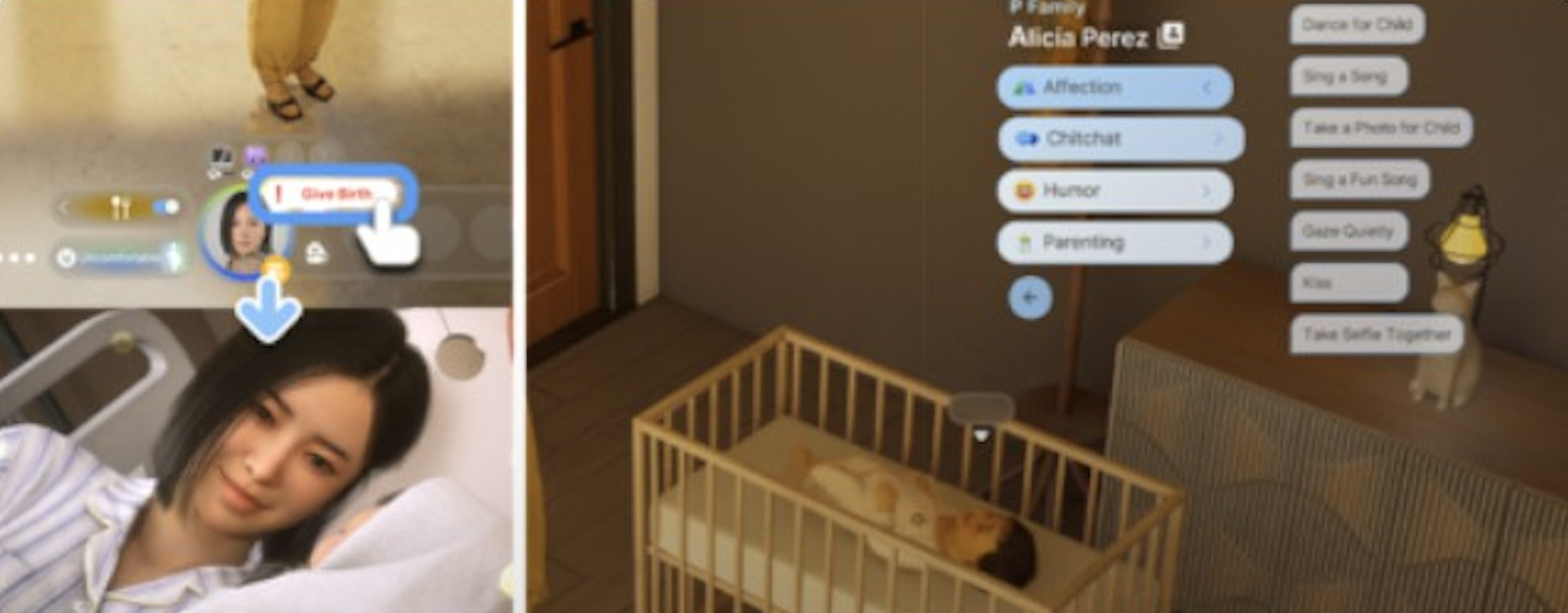
Method 1: Try for Baby
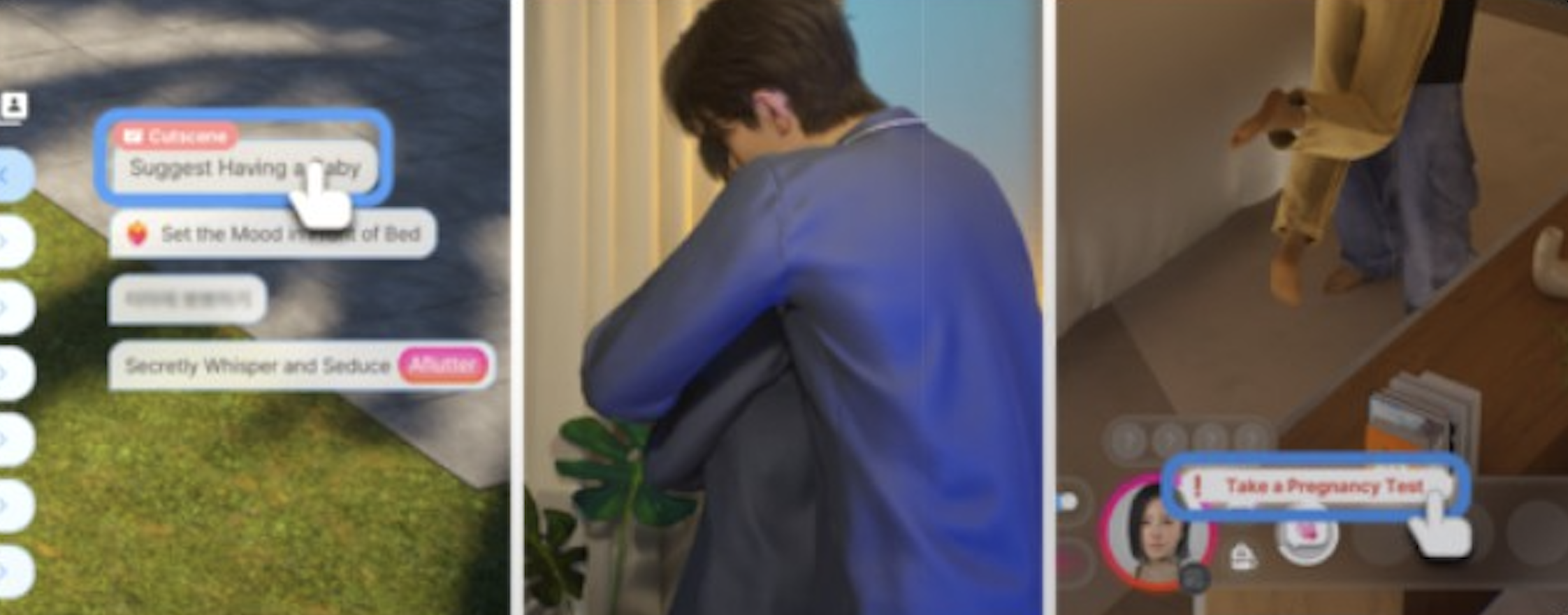
The most common method. Two Zois in a romantic relationship (married or unmarried) can use the "Try for Baby" interaction on a double bed. Both Zois must be in the Young Adult, Adult, or Middle-Aged life stage.
The "Try for Baby" option appears in the bed interaction menu when two compatible Zois are present
Success is not guaranteed on the first attempt. Multiple tries may be needed.
Once successful, the pregnant Zoi will receive a notification and enter the first trimester
Same-sex couples cannot use Try for Baby; they must use adoption or medical assistance
Method 2: Adoption
Any household with at least one Adult or Young Adult Zoi can adopt a child. Adoption is initiated through the smartphone.
Open the smartphone and navigate to the services menu
Select the adoption option
Choose the age of the child you want to adopt (Baby, Toddler, or Child)
The adopted child arrives at your home within one in-game day
Adoption costs Meow (the amount varies by the child's age)
Single Zois can adopt; marriage is not required
Method 3: Medical Assistance
Zois who have difficulty conceiving naturally can use medical assistance through the computer. This option was added to give players an alternative path to parenthood.
Visit the hospital and select the fertility assistance option
Medical assistance costs more Meow than natural conception
Available to any couple regardless of relationship status (married, dating, etc.)
The process takes one to two in-game days before pregnancy begins
Pregnancy
Pregnancy in inZOI lasts three in-game trimesters, each spanning approximately one in-game day. The total pregnancy duration is about three days of game time.
Trimester | Duration | Symptoms and Changes |
|---|---|---|
First | ~1 day | Mild nausea moodlet, no visible physical changes, pregnancy confirmed via notification |
Second | ~1 day | Visible baby bump, increased hunger and bladder needs, occasional discomfort moodlets |
Third | ~1 day | Large baby bump, reduced movement speed, increased fatigue, labor begins at the end of this stage |
Pregnant Zois can continue working and performing normal activities throughout pregnancy, though their needs drain faster. When labor begins, the Zoi can give birth at home or travel to the hospital.
Giving Birth
Home birth: The Zoi gives birth at home. Another household member should be present to help. The bassinet is automatically placed in the home.
Hospital birth: Travel to the hospital for a supervised delivery. This option provides a small positive moodlet.
After birth, the baby appears in a bassinet in the household
Twins are possible but rare. There is no reliable way to guarantee twins in the current version.
Newborn Stage (Baby)
Newborns are the most dependent life stage. They cannot move on their own and require constant attention from household members.
Need | How to Fulfill |
|---|---|
Hunger | Feed the baby using a bottle. Prepare bottles in the kitchen. |
Diaper | Check and change diapers when the diaper icon appears. Ignoring this causes discomfort and crying. |
Social | Talk to, cuddle, or play with the baby. Any household member can provide social interaction. |
Sleep | Place the baby in the bassinet. Babies sleep frequently throughout the day. |
Comfort | Rock or hold the baby when they are fussy. |
Newborns require nearly around-the-clock care. In a single-parent household, the parent will struggle to maintain their own needs while caring for the baby. A two-parent household or having other adult household members significantly eases the burden.
Newborn Tips
Keep multiple prepared bottles in the fridge to save time during feedings
Change diapers immediately when prompted to prevent the baby from becoming distressed
If a parent needs sleep, have another household member take over baby care
The baby will age up to Toddler after approximately 1 in-game day on the default aging speed
Toddler Stage
Toddlers are mobile but still highly dependent on caregivers. This is the stage where early skill development begins. See the Life Stages article for age duration details.
Need | How to Fulfill |
|---|---|
Hunger | Toddlers can eat from a high chair. Place them in the chair and serve food. |
Bladder | Toddlers use a potty chair. Teaching potty training reduces accidents. |
Social | Talk to, play with, or read to the toddler. Social need drains faster than for older Zois. |
Sleep | Toddlers sleep in a toddler bed. They take naps during the day and sleep through the night. |
Fun | Play with toddler toys, building blocks, or watch TV with supervision. |
Toddler Skill Development
Toddlers can begin developing four foundational skills that carry forward into the Child stage. Early investment in these skills gives the child an aptitude bonus later.
Skill | How to Develop | Effect |
|---|---|---|
Cognitive Development | Talking to the toddler, reading books aloud, flashcards | Improves social interactions and school readiness |
Physical Development | Playing on jungle gyms, running around, playing physical games | Improves physical coordination and future Fitness |
Emotional Development | Playing with blocks, drawing, creative play | Supports future Art and Creativity skills |
Language Development | Solving simple puzzles, shape sorters, logic toys | Supports future Critical Language Development and school performance |
Each skill has three levels (1, 2, 3) during the toddler stage. Reaching level 3 in a skill before aging up grants an aptitude bonus that makes the corresponding child skill develop faster.
Child Stage
Children are significantly more independent than toddlers. They attend school on weekdays, can feed themselves, use the bathroom independently, and develop more advanced skills. However, they still need parental supervision and cannot be left home alone for extended periods.
Child Skills and Aptitude
Children develop four skills that replace the toddler foundational skills. Each child skill has a corresponding toddler skill that provides an aptitude boost if it was developed to level 3.
Child Skill | Toddler Prerequisite | How to Develop |
|---|---|---|
Social Skills | Cognitive Development (Lv. 3) | Talking to other Zois, making friends at school, social activities |
Motor Skills | Physical Development (Lv. 3) | Playing sports, using playground equipment, physical activities |
Creativity | Emotional Development (Lv. 3) | Drawing, painting, playing instruments, creative writing |
Mental Skills | Language Development (Lv. 3) | Reading books, doing homework, solving puzzles, using the computer |
The aptitude system means that toddler skill development directly impacts child skill growth. A child who had level 3 Language Development as a toddler will develop Mental Skills approximately 25% faster than a child without the aptitude bonus. Planning skill development during the toddler stage pays off significantly during the child years.
School and Homework
Children attend school on weekdays from 8:00 AM to 2:00 PM. See the Homework and School Life article for detailed homework mechanics.
Children are automatically enrolled in school when they age up from Toddler
A school bus arrives at the household each weekday morning
Missing school has consequences similar to missing work: multiple absences can trigger a visit from the Child Protection Agency
Children receive homework assignments that must be completed at home after school
Homework
Homework is a daily task that children bring home from school. It appears in the child's task queue and can be completed at any desk or table.
Homework takes approximately 30 to 60 minutes of in-game time to complete
Parents can help with homework by selecting the "Help with Homework" interaction, which speeds up completion
Completing homework consistently improves school performance and builds the Mental Skills stat
Ignoring homework repeatedly leads to declining school grades
Children in a good mood complete homework faster than children who are stressed or unhappy
Teen Stage
Teenagers are the most independent child life stage. They can stay home alone, cook basic meals, and manage most of their own needs. Teens attend high school and begin developing adult skills.
Teens attend high school on weekdays, similar to children attending school
They can develop all adult skills, though at a slightly slower rate than Young Adults
Teens can get part-time jobs for limited income
Romantic interactions become available between teens (teen-to-teen only)
Teens experience mood swings and stronger emotional reactions
Parental guidance still matters: teens who have good relationships with parents develop fewer negative moodlets
Babysitting
When all adult household members need to leave the home (for work, errands, or social activities), children and toddlers need supervision. The babysitting system handles this.
A babysitter can be hired through the smartphone services menu
The babysitter arrives at the house and cares for children until an adult returns
Babysitting costs Meow per hour
Alternatively, an older teen or young adult household member can supervise younger children without hiring a babysitter
Leaving young children unattended for too long without a babysitter triggers a Child Protection Agency visit
Child Protection Agency
The Child Protection Agency (CPA) monitors the welfare of children and toddlers in every household. If a child's needs are severely neglected, the CPA intervenes.
Warning: The first CPA event is usually a warning notification, giving the player a chance to correct the situation
Visit: If neglect continues, a CPA agent visits the household to investigate
Removal: In extreme cases, the CPA can remove children from the household permanently. This is essentially a game-over scenario for the parenting aspect of that household.
Triggers for CPA intervention include:
Children with critically low hunger, hygiene, or social needs for extended periods
Leaving toddlers or children home alone without adult supervision or a babysitter
Repeated school absences
Dangerous household conditions (though this is less clearly defined in the current version)
Aging Duration
The duration of each life stage depends on the aging speed setting. The following table shows the default (Normal) aging speed.
Image | Life Stage | Default Duration (in-game days) |
|---|---|---|
Baby (Newborn) | ~2 days | |
| Toddler | ~5 days |
| Child | ~7 days |
Teen | ~7 days | |
| Young Adult | ~14 days |
| Adult | ~14 days |
| Middle-Aged | ~14 days |
| Senior | ~10 days (natural death possible) |





Players can adjust aging speed in the game settings. Setting aging to "Long" roughly doubles these durations, while "Short" halves them. Aging can also be disabled entirely.
General Parenting Tips
Start developing toddler skills immediately after aging up from baby. The aptitude bonuses carry into the child stage and make a noticeable difference.
Keep at least two adults in a household with a baby. Single parents are overwhelmed quickly by the constant feeding and diaper change demands.
Help children with homework every day. The "Help with Homework" interaction speeds up completion and builds the parent-child relationship.
Hire a babysitter before both parents leave for work. The CPA will intervene if young children are left alone.
Children who are in a good mood learn skills faster. Prioritize keeping the Fun and Social needs high before skill training sessions.
Plan your Zoi's career around parenting. A career with a 3-day work week (like Lawyer or Football Player) gives parents four days at home with the children.
Toddler potty training is worth the effort. Fully trained toddlers have far fewer accidents and free up caregiver time.
The Cognitive Development toddler skill is the most impactful, as the Social Skills it feeds into affects school performance and friendship building throughout childhood.
Read to children before bed. This builds the parent-child relationship, satisfies the child's Social and Fun needs, and develops Mental Skills simultaneously.
Do not neglect the parent Zoi's own needs. A parent with low energy or a bad mood will perform poorly at work and have less patience with the children.