
Fate Engine
Complete overview of the Fate Engine, a major 2026 feature for inZOI. Covers the random life scenario generator, its connection to Canvastown, the redesigned karma and luck systems, dice-roll actions, chain reactions, Twist of Luck, ghost mechanics, and the planned development timeline.
On This Page
The Fate Engine is a major planned feature for inZOI, first revealed by Director Hyungjun "Kjun" Kim on December 26, 2025 through the "Brainstorm with Kjun" developer communication series. It represents a fundamental shift in how the game generates and manages life scenarios, combining a random life setup generator with a redesigned karma and luck system that replaces direct rewards and punishments with probability-based outcomes. The Fate Engine is closely tied to Canvastown, a new compact world being developed as the system's first stage.
As of early 2026, the Fate Engine is under active development. The features described in this article are based on confirmed developer statements from official forum posts and roadmap communications. Timelines and scope may change as development progresses.
What the Fate Engine Does
the Fate Engine randomly generates an entire life setup for a Zoi. Players activate a randomizer that shuffles world settings and assigns a predetermined life scenario. The developer-given examples include:
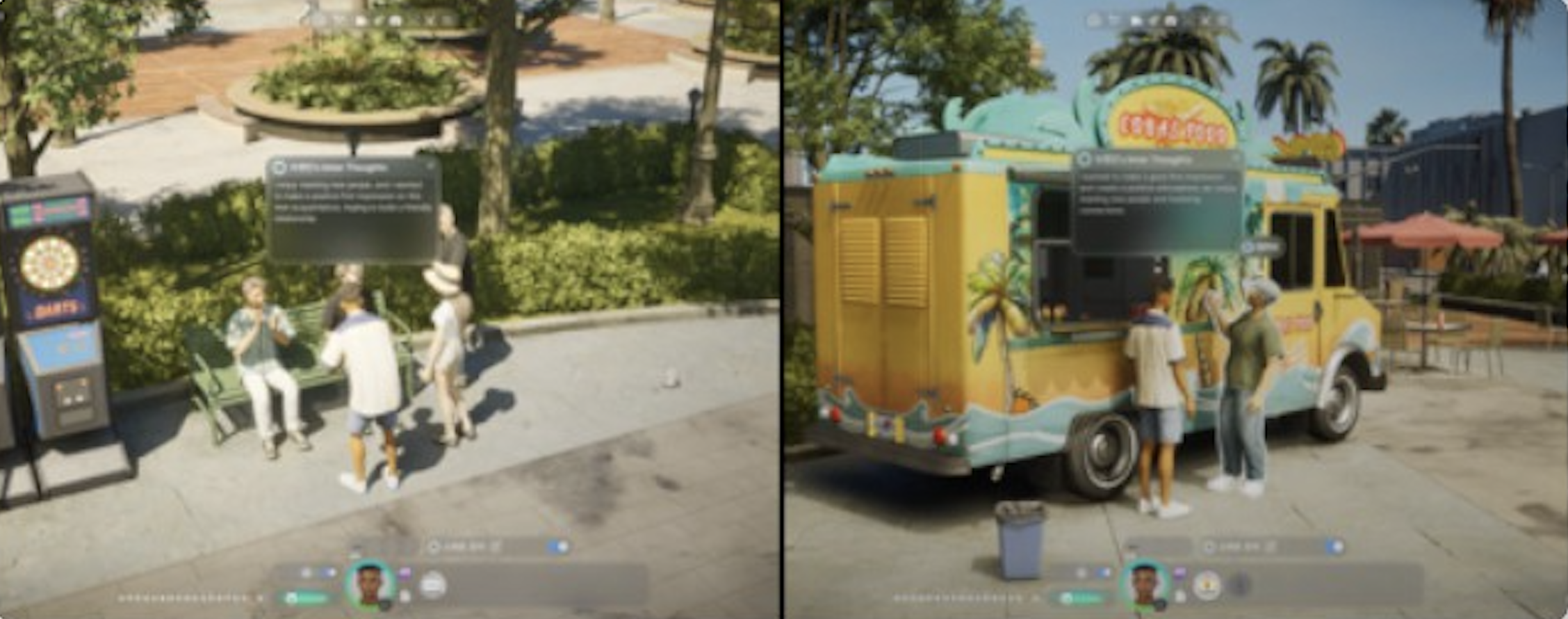
A billionaire's youngest child
A resident of a haunted house
A poor family head raising ten children
Each scenario comes with starting conditions (family, finances, housing, relationships) that create a unique gameplay challenge. The Fate Engine introduces goal-oriented gameplay with repeatable progression through varied life experiences, adding structure for players who want directed challenges alongside inZOI's existing freeform sandbox mode.
The system is entirely optional. Players can continue using the standard character creation and sandbox gameplay without ever engaging the Fate Engine.
Connection to Canvastown
Canvastown is a new rural countryside world being developed as the Fate Engine's first operational stage. It is approximately one-eighth the scale of Dowon, remaining stable with 40 to 80 customizable lots. The smaller size is intentional: Canvastown is designed to run smoothly even on lower-spec hardware, and the compact footprint means everything around your home becomes part of your playable space.
Canvastown introduces a "shared narratives" philosophy built around the concept of capturing, preserving, and sharing compelling life runs with other players. When you experience an interesting scenario through the Fate Engine, you can save that setup and invite others to play through the same starting conditions. This aims to preserve the emergent storytelling that makes life simulation games engaging while reducing the frustration that comes from pure randomness.
A separate dedicated team is developing Canvastown and the Fate Engine in parallel with the core development team. Performance optimizations made for Canvastown are planned to transfer back to existing cities.
Redesigned Karma System
The Fate Engine brings a fundamental redesign to how karma works. Currently, karma is a visible seven-tier scale that gates certain interactions and determines post-death outcomes. Under the new design, karma becomes an invisible system that quietly accumulates behind the scenes. It does not punish or reward directly; instead, it shifts the balance of probabilities.
Key Changes
Aspect | Current System | Planned Redesign |
|---|---|---|
Visibility | Visible karma meter with seven tiers (Best to Terrible). | Invisible accumulation. Players feel the effects without seeing the numbers. |
Effect | Directly gates interactions and NPC reactions. | Shifts probabilities. Good karma makes positive outcomes more likely; bad karma increases risk and negative opportunity. |
Structure | Single karma score. | Multiple independent areas: relationships, legacy, self-trust, and social harm. Each tracked separately. |
Reputation | Not yet separate from karma. | Reputation becomes its own visible system measuring social perception, distinct from internal karma. |
The multi-area karma division was proposed by the community and confirmed by the developers as the preferred direction. In a forum response, Kjun stated: "We agreed that your approach is better, and we're going to reflect it."
Luck Mechanics
Luck is a new gameplay mechanic designed to work alongside karma. The relationship is straightforward: karma determines what types of events become available; luck determines specific outcomes within those events. Luck is defined as randomness outcomes (RNG) combined with modifiers from traits, buffs, debuffs, and reputation.
For example, a Zoi with good karma might encounter a lottery opportunity. Luck then determines whether they actually win. A Zoi with bad karma might stumble into an illegal deal. Luck decides whether they avoid getting caught.
Lucky Chain Reactions
Success in one event can increase luck in the next, creating a streak effect. A lottery win might boost the luck baseline for a subsequent job interview. Conversely, failures lower luck for subsequent events. However, these streaks interact with karma: a lucky streak combined with bad karma might lead to a seemingly positive opportunity that is actually a trap (for example, a job at a company that turns out to be fraudulent).
Twist of Luck
Players can spend karma to increase luck, effectively manipulating fate. The "Twist of Luck" mechanic lets you sacrifice long-term karmic balance for short-term favorable outcomes. For example, a near-miss deal could be resolved through a luck expenditure, gaining success but dropping karma. This creates a deliberate tension between immediate needs and long-term consequences.
Lucky Charms
Items and buffs that increase the luck value. The Lucky Donut already exists in-game (purchased for 200 Meow Coins from the Meow Store) and increases rewards from fishing, treasure hunts, claw machines, and lotteries. The Fate Engine plans to expand this concept with additional lucky charm items and temporary luck buffs.
Dice-Roll Actions
Certain actions under the Fate Engine will resolve through hidden dice rolls rather than deterministic outcomes. These rolls combine luck with modifiers from traits, abilities, and buffs. The developers have cited D&D, Disco Elysium, and Paralives as reference points for this design.
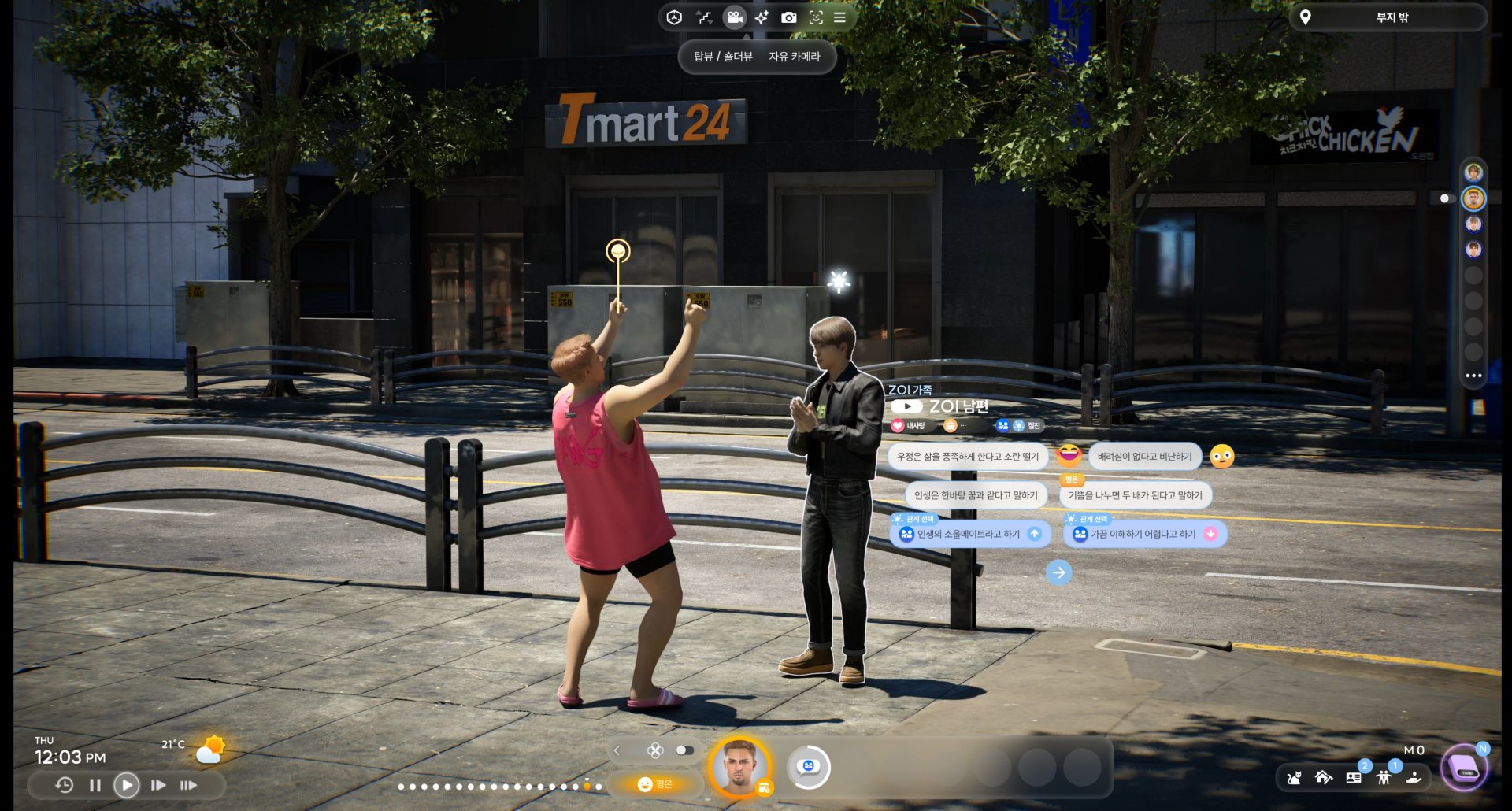
An example scenario from the developer post: a Zoi is being questioned by police. The resolution depends on a hidden dice roll modified by the Zoi's luck value, an "Authoritarian" trait bonus, and a "Confidence" modifier. A high roll means the Zoi talks their way out. A low roll means the confrontation escalates.
Dice-roll actions add unpredictability to critical moments without making the game feel arbitrary, since modifiers from personality, skills, and karma trajectory all tilt the odds in contextually appropriate directions.
Reputation as a Luck Modifier
The planned reputation system (separate from karma) will serve as a modifier to luck outcomes. Reputation measures how the outside world perceives a Zoi, based on their actions within local communities.
The interaction works like this: even a Zoi with good karma and favorable luck can fail in social situations if their reputation is poor. The developer example describes a Zoi attending a meeting where luck determines whether they persuade the room, but low reputation limits the ceiling of success regardless of the dice roll.
Ghost and Afterlife Mechanics
The Fate Engine formalizes the connection between karma and the afterlife. Karma accumulated in life determines the fate of a Zoi's soul after death:
Karma at Death | Outcome |
|---|---|
Sufficient good karma | The Zoi passes on peacefully. As a benevolent spirit, they can help the living, bless descendants, and bring good fortune to their family line. |
Insufficient karma (Poor or below) | The Zoi becomes a ghost, bound to the mortal realm. They must earn missing karma points through ghostly actions before they can reincarnate. |
High-karma ghosts become benevolent spirits who can bless descendants and receive city improvement tasks. Low-karma ghosts become vengeful spirits who scare NPCs, break equipment, take revenge on enemies, and cause accidents. Ghost traits are inherited from the living Zoi's personality.
Director Kjun has stated: "Karma accumulated in life will act as a condition for reincarnation after death, determining the form and fate of the next life." He also noted that ghost gameplay will be intentionally limited so it does not overshadow the main experience: "We want to keep the playability of ghosts fairly limited so it doesn't overshadow the main gameplay, but we also want to make sure the experience is engaging enough when it does happen."
If too many ghosts accumulate in a city, new Zois cannot be born and new families cannot be created. See the Karma and Reputation System article for current karma mechanics and ghost prevention strategies.
Sacred Redemption
The Fate Engine introduces atonement mechanics for Zois who want to recover from bad karma. "Sacred Redemption" allows players to atone through rituals, offerings, or prayers. This provides an active path back from low karma rather than relying solely on accumulating good actions over time.
Concerns about negative karma overly punishing villain playthroughs are being addressed. The developers are considering optional activation with a difficulty slider that tunes the strength of karma's impact on gameplay.
Intervention System Updates
The existing Compliment and Scold interventions (see Karma and Reputation System) are being redesigned under the Fate Engine to incorporate the luck mechanic:
Intervention | New Effect |
|---|---|
Compliment | Temporarily increases the target's luck for 24 hours. May lower karma if the compliment is insincere. In criminal contexts, increases success chance but decreases long-term karma. |
Scold | Decreases the target's immediate luck. May increase karma if the scolding is justified. In criminal contexts, creates conflict but builds karma if deserved. |
The core design creates short-term luck versus long-term karma tradeoffs, giving players meaningful choices in how they use the intervention system.
Calendar and Memory Integration
The Fate Engine is being developed alongside two related systems:
System | Timeline | Description |
|---|---|---|
Calendar System | Q1 2026 | A birthday calendar and seasonal milestone tracker. Ties into the memory system for birthday celebrations and life event markers. |
Memory System Expansion | Q1 2026 | Formalized memory tracking with trauma memories and life milestone memories. How Zois remember and are affected by significant events. |
Event Memory and Diary | Q3 2026 | Full diary feature where Zois record experiences with emotional context. Expands the current Smart Zoi diary into a comprehensive journaling system. |
These systems feed into the Fate Engine by providing the data that shapes how karma accumulates, how luck modifiers are calculated, and what scenarios the engine generates for each Zoi. See Diaries and Journaling and the Memory System for current implementations.
Development Timeline
Date | Milestone |
|---|---|
December 2025 | Fate Engine concept revealed in "Brainstorm with Kjun" developer post. |
December 2025 | Listed as Q1 2026 item on the "Fundamentals First" roadmap. |
January 2026 | Detailed karma/luck/ghost mechanics chain published. Canvastown development confirmed with dedicated team. |
March 2026 | Technical synchronization of Fate Engine within Canvastown (planned). |
May 2026 | Expand Fate Engine to other cities. Add update/download features to Canvastown Canvas (planned). |
June 2026 | Release Canvastown #1: approximately 40 customizable lots, small village setting (planned). |
October 2026 | Release Canvastown #2: approximately 50 lots, rural countryside aesthetic (planned). |
The developers have cautioned that not every feature on the roadmap is guaranteed to arrive on schedule: "It may not be possible to implement every item on this list in 2026, and some may even be technically impossible." These initiatives are under active R&D validation, and timelines may shift.
How the Fate Engine Differs From Current Karma
Karma becomes invisible: No longer a visible meter. Players feel the effects through gameplay without seeing exact numbers.
Probability over punishment: Instead of directly locking or unlocking interactions, karma shifts the likelihood of positive and negative events.
Multiple karma areas: Relationships, legacy, self-trust, and social harm tracked independently rather than as a single score.
Luck as a separate layer: RNG outcomes modified by traits, buffs, and reputation, determining specific results within karma-influenced scenarios.
Player agency over fate: Twist of Luck allows spending karma for luck. Sacred Redemption allows active atonement. Players can manipulate the system rather than passively accumulating.
Scenario generation: Complete starting life situations generated randomly, not just individual karma events.
Related Articles
Karma and Reputation System
Canvastown
Memory System
Traits
Diaries and Journaling