

This article covers the broader weapon ecosystem across all Flow Styles. For a detailed breakdown of the four Primal Flow weapons (Ring Blade, Sword, Lance, Hammer) and their mid-combo switching system, see Weapons.
Weapons Across Flow Styles
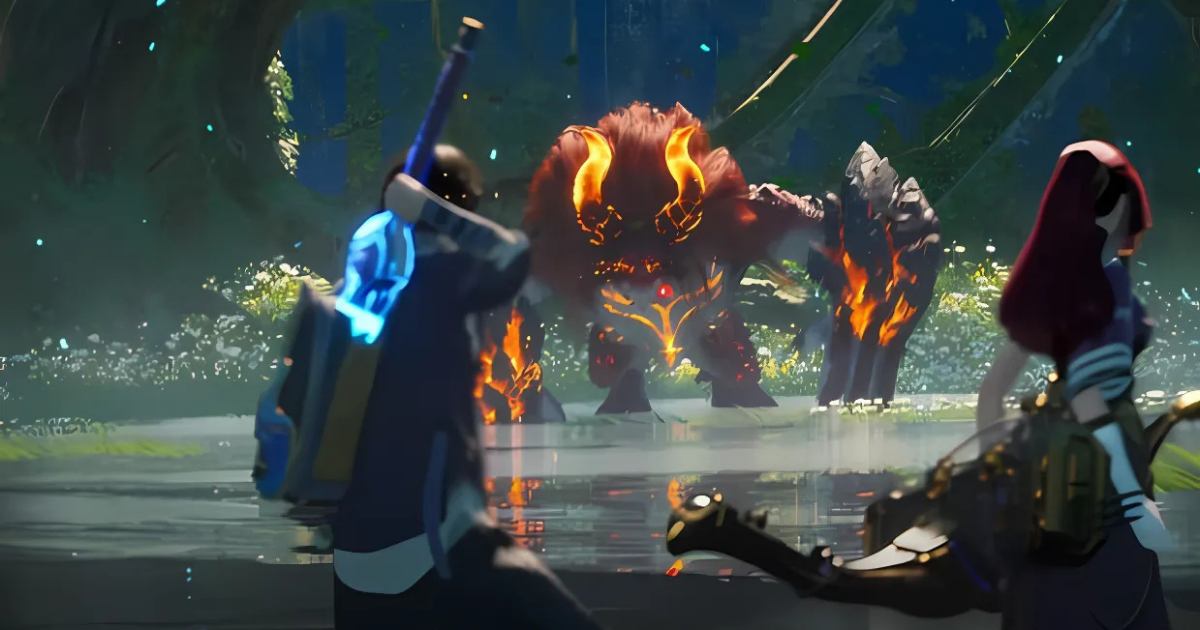
Every Flow Style in Honor of Kings: World comes with its own signature weapon or weapon type. Unlike the Primal Flow, which uniquely grants access to four interchangeable weapons, most other Flow Styles use a single fixed weapon that defines their combat identity. The weapon a style uses determines its attack range, animation speed, hit effects, and visual presentation during gameplay.
Because weapons are tied to specific Flow Styles, the weapon ecosystem extends beyond the four Primal Flow types. The 11 confirmed S0 launch Resonances each bring their own signature armament, and these character-bound weapons are a core part of what makes each style feel different to play. Collecting and upgrading weapons across the launch roster is a major component of the long-term progression system. Additional weapons may arrive with each new Resonance Tencent confirms in future seasons.
Signature Weapons by Style
Guan Yu's Flow Style wields the Dragon Moon Blade, a massive polearm based on the historical Green Dragon Crescent Blade. It delivers sweeping wide-arc attacks with substantial range and stagger potential, matching Guan Yu's identity as a powerful frontline warrior. The Dragon Moon Blade's moveset emphasizes heavy, deliberate swings that punish enemies caught in their arc.
Li Bai's style uses a single elegant sword suited for rapid, fluid swordplay. Li Bai's sword attacks chain together in quick succession with an emphasis on aerial combos and repositioning dashes. The weapon complements the style's agile, mobile combat approach where players dart in and out of danger.
Marco Polo's style replaces traditional melee weapons with dual pistols. This changes the combat dynamic from close-range exchanges to ranged gunplay. The dual pistols fire rapidly and allow the player to deal sustained damage while maintaining distance from enemies, making Marco Polo one of the safest styles to play in high-danger encounters.
Hou Yi's style employs a traditional bow with a focus on charged shots. Fully charged arrows deal heavy single-target damage, making the bow ideal for sniping high-value targets during boss encounters. The bow also supports area-denial arrow skills that control space on the battlefield.
Cai Wenji's style uses a lute as both a weapon and a support tool. Sound-wave attacks emanate from the lute at mid-range, dealing moderate damage while simultaneously providing healing and buff effects to nearby allies. The lute is the only weapon in the game that inherently combines offensive and supportive functions in its basic attack string.
These are representative examples from the confirmed roster. Each additional Flow Style added to the game post-launch will bring its own signature weapon, expanding the diversity of available armaments over time.
Primal Flow's Unique Weapon System
The Primal Flow stands apart from every other Flow Style in how it handles weapons. Rather than being tied to a single weapon, Primal Flow grants access to four weapon types (Ring Blade, Sword, Lance, Hammer) that can all be equipped simultaneously and swapped mid-combat. No other Flow Style has this capability. This makes weapon management a core mechanic unique to Primal Flow, where players maintain and upgrade four weapons instead of one.
For players who invest heavily in Primal Flow, the four-weapon system creates a significantly higher gear ceiling. Each of the four weapons can be individually upgraded, enchanted, and refined, meaning a fully built Primal Flow loadout requires four times the investment of a single-weapon style. The payoff is unmatched combat flexibility during encounters, since every situation has an optimal weapon among the four.
Weapon Acquisition
Weapons are acquired through multiple systems. Boss encounters drop weapons as loot rewards, with harder bosses dropping higher-rarity weapons. Dungeon clears provide weapon chests at completion, with the weapon pool varying by dungeon. Crafting allows players to forge specific weapons using materials gathered from exploration and combat. The gacha system offers a premium acquisition path for the rarest weapons in the game.
The gacha system has a reported 5-star weapon pull rate of 0.6% (based on unconfirmed beta data), with a reported hard pity system that guarantees a 5-star weapon within 80 pulls. This pity counter carries across banners, so failed pulls on one banner are not wasted if the player switches to a different banner. The pity system ensures that dedicated players will eventually obtain the weapons they want, even with poor luck on individual pulls.
Boss drops and dungeon rewards provide the most consistent free-to-play acquisition path. Many endgame weapons are designed to be farmable through repeated boss encounters, with drop rates that increase at higher difficulty tiers. Crafting is a deterministic alternative for players who prefer to work toward a specific weapon rather than relying on random drops.
Star-Based Rarity System
Weapons in Honor of Kings: World follow a star-based rarity scale ranging from 1-star to 5-star (some unconfirmed beta sources suggest a possible 6-star tier may exist). Higher-star weapons have higher base stats, more passive ability slots, and access to stronger enhancement bonuses. The rarity tiers are visually distinguished by color coding in the inventory interface, following the standard progression from common (grey) through uncommon (green), rare (blue), epic (purple), legendary (gold). Some beta sources suggest a possible mythic (red) tier above legendary, though this is unconfirmed.
1-star and 2-star weapons are found commonly during early progression and serve as starter equipment. They lack passive abilities and have limited enhancement potential. 3-star weapons begin to offer meaningful passive effects and represent the baseline for mid-game content. 4-star weapons are the primary endgame workhorses for most players, offering strong stats with reliable farmable acquisition paths.
5-star weapons are rare drops and gacha rewards with powerful unique passives that can define a build. These weapons often synergize specifically with certain Flow Styles or talent configurations, making them build-around items. Some unconfirmed beta sources reference a potential 6-star weapon tier that would be available only from the hardest endgame content. If this tier exists, such weapons would represent the peak of weapon power with transformative unique passives.
Enhancement and Upgrading
All weapons can be enhanced using materials obtained from combat and exploration. Enhancement increases a weapon's base stats (attack power, critical rate, secondary stats) along a linear scaling curve. Each enhancement level requires progressively more materials, creating a natural pacing mechanic where early levels are cheap and fast while later levels demand significant farming investment.
Beyond basic enhancement, weapons support a refinement process that upgrades their passive abilities. Refinement requires duplicate copies of the same weapon or universal refinement materials. Each refinement rank improves the weapon's unique passive effect, such as increasing the damage bonus from a critical-hit passive or extending the duration of an on-hit buff. Fully refining a 5-star weapon typically requires five total copies (one base plus four duplicates), making it a long-term goal.
The upgrading system also includes socket slots where players can embed stat-boosting gems. The number of available socket slots scales with weapon rarity, with higher-star weapons supporting more sockets and rarer gem types. Socket customization adds another layer of build personalization, allowing two players with the same weapon to achieve different stat profiles through gem selection.
The enhancement and upgrading systems apply universally across all weapon types, whether the weapon belongs to a Primal Flow type or a Flow Style's signature weapon. This means the same materials and currencies can be used flexibly across the player's entire weapon arsenal, and investment in one weapon does not lock out investment in others.
Weapon Color Grade Ladder
Every weapon type, regardless of the style that uses it, climbs the same six-step color grade ladder. The preview build confirms that a new player opens with white weapons, cycles through green, blue, purple, and yellow during the main campaign, and only reaches orange inside the endgame content loop described under dungeons and raids.
Step | Grade | Campaign Stage |
|---|---|---|
1 | White | Tutorial and first zone |
2 | Green | Early story chapters |
3 | Blue | Mid-game zones and normal group content |
4 | Purple | Late mid-game and hard-mode group content |
5 | Yellow | Pre-endgame farming tier |
6 | Orange | Endgame ceiling in the current preview |
Per-Weapon Ascension Caps
Every weapon, on every style, can be ascended to raise its own level cap. The preview session showed an orange weapon jumping from a level 45 cap to a level 50 cap after ascension, so a favorite weapon grows with the player instead of being replaced wholesale at each grade step. Ascension cost is paid in the stamina style vitality currency that also funds talent runs, so daily vitality planning shapes how fast any weapon reaches its next cap.
Normal Progression, Not Pay-To-Win
Both preview sources emphasize that weapon progression is part of the normal play loop. Grade-ups, ascension, and set-piece chasing all come from dungeon runs, world farming, and crafting at the gear system bench. There is no gacha lane that sells stronger weapons outright, so stat ceilings are gated by play time and vitality rather than by spending.
How Color Grade Interacts with Other Systems
Color grade acts as the coarse tier of a weapon. Two orange weapons always outclass any yellow weapon of the same level band.
Level cap is tracked per weapon through ascension. Two orange weapons can still differ by five or more cap levels depending on how many ascension runs each has absorbed.
Fixed stat lines, detailed under gear system, mean that color grade does not cause hidden stat rolls. What the tooltip prints is what the weapon delivers.
Weapon choice still feeds the talent system and the role a character plays, so the same orange weapon can serve different builds.