Loading...
Loading...
Combat
April 15, 2026 at 09:40 PM
Add combat rhythm, heavy-attack opener, stamina-block interaction, and red-glow unblockable notes
Combat in Windrose uses a Soulslite system. It borrows the parrying, dodging, and stamina management common to Souls-style games, but dials back the punishment. You can die and lose progress, but the game is designed to be challenging without being brutal. The developers cite Elden Ring as a direct inspiration for the combat feel.
Every weapon deals one of three damage types. Different enemies are vulnerable to different types, so carrying weapons of multiple damage categories gives a tactical advantage.
Damage Type | Best Against | |
|---|---|---|
Slash | Sabers, greatswords, two-handed swords | Unarmored and lightly armored enemies |
Pierce | Rapiers, pistols, muskets, blunderbusses | Armored enemies |
Crude | Clubs, halberds | Skeletons and undead |
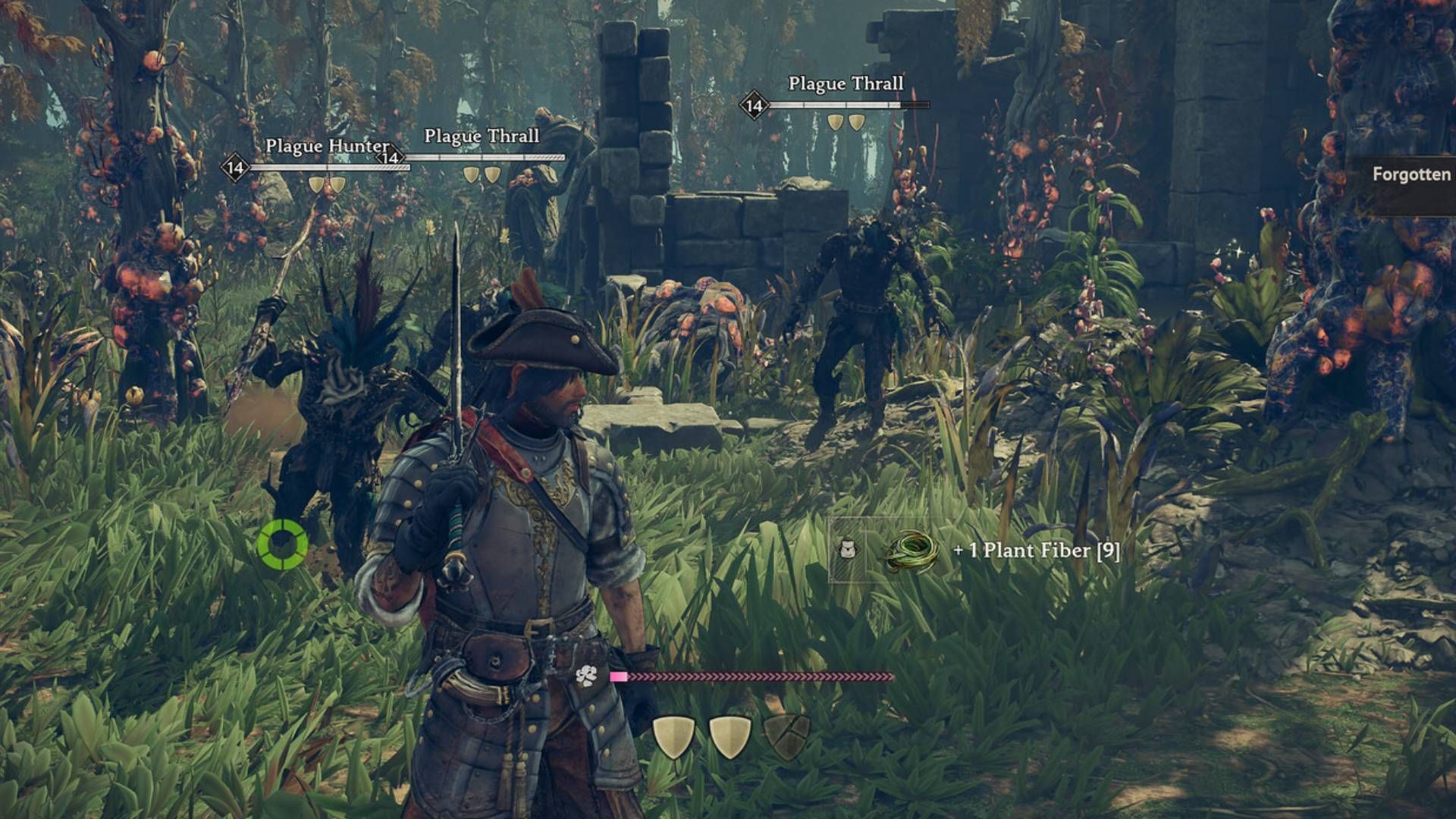
Both the player and enemies have a guard meter represented by shield icons. Blocking attacks drains guard. When guard is fully depleted, the target becomes stunned and open for heavy damage. Timing a block right before an enemy strike lands triggers a Perfect Block (parry), which rapidly drains the enemy's guard instead of your own. This is especially powerful against enemies with combo attacks, since parrying an entire combo creates massive openings.
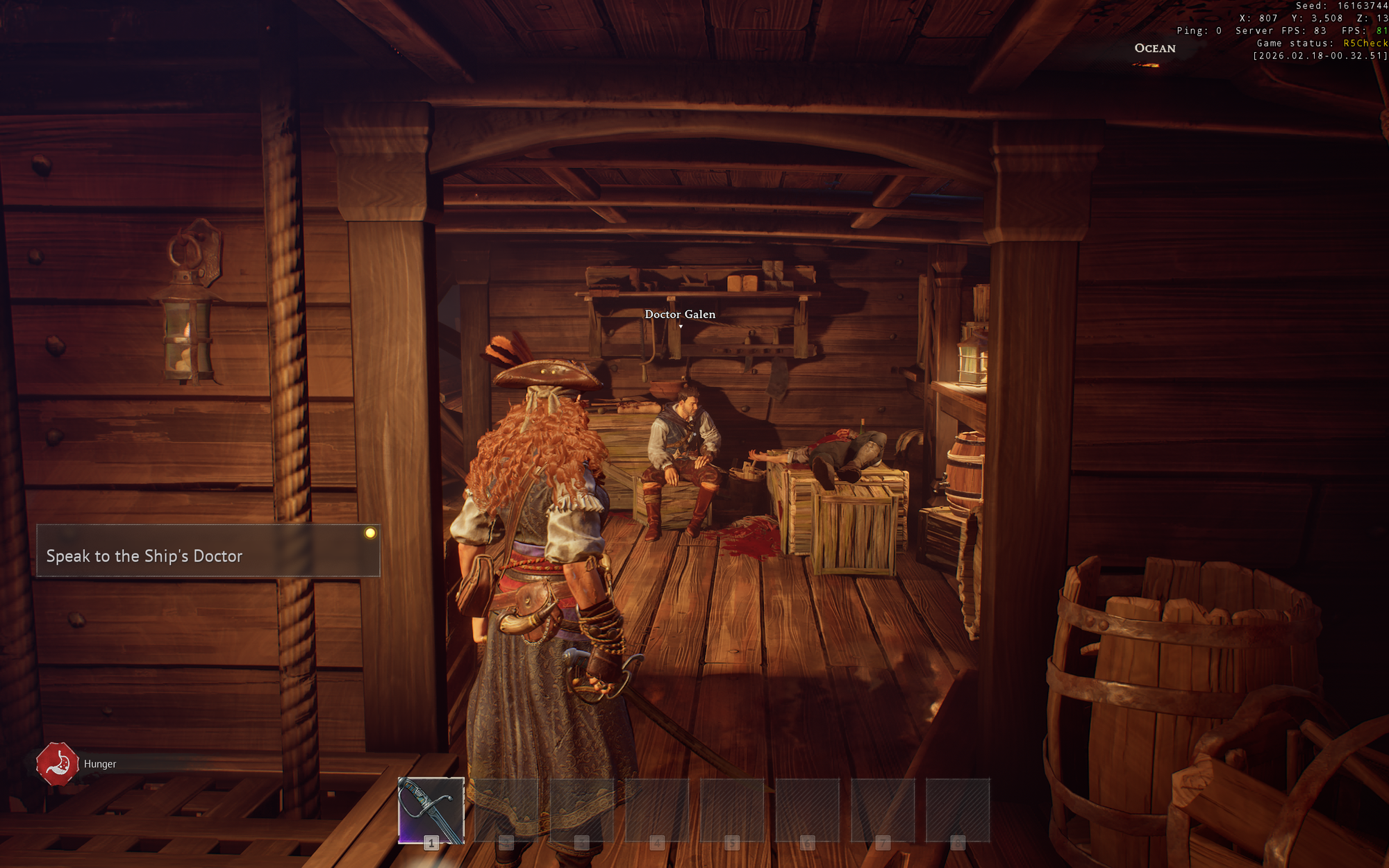
The weapon selection covers historical pirate-era arms with over 61 unique weapons across multiple categories:
Category | Examples | Characteristics |
|---|---|---|
Sabers | Broken Blade, Razor, Arboris Saber | Balanced speed and slash damage; scale with Agility |
Rapiers | Sturdy Rapier, Dueling Rapier | Fast pierce attacks; scale with Precision; wider parry windows |
Greatswords | Soul Eater, Two-Handed Sword | Slow, heavy slash hits; scale with Agility or Strength |
Clubs | Club | Crude damage; scale with Strength; good for guard breaking |
Halberds | Halberd, Sturdy Halberd, Plague Halberd | Reach and crude damage; scale with Strength |
Category | Examples | Characteristics |
|---|---|---|
Pistols | Worn-Out Pistol, Pistol | Quick-draw sidearm; moderate pierce damage; scale with Precision |
Muskets | Musket, Reliable Musket | Heavy pierce damage; slow reload; scale with Precision |
Blunderbusses | Blunderbuss, Reliable Blunderbuss | Spread fire; chance to knock down at close range; scale with Agility |
Weapons scale with character stats from the talent system. Scaling is graded S, A, B, C, D, with S providing the strongest bonus. A rapier that scales with Precision rewards a different build than a greatsword that scales with Strength.
Weapons come in four rarity tiers, with higher tiers adding special effects:
Rarity | Effects |
|---|---|
Common | Base stats only |
Uncommon | Improved base stats |
Rare | Special effects (e.g., Razor: +10% Critical Hit Chance; Soul Eater: drains health from nearby enemies) |
Epic | Multiple special effects (e.g., Reliable Musket: faster reload + 20% Critical Damage; Sturdy Halberd: +15% Crit Chance + 15 bonus damage) |
The talent system and weapon variety support multiple approaches:
Playstyle | Description |
|---|---|
Fencer | Using rapiers and precise dodges, relying on counterattacks and Precision scaling |
Cutthroat | Wielding saber and pistol, mixing melee aggression with point-blank shots |
Musketeer | Combining swordplay with well-timed ranged shots from distance |
Heavy Hitter | Greatsword or club focus, stacking Strength for guard-breaking power |
Plague Bearer | Using Plague Halberd or Arboris Saber for corruption-based damage over time |
Pistols and muskets complement melee combat. A typical loadout pairs a saber with a flintlock pistol for finishing off enemies at range. Firearms hit hard but reload slowly, so timing matters. Gunpowder is scarce in the demo (the Millstone for crafting it is disabled), so reserve ammunition for dungeon bosses and tough encounters. Gunpowder can be looted from pirate camps.
Equipment follows a rarity tier system. Progression comes through finding better gear rather than linear upgrades. Armor sets offer different bonuses that complement specific playstyles. Weapons can be upgraded at crafting stations, and special items found through exploration can advance weapons from one rarity tier to the next.
Bosses appear throughout the world and in dungeons. Each boss has unique attack patterns that require observation and adaptation. Some boss fights gate story progression or guard valuable loot. Bosses test mastery of the parry and dodge system rather than raw stats. Stacking food buffs and applying alchemy oils before a boss fight provides a significant tactical advantage.
Windrose combat rewards patience more than speed. Veteran players describe the rhythm as one, two, hit, dash: throw one or two light attacks, land a finishing hit, then dash backward to reset distance while stamina recovers. Repeating this loop lets you chip enemies down without trading blows.
Two rules make the loop work. First, never fully deplete stamina. Running out drops you into the Winded state where you cannot dodge or sprint, which is the single most dangerous moment in a fight. Second, never take a hit if you can help it. Even armored characters lose large chunks of health to enemies at appropriate level, so the dance of attack and retreat matters more than raw damage output.
When facing groups, lock on with the T key and let enemies trail you in a line. With a saber or greatsword the first swing often staggers multiple targets stacked behind each other, which converts a messy brawl into a controlled rhythm. After each hit, dash back, wait for the enemy to reset their stagger, and repeat.
Light attacks are the bread and butter of combat because their animation is short and their stamina cost is manageable. Heavy attacks leave a longer vulnerability window, so spamming them invites free hits from enemies. The heavy attack still earns its place as an opener, used as the first strike when the enemy is out of range and cannot punish the wind-up. After the heavy opener, switch back to the light attack loop.
Heavy attacks also shine outside combat. Against clustered copper ore or stone nodes, a wide heavy swing damages several nodes at once. This turns resource farming trips into a much faster grind, especially in the early game when copper is the bottleneck for weaponsmith workshop upgrades.
Holding block while stamina is empty is a silent trap. The game will not regenerate any stamina while the block is held, so a panicked reflex of just keep blocking actually keeps you locked in the vulnerable state longer. Drop the block the moment you are not actively absorbing a hit, and stamina will start recovering immediately.
Combined with the Perfect Block timing window, this means fights should alternate between short bursts of blocking (to bait a parry) and quick breaks with block lowered (to regenerate). Treat the block button like a tap, not a hold.
Some enemy attacks simply cannot be parried. These attacks are telegraphed with a bright red glow or sparkle during the wind-up. Blocking them with normal timing eats your guard, and a Perfect Block does not convert a red attack into a stagger. The only reliable counter is a dodge (Left Ctrl by default), ideally paired with lock-on so the dash moves laterally around the attack. Savage Boar charge attacks and Drowner area spits are typical examples.