
Engine Version
The Blood of Dawnwalker runs on Unreal Engine 5. The specific sub-version has never been disclosed, and no number should be inferred from anything published so far. What the studio has said is comparative. In a September 2025 interview, creative director Mateusz Tomaszkiewicz said the build was not on the newest engine release, explaining that every move to a newer version has to be weighed carefully by the programmers because it can break existing code, and that each new release is evaluated as it comes out. Some coverage turned that into a statement about version 5.6 specifically, which was simply the newest release at the time; the director did not name a version. Rebel Wolves had said nothing further on the subject as of September 2026.
Nanite
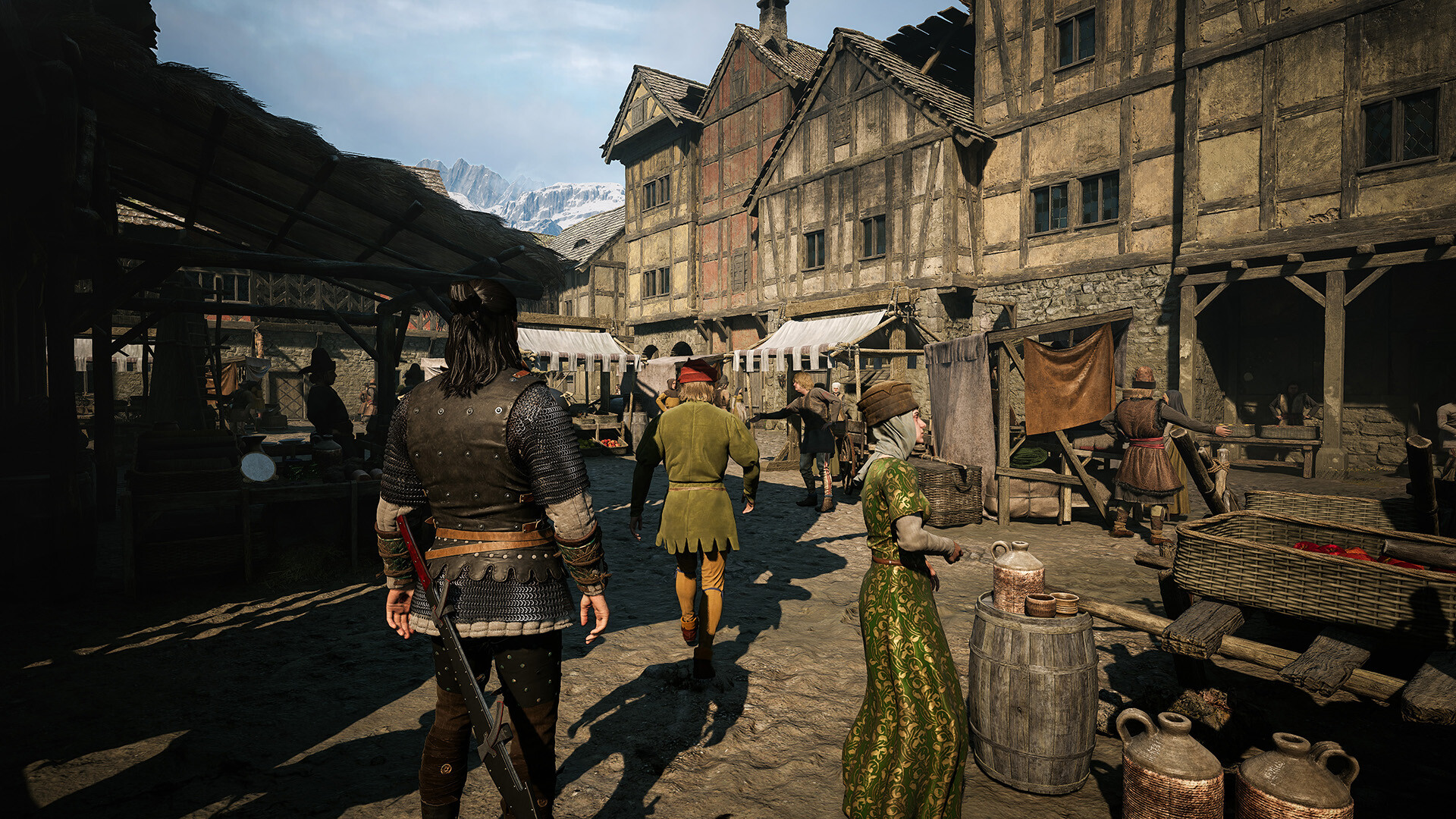
The game uses Nanite, which allows rendering of geometry at very high triangle counts by streaming and processing mesh detail on demand. For a game set in the Carpathian Mountains with dense forests, rocky terrain and detailed medieval architecture, the benefit is direct: environments can be built with natural geometric complexity rather than leaning on normal maps and reduced-detail stand-ins.
Lumen
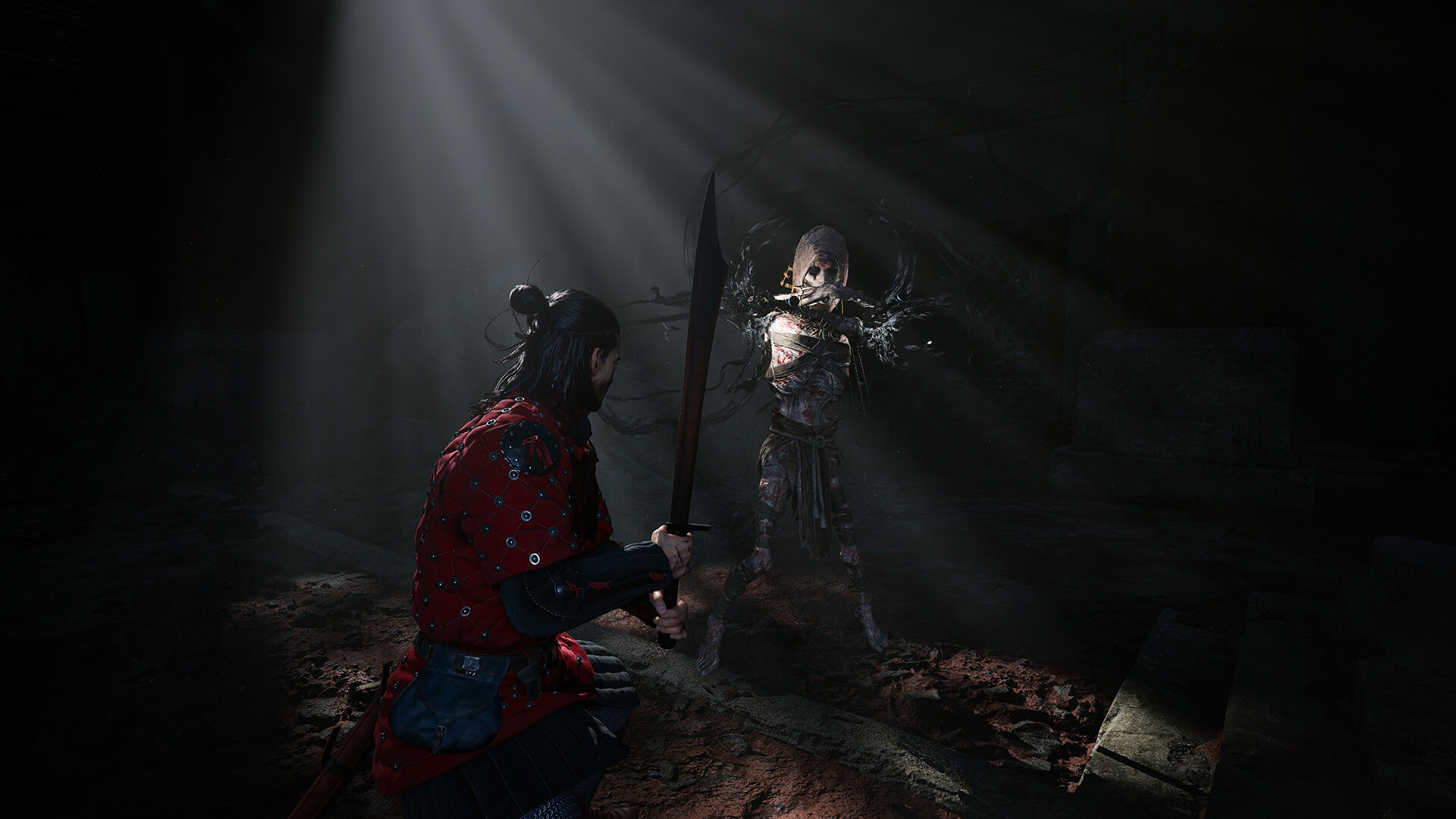
The game also uses Lumen, the engine's real-time global illumination and reflection system, and hardware testing after release confirms it is active in the shipped build. Lighting responds to the time of day and to the space it is in, which matters more here than in most games because the day and night split is the central design idea. A torch in a cave throws shadows that move with it, and the contrast between a lit street and an unlit rooftop is the same contrast Coen lives on as a Dawnwalker.
Upscaling and Frame Generation
The PC build ships with upscaling from both major vendors, and a frame generation option was added shortly before launch and labelled experimental, covering both vendors' implementations at a two-times multiplier. Post-release hardware testing reports that image quality under upscaling is more fragile in motion here than in many comparable titles, and that the studio's own ultra-preset targets are optimistic on the hardware they name. See System Requirements.
Consoles use the same approach from the other direction. All three console graphics modes render below 4K and upscale to it, and the PlayStation 5 Pro build uses that console's own machine-learning upscaler. See Update History for the mode targets.
Performance
Rebel Wolves acknowledged before release that it was aware of the stuttering common to older engine releases and said it was using out-of-the-box solutions to keep performance smooth across platforms. The shipped game arrived with two of those problems still present, both acknowledged in the first hotfix note: stuttering in windowed and borderless modes, with full screen given as the workaround, and crashes during shader compilation, with a firmware update given as the fix.
Both have since been worked on directly. A hotfix on September 10, 2026 rebuilt part of the shader compilation pipeline, which the studio said can resolve stuttering for some players, and an earlier hotfix the day before fixed VSync misbehaving while frame generation was enabled. Shader compilation and frame pacing are the two areas where this engine most often causes trouble, and they are the two the studio has spent its first post-launch week on.
Custom Code
The studio's own code sits deep enough in the engine that each version upgrade has to be checked against it, which points at substantial changes rather than surface-level adjustments. The custom work plausibly supports the features specific to this game's design: the fluid day and night transitions, the directional combat system, the time layer that advances only on narrative beats, and the open-world streaming needed for Vale Sangora's varied biomes and its night traversal routes across rooftops and walls. The studio has not itemised the modifications, so that is an inference from what it has said about them rather than a published list.