
Loading...
Loading...
Gameplay and Controls
September 11, 2026 at 09:29 PM
Added the three pillars, the no-traction physics model, the 300 to 1000 km/h track speed range and the per-class real-world handling analogues; moved the duplicated Upgrade stats and Chassis traits sections to a pointer at the vehicle hub
Star Wars: Galactic Racer is a track-based racing game, not an open world. You race repulsorcraft around set circuits, and the core tension is risk against reward: the more aggressively you drive, the more you stand to gain and the more likely you are to wreck. This page covers how the racing feels, how you boost, and how you build a vehicle. The run structure that wraps around all of it lives on Runs and Tours, and the contact racing on Combat and Takedowns.
Official material frames the whole game around three pillars, Race, Master and Survive. They are a compact summary of what a session actually asks of you, and each one maps onto a different corner of this wiki.
Pillar | What It Covers |
|---|---|
Race | Joining the Galactic League, an unsanctioned racing circuit born in the lawless Outer Rim, as Shade, a lone racer chasing revenge and glory |
Master | Riding solo through a story driven campaign of shifting alliances, or braving strategic player versus player grudge matches where reputation rides with you |
Survive | Slamming, shunting and taking down rivals across varied circuits in landspeeders, speeder bikes, skim speeders and podracers, on the principle that the greater the risk, the greater the reward |
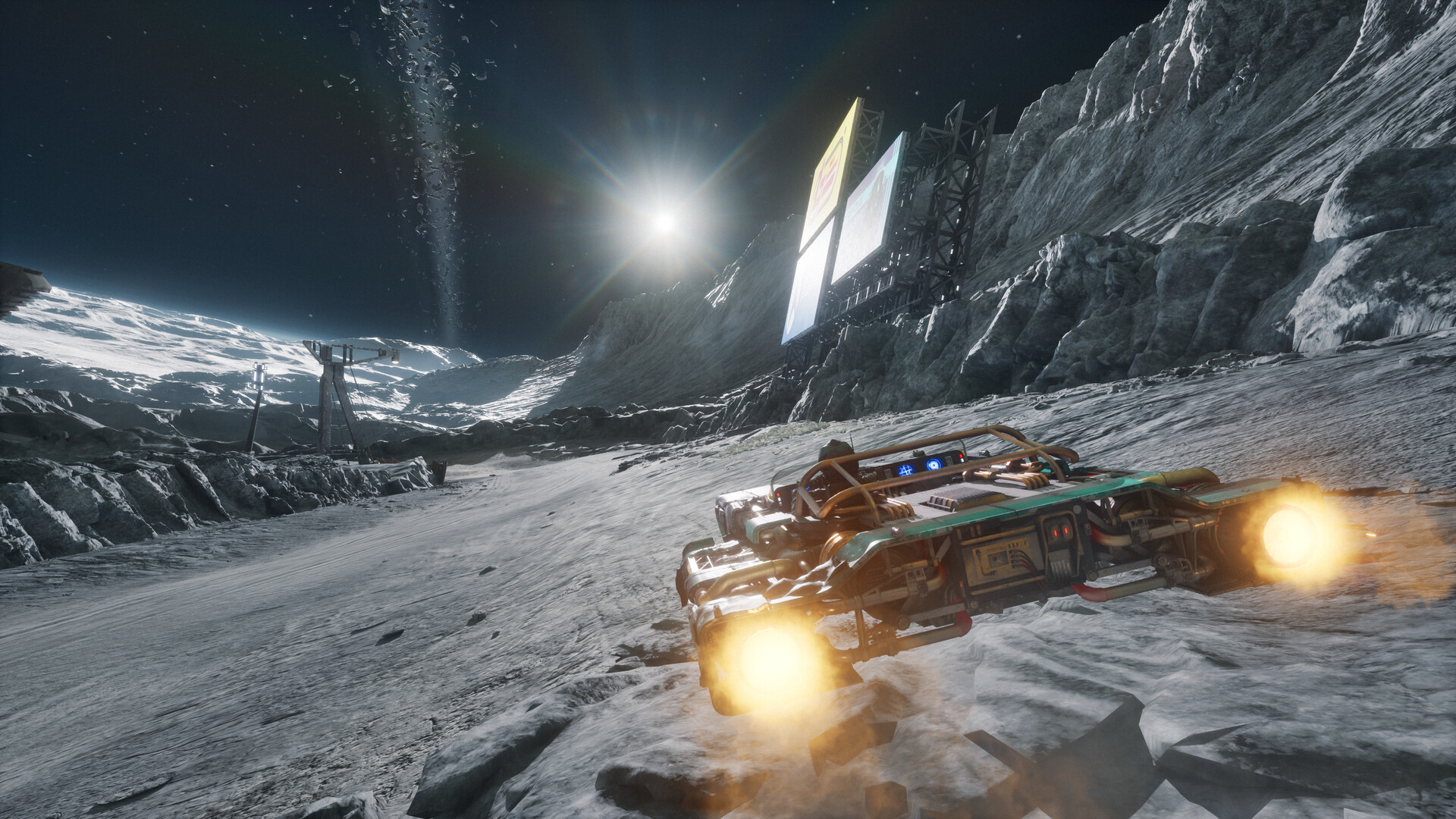
Each class of Repulsorcraft handles differently, and the differences are deliberate rather than cosmetic. A landspeeder has real weight and wants to drift through corners. A speeder bike is fast in a straight line but harder to keep under control when the track turns. A skim speeder is built for hard banking, what the developers call knife-edging, and is one of the harder frames to fly. Picking a class is the first real decision you make about how you want to race.
The single largest departure from a conventional racing game is that repulsorcraft have no traction model at all. An early prototype was built on one, on the reasoning that the vehicles were originally filmed using cars with their tyres hidden behind mirrors, and the team threw it out. A repulsorcraft does not lay its grip onto the ground based on the surface it is crossing, it holds the track through technological means. Taking traction out of the simulation is what let the studio run circuits across any terrain type and gradient it liked, and it is also what unlocked the speed.
That speed is a range rather than a setting. There are tracks in the game you take at 300 kilometres an hour and tracks you take at 1000, and the developers have described making a circuit read well at both ends of that spread as the hardest balancing problem on the project. The podracer is the craft they single out as feeling fastest, because it mattered to them that it came across as a pinnacle racing vehicle.
Each class was grounded in a real-world analogue before any of the fantastical parts were layered on top, and that decision is audible in how the four of them fly. The developers have said the vehicles needed to sit closer to physical reality than they first expected, so that a player can pick the game up and have it behave the way instinct says it should instead of learning an entirely new paradigm.
Class | Real-World Analogue | What It Shapes |
|---|---|---|
A car, with rally cars and Paris-Dakar off-roaders as the working reference | Weight through a corner and the confidence to lean on other pilots | |
A bike | The rider leads the motion of the bike in the animation, the way a rider does in life | |
A plane, referenced from air race footage of aircraft threading slalom gates | Knife edge banking that snaps the craft around a corner and lets it take off at speed | |
Described by the developers as horse and chariot meets Formula 1 | The pinnacle vehicle feel and the strongest sense of speed in the game |
Two boost components shape the moment-to-moment driving. The Afterburner is a short boost that recharges during a race, so you can use it more than once if you spend it well. The Ramjet is the high-risk option: it gives great speed and helps you knock opponents off the track, but it overheats, so leaning on it has a cost. Choosing when to burn each one is a big part of how a race plays out.
Component | What it does | Catch |
|---|---|---|
Afterburner | Short boost that recharges mid-race, usable multiple times | Limited charge, has to refill |
Ramjet | Strong speed boost that also helps shove rivals off the track | Overheats if overused |
The Ramjet is the component the developers single out as game defining rather than as one boost among several, and the heat it builds is the reason. Deciding whether to spend that heat on speed or on a rival is the choice the rest of a build sits on top of.
Customization is deep. You assemble a vehicle from over 300 parts, and the developers have put the number of possible combinations in the trillions. The point is that the same class can be tuned toward very different races. You buy parts from vendors and fit them at the workshop the engineer Hibi runs in each planet's paddock.
Between races you raise the vehicle’s base stats, and three of the four classes also carry a signature chassis trait that shapes how the frame wants to be flown. The full stat list and the trait table are documented on the Repulsorcraft hub page rather than repeated here, so that there is one place to keep them current.
Each planet applies its own environmental status effect to your vehicle, and the game’s synergy system lets you use the environment to counter them. On Ando Prime you can be frozen, on Lantaana you can overheat in the lava but cool off by driving through water, and on some versions of Jakku the sun can burn you. The same hazards interact with the Ramjet: driving over Lantaana’s water rivers makes it heat up more slowly, so reading the track is part of managing your boost. Cooling runs the same logic in reverse: volcanic lava on Lantaana brings the heat, while Ando Prime’s exposed ice sections let you cool down faster.
On a controller the core inputs are simple to reach. The Afterburner fires on one face button and the Ramjet is held on a stick click, so you can feather boost while steering. On PlayStation 5 the Afterburner is mapped to the X button and the Ramjet is held with R3.
On top of the boost components, you can unlock and equip special abilities, such as shields or weapons, and trigger the equipped ability with a shoulder button (L1 on PlayStation 5). Which ability you bring is another build choice layered on top of your parts and stats.
Because finishing near the front is what keeps you in a tour, clean driving is rarely the fastest driving. Slamming and shunting rivals is encouraged, and the Ramjet doubles as a way to push opponents into walls. The trade-off is constant: every aggressive move that could win you a place could also be the crash that ends your run.
