

Repulsorcraft are the vehicles you race in Star Wars: Galactic Racer. There are four classes, and each one flies differently on purpose, so picking a class is a real choice about how you want to play rather than a skin swap. On top of the class differences sits a deep customization system, which means two pilots in the same class can still end up with very different machines.
The four classes
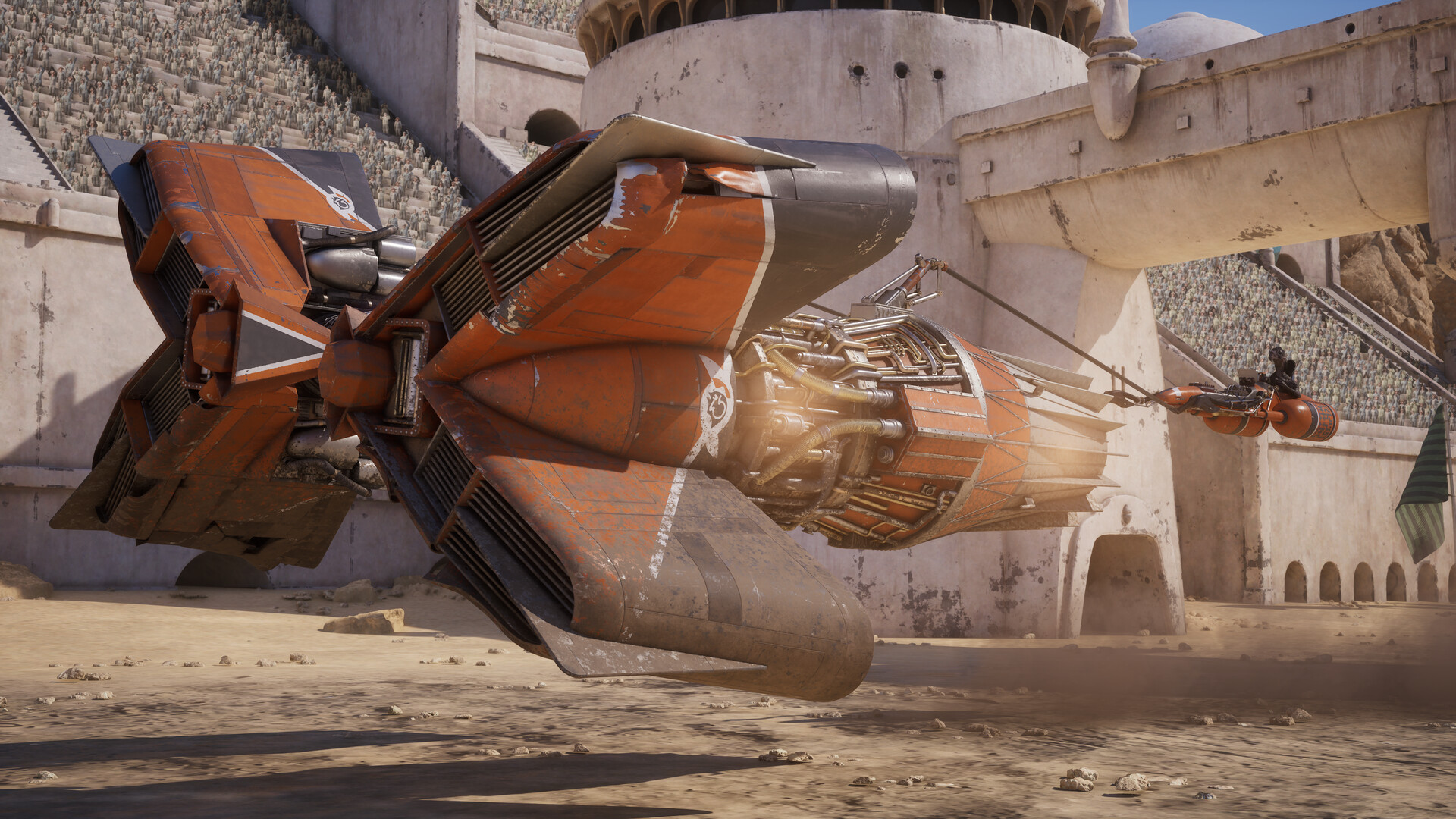
The four confirmed classes are Landspeeders, Speeder Bikes, Skim Speeders, and Podracers. One of them, the skim speeder, is a brand-new vehicle invented for this game and new to Star Wars canon. The others draw on vehicle types the franchise has used before, but their handling here is tuned for this game's racing.
Class | Handling | Signature trait |
|---|---|---|
Real weight; specializes in drifting around corners | Drift | |
Great straight-line speed; harder to control around corners | Kinetic Burst | |
Built for hard banking turns; one of the harder frames to control | Knife Edge | |
Returning podracing class; playable immediately in Arcade | Not publicly named |
No traction model
The single biggest difference between a repulsorcraft and a wheeled racing car is that there is no traction model underneath it. Design Director Mark Bridges has explained that one of the first prototypes did use one, built the way a wheeled vehicle would be, partly because the early films shot repulsorcraft scenes with cars and mirrors hiding the tyres. The team concluded it was the wrong model: repulsorcraft do not lay their grip onto the ground based on the surface, they do it through technological means. Dropping traction let the game use a far wider range of terrain types and gradients, and it unlocked the thing the whole game is built on, which is speed.
That speed range is unusually wide. The studio has described building tracks that hold up both at around 300 kilometres an hour and at around 1000, with every class expected to stay readable at both ends. The flip side of hovering craft was ground detection: reconciling undulating terrain, jumps and big speed differences has been called the hardest problem on the game, and the stated goal was physics that feel intuitive rather than physics that are classically correct.
Each class was still grounded in a real-world analogue rather than invented from nothing. A landspeeder drives like a car, referenced from rally cars and desert rally raiders. A speeder bike drives like a bike, down to the rider leading the machine's motion. A skim speeder drives like a plane, referenced from air racing and slalom gates. A podracer, in the game director's phrase, is horse and chariot meets Formula 1. Keeping each frame close to something players already understand is what makes the set readable without a manual.
Customization
You build a ride from over 300 parts, and the developers have described the number of possible combinations as being in the trillions. The system is deep enough that the same class can be pushed toward different races and different driving styles. Parts come from vendors, paid for with the run's persistent resource, and you fit them at the workshop the engineer Hibi keeps in each planet's paddock. Builds also have to account for each world's status effects, so the best setup can change from planet to planet.
Upgrade stats
Between races you raise five base stats on a vehicle: Afterburner, Battery, Cornering, Ramjet, and Resilience. Resilience controls how many crashes you can take in a race before wrecking out, while the other four shape boost, energy, and handling. The signature chassis trait can be upgraded too, so there are up to six elements to invest in. How you earn and spend those upgrades during a run is covered on Gameplay and Controls.
Stat | What it does |
|---|---|
Afterburner | Governs the short boost that recharges during a race |
Battery | The vehicle's energy capacity |
Cornering | How well the frame holds a turn |
Ramjet | The high-risk speed and shove boost, which overheats if you lean on it |
Resilience | How much crash damage you absorb before wrecking out of a race |
Chassis trait | The class signature, upgradeable as a sixth element on the three chassis that have one |
Chassis traits
Three of the four classes carry a signature chassis trait that captures their strength: Drift for landspeeders, Kinetic Burst for speeder bikes, and Knife Edge for skim speeders. No trait has been published for podracers. The trait reflects how the frame is meant to be flown, which is why the class you choose sets the tone for everything you build on top of it.
Trait | Class | What it does |
|---|---|---|
Drift | Weight that helps the frame slide through corners | |
Kinetic Burst | Built around straight-line speed | |
Knife Edge | Hard banking through tight turns | |
Not publicly named | A fourth class, outside the three campaign chassis |
Choosing a class
There is no single best class, just different bets. A weighty drifting frame, a fast but twitchy bike, and a knife-edging skim speeder all reward different kinds of driving. The individual class pages, Landspeeders and Speeder Bikes, go further into each one's role, and the returning Podracers class has its own history in the franchise.