Loading...
Loading...
Materials and Resources
August 26, 2026 at 10:02 AM
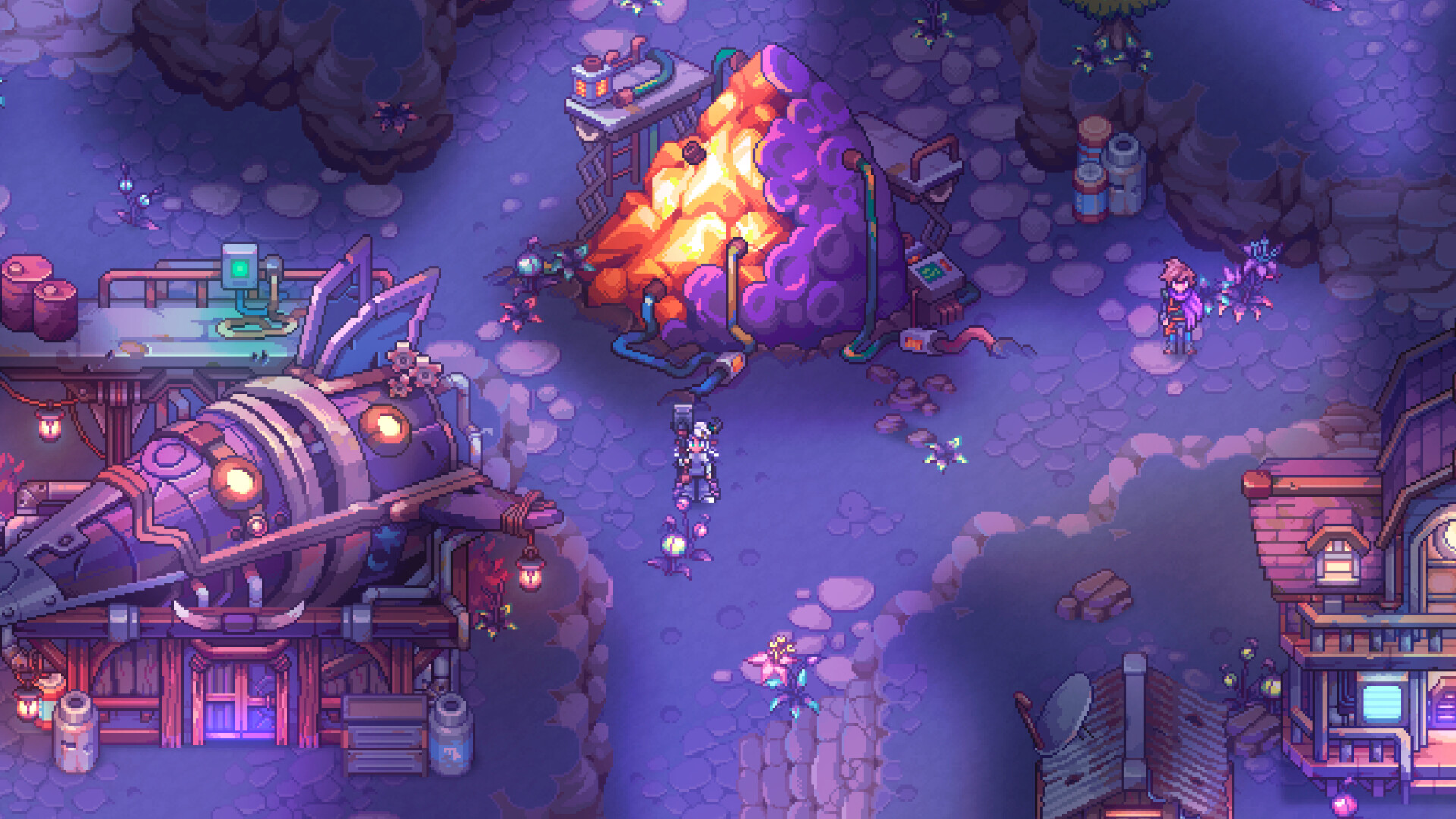
Added an ore seam screenshot to the section on where materials come from
Materials are the base layer of everything you make in Soulbound: Online. Ore becomes ingots, ingots become components, components become weapons and armour, and the plants, fish and salvaged robot parts you pick up along the way feed cooking, chemistry, and the fuel that keeps your base powered.
Almost all of it comes out of the shared overworld rather than out of dungeons. Each gathering skill has its own node type and its own six-tier tool line, and a tool works nodes at its own tier and below, so what you can reach is set by the tool you can craft and the skill level behind it.
Skill | Node | Main Yield | Also Drops |
|---|---|---|---|
Mining | Outcrops | Copper Ore, Iron Ore, Chronoterra, Tritium Ore, Voidstone, Astralite Vein | Coal at every tier, plus Raw Yokulite, Snakestone, Viridium and Celestial Vein higher up |
Foraging | Plants | Hemlock, Spikeward, Voltgrass, Witherleaf, Shinjitsu Zakura, Starbloom | Yoku Resin, Fibre Weave, Ghostcap, Moonlace, and crop seeds |
Fishing spots | Raw fish, tiered by spot | Seaweed and other cooking ingredients | |
Lockboxes and broken bots | Key drives and Yoku data in rising grades | Charged Cells at the top three tiers | |
Plots at the homestead or in an apartment | Produce grown from seeds | Nothing secondary; the crop is the yield |
Gathering runs on stamina, not health. Each action costs three stamina, and a hack or a cast that fails does not charge you for it. The patch of 20 August 2026 made hacking and mining nodes spawn more often and pack them more densely, so there is less ground to cover between pulls.
Four of the five gathering skills use a six-step tool ladder, and the steps line up across all of them. A tier 4 tool opens tier 4 nodes and everything below.
Tier | Pickaxe | Gloves | Fishing Rod | Hacking Tool | Skill Level |
|---|---|---|---|---|---|
1 | Old Pickaxe | Old Gloves | Cheap Fishing Rod | KeyLime Hacking Tool | 0 |
2 | Steel Pickaxe | Coppercore Gloves | Coppercore Fishing Rod | Coppercore Hacking Tool | 10 |
3 | Chrono Pickaxe | ChronoMesh Gloves | Steelward Rod | Chrono Cipher | 20 |
4 | Obsidian Pickaxe | Obsidian Gauntlets | Tritanium Rod | Dark Cipher | 30 |
5 | Voidstone Pickaxe | Voidstone Gauntlets | Viridium Rod | Dark Cipher Mk II | 40 |
6 | Astralite Pickaxe | Astralite Gauntlets | Celestial Rod | Quantum Cipher | 50 |
Farming is the exception. Its tools are a fixed starter set of hoe, trowel, watering can and garden shears, with no tiers and no upgrade path. You are given them during the farming introduction, or you buy replacements cheaply in Virelda. What gates farming instead is the seed: the vendor who sells seeds checks your farming level before he will part with the higher ones. Full tool lines, including their crafting requirements, are covered on Tools and Gathering Gear.
Raw ore is useless until it is smelted. The Smelter turns one ore into one ingot, and each level of the station unlocks the next rung.
Smelter Level | Ingot | Tier | Ore | Craft Time |
|---|---|---|---|---|
1 | Steel Ingot | T2 | Iron Ore | 6 seconds |
2 | Chronosteel | T3 | Chronoterra | 3m 24s |
3 | Tritium Bar | T4 | Tritium Ore | 18m 45s |
4 | Voidstone Ingot | T5 | Voidstone | 1h 33m 45s |
5 | Astralite Ingot | T6 | Astralite | 7h 48m 45s |
Each crafting slot reserves at most 24 hours of work, and the game refuses a queue that would run past it. In practice that means one slot can turn out thousands of steel ingots in a day but only a handful of the top-tier ones, which is the real reason a T6 build is slow rather than any single recipe being expensive.
One correction worth carrying, because it is easy to get backwards. The patch of 20 August 2026 cut weapon and armour crafting to five seconds at every tier and took station upgrade timers down to zero. It did not touch the ore times in the table above. Those still run on the clock, and the top two rungs still take hours.
Coal falls out of every tier of mining outcrop as a secondary drop, which is why mining pays twice: once in ore, once in the fuel that will smelt it. Coal is the standard generator fuel and burns down while a generator is running, including while you are logged off.
The 20 August 2026 patch added a second option. The Charged Cell is a high-tier fuel that produces three times as much power as coal, and it drops from tier 4 to tier 6 hacking nodes. The same patch doubled generator output at every tier, so a base that used to run two or three stations at once can now run a wider spread on the same footprint. Station power draw and the grid itself are covered on Crafting Stations.
Materials carry the same five-step rarity ladder as gear, and the infobox on an item tells you which rung it sits on.
Rarity | Examples |
|---|---|
Common | Carbon Piece, Cog, Core Residue, Egg, Green Data Chunk, Cobblestone Bar |
Uncommon | Bronze Ingot, Composite Fabric, Desert Crystal, Glass Piece, Obsidian Fragment, Fossil |
Rare | Amber, Carbon Fibre Plates, Fine Core Residue, Glass Panel, Hydraulic Lens, Soulstone |
Epic | Epic Crystal Geode, Refined Core Residue, Spectral Essence, Uranium Cell, Weapon Core Gem |
Legendary | Rose, Silver Chalice, Snake-stone |
Rarity is a rough guide to where a material sits in the chain rather than a promise about power. Plenty of common materials are used at every tier, and a legendary one may exist purely because a single quest needs it.
Yoku is no longer a spendable energy resource, and dungeon chests no longer charge you anything to open. What survives is a family of materials that kept the name: Yoku Shard, Yokulite, Yoku Resin, Yoku Bloom, Yoku Scale, Yoku Spore, Encoded Yoku, the Yoku data chunks that come out of lockboxes, and the Yoku Fillet line refined at the Chemistry Lab. They are ordinary crafting materials with an awkward inheritance. See Yoku for the full split between the removed mechanic and the surviving items.
Ingots go to the Smelter first, then into almost every downstream recipe.
Components are made from ingots and gathered materials, and they are what final assembly actually consumes.
Weapons and armour are assembled at the Weapon Station and the Gearforge, and are covered on Weapons and Gear Sets.
Chemistry Lab input is refined Yoku, plants and fish, turned into vials, flasks, stims and elixirs.
Kitchen input is farmed produce, fish and vendor staples, turned into buff food.
Generators burn coal or Charged Cells and power everything else.
Furniture and stations for your apartment are built from the same pool. See Apartments and Housing.
The practical consequence is that no gathering skill is a dead end. Mining feeds smelting and fuel, foraging feeds chemistry and seeds, fishing and farming feed cooking, and hacking feeds both the data-grade materials and the best fuel in the game.
Node rosters, tool ladders and the ingot table describe the live Early Access build as of 26 August 2026. Drop chances shift with balance passes and are deliberately not reproduced here. For what the materials become, see Crafting and Base Building, Consumables and Food and Life Skills. For what the gathering is worth, see Currencies.