

Overview
Sustainability is not just a single mechanic in Outbound; it is the foundational theme that shapes every aspect of the game's design. From the energy system that rewards players for switching to renewable power, to the recycling system that turns collected litter into useful blueprints, sustainability is woven into the fabric of the gameplay experience. The game is set in a utopian near future where humanity has found a way to live in balance with the natural world, and every design decision reinforces that vision.
Co-founder Tobi Schnackenberg of Square Glade Games has described Outbound as "our pitch on how such a future could look," a phrase that captures the studio's ambition to use a cozy video game as a medium for imagining what sustainable living might actually feel like. Rather than lecturing the player about environmental issues, Outbound simply drops them into a world where sustainability is the norm and lets the experience speak for itself.
Solarpunk Vision
Outbound draws heavily from the solarpunk movement, a genre of speculative fiction that envisions an optimistic future in which advanced technology and the natural environment coexist in harmony. Solarpunk stands in contrast to cyberpunk's dystopian outlook, instead imagining societies powered by clean energy, surrounded by thriving ecosystems, and organized around community well-being.
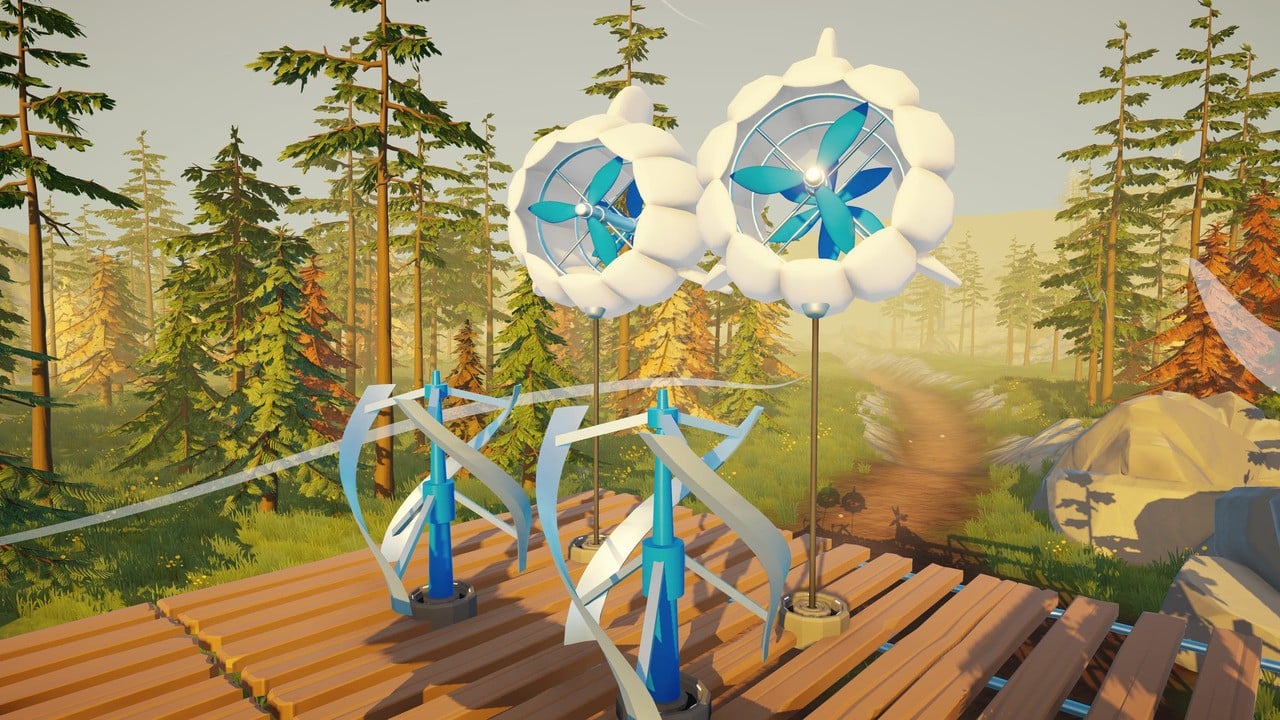
In Outbound, this philosophy manifests visually and mechanically. The game world features solar panels integrated into landscapes, windmills turning on hilltops, and lush greenery growing alongside human infrastructure. The overall art style communicates a world that has moved past environmental exploitation and arrived at something gentler. The Green Mediography, a Dutch academic project cataloguing environmental themes in media, has categorized Outbound under the "Solarpunk" motif alongside themes of ecological identity and living off the grid.
The Dear Alice Connection
One of the most distinctive visual influences on Outbound is "Dear Alice," a short animated film produced for yoghurt brand Chobani in 2021 by London-based animation studio The Line. The film, scored by longtime Studio Ghibli composer Joe Hisaishi, depicts a solarpunk future full of sparkling solar panels, lush vertical farms, floating windmill blimps, and contented farm animals. It went viral after solarpunk futurist Stephen Magee shared it on social media, where it reached over 1.8 million views.
Tobi has cited "Dear Alice" as a direct inspiration for Outbound's art style. The short film's optimistic depiction of farming in the future resonated with what Square Glade Games was trying to achieve: a world where people live sustainably without sacrificing beauty, comfort, or technology. The influence is visible in Outbound's warm color palette, its integration of green technology into natural settings, and its overall tone of hopeful coexistence between humanity and nature.
Developer Intent
The idea of building a game around sustainability came to Tobi during a road trip from Germany to the Netherlands. He saw "a beautiful old-school camper van as it drove by a field of solar panels and windmills." The studio was in its prototyping stage at the time, and that moment crystallized the direction of the project. Tobi has explained that this image sparked "the idea of building it around an electric van with sustainability in mind."
Tobi described the studio's goal plainly: "We are trying to portray a world where mankind has learned to coexist with nature and with technology in a way that is mutually beneficial." This statement, paired with the "pitch on how such a future could look" quote, positions Outbound not as an environmental lecture but as a positive demonstration. The developers wanted to show what a sustainable society might look and feel like, rather than warning players about the consequences of failing to build one.
This approach distinguishes Outbound from survival games that treat the natural world primarily as a resource pool to be depleted. In Outbound, the environment is something to live with, not to conquer. The game was designed as "a survival game that leaned into sustainability, rather than resource exhaustion."
Energy Progression
The energy system is one of the most direct mechanical expressions of the sustainability theme. The camper van's electric motor, workstations, lights, and appliances all draw from a shared battery. If the battery drains completely, the van stops moving and powered equipment shuts down until power is restored. How the player chooses to generate that power tells the story of the sustainability theme in miniature.
In the early game, the only available power source is the bio burner, which consumes gathered fibre and lumber to produce electricity. It works, but it is inefficient and requires constant foraging to keep fed. The bio burner represents an older, unsustainable model of energy production: burning organic material to generate power.
As the player progresses through the technology tree, they unlock renewable energy sources: solar panels that harvest sunlight during clear weather, wind turbines that perform best on hilltops and exposed ridges, and hydroelectric generators that tap flowing rivers and streams. Each renewable source has its own strengths and placement considerations, encouraging thoughtful setup rather than a single optimal solution.
The intended arc is clear. Players start dependent on burning resources, experience the friction of that approach, and gradually build a fully self-sufficient renewable energy grid. By the late game, the bio burner can be retired entirely, replaced by a combination of clean power sources. The game mechanically rewards the transition to sustainability by removing the need for constant fuel gathering, freeing the player to spend time on exploration, building, and relaxation.
Energy Sources and Thematic Role
Energy Source | Game Phase | Thematic Role |
|---|---|---|
Early game | Represents unsustainable burning of organic resources; requires constant foraging | |
Solar Panels | Mid game | Clean daytime energy; reflects the solarpunk emphasis on solar power |
Wind Turbines | Mid game | Location-dependent clean energy; mirrors the real-world wind farms that inspired the game |
Hydroelectric Generators | Mid to late game | Steady power from flowing water; requires parking near rivers or streams |
Combined Renewable Grid | Late game | Full energy independence; the bio burner becomes obsolete |
Recycling as Gameplay
The recycling system is another pillar of the sustainability theme. Throughout the game world, players encounter litter scattered across the landscape. Rather than treating this debris as background decoration, Outbound turns litter collection into a core progression mechanic. Picking up and recycling litter earns the player new blueprints for camper van upgrades, directly tying environmental cleanup to tangible gameplay rewards.
This design choice accomplishes two things at once. First, it gives the player a constant incentive to explore and clean up the world around them, reinforcing the idea that environmental stewardship is productive rather than burdensome. Second, it ties material progress to sustainability rather than extraction. Instead of mining or chopping down trees for better equipment, the player literally recycles waste into useful technology.
Environmental Storytelling
Outbound communicates its sustainability message through visual worldbuilding as much as through its mechanics. The developers made deliberate aesthetic choices to reinforce the theme at every level. On the water, players see sailboats on the horizon rather than massive tankers and cargo ships. On land, windmills and solar panels are integrated into the scenery as natural parts of the landscape, not as industrial eyesores.
The camper van itself is electric by design. This is not an incidental detail; it is a statement. The central vehicle in the game runs on clean energy, and the entire gameplay loop revolves around keeping it powered through renewable means. Even the van's modular building system encourages creative, efficient use of limited space, echoing the real-world tiny-home and van-life movements that prioritize living with less.
The world of Outbound is described as a "utopian near future" and a post-human landscape where other people have moved on but the infrastructure of a sustainable society remains. The roads are clean, the forests are thriving, and the technology left behind is green. This environmental storytelling creates a setting that feels aspirational rather than post-apocalyptic.
Coexistence with Nature
Outbound's approach to animals and wildlife reinforces the sustainability theme through a strict no-harm philosophy. Players can feed, pet, and befriend the animals they encounter. In a review of the Steam Next Fest demo, one writer noted that "you can't even run the animals over with your massive, unwieldy campervan," confirming that the game actively prevents players from harming wildlife.
When backers asked during the Kickstarter campaign how fishing would work, the developers addressed the question directly, explaining that they did not want to harm or kill any animals. The fishing stretch goal was designed with this principle in mind. This reflects a consistent design philosophy where every interaction with nature is cooperative rather than extractive.
Players can also adopt a dog companion who fetches resources and carries items. The relationship between the player and their animal companion is built on care and mutual benefit, not on dominance or utility. Even foraging activities like farming plants and gathering mushrooms are framed as working with the land rather than depleting it.
Sustainability in Gameplay Systems
Nearly every major system in Outbound connects back to the sustainability theme in some way. The following table shows how each core gameplay system reinforces the environmental message.
Gameplay System | Sustainability Connection |
|---|---|
Progression from burning resources to fully renewable solar, wind, and hydro power | |
Litter collection and recycling as a core progression mechanic, rewarding cleanup with blueprints | |
Electric vehicle powered by clean energy; modular design encourages efficient use of space | |
No-harm philosophy; all animal interactions are cooperative and caring | |
Discovering a world where sustainable infrastructure is the norm, not the exception | |
Solarpunk-inspired visuals with green technology woven into natural landscapes |
A Positive Vision
What sets Outbound apart from other games that touch on environmental themes is its tone. Many games use ecological collapse as a dramatic backdrop or frame sustainability as a problem to be solved under pressure. Outbound takes the opposite approach. It presents a world where the hard work of building a sustainable society has already been done, and the player gets to enjoy the result. There are no enemies, no combat, and no environmental catastrophes to avert. The sun rises over solar panels, the wind turns turbines on the ridge, and the player drives their electric van down a clean road through a healthy forest.
This optimism is intentional. By showing players what a sustainable future could feel like rather than what an unsustainable present looks like, Square Glade Games created a game that inspires rather than scolds. The studio's pitch is not that the world is broken; it is that a better one is imaginable. And in Outbound, you get to live in it.